
K
KingChris17 Jul 2022 17:10Hi everyone,
I wrote here before that the edge of my shower tray becomes leaky over time because the edges were not properly supported by the builder (neither clamps nor bricks). This places a lot of stress on the silicone, which leads to leaks quite quickly. Also, the wall and floor were not waterproofed, which I now want to fix. I have completely dismantled the shower. The materials I have obtained are PCI Lastogum, PCI sealing tape, and PCI sealing membrane. However, due to the pipes, it’s not easy to install the membrane exactly as described in the instructions. I could just lay the sealing membrane (1m2 (10.8 sq ft)) over the pipes and secure it at the sides with the sealing tape and Lastogum. That would probably work, but what if water does get through at some point? It would then accumulate under the shower tray :-(
I have seen there is also a self-adhesive sealing tape for shower trays, which is usually applied under the tiles but would provide additional sealing at the tray’s edge.
Another idea is to get a new shower tray with a recessed edge or raised rim, so water doesn’t sit so long on the edge but drains away immediately. (Mine is currently level.)
I would appreciate any other ideas or tips.
Best regards,
Christian
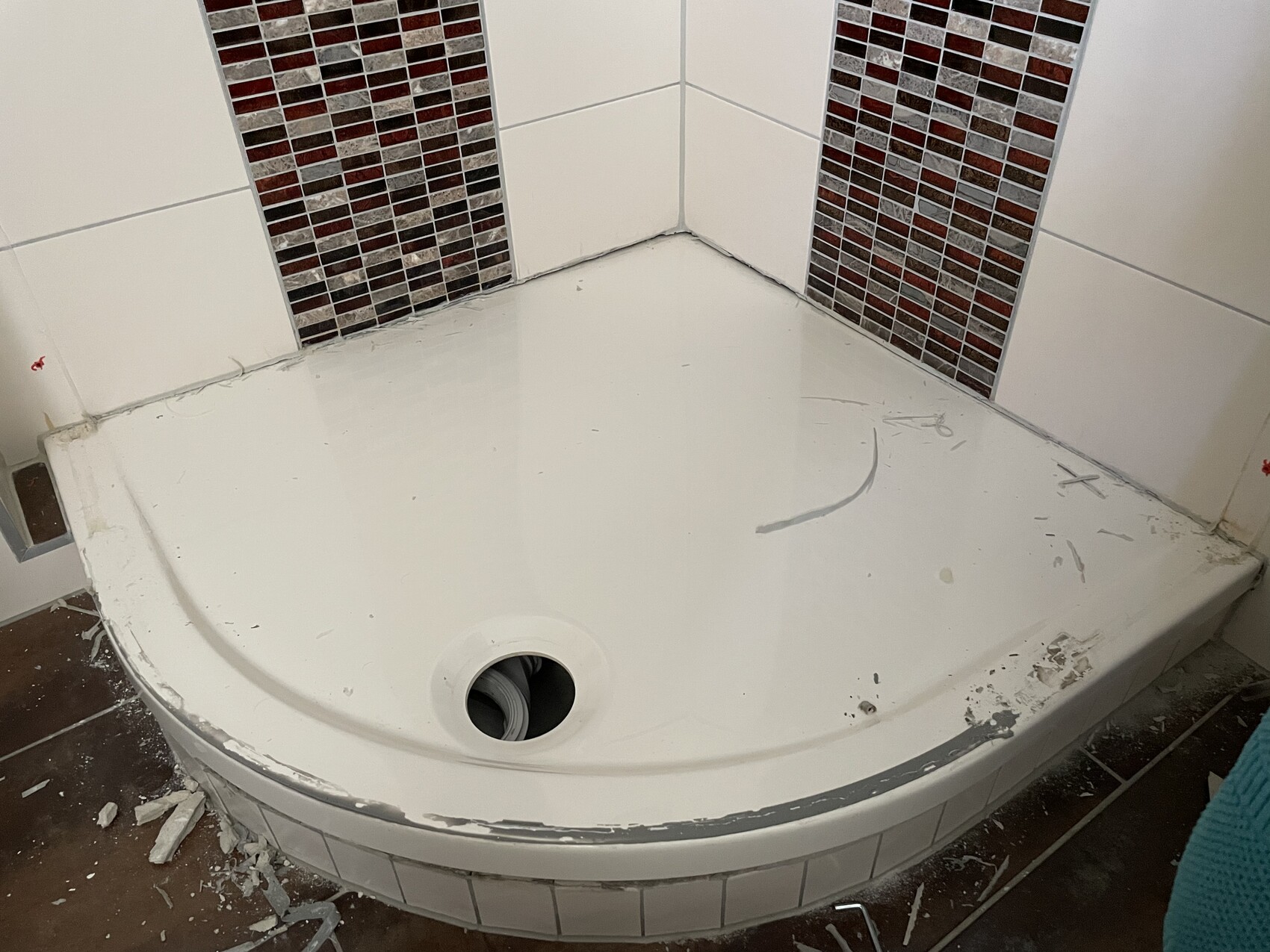
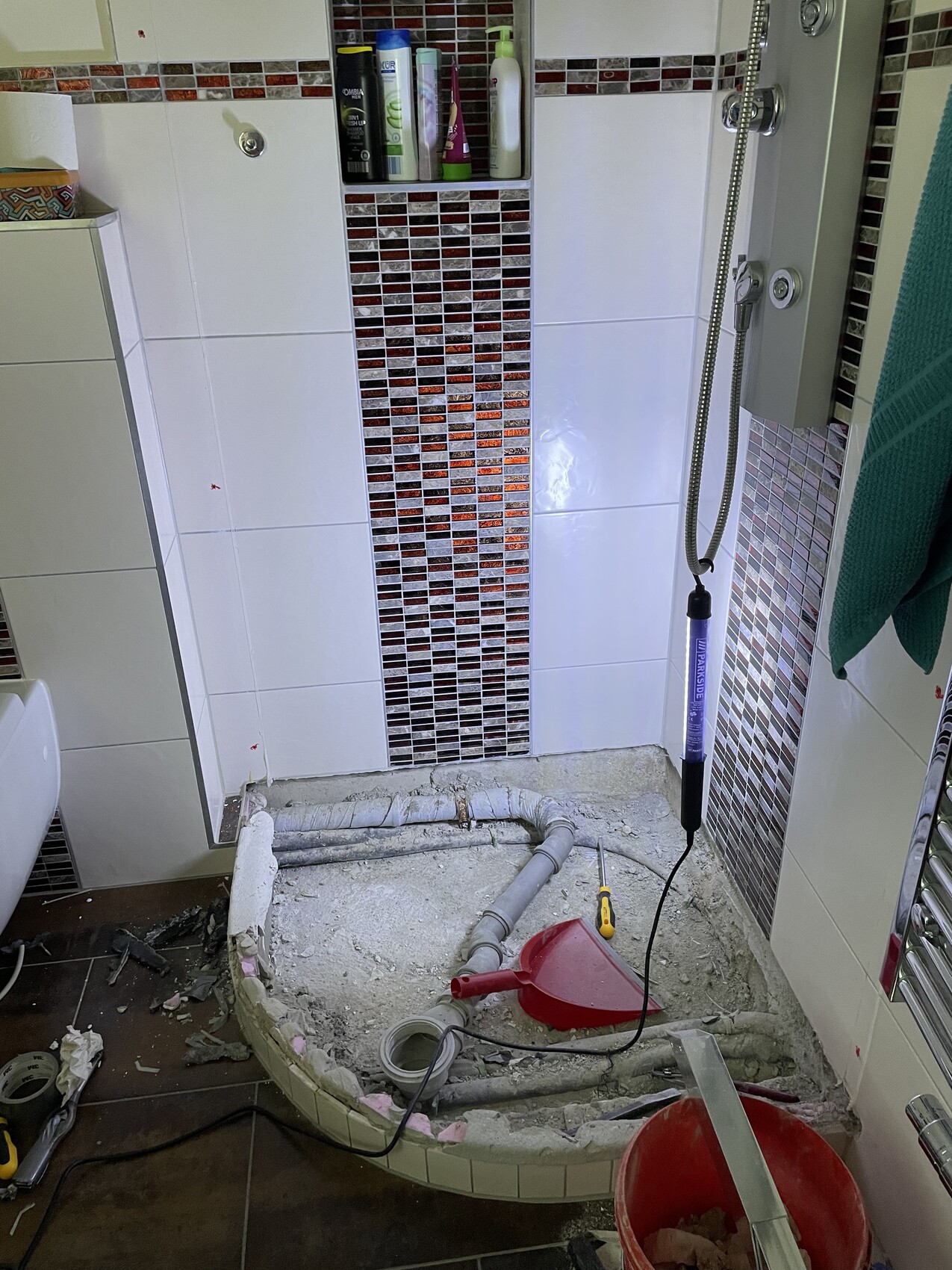
I wrote here before that the edge of my shower tray becomes leaky over time because the edges were not properly supported by the builder (neither clamps nor bricks). This places a lot of stress on the silicone, which leads to leaks quite quickly. Also, the wall and floor were not waterproofed, which I now want to fix. I have completely dismantled the shower. The materials I have obtained are PCI Lastogum, PCI sealing tape, and PCI sealing membrane. However, due to the pipes, it’s not easy to install the membrane exactly as described in the instructions. I could just lay the sealing membrane (1m2 (10.8 sq ft)) over the pipes and secure it at the sides with the sealing tape and Lastogum. That would probably work, but what if water does get through at some point? It would then accumulate under the shower tray :-(
I have seen there is also a self-adhesive sealing tape for shower trays, which is usually applied under the tiles but would provide additional sealing at the tray’s edge.
Another idea is to get a new shower tray with a recessed edge or raised rim, so water doesn’t sit so long on the edge but drains away immediately. (Mine is currently level.)
I would appreciate any other ideas or tips.
Best regards,
Christian
K
KingChris11 Sep 2022 18:40Does anyone have any tips?
Thanks and best regards
Christian
Thanks and best regards
Christian
S
SaniererNRW12311 Sep 2022 19:05In this condition, everything is just makeshift. Ideally, at least the lower part of the tiles should be removed (or even all of them) so the wall can be properly waterproofed.
As a temporary solution, you could look into a shower tray support with its own drainage system. You should imagine the frame like a U-shape. The shower tray is placed inside it. So, if water splashes over the edges of the shower tray, it flows into the tray support and then drains through an outlet into the drain.
As a temporary solution, you could look into a shower tray support with its own drainage system. You should imagine the frame like a U-shape. The shower tray is placed inside it. So, if water splashes over the edges of the shower tray, it flows into the tray support and then drains through an outlet into the drain.

Stupid question: This is definitely a hidden defect. Is the builder’s warranty no longer applicable or has it been an incredibly long time? The waterproofing MUST be done by them; it’s not an optional extra ;-)
Otherwise, I agree with @SaniererNRW123. My nephew has a shower tray from one of the major manufacturers in the sanitary fittings industry (because of timber frame construction, and as everyone knows, water is especially damaging there).
Otherwise, I agree with @SaniererNRW123. My nephew has a shower tray from one of the major manufacturers in the sanitary fittings industry (because of timber frame construction, and as everyone knows, water is especially damaging there).
B
Benutzer 100111 Sep 2022 21:04I would remove the first row of tiles and seal everything with a liquid membrane. Install a sealing tape. Get a new bathtub support frame that also rests against the wall.
If you don’t have any more tiles, use black for the bottom row; it looks as if it was planned that way.
If you don’t have any more tiles, use black for the bottom row; it looks as if it was planned that way.
Similar topics