
ᐅ Mold Caused by Residual Construction Moisture or Insulation Issues?
Created on: 20 Sep 2024 06:38
U
UbibubiHello everyone,
We have now been living in our newly built house for a little over a year. As is common with all new builds, there is residual moisture in the walls during the first 1-2 years. This can sometimes lead to mold forming behind a wardrobe or picture frame due to a lack of air circulation. This is a well-known potential issue.
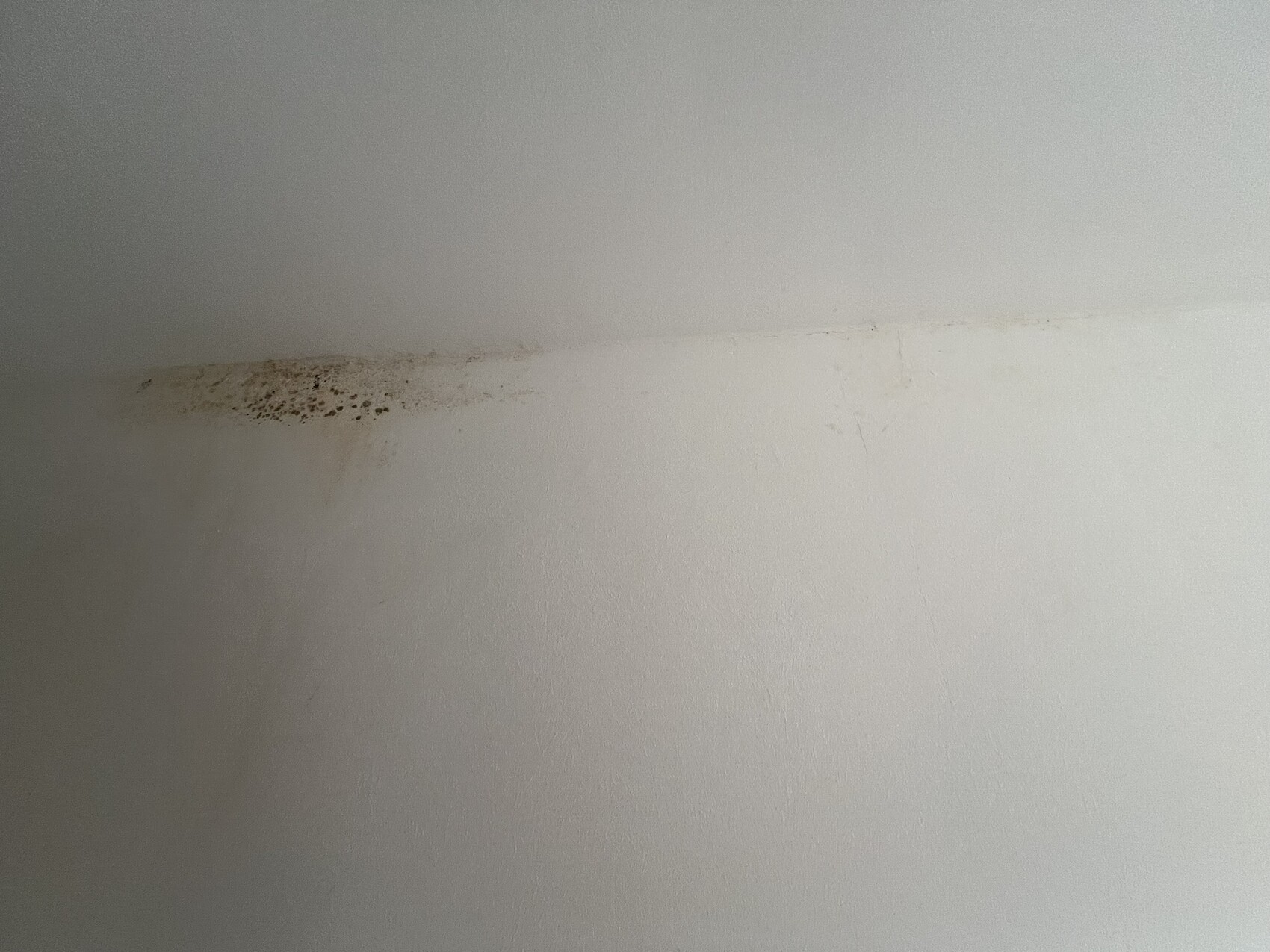
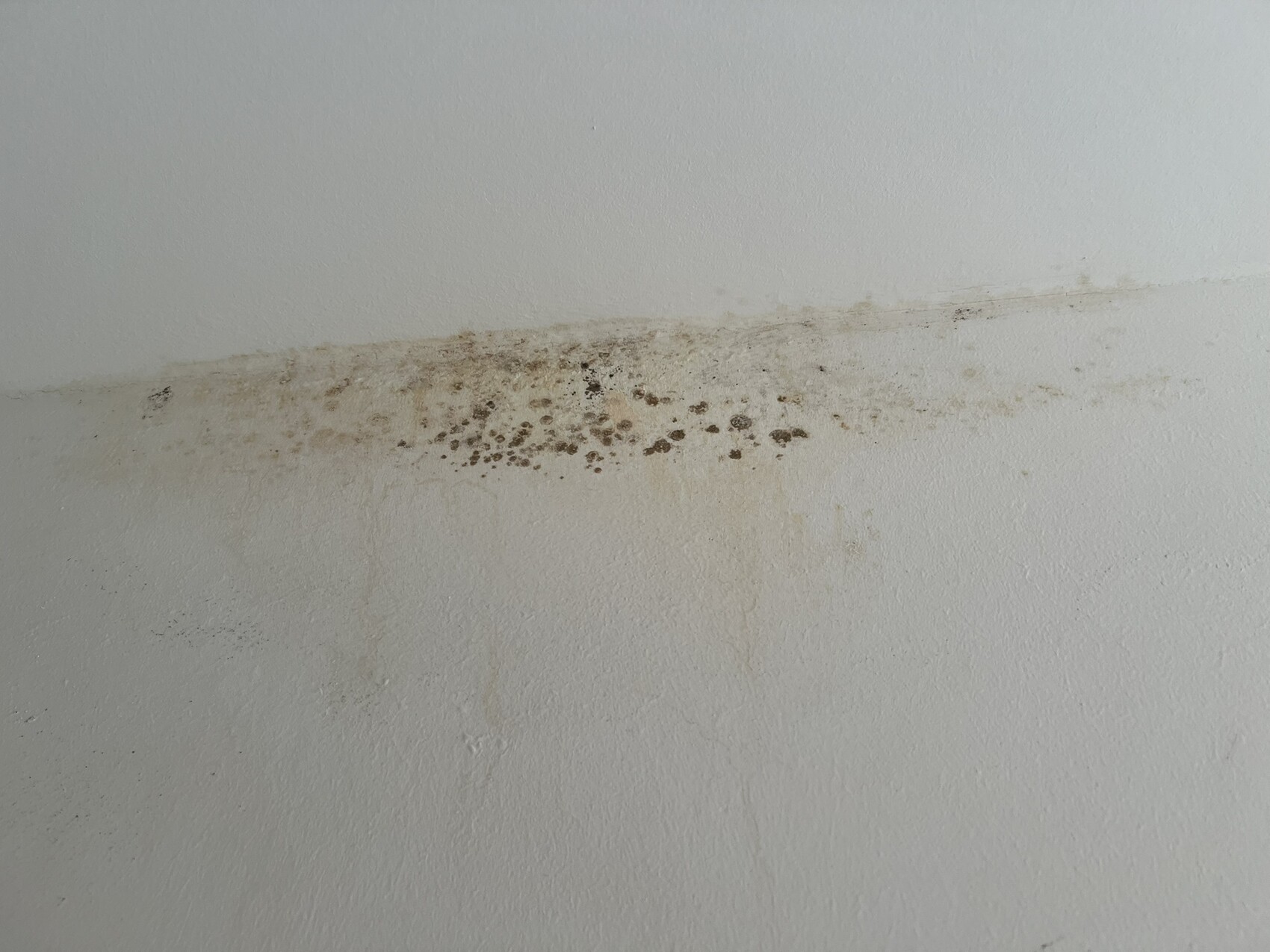
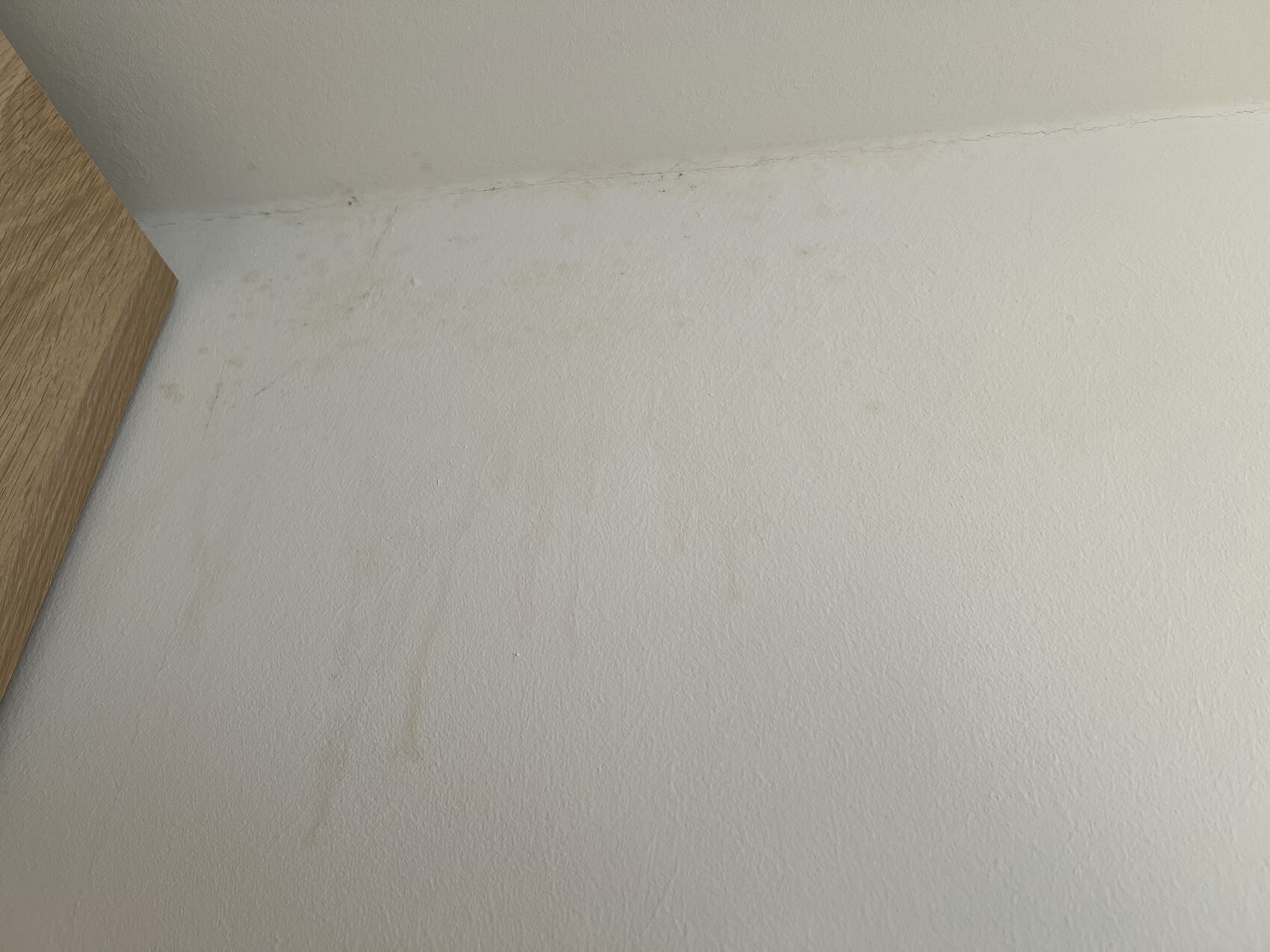
Our house has a side gable. On the upper floor, the dressing room is located in this area. Above the ceiling is insulation, and the attic is unheated. Yesterday, when we wanted to run cables for new wardrobe lighting above the wardrobe, we discovered mold in one spot above the wardrobe. At first, we thought this was a typical residual moisture problem—the mold likely formed behind the wardrobe and has now spread to a spot above it. However, when we moved the wardrobe elements aside, a different picture emerged. The walls themselves are not heavily affected. The origin point seems to be at the junction between the ceiling and the wall, from where some moisture and mold have migrated downward. I hope the photos illustrate this well.
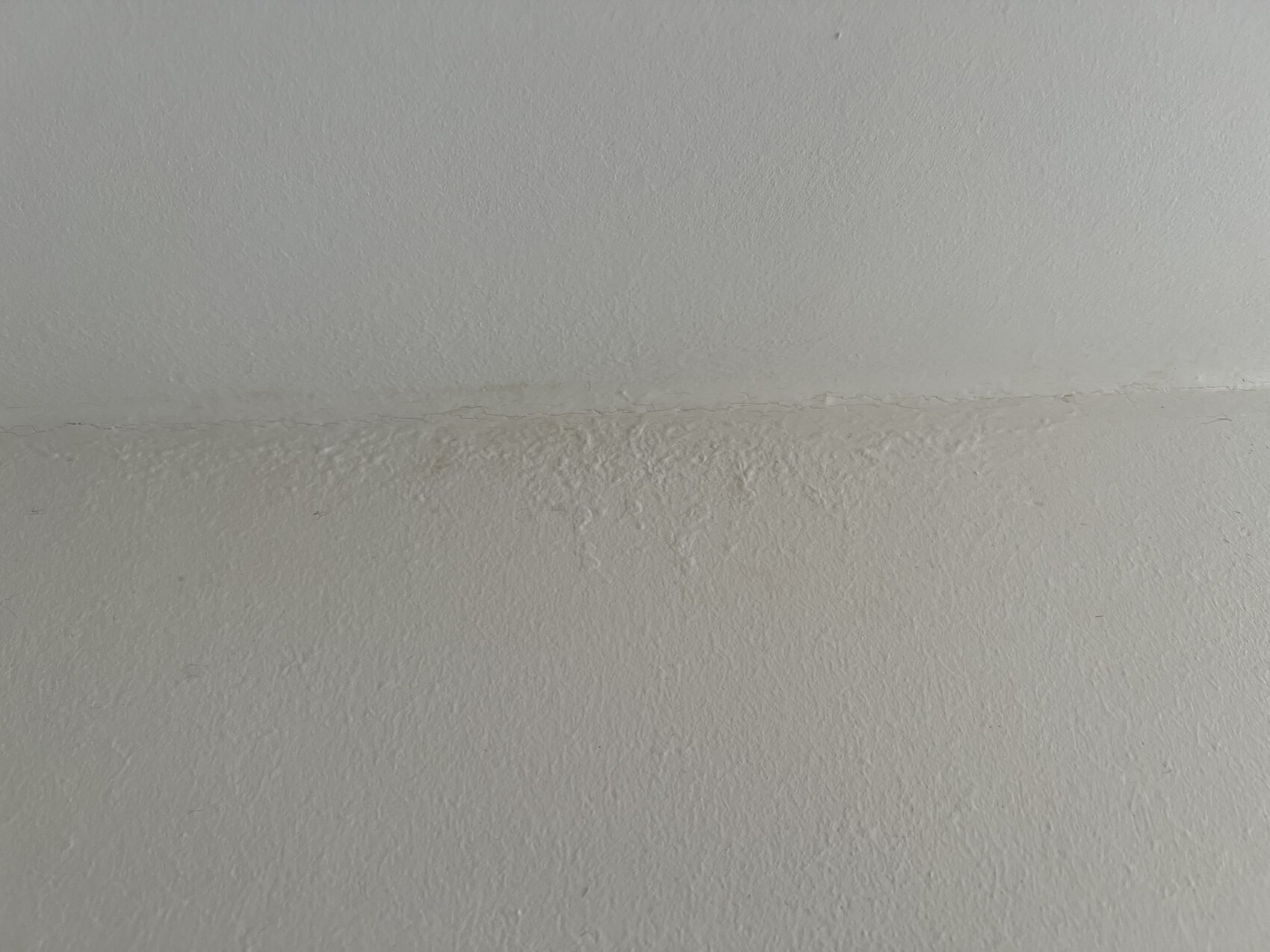
This surprised us because we would have expected some air circulation at the spot above the wardrobe (about 6cm (2.5 inches) from the ceiling) and thought the mold would be behind the wardrobes where there is less circulation. But it’s the opposite. Therefore, we are unsure whether the cause is the typical residual moisture or if it points to an issue with the insulation. What stands out is that the area most affected is roughly where the gable protrudes from the roof. On the opposite wall, at about the same height above the wardrobes, we have also found mold. We haven’t yet moved those wardrobes to take a closer look because we want to treat the first side first. After cleaning off the mold with a cleaner, we noticed that the heavily affected spot at the wall-to-ceiling junction shows slight “bubbling” (see photo after cleaning). We believe this was not present when we moved in.
What do you think is the cause? Normal residual moisture, or something related to the insulation?
Best regards,
Ubibubi
We have now been living in our newly built house for a little over a year. As is common with all new builds, there is residual moisture in the walls during the first 1-2 years. This can sometimes lead to mold forming behind a wardrobe or picture frame due to a lack of air circulation. This is a well-known potential issue.
Our house has a side gable. On the upper floor, the dressing room is located in this area. Above the ceiling is insulation, and the attic is unheated. Yesterday, when we wanted to run cables for new wardrobe lighting above the wardrobe, we discovered mold in one spot above the wardrobe. At first, we thought this was a typical residual moisture problem—the mold likely formed behind the wardrobe and has now spread to a spot above it. However, when we moved the wardrobe elements aside, a different picture emerged. The walls themselves are not heavily affected. The origin point seems to be at the junction between the ceiling and the wall, from where some moisture and mold have migrated downward. I hope the photos illustrate this well.
This surprised us because we would have expected some air circulation at the spot above the wardrobe (about 6cm (2.5 inches) from the ceiling) and thought the mold would be behind the wardrobes where there is less circulation. But it’s the opposite. Therefore, we are unsure whether the cause is the typical residual moisture or if it points to an issue with the insulation. What stands out is that the area most affected is roughly where the gable protrudes from the roof. On the opposite wall, at about the same height above the wardrobes, we have also found mold. We haven’t yet moved those wardrobes to take a closer look because we want to treat the first side first. After cleaning off the mold with a cleaner, we noticed that the heavily affected spot at the wall-to-ceiling junction shows slight “bubbling” (see photo after cleaning). We believe this was not present when we moved in.
What do you think is the cause? Normal residual moisture, or something related to the insulation?
Best regards,
Ubibubi
J
Jesse Custer20 Sep 2024 08:25I am not on site and therefore cannot really help.
What surprises me, however, is that it looks like liquid has actually "run down" – you can see clear "trails"...
What surprises me, however, is that it looks like liquid has actually "run down" – you can see clear "trails"...
Please get an expert from the Chamber of Commerce to take a look… it doesn’t cost much and is a good first assessment to find out what the cause might be…
What is your house built from? We have pictures on the exterior walls and cabinets placed against them; I’m not familiar with the issue of residual moisture, especially not after such a long time!
What is your house built from? We have pictures on the exterior walls and cabinets placed against them; I’m not familiar with the issue of residual moisture, especially not after such a long time!
 schubert7922 Sep 2024 18:49
This has nothing to do with residual moisture.
B
Buchsbaum06623 Sep 2024 21:28Are you possibly heating with a heat pump? Is the room being heated or was it heated? Exterior wall?
Similar topics