
ᐅ Mold Caused by Residual Construction Moisture or Insulation Issues?
Created on: 20 Sep 2024 06:38
U
Ubibubi
Hello everyone,
We have now been living in our newly built house for a little over a year. As is common with all new builds, there is residual moisture in the walls during the first 1-2 years. This can sometimes lead to mold forming behind a wardrobe or picture frame due to a lack of air circulation. This is a well-known potential issue.
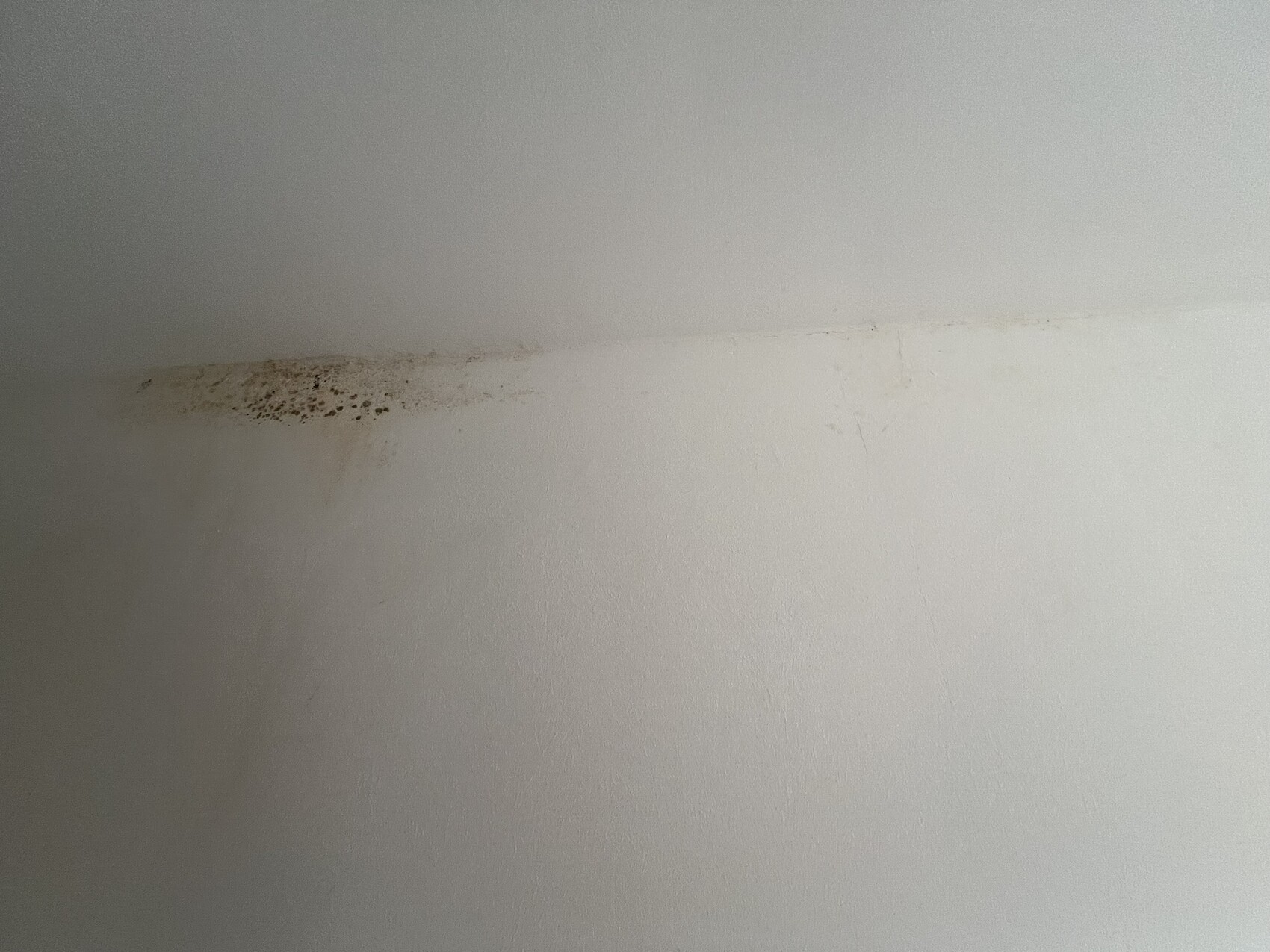
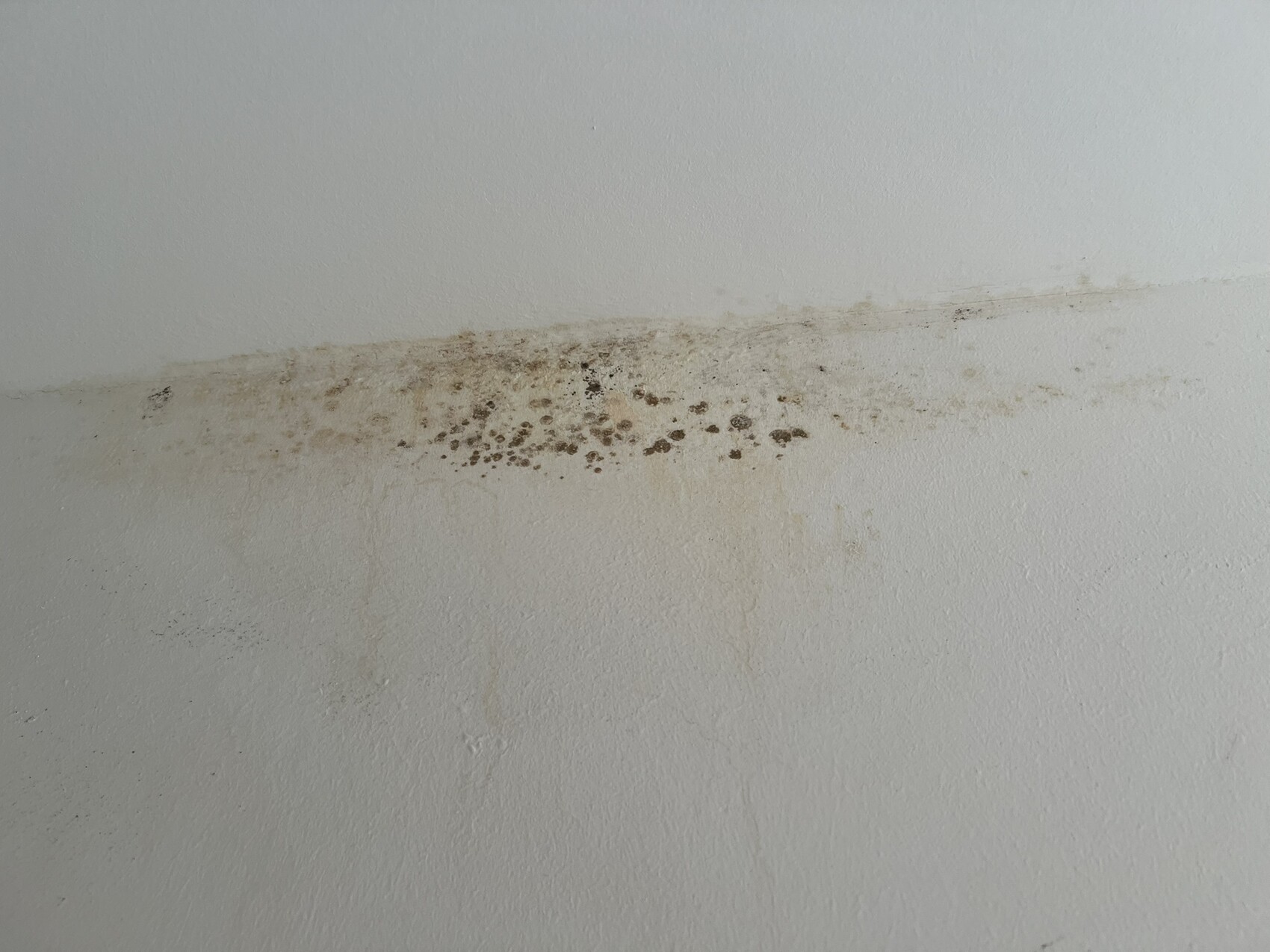
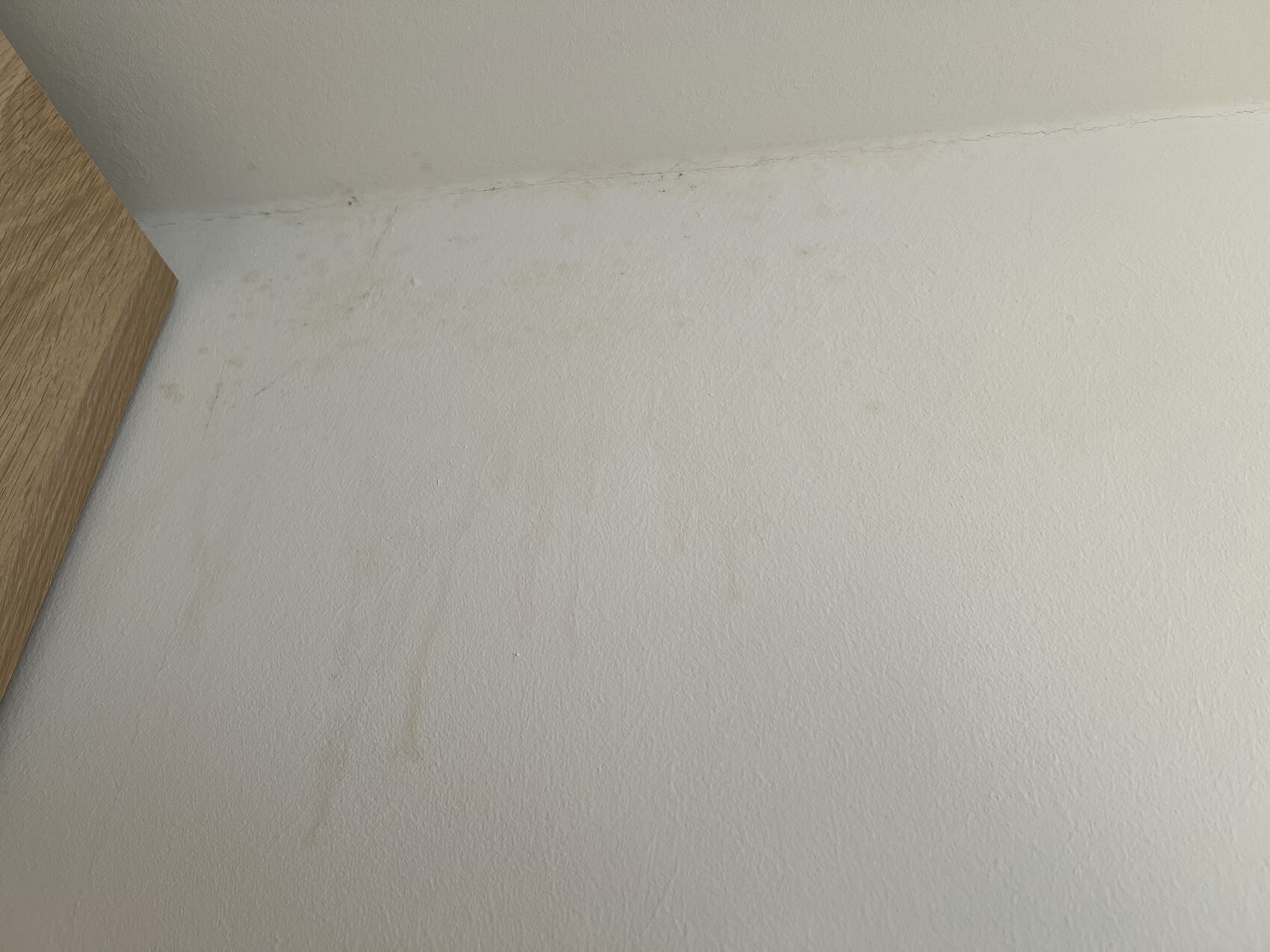
Our house has a side gable. On the upper floor, the dressing room is located in this area. Above the ceiling is insulation, and the attic is unheated. Yesterday, when we wanted to run cables for new wardrobe lighting above the wardrobe, we discovered mold in one spot above the wardrobe. At first, we thought this was a typical residual moisture problem—the mold likely formed behind the wardrobe and has now spread to a spot above it. However, when we moved the wardrobe elements aside, a different picture emerged. The walls themselves are not heavily affected. The origin point seems to be at the junction between the ceiling and the wall, from where some moisture and mold have migrated downward. I hope the photos illustrate this well.
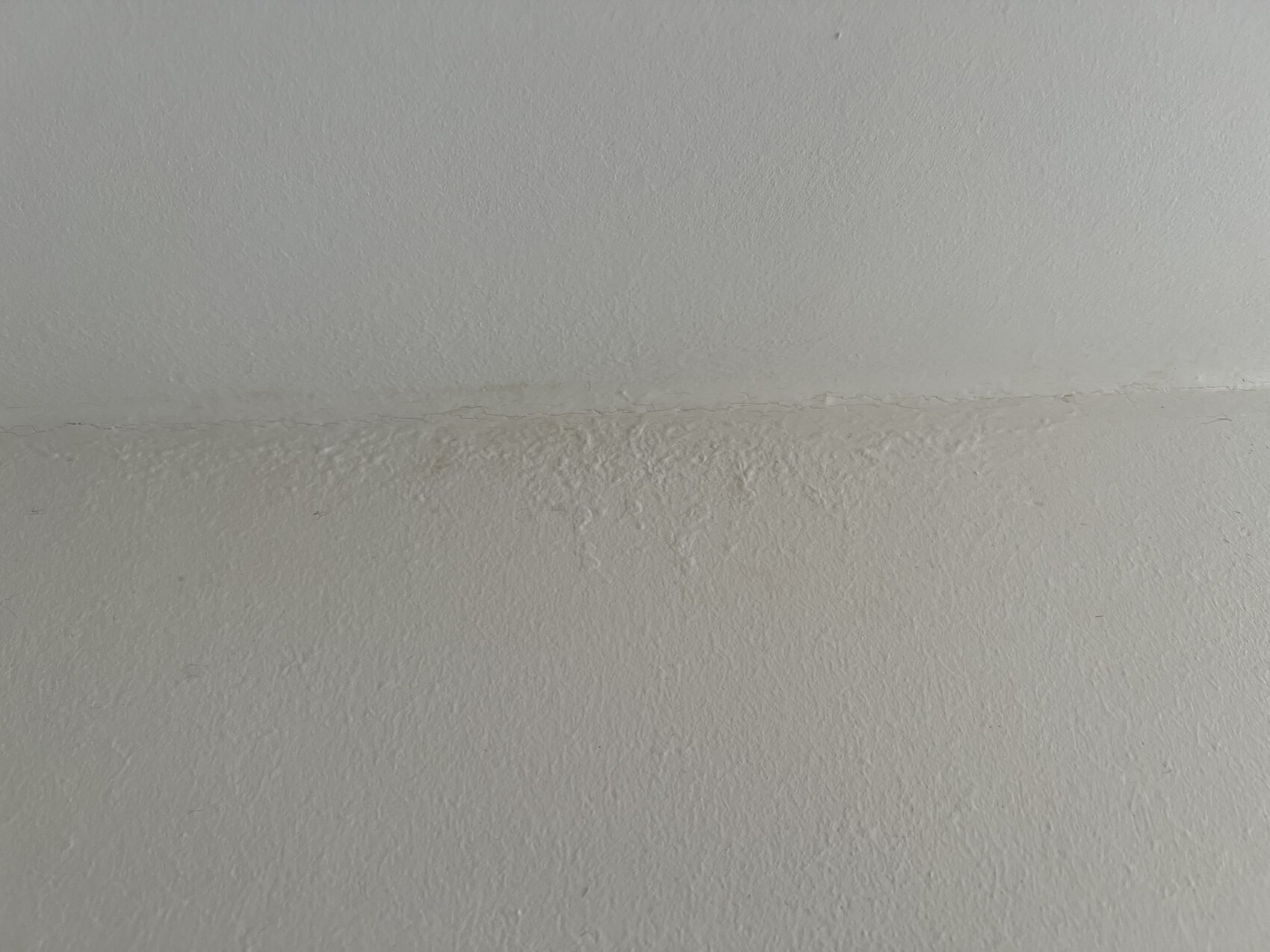
This surprised us because we would have expected some air circulation at the spot above the wardrobe (about 6cm (2.5 inches) from the ceiling) and thought the mold would be behind the wardrobes where there is less circulation. But it’s the opposite. Therefore, we are unsure whether the cause is the typical residual moisture or if it points to an issue with the insulation. What stands out is that the area most affected is roughly where the gable protrudes from the roof. On the opposite wall, at about the same height above the wardrobes, we have also found mold. We haven’t yet moved those wardrobes to take a closer look because we want to treat the first side first. After cleaning off the mold with a cleaner, we noticed that the heavily affected spot at the wall-to-ceiling junction shows slight “bubbling” (see photo after cleaning). We believe this was not present when we moved in.
What do you think is the cause? Normal residual moisture, or something related to the insulation?
Best regards,
Ubibubi
We have now been living in our newly built house for a little over a year. As is common with all new builds, there is residual moisture in the walls during the first 1-2 years. This can sometimes lead to mold forming behind a wardrobe or picture frame due to a lack of air circulation. This is a well-known potential issue.
Our house has a side gable. On the upper floor, the dressing room is located in this area. Above the ceiling is insulation, and the attic is unheated. Yesterday, when we wanted to run cables for new wardrobe lighting above the wardrobe, we discovered mold in one spot above the wardrobe. At first, we thought this was a typical residual moisture problem—the mold likely formed behind the wardrobe and has now spread to a spot above it. However, when we moved the wardrobe elements aside, a different picture emerged. The walls themselves are not heavily affected. The origin point seems to be at the junction between the ceiling and the wall, from where some moisture and mold have migrated downward. I hope the photos illustrate this well.
This surprised us because we would have expected some air circulation at the spot above the wardrobe (about 6cm (2.5 inches) from the ceiling) and thought the mold would be behind the wardrobes where there is less circulation. But it’s the opposite. Therefore, we are unsure whether the cause is the typical residual moisture or if it points to an issue with the insulation. What stands out is that the area most affected is roughly where the gable protrudes from the roof. On the opposite wall, at about the same height above the wardrobes, we have also found mold. We haven’t yet moved those wardrobes to take a closer look because we want to treat the first side first. After cleaning off the mold with a cleaner, we noticed that the heavily affected spot at the wall-to-ceiling junction shows slight “bubbling” (see photo after cleaning). We believe this was not present when we moved in.
What do you think is the cause? Normal residual moisture, or something related to the insulation?
Best regards,
Ubibubi
Buchsbaum066 schrieb:
Are you possibly heating with a heat pump? Is the room currently heated or was it heated? Exterior wall? The room was heated, and yes, with a heat pump combined with underfloor heating.
Snowy36 schrieb:
What is your house built from? We have pictures on the exterior walls and cabinets standing against them; I’m not familiar with the issue of residual moisture, especially not after such a long time! The house is solidly built, using aerated concrete blocks (Ytong) and finished with brick cladding, with a pitched roof and a side gable where the walk-in closet is located.
We have had moisture meters in all rooms since moving in, and during the first six to nine months, the humidity was still over 70% with the windows closed. Now it averages below 60%. We believe the mold only started to develop after November, because before that, we had placed items above the cabinets without noticing anything.
B
Buchsbaum06624 Sep 2024 21:34Ubibubi schrieb:
The room was heated, and yes, a heat pump with underfloor heating. That is probably your issue. No convective heat and too low room temperature. It’s completely normal for moisture to accumulate in the corners of the room at a potential thermal bridge. And quite a bit can build up there.
Maybe you should try heating the room thoroughly with an oil-filled radiator for 2–3 days to drive out the moisture. It’s possible that moisture has accumulated in the masonry and has nowhere to go.
There are many possibilities here. I would check whether the moisture is inside the masonry or just surface moisture in the room.
As mentioned, start by heating and ventilating, then observe what happens.
A brief update from me:
The carpenters came and inspected the insulation at the gable from the attic. It seems there is sufficient insulation material everywhere, the vapor barrier was well sealed, and no moisture could be detected.
If the cause is not coming from above, then it must be from the side, probably somewhere in the marked area?
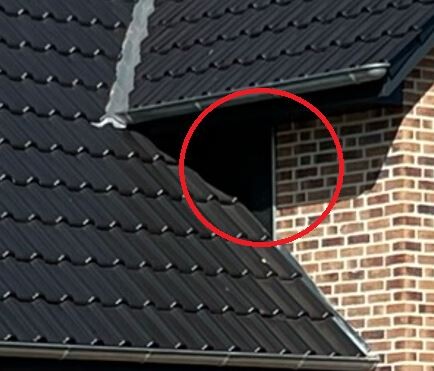
The search will definitely continue..
The carpenters came and inspected the insulation at the gable from the attic. It seems there is sufficient insulation material everywhere, the vapor barrier was well sealed, and no moisture could be detected.
If the cause is not coming from above, then it must be from the side, probably somewhere in the marked area?
The search will definitely continue..
Similar topics