
Hello,
here I would like to share some experiences and data regarding my brine heat pump and deep drilling, based in part on the expert’s "questionnaire":
a) What is the soil composition on your property?
Up to 3m (10 feet) silty, fine sandy, clayey soil
Up to 4m (13 feet) slope debris, rock fragments
Then bedrock (mainly limestone)
b) How deep was the drilling?
Drilled twice to a depth of 72m (236 feet)
c) How much did the drilling cost?
€10,400 including double U-probes DN25
Grouting material with 2.0 W/mK thermal conductivity
Permitting process (building permit / planning permission)
Pressure-tight house entry at the basement and underground routing of supply lines (about 25m (82 feet))
Filling/draining equipment, filling, pressure testing, etc. (all inclusive)
d) How much did the system cost?
System: Tecalor TTc 05 with heating output at B0/W35 of 5.8 kW and coefficient of performance (COP) of 4.8
Cost: €9,800
e) Were there any difficulties during installation, if so, what kind?
Because the water used to flush out the drilled material during drilling seeped away, a "small compressor" was needed to blow it out with air. However, it had to be placed on a neighbor’s property who had not yet started building. The machine was the size and approximate weight of a 20-ton truck but was off-road capable. This caused a 2-day delay because the compressor first had to be transported to our site. No additional costs were charged.
f) How is the daily operation?
"Like a refrigerator." Once the parameters on the heating system are correctly set, the only thing that should be done is occasionally reading the information/data such as operating hours and source temperature. Otherwise, it runs "on its own," just like any heating system. When the door is closed, the unit is virtually inaudible. Very discreet since, apart from the cabinet in the utility room, nothing else is visible (all brine pipes are underground).
e) What are the operating costs for which living area?
Currently, a living area of 180sqm (1937 sqft) is heated, plus an additional 65sqm (700 sqft) of cellar space within the insulated thermal envelope (these rooms are around 15-16°C (59-61°F) on the coldest days). From September 2014 to September 2015, 2,000 kWh of electricity was consumed for heating and hot water (2 adults, 1 baby, 1 toddler). The house is a KfW-70 standard building according to the 2009 energy saving regulations, which already met the required technical standards before the central ventilation system with enthalpy heat exchanger was installed (we decided to add this after the initial applications).
f) to be continued ....
Note regarding the comparison of the coefficient of performance (COP):
Since optimizing the heating curve and settings at the end of last year, the system has had a COP of about 5.5. Operating hours are around 1200; the deep borehole was drilled approximately 20% deeper than initially recommended by the companies, at our own request.
here I would like to share some experiences and data regarding my brine heat pump and deep drilling, based in part on the expert’s "questionnaire":
a) What is the soil composition on your property?
Up to 3m (10 feet) silty, fine sandy, clayey soil
Up to 4m (13 feet) slope debris, rock fragments
Then bedrock (mainly limestone)
b) How deep was the drilling?
Drilled twice to a depth of 72m (236 feet)
c) How much did the drilling cost?
€10,400 including double U-probes DN25
Grouting material with 2.0 W/mK thermal conductivity
Permitting process (building permit / planning permission)
Pressure-tight house entry at the basement and underground routing of supply lines (about 25m (82 feet))
Filling/draining equipment, filling, pressure testing, etc. (all inclusive)
d) How much did the system cost?
System: Tecalor TTc 05 with heating output at B0/W35 of 5.8 kW and coefficient of performance (COP) of 4.8
Cost: €9,800
e) Were there any difficulties during installation, if so, what kind?
Because the water used to flush out the drilled material during drilling seeped away, a "small compressor" was needed to blow it out with air. However, it had to be placed on a neighbor’s property who had not yet started building. The machine was the size and approximate weight of a 20-ton truck but was off-road capable. This caused a 2-day delay because the compressor first had to be transported to our site. No additional costs were charged.
f) How is the daily operation?
"Like a refrigerator." Once the parameters on the heating system are correctly set, the only thing that should be done is occasionally reading the information/data such as operating hours and source temperature. Otherwise, it runs "on its own," just like any heating system. When the door is closed, the unit is virtually inaudible. Very discreet since, apart from the cabinet in the utility room, nothing else is visible (all brine pipes are underground).
e) What are the operating costs for which living area?
Currently, a living area of 180sqm (1937 sqft) is heated, plus an additional 65sqm (700 sqft) of cellar space within the insulated thermal envelope (these rooms are around 15-16°C (59-61°F) on the coldest days). From September 2014 to September 2015, 2,000 kWh of electricity was consumed for heating and hot water (2 adults, 1 baby, 1 toddler). The house is a KfW-70 standard building according to the 2009 energy saving regulations, which already met the required technical standards before the central ventilation system with enthalpy heat exchanger was installed (we decided to add this after the initial applications).
f) to be continued ....
Note regarding the comparison of the coefficient of performance (COP):
Since optimizing the heating curve and settings at the end of last year, the system has had a COP of about 5.5. Operating hours are around 1200; the deep borehole was drilled approximately 20% deeper than initially recommended by the companies, at our own request.
That can definitely be used like this, looks fitting. Price?
I’ve never understood why multiple services are chosen. Here it is required when a slab foundation without a basement and gas are included. Otherwise, it is up to you how to route the connections into the house.
It costs 800 euros (about 850 USD), and must be obtained compulsorily from the utility provider.
I’ve never understood why multiple services are chosen. Here it is required when a slab foundation without a basement and gas are included. Otherwise, it is up to you how to route the connections into the house.
It costs 800 euros (about 850 USD), and must be obtained compulsorily from the utility provider.
M
Mastermind125 Mar 2018 21:43Alex85 schrieb:
That can definitely be used as is, looks like a good fit. Price?
I’ve never really understood why a multi-service entry is chosen. Here, it’s required when there’s a slab foundation without a basement and gas is included. Otherwise, it’s up to you how you run the connections into the house.
The unit costs €800 (about $860), and must be obtained compulsorily from the utility provider. I can’t say the price... as an ordinary home builder, I would have simply rebuilt the “bracket” myself or had a local steel fabricator make it. But at our place back then, multi-service entries weren’t really common yet.
However, I think the multi-service entry is beneficial in terms of sealing, something where the craftsman can’t really go wrong.
P.S. In our case, the supply and return lines of our air heat pump were run through the basement wall using two-kilogram (around 4.4-pound) pipes and sealed with a special dorma screw seal. This could have also worked through the slab foundation...
S
spooky081517 May 2018 12:05Hello dear community,
I would like to get an expert opinion from experienced heat pump specialists here in the forum regarding the efficiency of my brine-to-water heat pump.
It has been operating since around October 2015 (shell construction, drying & remaining construction work until March 2016), then normal operation.
The house is heated as follows, a KfW70 standard building:
- 265m² (2854 sq ft) usable floor area, 2 full floors, insulated attic
- Window ventilation
- Brick walls + external thermal insulation composite system (ETICS) 160mm (6.3 inches)
- Final energy demand of the building 22 kWh / m² per year
- Primary energy demand 45 kWh / m² per year
Heating system:
- Novelan WS 10.2 H3M
- 2x deep boreholes at 85m (279 ft)
- 180-liter (47 gallon) hot water tank (set to 52°C (126°F))
Unfortunately, my Novelan controller only provides log data regarding the heat quantity and the runtime of the pumps (see attachments). The electricity consumption is mixed in the bidirectional meter with photovoltaic production and many other consumers.
I would appreciate if someone with more technical expertise could help interpret the values over the past three winters better than I can. Do the heat consumption figures match the data from the energy performance certificate? Are the operating hours of the heat pump reasonable?
Otherwise, I won’t get much further without a separate electricity meter for the heating system. Perhaps the data provided is sufficient at least for a rough assessment of the efficiency.
Thank you and good luck
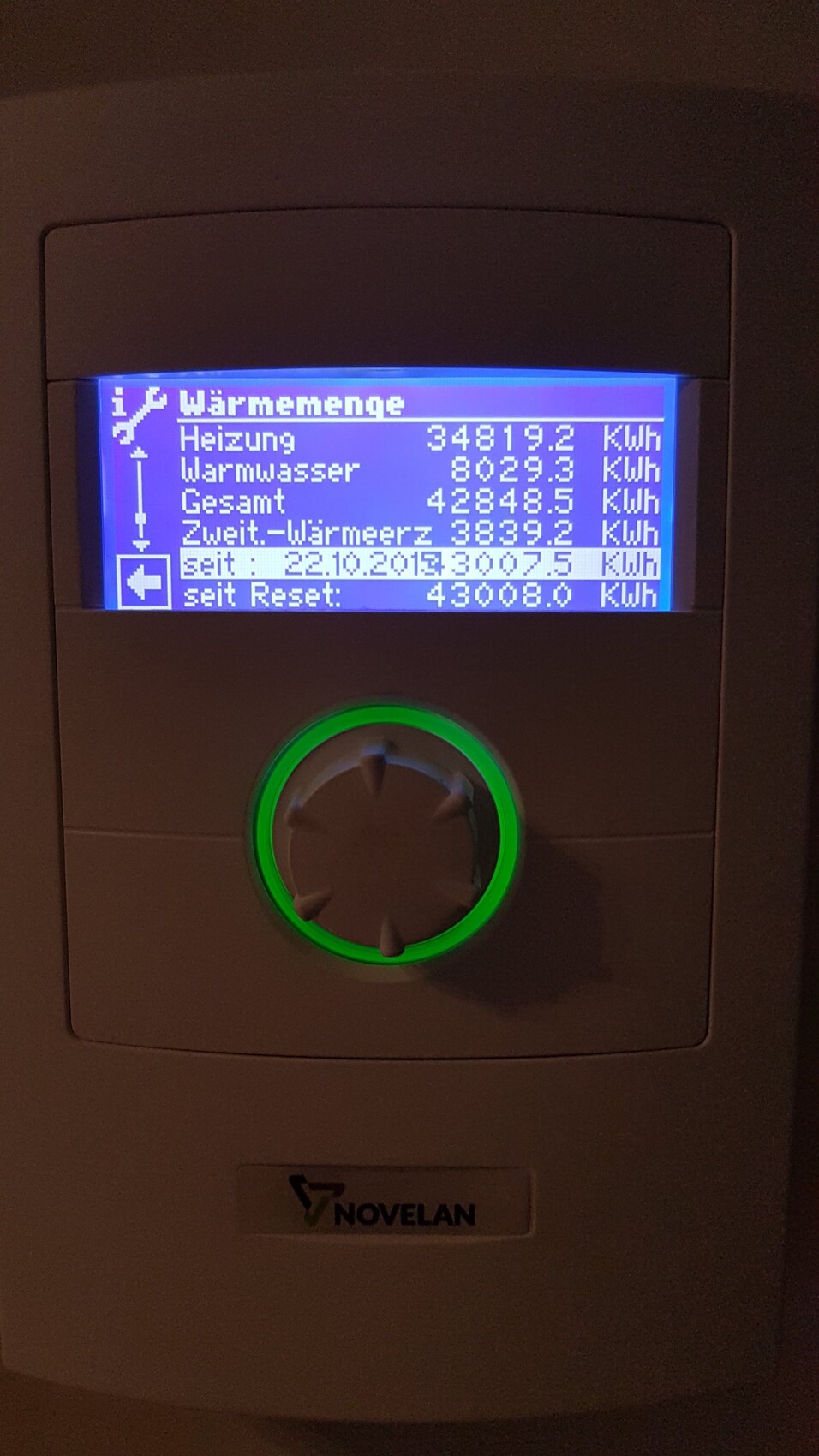
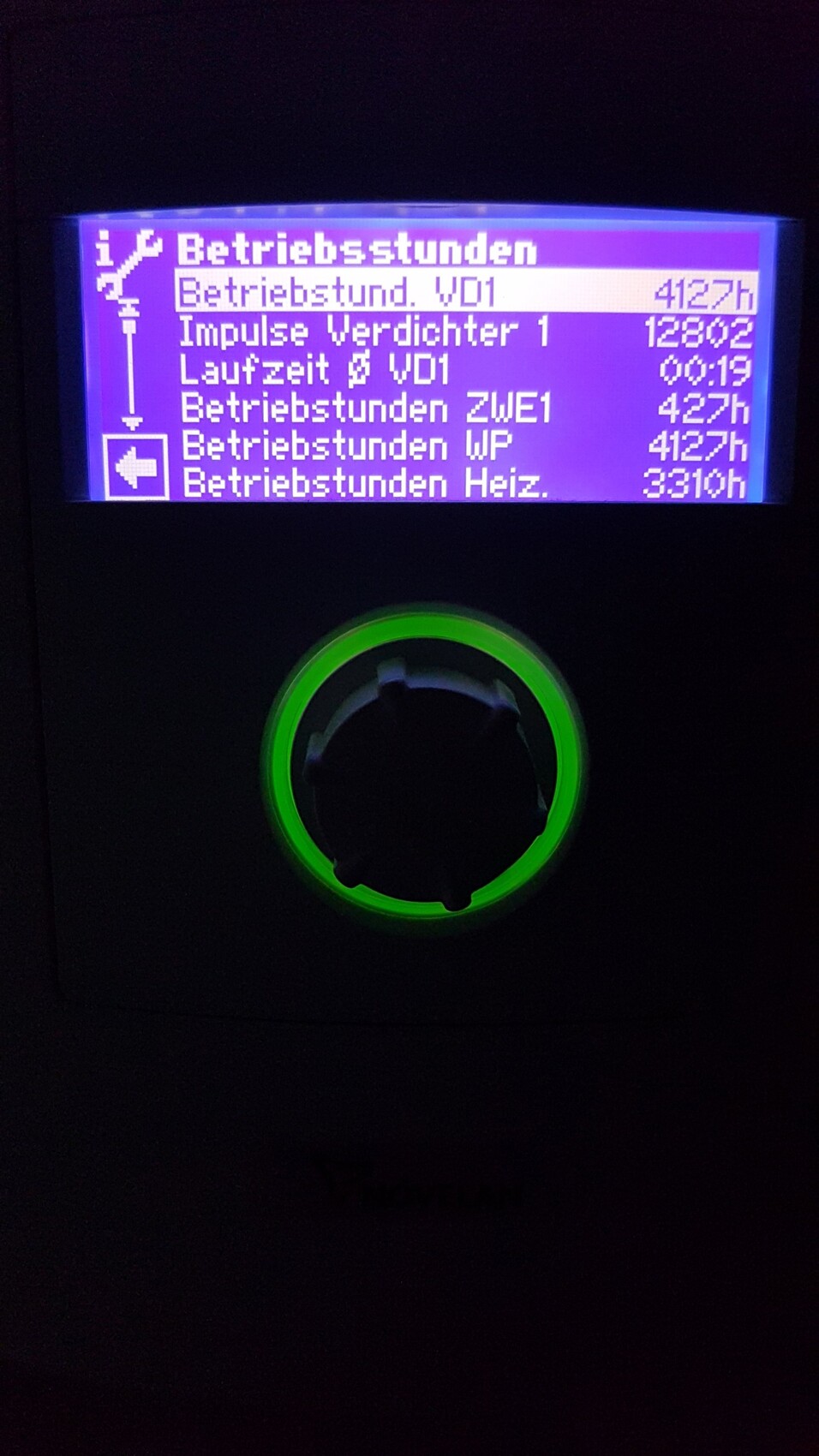
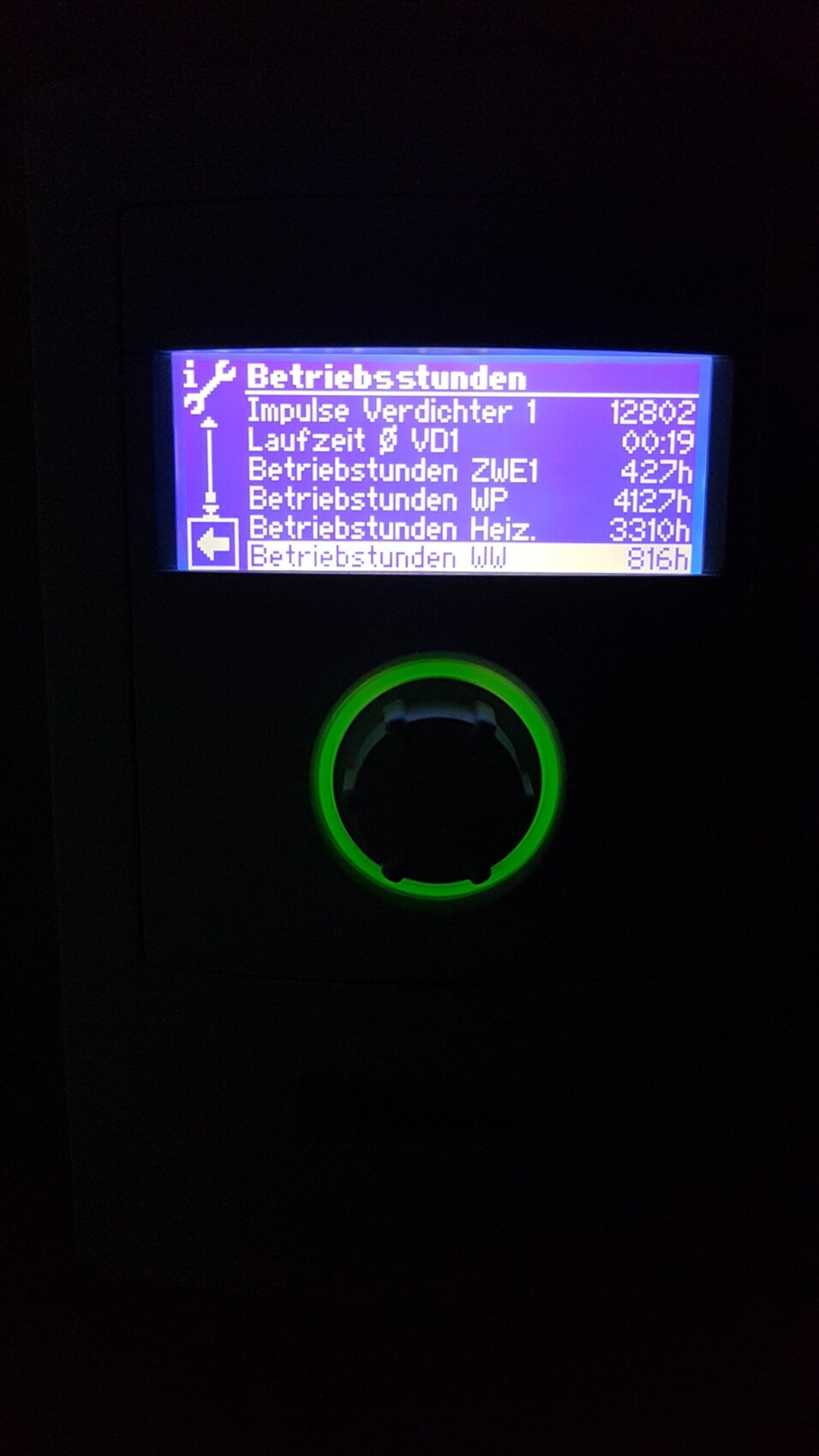
I would like to get an expert opinion from experienced heat pump specialists here in the forum regarding the efficiency of my brine-to-water heat pump.
It has been operating since around October 2015 (shell construction, drying & remaining construction work until March 2016), then normal operation.
The house is heated as follows, a KfW70 standard building:
- 265m² (2854 sq ft) usable floor area, 2 full floors, insulated attic
- Window ventilation
- Brick walls + external thermal insulation composite system (ETICS) 160mm (6.3 inches)
- Final energy demand of the building 22 kWh / m² per year
- Primary energy demand 45 kWh / m² per year
Heating system:
- Novelan WS 10.2 H3M
- 2x deep boreholes at 85m (279 ft)
- 180-liter (47 gallon) hot water tank (set to 52°C (126°F))
Unfortunately, my Novelan controller only provides log data regarding the heat quantity and the runtime of the pumps (see attachments). The electricity consumption is mixed in the bidirectional meter with photovoltaic production and many other consumers.
I would appreciate if someone with more technical expertise could help interpret the values over the past three winters better than I can. Do the heat consumption figures match the data from the energy performance certificate? Are the operating hours of the heat pump reasonable?
Otherwise, I won’t get much further without a separate electricity meter for the heating system. Perhaps the data provided is sufficient at least for a rough assessment of the efficiency.
Thank you and good luck
M
Mastermind117 May 2018 13:01Without a separate electricity meter for your heat pump, nothing can be said about its efficiency.
Only by monitoring the compressor starts can you tell if the heat pump is running reliably (and not short-cycling).
Only by monitoring the compressor starts can you tell if the heat pump is running reliably (and not short-cycling).
S
spooky081517 May 2018 13:02Hello Mastermind,
how would you assess the compressor starts of my heat pump and its operating hours?
Good luck and thanks for the feedback
how would you assess the compressor starts of my heat pump and its operating hours?
Good luck and thanks for the feedback
M
Mastermind117 May 2018 13:17spooky0815 schrieb:
Hello Mastermind1,
how should I assess the compressor starts on my heat pump and its operating hours?
Good luck and thanks for the feedback Some key data are still missing. Is a heat load calculation available?
A compressor is generally designed for about 100,000 starts over its lifetime.
A brine-to-water heat pump should run around 1,500–1,800 hours per year. Since you cannot clearly separate the numbers, they might be skewed by screed heating or other factors.
It is best to record the data year by year or even monthly.
The usual critical questions:
How was the size of the heat pump determined?
Buffer tank yes/no
Individual room controllers yes/no
How is the domestic hot water produced, and to what temperature?
P.S. You really need a separate electricity meter for the heat pump.
A simple meter or an S0 meter, etc., costing roughly 50€–100€.
Installation by an electrician takes about 30 minutes... done.
Similar topics