
ᐅ Between the brick facade and the roof: Hornets are looking to settle in
Created on: 14 Feb 2022 11:14
P
PianistGood day!
Last autumn, hornets began to settle in a gap just above the last row of bricks, practically right at the eave line. However, winter intervened, so nothing was done at that time. It is not certain that the insects will try again this year, but insect experts have advised me that it would be a good idea to seal this area to prevent new habitation. It is located directly above the front door, which poses too high a risk.
How would you suggest sealing this gap? Of course, I could prepare and nail a strip for each section, but I believe that the vertical joints between the bricks might still allow insects to get in. I assume a weatherstripping tape or foam seal should be applied to the strips before installation.
Or should it rather be sealed with a filler? If yes, with what material? I am wondering if there was a reason why we did not seal it completely back then. Maybe some airflow is intended. Perhaps I will look for a brown, mesh-like plastic fabric that I can staple to the wood at the top and let it run down behind the cladding. But I’m not sure if that will be sufficient...
Thank you for any helpful tips.
Matthias
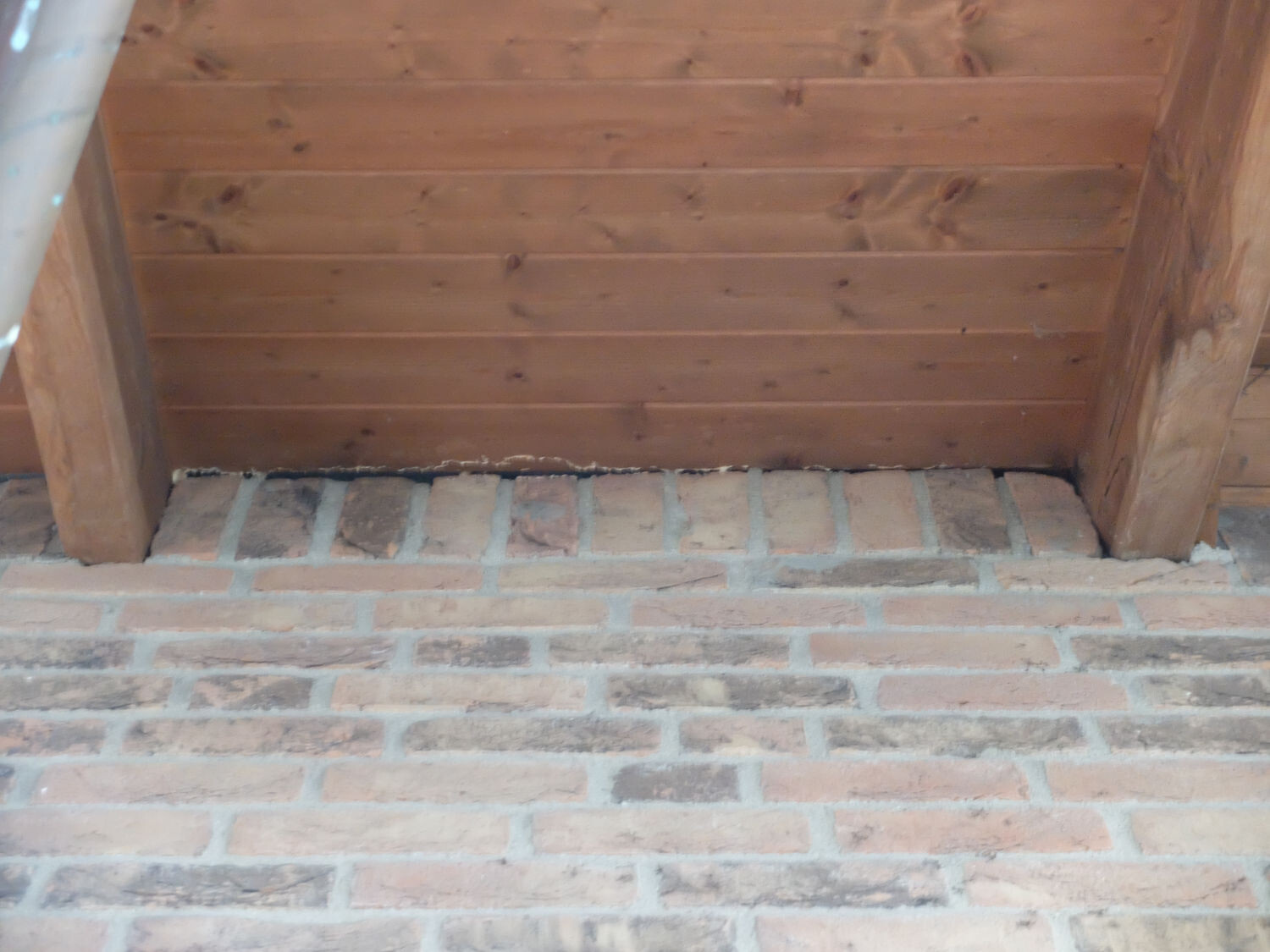
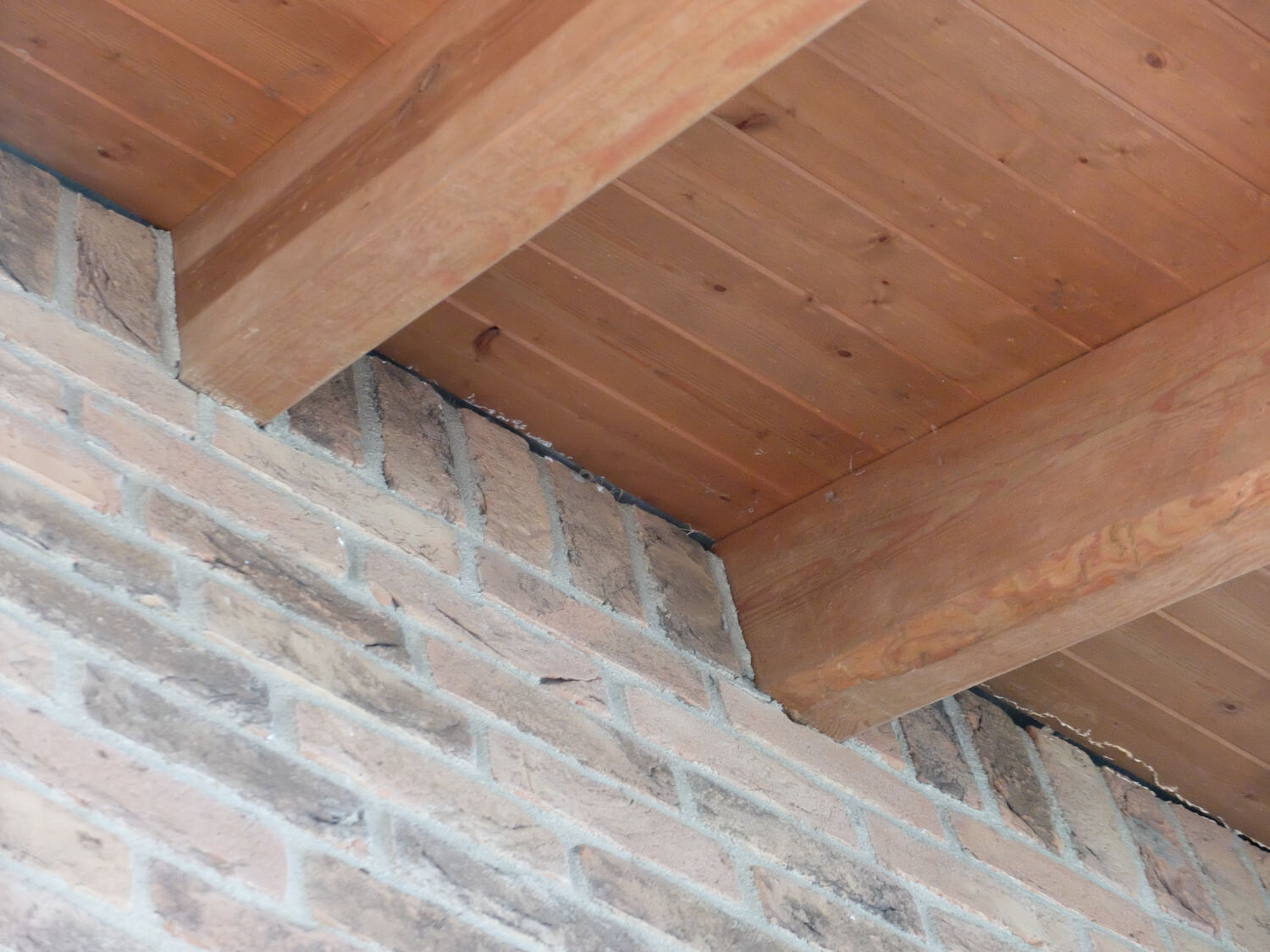
Last autumn, hornets began to settle in a gap just above the last row of bricks, practically right at the eave line. However, winter intervened, so nothing was done at that time. It is not certain that the insects will try again this year, but insect experts have advised me that it would be a good idea to seal this area to prevent new habitation. It is located directly above the front door, which poses too high a risk.
How would you suggest sealing this gap? Of course, I could prepare and nail a strip for each section, but I believe that the vertical joints between the bricks might still allow insects to get in. I assume a weatherstripping tape or foam seal should be applied to the strips before installation.
Or should it rather be sealed with a filler? If yes, with what material? I am wondering if there was a reason why we did not seal it completely back then. Maybe some airflow is intended. Perhaps I will look for a brown, mesh-like plastic fabric that I can staple to the wood at the top and let it run down behind the cladding. But I’m not sure if that will be sufficient...
Thank you for any helpful tips.
Matthias
Well, as you already mentioned, the area should have ideally been sealed directly with compressible sealing tape.
In your situation, I would still try to fix it with that, even though it is difficult to access now. If that doesn’t work, you can consider other options. However, it is generally advised not to try using silicone or similar materials for this purpose.
In your situation, I would still try to fix it with that, even though it is difficult to access now. If that doesn’t work, you can consider other options. However, it is generally advised not to try using silicone or similar materials for this purpose.
I wouldn’t do that either, especially since a huge amount would be needed. I probably have to cut a strip for each rafter bay, similar in size to a battens (planed and painted), attach expanding foam tape to the back, and then nail or screw these strips from underneath against the boards.
There are spots on my house where bees or wasps also manage to get through the expanding foam tape between the stones and windows and nest there...
There are spots on my house where bees or wasps also manage to get through the expanding foam tape between the stones and windows and nest there...

Similar topics