
ᐅ Between the brick facade and the roof: Hornets are looking to settle in
Created on: 14 Feb 2022 11:14
P
Pianist
Good day!
Last autumn, hornets began to settle in a gap just above the last row of bricks, practically right at the eave line. However, winter intervened, so nothing was done at that time. It is not certain that the insects will try again this year, but insect experts have advised me that it would be a good idea to seal this area to prevent new habitation. It is located directly above the front door, which poses too high a risk.
How would you suggest sealing this gap? Of course, I could prepare and nail a strip for each section, but I believe that the vertical joints between the bricks might still allow insects to get in. I assume a weatherstripping tape or foam seal should be applied to the strips before installation.
Or should it rather be sealed with a filler? If yes, with what material? I am wondering if there was a reason why we did not seal it completely back then. Maybe some airflow is intended. Perhaps I will look for a brown, mesh-like plastic fabric that I can staple to the wood at the top and let it run down behind the cladding. But I’m not sure if that will be sufficient...
Thank you for any helpful tips.
Matthias
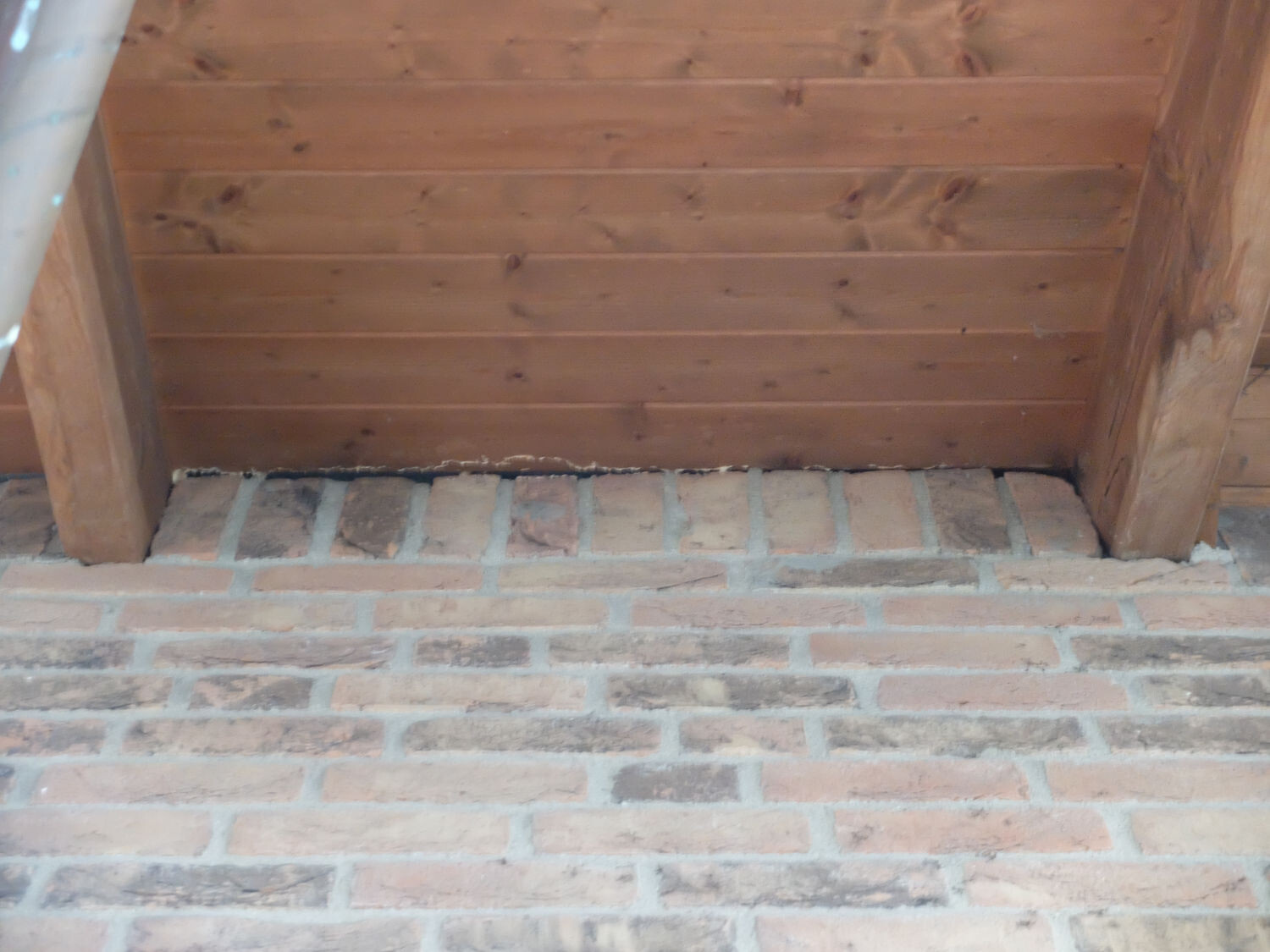
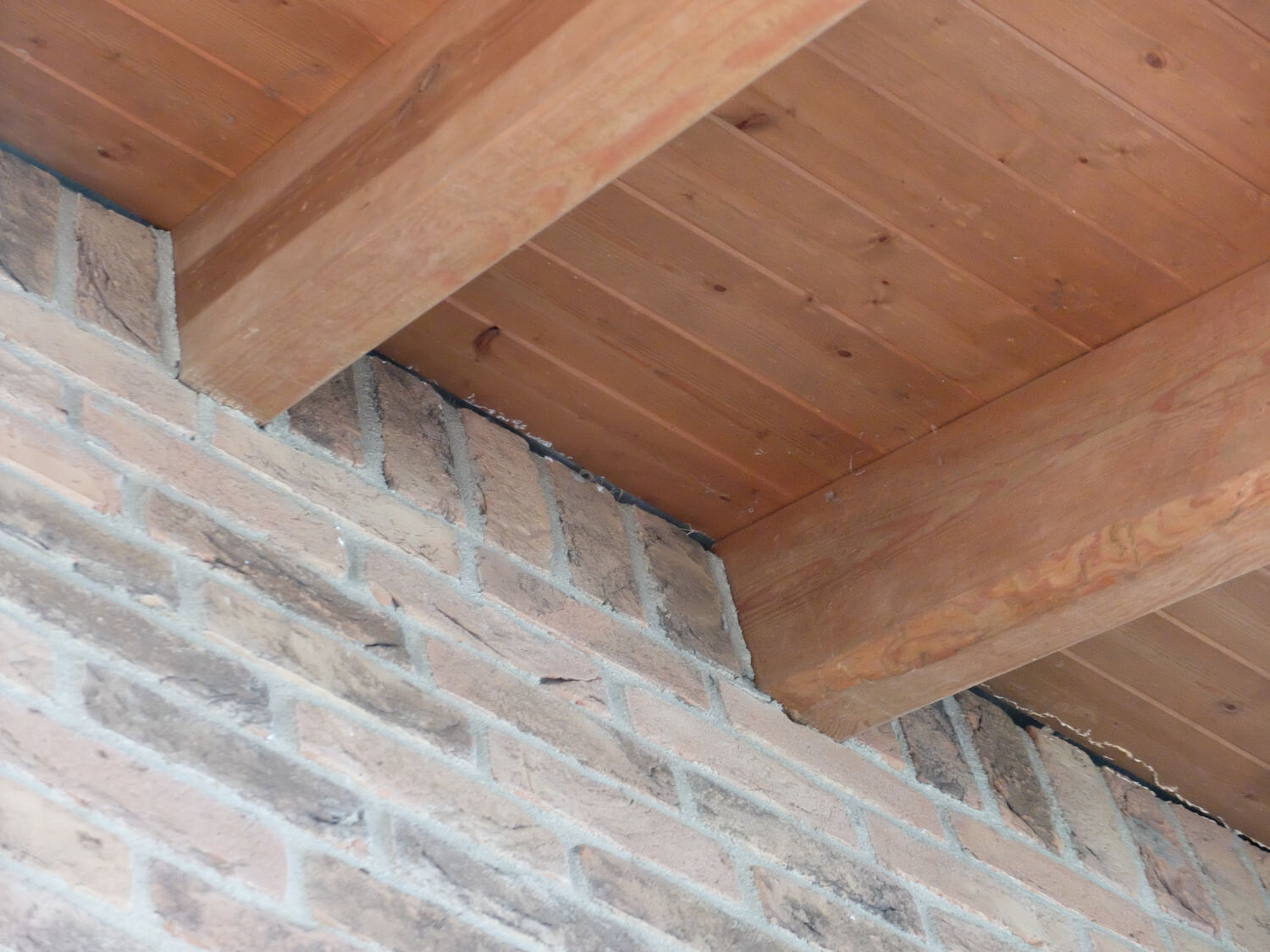
Last autumn, hornets began to settle in a gap just above the last row of bricks, practically right at the eave line. However, winter intervened, so nothing was done at that time. It is not certain that the insects will try again this year, but insect experts have advised me that it would be a good idea to seal this area to prevent new habitation. It is located directly above the front door, which poses too high a risk.
How would you suggest sealing this gap? Of course, I could prepare and nail a strip for each section, but I believe that the vertical joints between the bricks might still allow insects to get in. I assume a weatherstripping tape or foam seal should be applied to the strips before installation.
Or should it rather be sealed with a filler? If yes, with what material? I am wondering if there was a reason why we did not seal it completely back then. Maybe some airflow is intended. Perhaps I will look for a brown, mesh-like plastic fabric that I can staple to the wood at the top and let it run down behind the cladding. But I’m not sure if that will be sufficient...
Thank you for any helpful tips.
Matthias

B
barfly66627 Feb 2022 12:09Try using gentle and less labor-intensive methods:
- Hang a fake wasp nest under the roof
- They also dislike the scent of lemon
- Hang a fake wasp nest under the roof
- They also dislike the scent of lemon
K
karl.jonas27 Feb 2022 23:36Last summer, we had problems with wasps that had made themselves comfortable behind our timber frame. I sealed the entry gaps with duct tape, which worked really well.

karl.jonas schrieb:
Last summer, we had problems with wasps nesting behind our timber frame. I sealed the entry gaps with duct tape, and it worked really well. We have a similar problem here, and so far, nothing has provided a lasting solution. But I like the idea of using tape and will definitely try it out. Thanks! 🙂