
Good morning community,
We are planning to install stair lighting as shown in the attached image, marked in yellow, using an LED strip that follows the incline of the stairs. Based on everything I have read here so far, I thought the idea of installing a flush-mounted channel directly onto the stone, which the plasterer would then level flush during plastering, would not be too difficult to achieve.
However, we had a construction meeting today with our electrician and site manager, and both expressed serious concerns that this would be a huge effort or might even be technically infeasible. Their concern, as far as I understood, is that when plastering this high and long wall spanning two floors, there will inevitably be variations in plaster thickness due to the construction method, making it almost impossible to install the channel evenly and flush along the entire length. Additionally, the plasterer’s workload would be much greater, which means higher costs for us, so they advise against this option for that reason alone. Both recommend a surface-mounted solution, although they agree with us that the flush-mounted version would obviously look better.
They gave us very good advice today, and I think we have come up with a great electrical plan… I believe they were simply a bit unsure about the LED stair lighting strip.
Do you have suggestions on the best way to implement the LED strip? Should it definitely be flush-mounted, or would a surface-mounted solution be simpler? Or would it perhaps be easier from a craftsmanship perspective to use several vertical LED strips that follow the stair incline?
Additionally, I have a question about whether it’s possible to plan a Hue Lightstrip here, or if it would be better to use conventional LED strips.
Thanks in advance for your advice and help!!
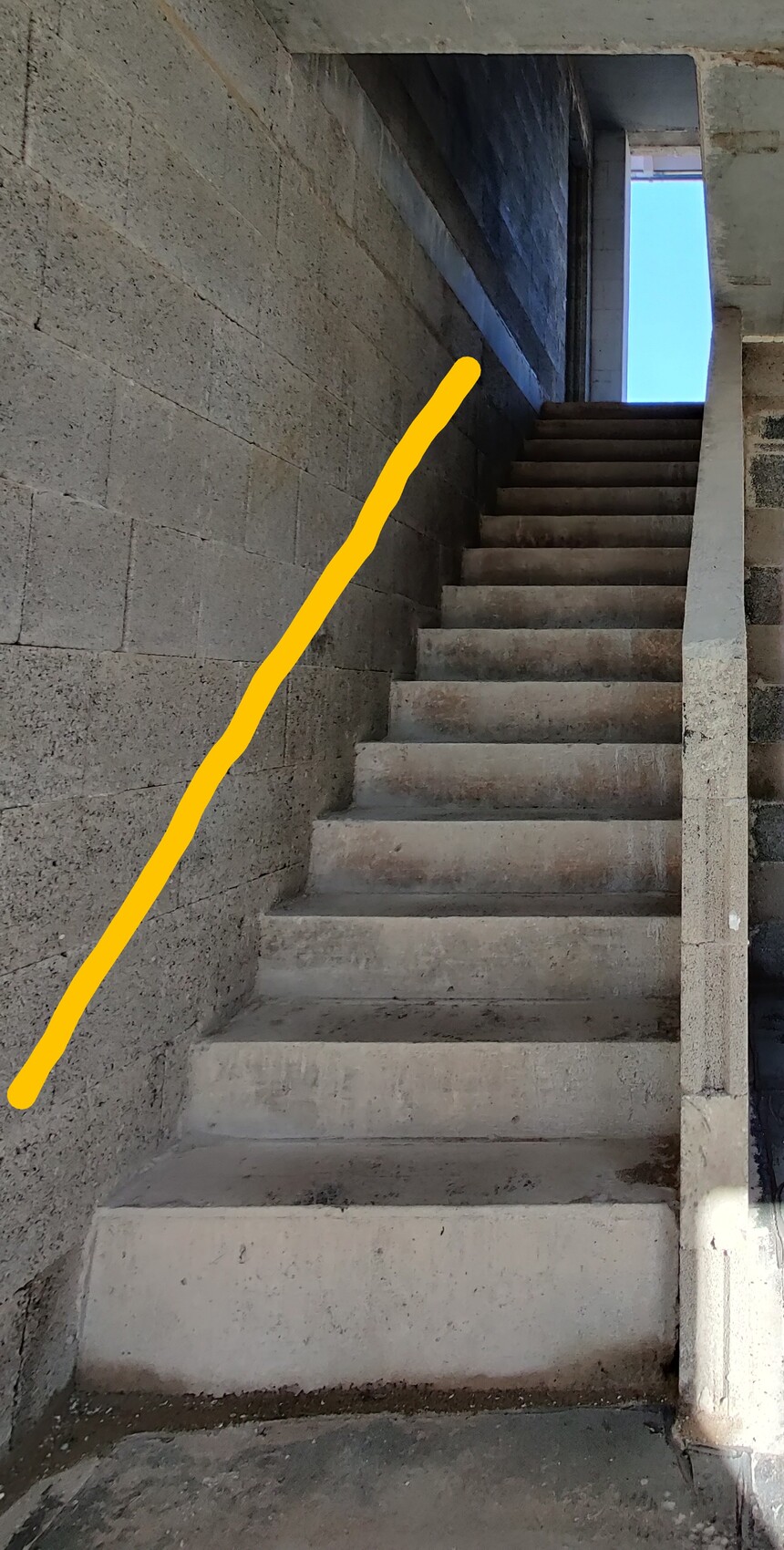
We are planning to install stair lighting as shown in the attached image, marked in yellow, using an LED strip that follows the incline of the stairs. Based on everything I have read here so far, I thought the idea of installing a flush-mounted channel directly onto the stone, which the plasterer would then level flush during plastering, would not be too difficult to achieve.
However, we had a construction meeting today with our electrician and site manager, and both expressed serious concerns that this would be a huge effort or might even be technically infeasible. Their concern, as far as I understood, is that when plastering this high and long wall spanning two floors, there will inevitably be variations in plaster thickness due to the construction method, making it almost impossible to install the channel evenly and flush along the entire length. Additionally, the plasterer’s workload would be much greater, which means higher costs for us, so they advise against this option for that reason alone. Both recommend a surface-mounted solution, although they agree with us that the flush-mounted version would obviously look better.
They gave us very good advice today, and I think we have come up with a great electrical plan… I believe they were simply a bit unsure about the LED stair lighting strip.
Do you have suggestions on the best way to implement the LED strip? Should it definitely be flush-mounted, or would a surface-mounted solution be simpler? Or would it perhaps be easier from a craftsmanship perspective to use several vertical LED strips that follow the stair incline?
Additionally, I have a question about whether it’s possible to plan a Hue Lightstrip here, or if it would be better to use conventional LED strips.
Thanks in advance for your advice and help!!


To be honest, I don’t really see what the problem is.
If you’re that concerned, just install a dummy first into the wall.
After the painters have finished plastering, remove the dummy and glue in the embedding profile.
Simply use an omega profile or something similar for this.
If you’re that concerned, just install a dummy first into the wall.
After the painters have finished plastering, remove the dummy and glue in the embedding profile.
Simply use an omega profile or something similar for this.

I can’t really imagine that it’s such a big problem, but if they’re already making a fuss about it, I wouldn’t feel comfortable either. It’s pretty much asking for trouble, and then they’ll say, “We told you so.”
Alternatively, maybe install it indirectly in the handrail? If someone objects, that could be an option. It’s also something you can easily do yourself.
Alternatively, maybe install it indirectly in the handrail? If someone objects, that could be an option. It’s also something you can easily do yourself.
N
nordanney28 Feb 2021 13:34Otherwise, just do it yourself. Scraping out a few millimeters (inches) in the plaster for an LED strip and gluing the strip along with the LEDs in place is a task for a relaxed afternoon.
There are two options:
1) Install the profile now. This requires patience and a good eye to align the profile properly. Then plaster, and the painter finishes it neatly with filler.
2) After plastering, rout out and glue in the profile.
If the electrician isn’t confident with option 1, discuss option 2 with the plasterer or painter.
Hue is just a gimmick for me.
Plan for a good 24V strip light. Get information about lengths and power supply.
1) Install the profile now. This requires patience and a good eye to align the profile properly. Then plaster, and the painter finishes it neatly with filler.
2) After plastering, rout out and glue in the profile.
If the electrician isn’t confident with option 1, discuss option 2 with the plasterer or painter.
Hue is just a gimmick for me.
Plan for a good 24V strip light. Get information about lengths and power supply.
Similar topics