
ᐅ Demolition of Existing Bungalow: Preparation and Procedures?
Created on: 9 Nov 2022 12:29
B
bauherr_berlin
Hello everyone,
we have a DDR bungalow standing on our (recently surveyed) plot. We have already requested demolition quotes via MyHammer, but since we need the money elsewhere now, we want to demolish it ourselves. Do you have experience with demolition, especially regarding the following topics:
Thank you very much for your answers!
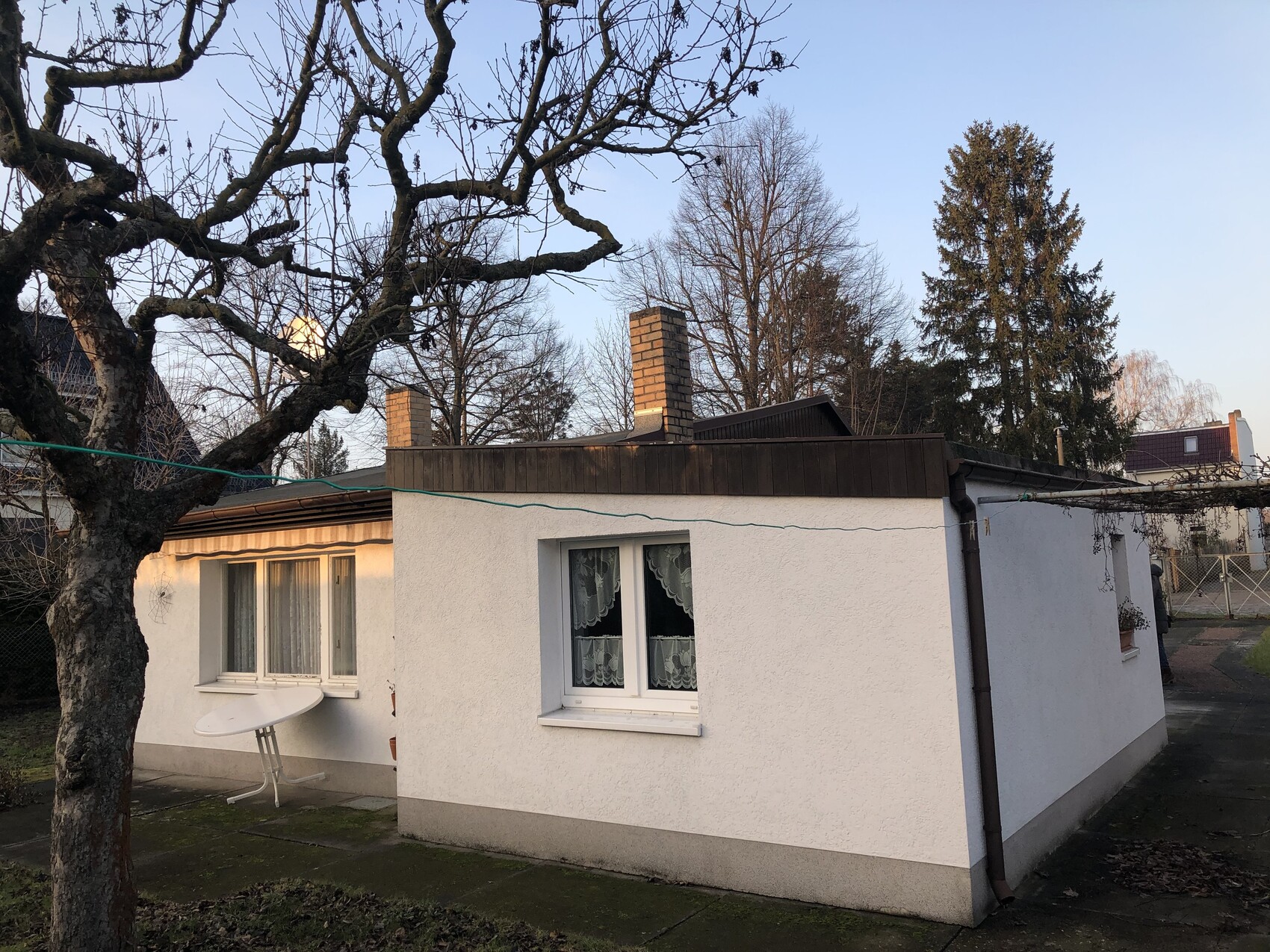
A picture of the house (approx. 8m x 8m (26ft x 26ft)):
we have a DDR bungalow standing on our (recently surveyed) plot. We have already requested demolition quotes via MyHammer, but since we need the money elsewhere now, we want to demolish it ourselves. Do you have experience with demolition, especially regarding the following topics:
- Preparation for disconnecting utilities,
- Planning for waste containers,
- What rental equipment is needed?
- ...
Thank you very much for your answers!
A picture of the house (approx. 8m x 8m (26ft x 26ft)):

i_b_n_a_n schrieb:
I believe you can tell by the (typical for ETICS) recess of the floor slab on the sides and the window installation level being set deep into the wall itself. My monolithically built townhouse from the 1970s had the same.
But it doesn’t matter… it has been and still is allowed to renovate even "challenging" houses with ETICS.
The left window is probably the original, while the one on the right was likely replaced during the renovation.
M
motorradsilke9 Nov 2022 21:31We dismantled parts of the building ourselves, everything except the masonry. Some of the materials were reused in sheds and similar structures, so we carefully removed them. For example, we had a metal roof that my son took down and will reuse on a shed. I also offered some items through classified ads, and people took care of dismantling and collecting them themselves.
We properly separated everything that could no longer be used, such as the old insulation, and took it ourselves to the disposal site.
The tools needed varied depending on the parts we removed, so it’s not possible to generalize. But we already had all the necessary equipment.
We needed a demolition permit, which was applied for and granted together with the building permit / planning permission. The official required proof of where the old materials would be disposed of. She accepted our confirmation that some materials would be reused and the disposal site receipts for the rest. Our general contractor demolished the masonry, and providing the company’s name was sufficient for her.
For disconnecting the utilities, I contacted the respective suppliers. The water supply was shut off and separated. The water company first had to locate the pipes because they were unsure where they were installed. The electrical connection had to be rerouted since we shared a main line with the neighbors. This line was connected directly to the temporary construction power box and then to the new house, so there was always electricity on the property. We separated the wastewater lines on the property ourselves and then reconnected them to the new house. Nobody showed any interest in this. The telephone line could remain as it was because the connection point is in the garage, which was left standing.
We properly separated everything that could no longer be used, such as the old insulation, and took it ourselves to the disposal site.
The tools needed varied depending on the parts we removed, so it’s not possible to generalize. But we already had all the necessary equipment.
We needed a demolition permit, which was applied for and granted together with the building permit / planning permission. The official required proof of where the old materials would be disposed of. She accepted our confirmation that some materials would be reused and the disposal site receipts for the rest. Our general contractor demolished the masonry, and providing the company’s name was sufficient for her.
For disconnecting the utilities, I contacted the respective suppliers. The water supply was shut off and separated. The water company first had to locate the pipes because they were unsure where they were installed. The electrical connection had to be rerouted since we shared a main line with the neighbors. This line was connected directly to the temporary construction power box and then to the new house, so there was always electricity on the property. We separated the wastewater lines on the property ourselves and then reconnected them to the new house. Nobody showed any interest in this. The telephone line could remain as it was because the connection point is in the garage, which was left standing.

The house looks like a renovated solid garden shed. Here in the Berlin area, something like this would be demolished in a day by companies that expect between 30,000 and 50,000 euros. Three years ago, we contracted demolition, construction access road, and subsequent paving as a single package, which cost around 65,000 euros. But today’s prices
B
Bausparfuchs12 Nov 2022 21:26The right part is clearly a later extension. The three-part window on the left is actually an old DDR window with a wooden core.
Of course, it can be demolished. Water and electricity shouldn’t be a problem and can be redirected. New utility connections for electricity are usually located at the property boundary in an external box. In the DDR, water supply was often in a separate shaft. You could separate the supply after the water meter. The basic fee will still apply.
Wood can be given away, burned, stored, or reused elsewhere. Roofing felt and similar materials must be properly disposed of. If the building is solidly constructed, a excavator can be used for demolition, dumping everything in one pile. Then you can rent a mobile crusher to break it all down. The recycled gravel can be reused or sold.
Metal goes to the scrap yard.
There won’t be much left, and the cost won’t be very high.
Of course, it can be demolished. Water and electricity shouldn’t be a problem and can be redirected. New utility connections for electricity are usually located at the property boundary in an external box. In the DDR, water supply was often in a separate shaft. You could separate the supply after the water meter. The basic fee will still apply.
Wood can be given away, burned, stored, or reused elsewhere. Roofing felt and similar materials must be properly disposed of. If the building is solidly constructed, a excavator can be used for demolition, dumping everything in one pile. Then you can rent a mobile crusher to break it all down. The recycled gravel can be reused or sold.
Metal goes to the scrap yard.
There won’t be much left, and the cost won’t be very high.
A
Allthewayup13 Nov 2022 20:42I had also meticulously planned the demolition of our house until I came across a demolition company on a classified ads portal. I requested a quote, and it turned out to be only slightly more expensive than doing it myself. Just try your luck.
If not, here are some points to consider (referring to Bavaria; the list is not in chronological order):
- Determine whether the house is solid construction or timber frame construction, as this significantly affects the machinery needed
- Is there a basement? Masonry/concrete?
- Slab foundation or (basement) strip footings?
- For solid houses and/or basements/foundations, you won’t have a chance without a large excavator (the 30-ton (33 US tons) excavator really struggled with our steel-reinforced strip footings)
- Are hazardous materials installed? Is a construction specification available? Are manufacturer/model details known? -> Try to obtain the construction specification
- If not possible and there is suspicion of asbestos -> Test kits are available online for 50€ (about $55) per test
- When working with asbestos, be sure to comply with TRGS 519 and contact authorities in advance (special site labeling, requirements, etc.)
- Quantify the volume of each type of waste and plan container rental or self-delivery accordingly
- Mineral wool must always be packed in “KMF bags,” asbestos in airtight “big bags”
- Allow plenty of time
- Personal protective equipment (PPE) is MANDATORY!
- Market, market, market -> We sold: windows and doors (€150), oil heating system without oil (€300), cables (€50), copper gutters (€700), scrap iron (€50), aluminum (€40), wooden beams (€300), light well grates (€40), gave away concrete pavers (saved disposal of 12 tons (13 US tons) of construction debris), gave away splash protection around the house (saved disposal of 2 tons (2.2 US tons) of construction debris), empty oil tanks given away, and so on…
The most expensive quote was €40,000 (about $44,000); we managed for a little more than half, with 80% of the cost going to the demolition company and 20% covering tasks done by ourselves (disposal fees, equipment rentals, finishing work).
If not, here are some points to consider (referring to Bavaria; the list is not in chronological order):
- Determine whether the house is solid construction or timber frame construction, as this significantly affects the machinery needed
- Is there a basement? Masonry/concrete?
- Slab foundation or (basement) strip footings?
- For solid houses and/or basements/foundations, you won’t have a chance without a large excavator (the 30-ton (33 US tons) excavator really struggled with our steel-reinforced strip footings)
- Are hazardous materials installed? Is a construction specification available? Are manufacturer/model details known? -> Try to obtain the construction specification
- If not possible and there is suspicion of asbestos -> Test kits are available online for 50€ (about $55) per test
- When working with asbestos, be sure to comply with TRGS 519 and contact authorities in advance (special site labeling, requirements, etc.)
- Quantify the volume of each type of waste and plan container rental or self-delivery accordingly
- Mineral wool must always be packed in “KMF bags,” asbestos in airtight “big bags”
- Allow plenty of time
- Personal protective equipment (PPE) is MANDATORY!
- Market, market, market -> We sold: windows and doors (€150), oil heating system without oil (€300), cables (€50), copper gutters (€700), scrap iron (€50), aluminum (€40), wooden beams (€300), light well grates (€40), gave away concrete pavers (saved disposal of 12 tons (13 US tons) of construction debris), gave away splash protection around the house (saved disposal of 2 tons (2.2 US tons) of construction debris), empty oil tanks given away, and so on…
The most expensive quote was €40,000 (about $44,000); we managed for a little more than half, with 80% of the cost going to the demolition company and 20% covering tasks done by ourselves (disposal fees, equipment rentals, finishing work).
Similar topics