
ᐅ Demolition of Existing Bungalow: Preparation and Procedures?
Created on: 9 Nov 2022 12:29
B
bauherr_berlinB
bauherr_berlin9 Nov 2022 12:29Hello everyone,
we have a DDR bungalow standing on our (recently surveyed) plot. We have already requested demolition quotes via MyHammer, but since we need the money elsewhere now, we want to demolish it ourselves. Do you have experience with demolition, especially regarding the following topics:
Thank you very much for your answers!
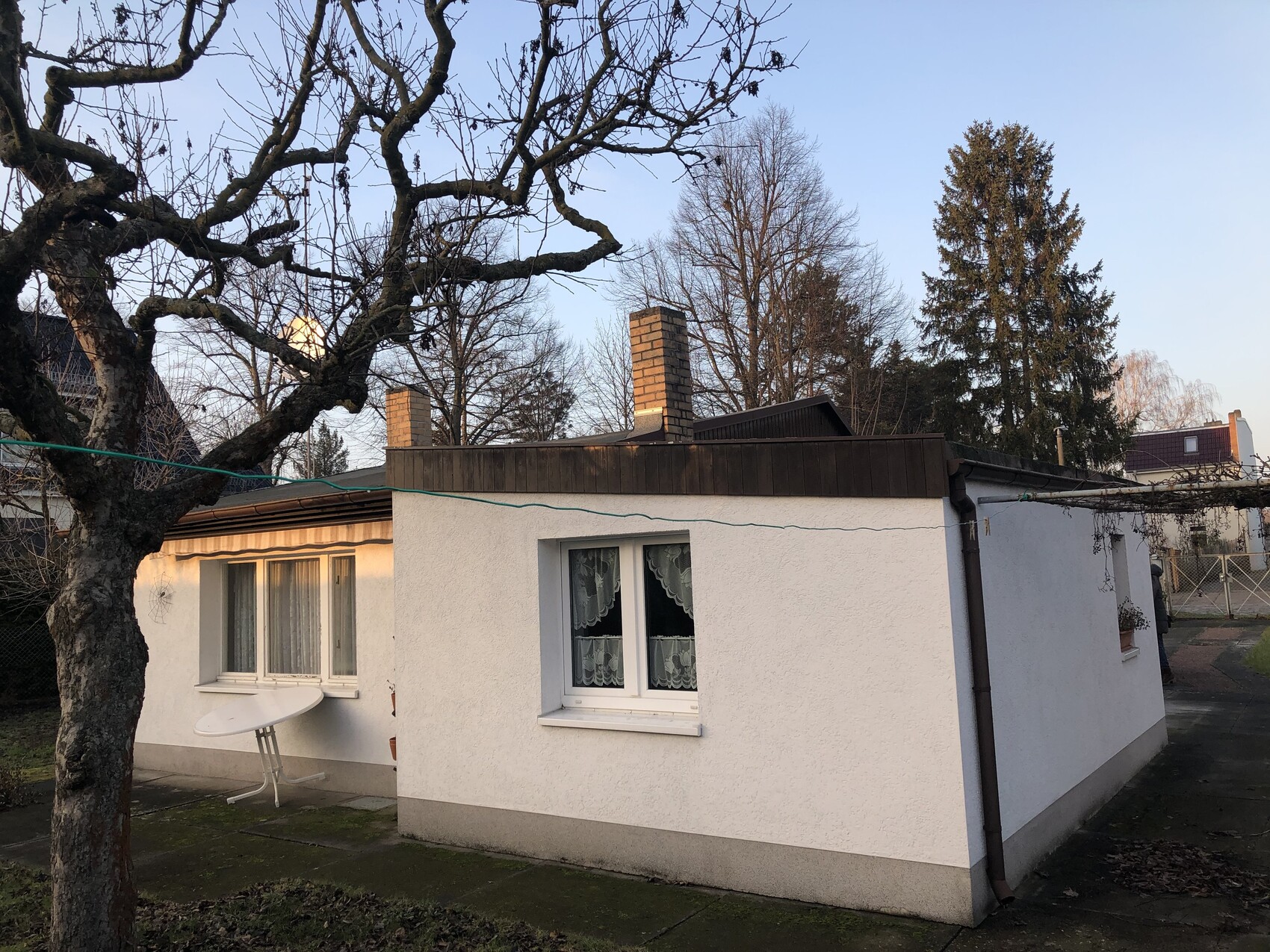
A picture of the house (approx. 8m x 8m (26ft x 26ft)):
we have a DDR bungalow standing on our (recently surveyed) plot. We have already requested demolition quotes via MyHammer, but since we need the money elsewhere now, we want to demolish it ourselves. Do you have experience with demolition, especially regarding the following topics:
- Preparation for disconnecting utilities,
- Planning for waste containers,
- What rental equipment is needed?
- ...
Thank you very much for your answers!
A picture of the house (approx. 8m x 8m (26ft x 26ft)):

Yes, you need to have the electricity and water disconnected professionally. You have to be careful about the exact process. There is dismantling, decommissioning, and relocation, and each has different implications regarding costs and what you can do with the connections afterward.
If I remember correctly, water can, for example, be decommissioned free of charge, but electricity costs money.
However, reconnecting water can be quite expensive, so in some cases, relocation might be cheaper.
There are consultants for all utility services, so it’s best to get advice from them directly.
Also, the current situation is of course important. Do the utility lines go directly into the house, or are there connection chambers? If there is a chamber, is it within the later construction area (consider the workspace here)?
I’m not very familiar with equipment, but with old houses, you have to be careful about roofing felt and asbestos. These need to be disposed of separately, and when stripping the building, special precautions are required (tent, full-body protective suit, etc.).
There are a few users here who have done everything themselves, but I don’t remember exactly who.
I’ll list some names just in case; if they don’t know, they don’t have to reply.
@haydee, @motorradsilke, @Grillhendl, @Stefan001, @Marvinius
Oh, and in Berlin, you always need a permit for the change of use of residential space or a negative certificate regarding residential space. Otherwise, someone might report you.
If I remember correctly, water can, for example, be decommissioned free of charge, but electricity costs money.
However, reconnecting water can be quite expensive, so in some cases, relocation might be cheaper.
There are consultants for all utility services, so it’s best to get advice from them directly.
Also, the current situation is of course important. Do the utility lines go directly into the house, or are there connection chambers? If there is a chamber, is it within the later construction area (consider the workspace here)?
I’m not very familiar with equipment, but with old houses, you have to be careful about roofing felt and asbestos. These need to be disposed of separately, and when stripping the building, special precautions are required (tent, full-body protective suit, etc.).
There are a few users here who have done everything themselves, but I don’t remember exactly who.
I’ll list some names just in case; if they don’t know, they don’t have to reply.
@haydee, @motorradsilke, @Grillhendl, @Stefan001, @Marvinius
Oh, and in Berlin, you always need a permit for the change of use of residential space or a negative certificate regarding residential space. Otherwise, someone might report you.
Disposal regulations vary from state to state.
We had to arrange this in Bavaria.
A demolition permit had to be applied for (similar to a building permit/planning permission).
Water, electricity, etc., must be disconnected by the utility providers. I have to admit, this went smoothly for us through informal channels. It’s a small town, so everyone knows everyone.
There are specific regulations for asbestos.
Disposal of night storage heaters was free for us. We only had to apply for a disposal certificate.
There are requirements regarding how these items must be packaged.
Disposal:
I would recommend calling various disposal companies for advice. I would have sorted and separated materials much more carefully.
We had wood, metals, glass, asbestos, rubble, and general waste.
For the rubble, we needed laboratory tests, which, I believe, depended on the quantity we had.
Tools:
Protective clothing including masks, hammer, chisel, demolition hammer, chainsaw, and possibly an excavator for the rubble.
We had to arrange this in Bavaria.
A demolition permit had to be applied for (similar to a building permit/planning permission).
Water, electricity, etc., must be disconnected by the utility providers. I have to admit, this went smoothly for us through informal channels. It’s a small town, so everyone knows everyone.
There are specific regulations for asbestos.
Disposal of night storage heaters was free for us. We only had to apply for a disposal certificate.
There are requirements regarding how these items must be packaged.
Disposal:
I would recommend calling various disposal companies for advice. I would have sorted and separated materials much more carefully.
We had wood, metals, glass, asbestos, rubble, and general waste.
For the rubble, we needed laboratory tests, which, I believe, depended on the quantity we had.
Tools:
Protective clothing including masks, hammer, chisel, demolition hammer, chainsaw, and possibly an excavator for the rubble.
What is the year of construction?
As far as I know, many bungalows in the former GDR were also built with asbestos in the facade.
Aren’t there bungalow identification numbers that could provide clues about this?
In any case, caution is necessary – simply smashing it with a sledgehammer is negligent and should be avoided, as this releases fibers that at least contaminate the surrounding air.
Building components containing asbestos must be properly removed, sealed or packaged, and disposed of. Anyone who does not comply may be committing an offense, or at least a costly regulatory violation.
As far as I know, work involving hazardous materials (such as demolition) may only be carried out by professionals or under their supervision.
For more details on hazardous materials, see GefStoffV.
As far as I know, many bungalows in the former GDR were also built with asbestos in the facade.
Aren’t there bungalow identification numbers that could provide clues about this?
In any case, caution is necessary – simply smashing it with a sledgehammer is negligent and should be avoided, as this releases fibers that at least contaminate the surrounding air.
Building components containing asbestos must be properly removed, sealed or packaged, and disposed of. Anyone who does not comply may be committing an offense, or at least a costly regulatory violation.
As far as I know, work involving hazardous materials (such as demolition) may only be carried out by professionals or under their supervision.
For more details on hazardous materials, see GefStoffV.

I think I can recognize a relatively recent bungalow. I base this on the apparently somewhat "more modern" ETICS facade. In particular, I find the window sills too modern for an ETICS over 30 years old.
Of course, I could be mistaken... Do you happen to know more precisely about the age?
(Copy of building file)
Of course, I could be mistaken... Do you happen to know more precisely about the age?
(Copy of building file)
Similar topics