
Hello
we are planning a new semi-detached house.
We want to install a photovoltaic system later on.
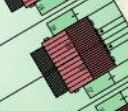
We will get the right half shown in the photo. Orientation is southwest.
The photovoltaic system will of course be installed on the southwest side facing the garden.
The black area is the 3x5 m (10x16 ft) terrace, which will later be covered with a fixed terrace roof measuring 4 m (13 ft) deep and 5.5 m (18 ft) wide.
My question is whether it will still be possible to install a photovoltaic system on the roof once the fixed terrace roof is there?
If the terrace roof is on the southwest side in the garden, it will no longer be possible to set up scaffolding.
For maintenance or in case of problems, access to the photovoltaic system will be necessary later on (is access without scaffolding not possible?)
Or can the photovoltaic system be installed without scaffolding?
The house will have a gable roof and 2.5 full stories.
we are planning a new semi-detached house.
We want to install a photovoltaic system later on.
We will get the right half shown in the photo. Orientation is southwest.
The photovoltaic system will of course be installed on the southwest side facing the garden.
The black area is the 3x5 m (10x16 ft) terrace, which will later be covered with a fixed terrace roof measuring 4 m (13 ft) deep and 5.5 m (18 ft) wide.
My question is whether it will still be possible to install a photovoltaic system on the roof once the fixed terrace roof is there?
If the terrace roof is on the southwest side in the garden, it will no longer be possible to set up scaffolding.
For maintenance or in case of problems, access to the photovoltaic system will be necessary later on (is access without scaffolding not possible?)
Or can the photovoltaic system be installed without scaffolding?
The house will have a gable roof and 2.5 full stories.
Evolith schrieb:
I don’t use that much electricity per month, and the feed-in tariff keeps decreasing. It has now been announced to be 5.6 cents at my neighbor’s place.I don’t quite understand. The feed-in tariff should be fixed for 20 years from the commissioning date, right?
Why would it decrease for your neighbor, assuming it’s the same one who has operated the system for two years?
H
hampshire20 Sep 2021 18:18Evolith schrieb:
It wasn’t presented that way for us. In our case, the maximum period mentioned (within the framework of the KFW loan) was 10 years (we wanted to repay it faster and aimed for 6 years). The installation, as mentioned, cost around 18,000 euros (subsidy already deducted, but I believe that is no longer available). We did not want a storage system. Our feed-in tariff has been just under 6 cents per kWh for the past 2 years.That is very unusual and does not meet what a buyer of a photovoltaic system would expect. If the neighbor really only receives a 6-cent per kWh feed-in tariff for 10 years, then someone in between must be taking a significant cut. The feed-in tariff is nationally standardized in terms of duration (20 years) and amount (decreasing from month to month but still well above 6 cents per kWh). By aiming to repay the loan quickly, you might have shot yourself in the foot.
Deliverer schrieb:
@Evolith Where are the incorrect feed-in tariff rates coming from? For example, in October, the first 10 kWp receive 7.14 cents. Then up to 40 kWp, it’s 6.94 cents. Two years ago, the rates were around 11 cents. Someone here has been giving wrong information.
And why would someone want to pay off a loan, which pays for itself comfortably over 15 years (or 10, if you put in some equity), quickly? Why the rush?I can’t tell you. He showed me his bill back then. It was 6 cents. The threat of another reduction came in a month ago. I don’t know exactly what kind of contract he negotiated. I should ask him about it sometime.
But I think he has a strangely sized system anyway. 8 kWh with a battery (I don’t know its size), but he always raves about how much he saves. From feed-in tariffs alone, he earned €200 (euros) over the last three years (as of July). Either he has an exceptional self-consumption rate (he works during the day just like we do) or his calculations are off.
Loan: I don’t like small loans running for a long time. It stresses me out. I always worry a bit that one more loan will be added and then another. Loans make it so easy to spend money.
We are now paying off my husband’s new dental work (+ remaining refinancing) quickly. In 5 years, we will have done it and will only really have our mortgage left… well, until a new car comes up.
netuser schrieb:
I don’t understand something here. The feed-in tariff is fixed for 20 years from the date the system starts operation, right?
Why would it decrease for your neighbor, assuming it is the same person who has been operating the system for two years?If I remember correctly, he got the system through a smaller energy provider. It was supposedly THE offer you couldn’t miss. I don’t know the exact conditions and prices. He probably told me, but I didn’t remember.
D
Deliverer21 Sep 2021 15:35I’m not sure what kind of contract this is, but he should urgently try to terminate it. With “normal” self-consumption, an 8 kWp system should have generated about €1,000 (approximately $1,100) over two years. If it was actually three years (your posts were a bit unclear to me), then naturally proportionally more.
To be absolutely clear: The feed-in tariff for self-generated electricity is legally guaranteed for at least 20 years. It is fixed on the day the system is commissioned and never changes until the end of the 20th year after commissioning.
Furthermore, no contract is actually required for feeding solar energy into the grid. Everything relevant is regulated by the Renewable Energy Sources Act. If you do sign a contract, only do so if it offers more than the legal minimum tariff (which can be easily found online). (Hint: Such contracts don’t really exist ;-)
It’s possible he entered into a so-called cloud contract with assignment of the tariff payment. Those contracts are all bad → terminate as soon as possible.
I understand that loans can be burdensome—I have some myself. But a loan that is legally guaranteed to pay itself off would bother me far less than a car loan. Among other reasons, because a car loan leads to ongoing costs, while a solar loan results in ongoing savings due to cheap electricity from your own roof.
You can set this up through a separate account, so you don’t notice the payments. The grid operator transfers the feed-in tariff, which then goes directly to the lending institution. Eventually, money will accumulate in the account—so you just have to keep an eye on that. ;-)
To be absolutely clear: The feed-in tariff for self-generated electricity is legally guaranteed for at least 20 years. It is fixed on the day the system is commissioned and never changes until the end of the 20th year after commissioning.
Furthermore, no contract is actually required for feeding solar energy into the grid. Everything relevant is regulated by the Renewable Energy Sources Act. If you do sign a contract, only do so if it offers more than the legal minimum tariff (which can be easily found online). (Hint: Such contracts don’t really exist ;-)
It’s possible he entered into a so-called cloud contract with assignment of the tariff payment. Those contracts are all bad → terminate as soon as possible.
I understand that loans can be burdensome—I have some myself. But a loan that is legally guaranteed to pay itself off would bother me far less than a car loan. Among other reasons, because a car loan leads to ongoing costs, while a solar loan results in ongoing savings due to cheap electricity from your own roof.
You can set this up through a separate account, so you don’t notice the payments. The grid operator transfers the feed-in tariff, which then goes directly to the lending institution. Eventually, money will accumulate in the account—so you just have to keep an eye on that. ;-)
Feeding electricity back into the grid no longer makes any sense at all. A feed-in tariff of 7 cents does not even come close to covering the costs.
The goal, in view of skyrocketing electricity prices, must be to maximize self-consumption as much as possible.
I built a photovoltaic system myself: 7.2 kWp and a 10 kW battery storage attached. The system will start operation in March.
Our current electricity consumption is about 5000 kWh per year. The hot water is produced using an electric 80-liter (21-gallon) boiler.
Until now, I paid 25.8 cents per kWh. Yesterday, the electricity provider announced an increase. The new price starting in March will be 37.8 cents per kWh.
That is an electricity price increase of almost 50 percent. Unbelievable!
My forecast for the photovoltaic system is as follows: There will be no feeding electricity into the grid at all. Zero feed-in.
The system should generate about 7000 kWh of electricity per year. Of that, around 2000 kWh can be used directly. The battery storage should cover 2000 kWh for base load, cloudy days, and night consumption.
Without the battery, I could only use a part of the generated electricity in the best case. The higher the electricity price, the more worthwhile the battery becomes. My goal is to consume only 1000 - 1500 kWh during the three low-yield winter months.
Then everything should pay off very well. I now expect electricity prices to continue rising sharply.
The system cost me a total of 11,000 euros. Including the 10 kW battery storage by Huawei. The system should pay for itself in 8 to 9 years. Probably even sooner.
I am planning to build an enclosed patio roof. It will also include an air conditioning system. However, I only need it when it is hot and the sun is shining. This is ideal for using the self-produced solar electricity.
The goal, in view of skyrocketing electricity prices, must be to maximize self-consumption as much as possible.
I built a photovoltaic system myself: 7.2 kWp and a 10 kW battery storage attached. The system will start operation in March.
Our current electricity consumption is about 5000 kWh per year. The hot water is produced using an electric 80-liter (21-gallon) boiler.
Until now, I paid 25.8 cents per kWh. Yesterday, the electricity provider announced an increase. The new price starting in March will be 37.8 cents per kWh.
That is an electricity price increase of almost 50 percent. Unbelievable!
My forecast for the photovoltaic system is as follows: There will be no feeding electricity into the grid at all. Zero feed-in.
The system should generate about 7000 kWh of electricity per year. Of that, around 2000 kWh can be used directly. The battery storage should cover 2000 kWh for base load, cloudy days, and night consumption.
Without the battery, I could only use a part of the generated electricity in the best case. The higher the electricity price, the more worthwhile the battery becomes. My goal is to consume only 1000 - 1500 kWh during the three low-yield winter months.
Then everything should pay off very well. I now expect electricity prices to continue rising sharply.
The system cost me a total of 11,000 euros. Including the 10 kW battery storage by Huawei. The system should pay for itself in 8 to 9 years. Probably even sooner.
I am planning to build an enclosed patio roof. It will also include an air conditioning system. However, I only need it when it is hot and the sun is shining. This is ideal for using the self-produced solar electricity.
D
Deliverer15 Jan 2022 10:28If you avoid buying overpriced equipment, seven cents is enough to fully pay off the system. It’s easy to calculate:
7000 kWh * 0.07 * 20 = 9800 euros
That’s the budget I have if I want to build a 7 kWp system.
Every kWh I consume myself saves me about 10 to 15 cents more, depending on the electricity price.
Granted, given the current market situation, it’s not easy to get such a good deal. The biggest factor for a good price is the size of the system.
But there are two positive developments on the horizon: First, more and more electricity is being sold directly because market prices have now risen above seven cents. In the future, it’s likely that without renewable energy law subsidies, you’ll get more for your electricity. For small systems, however, cooperatives or similar organizations will probably need to be established.
And then there might be some new announcements from Habeck around midyear. Let’s see...
Two more things: Electric cars start charging at around 1.6 kW. They won’t begin before that. On bad weather days, you usually get about 10% of peak output. Now everyone can do the math themselves.
And the absolute worst, most irresponsible thing is zero feed-in. If you don’t want to receive feed-in tariffs, just decline them and feed in electricity for free. The paperwork is the same. But simply wasting generated green electricity is the dumbest thing you can do. Sorry.
But not just complaining: You’re right that storage systems can become cost-effective at higher electricity prices. If you buy an average storage system today, it can pay off with a bit of luck at electricity prices of around 55 cents and above.
7000 kWh * 0.07 * 20 = 9800 euros
That’s the budget I have if I want to build a 7 kWp system.
Every kWh I consume myself saves me about 10 to 15 cents more, depending on the electricity price.
Granted, given the current market situation, it’s not easy to get such a good deal. The biggest factor for a good price is the size of the system.
But there are two positive developments on the horizon: First, more and more electricity is being sold directly because market prices have now risen above seven cents. In the future, it’s likely that without renewable energy law subsidies, you’ll get more for your electricity. For small systems, however, cooperatives or similar organizations will probably need to be established.
And then there might be some new announcements from Habeck around midyear. Let’s see...
Two more things: Electric cars start charging at around 1.6 kW. They won’t begin before that. On bad weather days, you usually get about 10% of peak output. Now everyone can do the math themselves.
And the absolute worst, most irresponsible thing is zero feed-in. If you don’t want to receive feed-in tariffs, just decline them and feed in electricity for free. The paperwork is the same. But simply wasting generated green electricity is the dumbest thing you can do. Sorry.
But not just complaining: You’re right that storage systems can become cost-effective at higher electricity prices. If you buy an average storage system today, it can pay off with a bit of luck at electricity prices of around 55 cents and above.
Similar topics