
ᐅ Planning kitchen appliances: How to approach it. The market is overwhelming.
Created on: 11 Sep 2017 12:34
G
G-Star1988
Hello everyone,
I have an appointment at the kitchen studio next Saturday and I’m preparing for it. Specifically, I’m looking for the appliances I want to have later in the kitchen. I’ve been researching a lot from brands like Neff / Siemens, Miele, Bora, etc., but I’m not making much progress.
For example, the current selection at Siemens looks like this:
Dishwasher IQ300 SN636X03MD
Oven IQ700 HB634GBS1
Microwave IQ500 HF15M264
Cooktop with integrated downdraft extractor EX801LX34E
or
2 x Cooktop IQ700 EX375FXB1E with extractor IQ700 LF16VA570
(The cooktop with integrated downdraft is the only fixed requirement, unfortunately I don’t have any influence on that ^^)
I actually value quality, energy efficiency, and a balanced price-performance ratio. But how can I find out if what you pick is really good? Or if there are possibly cheaper but equally high-quality products from other manufacturers. For example, the cooktop with integrated downdraft extractor from Miele—according to the catalog, it’s cheaper but just as good or even better?
How do you approach this?
I have an appointment at the kitchen studio next Saturday and I’m preparing for it. Specifically, I’m looking for the appliances I want to have later in the kitchen. I’ve been researching a lot from brands like Neff / Siemens, Miele, Bora, etc., but I’m not making much progress.
For example, the current selection at Siemens looks like this:
Dishwasher IQ300 SN636X03MD
Oven IQ700 HB634GBS1
Microwave IQ500 HF15M264
Cooktop with integrated downdraft extractor EX801LX34E
or
2 x Cooktop IQ700 EX375FXB1E with extractor IQ700 LF16VA570
(The cooktop with integrated downdraft is the only fixed requirement, unfortunately I don’t have any influence on that ^^)
I actually value quality, energy efficiency, and a balanced price-performance ratio. But how can I find out if what you pick is really good? Or if there are possibly cheaper but equally high-quality products from other manufacturers. For example, the cooktop with integrated downdraft extractor from Miele—according to the catalog, it’s cheaper but just as good or even better?
How do you approach this?
C
chand198629 Nov 2017 18:43That’s where we differ: I wouldn’t have used Boost for that.
Liquids do evaporate faster, but once they’re present, the cabbage only reaches its boiling temperature. So it won’t cook much faster. 1.5kg (3.3 lbs) of food in one pan is quite a load, of course.
I would have set it entirely to 9. If you want the cabbage a bit roasted, use Boost for searing but cook it down on 9.
I don’t want to stand by it constantly either. Just a different way of using it.
Liquids do evaporate faster, but once they’re present, the cabbage only reaches its boiling temperature. So it won’t cook much faster. 1.5kg (3.3 lbs) of food in one pan is quite a load, of course.
I would have set it entirely to 9. If you want the cabbage a bit roasted, use Boost for searing but cook it down on 9.
I don’t want to stand by it constantly either. Just a different way of using it.
D
daniels8729 Nov 2017 18:59I also think I might have been a bit generous with the boost.
Despite the wine, the cabbage turned a nice golden brown, which meant I had to stand by and stir occasionally. I’m sure it could have been done on a lower setting with a bit more patience.
I also believe we often have above-average quantities. We like to cook in large batches and freeze in portions, so we usually have 20-30+ meals in the freezer. It’s really convenient for work or just when you’re short on time. Plus, we both do a lot of endurance sports, so 500g (1.1 lbs) of pasta is just enough for two people and one meal—tending to be on the low side.
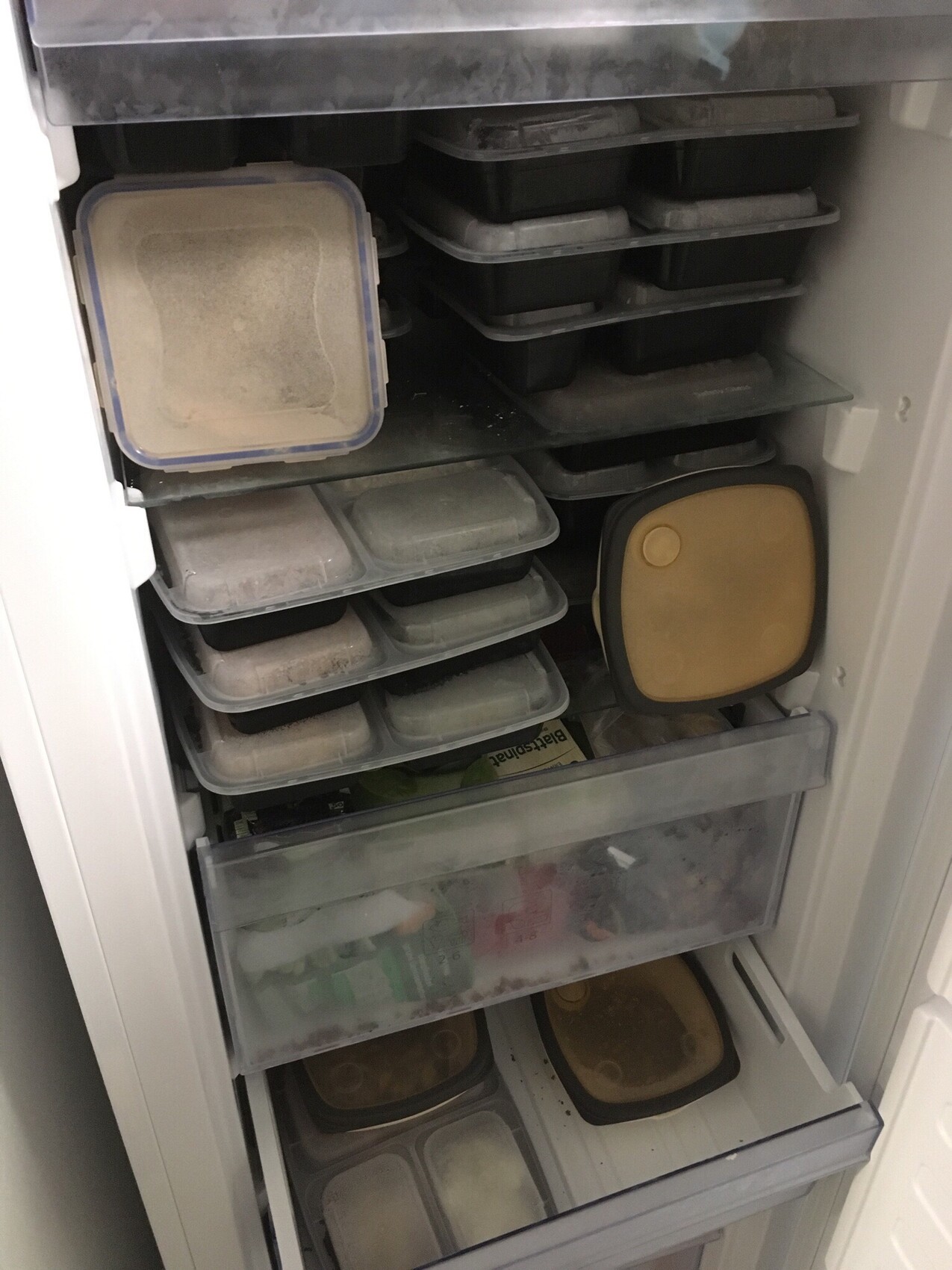
Despite the wine, the cabbage turned a nice golden brown, which meant I had to stand by and stir occasionally. I’m sure it could have been done on a lower setting with a bit more patience.
I also believe we often have above-average quantities. We like to cook in large batches and freeze in portions, so we usually have 20-30+ meals in the freezer. It’s really convenient for work or just when you’re short on time. Plus, we both do a lot of endurance sports, so 500g (1.1 lbs) of pasta is just enough for two people and one meal—tending to be on the low side.
C
chand198629 Nov 2017 19:07You need larger pots and plots. You must learn patience. Too much boost leads to the dark side.
D
daniels8729 Nov 2017 20:35The dark side is tempting!
The new cooktop was commissioned today! I really like it. The automatic cooking function is worth its weight in gold!
The installation also went well, but as expected, the side panels of the cabinets had to be adjusted. However, this was possible without removing the countertop. The quality multitool from Lidl was almost glowing!
The new cooktop was commissioned today! I really like it. The automatic cooking function is worth its weight in gold!
The installation also went well, but as expected, the side panels of the cabinets had to be adjusted. However, this was possible without removing the countertop. The quality multitool from Lidl was almost glowing!

chand1986 schrieb:
That describes the efficiency inside the pot. But that was not my question, see above! The actual heating only occurs at the pot/cooktop interface – what reaches the food depends on many other factors such as material thickness.
.You can calculate an efficiency value only if you compare the calculated value after the temperature measurement with a measurement of the energy consumed...
The type of measurement I described works extremely well. It gives you a lower bound for the power consumption of your cooktop. Heat losses to the surroundings naturally occur, but these are very low due to air’s poor heat capacity. That’s why measurements are taken only up to 95°C (203°F), to avoid losses caused by boiling.
This way, you can also compare the efficiency of different pots.
And again, the energy that does not reach the pot is never converted, so it is not drawn from the grid.
C
chand198629 Nov 2017 22:2677.willo schrieb:
You only get an efficiency value if you compare the calculated figure after the temperature measurement with a measurement of the energy consumed...Correct. When I wrote my response to your method, I mistakenly assumed a constant power input for the resonant circuit (also known as the "primary coil" in my concept). In that case, your method would not have provided any meaningful insights based on the absolute value of the stove I assumed.
With better understanding now, the situation is different.
So as an approximate method, it works. Of course, it would be better to measure power directly at the power supply.