
ᐅ Weedy Garden Before New Construction – What Should I Do?
Created on: 3 Aug 2021 19:25
N
NewHouseAppear
Hello everyone,
We plan to demolish an old house and build a new one on the same site by the end of the year (around December).
Currently, the backyard (photo attached) is overgrown, which is due not only to it being summer but also because no one has maintained the garden for the past two years. Besides a lot of weeds, many wild plants and some smaller (!) trees are growing there (pear, apple, cherry, etc.). There are also some 30x30 cm (12x12 inch) stone slabs used as garden bed borders.
The garden covers an area of about 150 m² (roughly 12x12 m (39x39 ft) plus a few irregular spots).
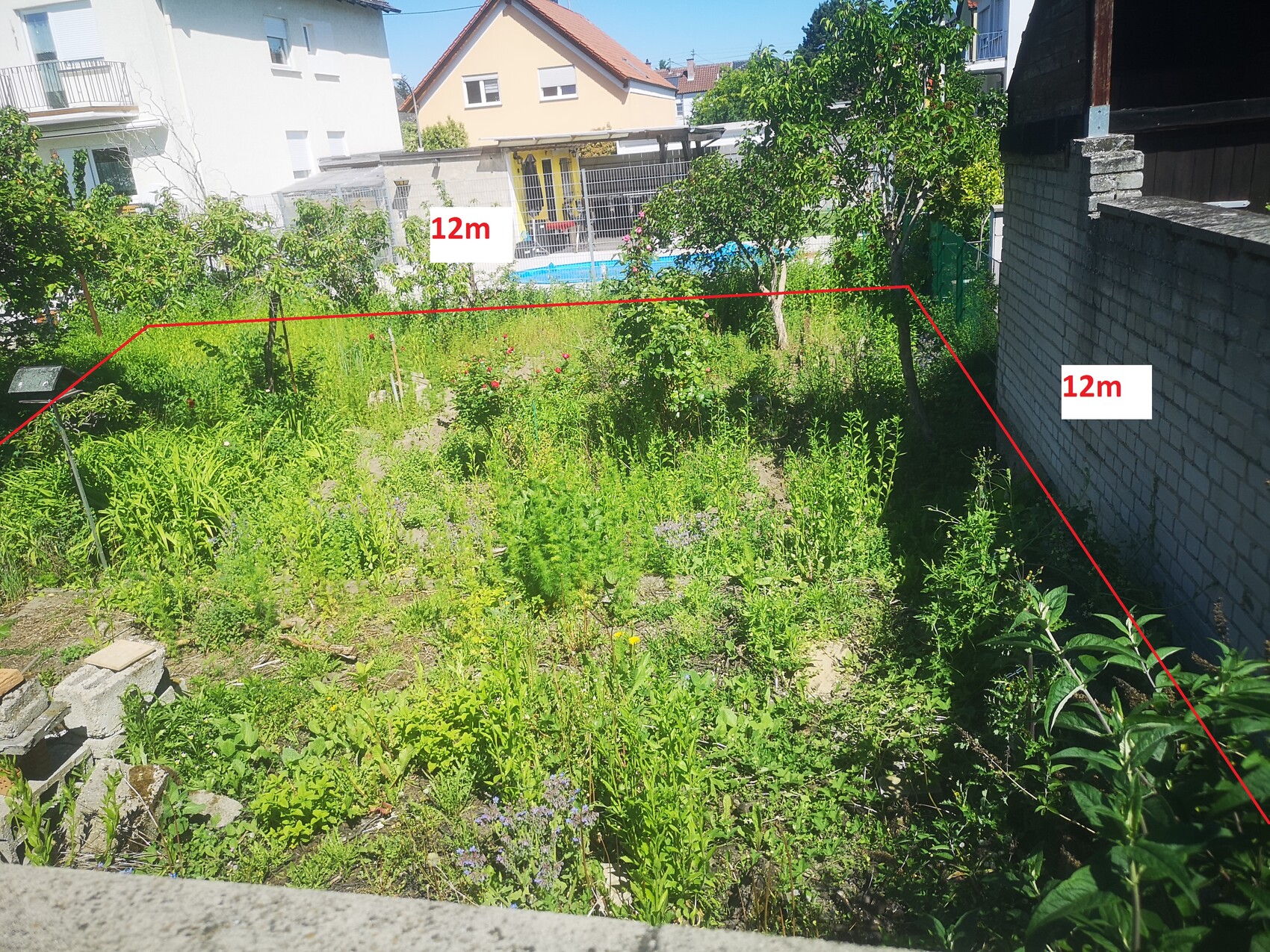
Now we are wondering what to do with it. Ideally, we would like to save a few healthy, young trees by relocating them to the edges, then completely clear or till the rest and cover it with a weed membrane until the house construction is finished and we can finally start caring for the garden.
This week, we had a small landscaping company give us a cost estimate → about €4,600 (including 19% tax).
Now to two questions:
1) Is what we are planning a common approach, and does it actually work this way (clearing + weed membrane until the house is finished)?
2) What do you think of this cost estimate? Unfortunately, I have no experience to compare it with.
Thanks a lot and best regards
We plan to demolish an old house and build a new one on the same site by the end of the year (around December).
Currently, the backyard (photo attached) is overgrown, which is due not only to it being summer but also because no one has maintained the garden for the past two years. Besides a lot of weeds, many wild plants and some smaller (!) trees are growing there (pear, apple, cherry, etc.). There are also some 30x30 cm (12x12 inch) stone slabs used as garden bed borders.
The garden covers an area of about 150 m² (roughly 12x12 m (39x39 ft) plus a few irregular spots).
Now we are wondering what to do with it. Ideally, we would like to save a few healthy, young trees by relocating them to the edges, then completely clear or till the rest and cover it with a weed membrane until the house construction is finished and we can finally start caring for the garden.
This week, we had a small landscaping company give us a cost estimate → about €4,600 (including 19% tax).
Now to two questions:
1) Is what we are planning a common approach, and does it actually work this way (clearing + weed membrane until the house is finished)?
2) What do you think of this cost estimate? Unfortunately, I have no experience to compare it with.
Thanks a lot and best regards
I see it differently. By the way, it has been prohibited for private use since 2017, which is why I had it done by a landscaping company. The employee wore protective clothing.
Why? There used to be a rapeseed field here, and rapeseed is otherwise difficult to eradicate; it is still present on the undeveloped plots today.
Honestly, I am upfront about it, and I would really like to know how many forum members quietly obtain this stuff from Poland via eBay and use it while outwardly pretending to be the purest environmentalists.
Why? There used to be a rapeseed field here, and rapeseed is otherwise difficult to eradicate; it is still present on the undeveloped plots today.
Honestly, I am upfront about it, and I would really like to know how many forum members quietly obtain this stuff from Poland via eBay and use it while outwardly pretending to be the purest environmentalists.
Then just on private properties. Although the glyphosate replacement is not ideal either.
Rapeseed does not survive regular lawn mowing. You would get rid of it anyway.
Many people who signed the petition against the so-called "bad farmers," that is, the popular initiative for bees and flowers, were shocked that there was a large round table discussing actual bans on gardens. Of course, biodiversity and protecting bees don’t cause economic damage there.
I don’t use any herbicides and don’t buy any from Poland or get any free from farmers. My garden is natural. Weeds and unwanted plants are not a problem I struggle with. This year, it’s aphids, brown rot, and late blight. Well, with this weather.
Rapeseed does not survive regular lawn mowing. You would get rid of it anyway.
Many people who signed the petition against the so-called "bad farmers," that is, the popular initiative for bees and flowers, were shocked that there was a large round table discussing actual bans on gardens. Of course, biodiversity and protecting bees don’t cause economic damage there.
I don’t use any herbicides and don’t buy any from Poland or get any free from farmers. My garden is natural. Weeds and unwanted plants are not a problem I struggle with. This year, it’s aphids, brown rot, and late blight. Well, with this weather.
No, I don’t use it. I just let clover grow. The bees and bumblebees enjoy it. Having a perfectly manicured lawn is not important to me. It’s green with clover as well. I’m not going to plant flower beds everywhere just to spray the lawn with chemicals. If it bothers me, I dig it out. Okay, I’ve lost with the clover, but I don’t mind.
B
Bertram1006 Aug 2021 08:05If this stuff would simply break down on its own, then it wouldn’t be toxic. Just because it apparently shouldn’t be in your garden after about 48 hours doesn’t mean it has disappeared—it’s probably moved deeper into the soil layers, from where it can enter the water cycle.
My common-sense approach as a farmer tells me that a biocide is meant to kill living organisms. That doesn’t sound very healthy. I really didn’t want to spray it in my garden.
I believe very few people actually do this because it’s so unreasonable—using biocides just to have a nice garden.
My common-sense approach as a farmer tells me that a biocide is meant to kill living organisms. That doesn’t sound very healthy. I really didn’t want to spray it in my garden.
I believe very few people actually do this because it’s so unreasonable—using biocides just to have a nice garden.
Similar topics