
ᐅ Use of empty conduit from basement to ground floor / flush-mounted electrical box clogged
Created on: 18 Nov 2025 18:43
Z
zweiflamme
Hello everyone,
I have to start right away with a question.
Recently, we got fiber optic internet installed for our single-family house, built in 1972. The network termination point (NTP) is located in the basement; I would like to have the router with built-in optical network terminal (ONT) on the ground floor.
The good news: there is an empty conduit from the basement to the ground floor where copper cables used to run for the telephone connection (which I have used rather poorly for DSL).
My plan: to pull a fiber optic cable through the empty conduit from the basement to the ground floor. So far, so good.
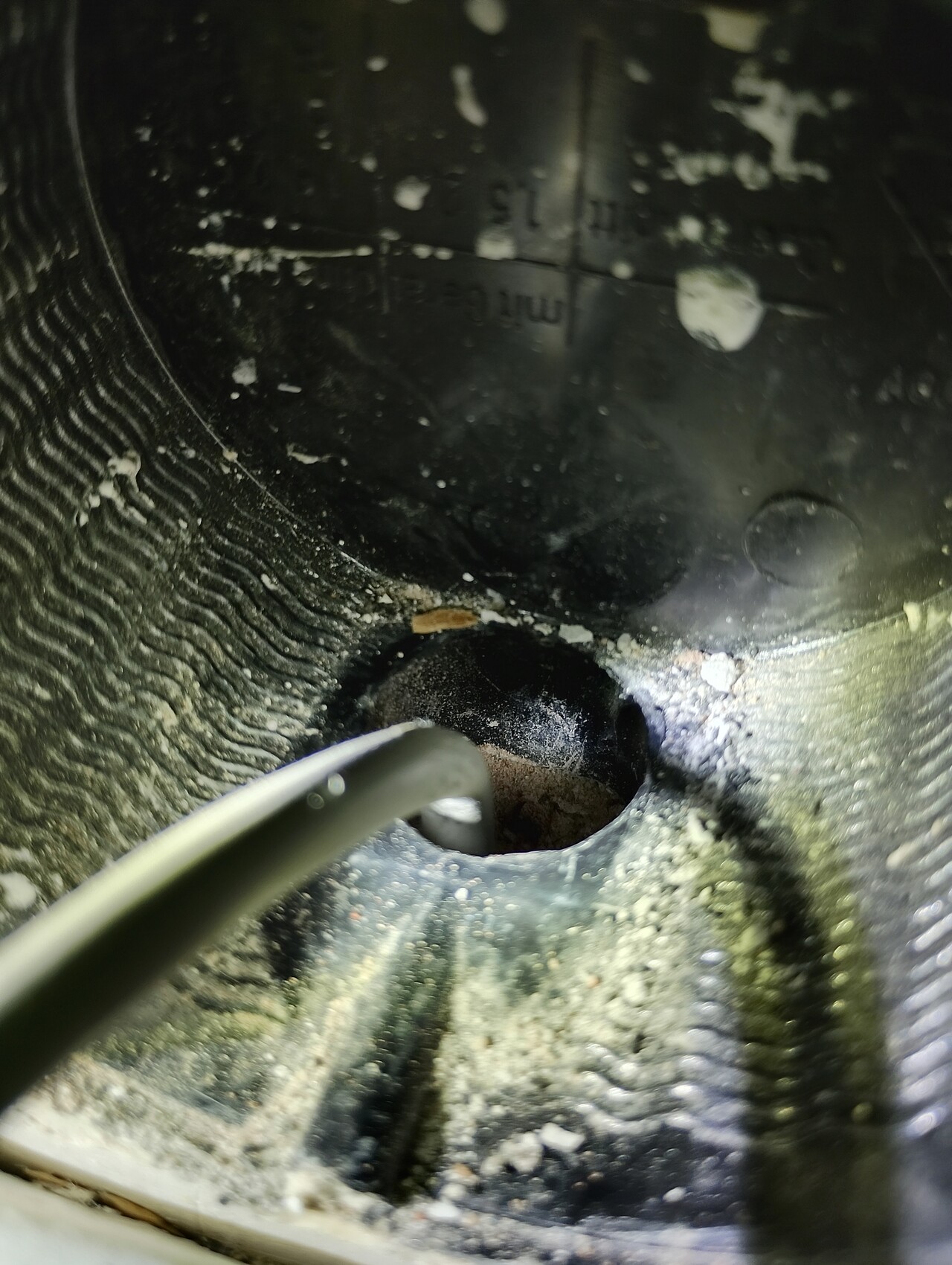
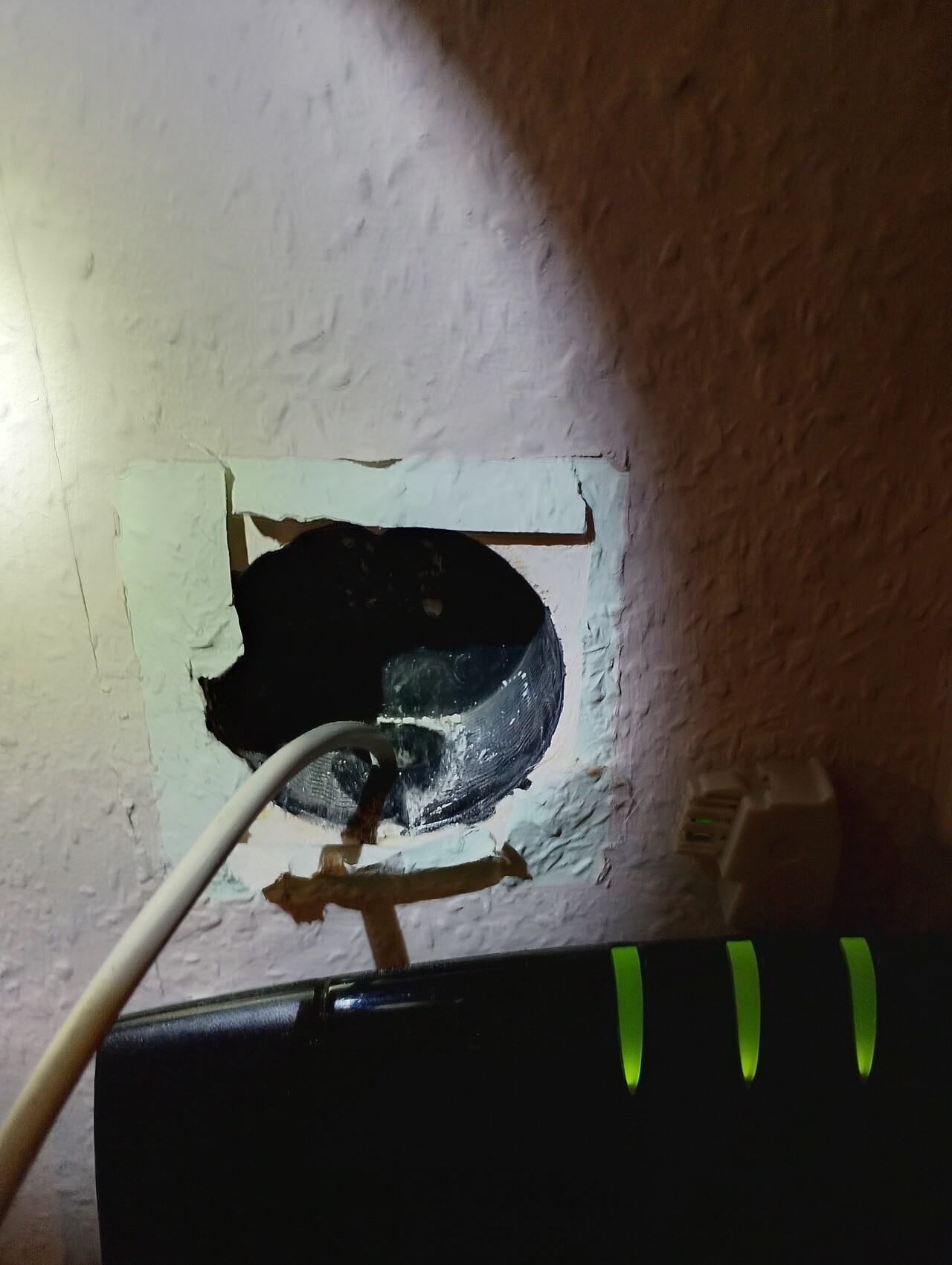
Unfortunately, after opening the outlet box, it turns out that the conduit going downwards is filled with sand and small stones.
Does anyone have an idea how I could still use it? The pictures are attached.
Best regards,
Dennis
I have to start right away with a question.
Recently, we got fiber optic internet installed for our single-family house, built in 1972. The network termination point (NTP) is located in the basement; I would like to have the router with built-in optical network terminal (ONT) on the ground floor.
The good news: there is an empty conduit from the basement to the ground floor where copper cables used to run for the telephone connection (which I have used rather poorly for DSL).
My plan: to pull a fiber optic cable through the empty conduit from the basement to the ground floor. So far, so good.
Unfortunately, after opening the outlet box, it turns out that the conduit going downwards is filled with sand and small stones.
Does anyone have an idea how I could still use it? The pictures are attached.
Best regards,
Dennis
Z
zweiflamme20 Nov 2025 23:47P.S. Maybe you could explain again how you would use it? I’ve never done this before and wouldn’t know how to start. The old cable is still inside the conduit; at least in the socket piece of the flush-mounted box on the ground floor, it’s wedged with sand and stones, and in the worst case, it might be stuck even further down with sand and stones. Can I reach it with the cable rod “from below”? Or do you mean somehow cutting the old cable / removing it from both ends, and then pulling the fiber optic cable through using the cable rod? Best regards
M
MachsSelbst21 Nov 2025 06:59No idea. It depends on how tightly the cable is stuck, how much debris you can remove beforehand, and so on.
The stripping knives come in different thicknesses, so maybe don’t use the thinnest one.
Otherwise, try pulling the cable firmly? What could happen, I’ve never heard of anyone tearing a cable of this thickness apart by hand...
But if it’s really jammed, then your chances are slim, especially from below. You can pull cables quite well, but pushing them is usually much harder.
The stripping knives come in different thicknesses, so maybe don’t use the thinnest one.
Otherwise, try pulling the cable firmly? What could happen, I’ve never heard of anyone tearing a cable of this thickness apart by hand...
But if it’s really jammed, then your chances are slim, especially from below. You can pull cables quite well, but pushing them is usually much harder.

It would probably be more effective to work with a compressor from below and a vacuum cleaner attached to the top of the conduit at the same time.
Seal the inlet around the hose well, and you’re good to go. If air blows out at the top, you’ll immediately know if the pipe is clear.
If you poke around inside the pipe from below along its length, small debris may just fall further down to the next bend.
I had assumed the pipe runs straight vertically through the ceiling down to the basement.
Using the Katiblitz tool only makes sense if the pipe is empty; otherwise, the inner cord of the Katiblitz might wrap around the telephone cable like a snake around its prey, and if you’re unlucky, it won’t move forward or backward anymore.
I lent out my Kati twice, and each time it came back with a broken inner cord.
It’s a great tool but also quite delicate.
You’re more likely to be able to borrow a compressor from someone.
Seal the inlet around the hose well, and you’re good to go. If air blows out at the top, you’ll immediately know if the pipe is clear.
If you poke around inside the pipe from below along its length, small debris may just fall further down to the next bend.
I had assumed the pipe runs straight vertically through the ceiling down to the basement.
Using the Katiblitz tool only makes sense if the pipe is empty; otherwise, the inner cord of the Katiblitz might wrap around the telephone cable like a snake around its prey, and if you’re unlucky, it won’t move forward or backward anymore.
I lent out my Kati twice, and each time it came back with a broken inner cord.
It’s a great tool but also quite delicate.
You’re more likely to be able to borrow a compressor from someone.
M
MachsSelbst23 Nov 2025 20:54A compressor can work as well, that's true. It depends on where the problem lies.
If plaster or masonry is stuck, you won't be able to remove it with compressed air. In fact, you might make it worse by pressing the debris further into the conduit and the surrounding plaster, compacting it and causing it to jam even more. Or the debris could be positioned in such a way that the air just passes by without carrying the rubble out.
You have to try it out...
If plaster or masonry is stuck, you won't be able to remove it with compressed air. In fact, you might make it worse by pressing the debris further into the conduit and the surrounding plaster, compacting it and causing it to jam even more. Or the debris could be positioned in such a way that the air just passes by without carrying the rubble out.
You have to try it out...
Similar topics