
ᐅ The floor tiles have been removed; how can the leveling compound be removed?
Created on: 21 Apr 2021 14:39
G
Gerd53
Many tiles have lifted extensively after 27 years. I have now removed almost all the remaining tiles. Nearly all of them could be removed easily without breaking.
The affected area is about 4 m² (43 sq ft) in a small bathroom in the attic studio.
15 m² (161 sq ft) of floor tiles of the same type in a total of two guest toilets and two bathrooms show no problems at all.
1) How should I proceed with the construction layers?
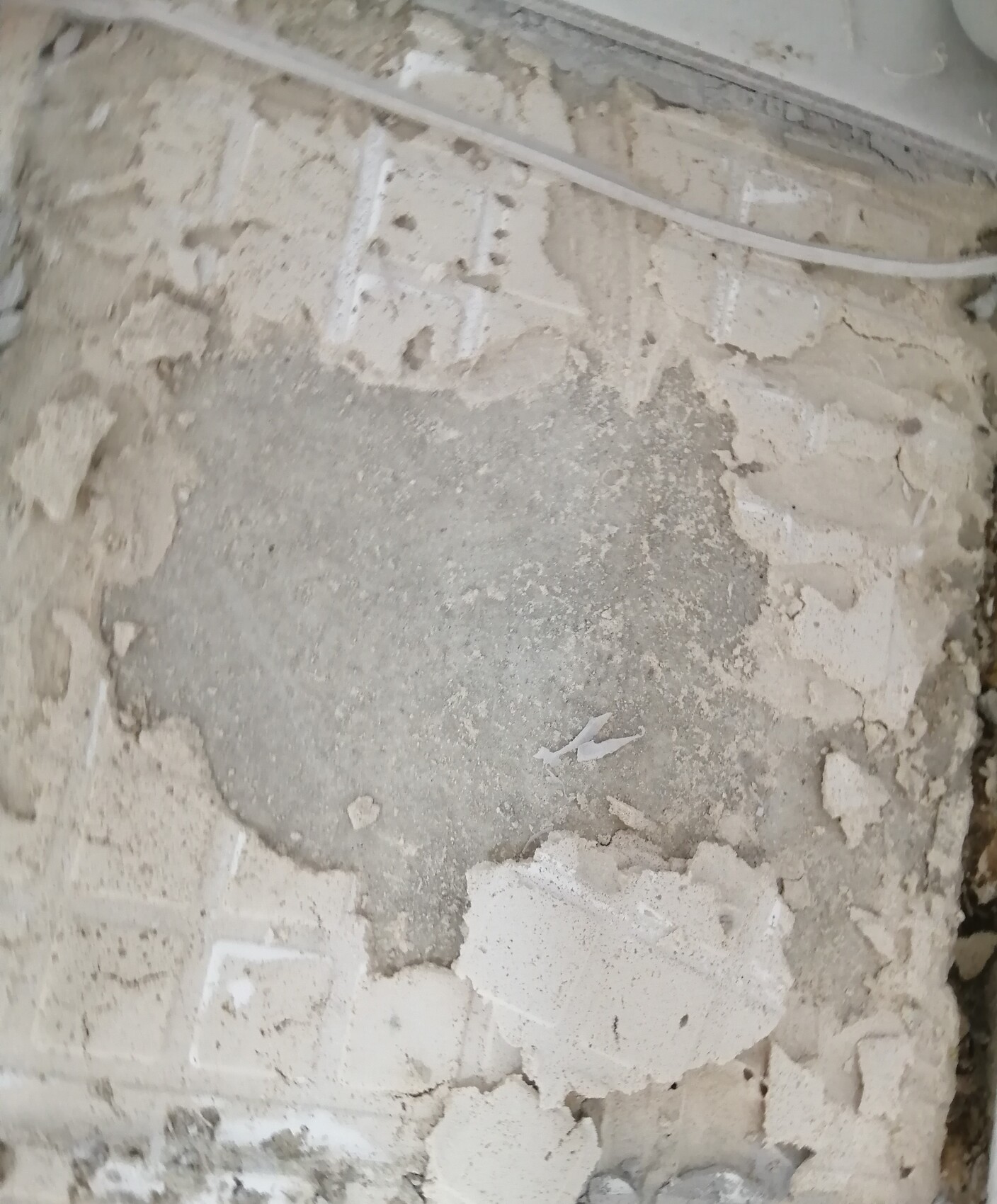
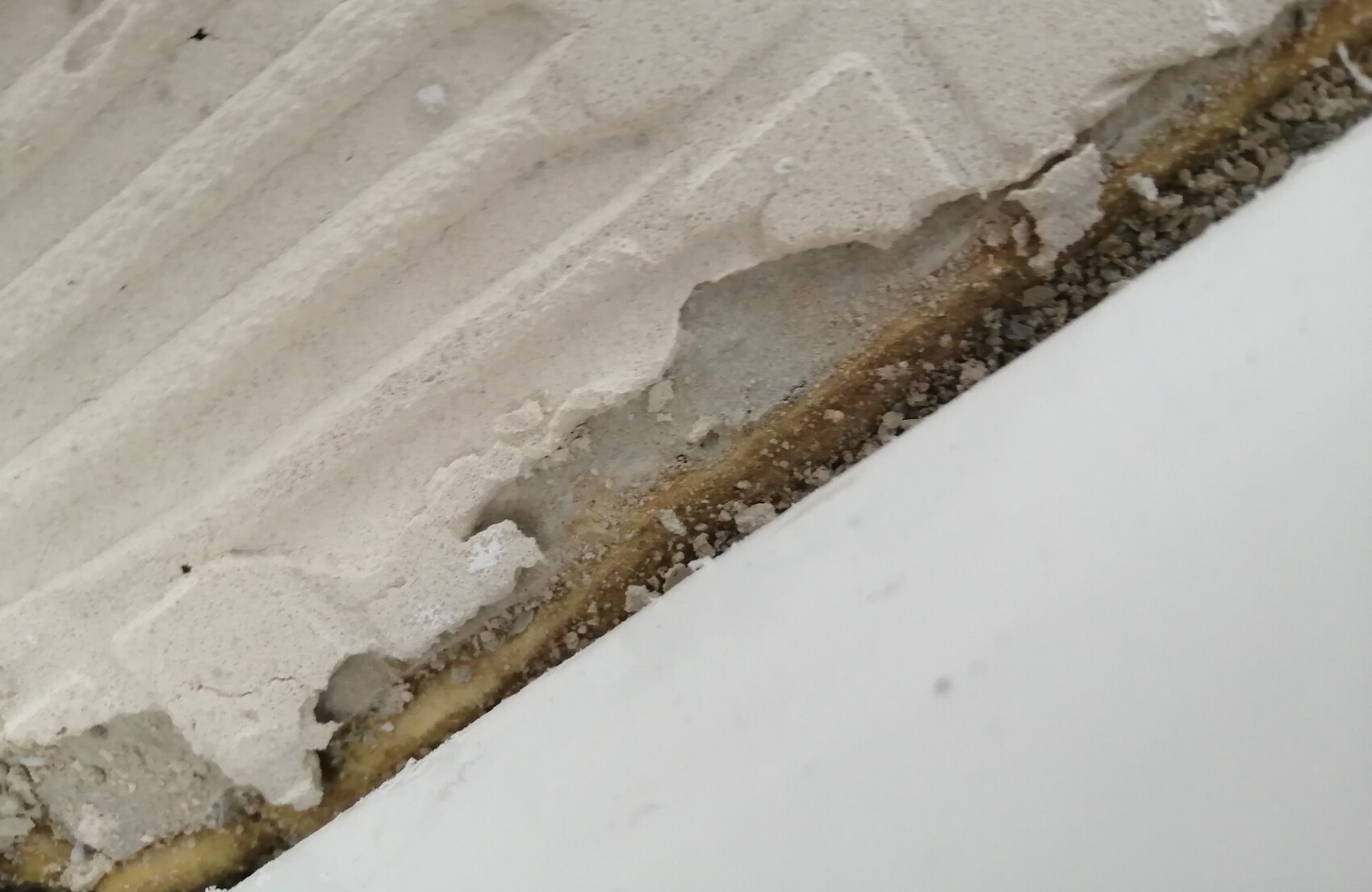
2) In the pictures, there is a gray substrate. Is that the screed?
3) I could also leave the work to the flooring installer. What would be the approximate cost for tile removal?
4) Is it sufficient to remove the layers with a scraper, or is a grinder needed?
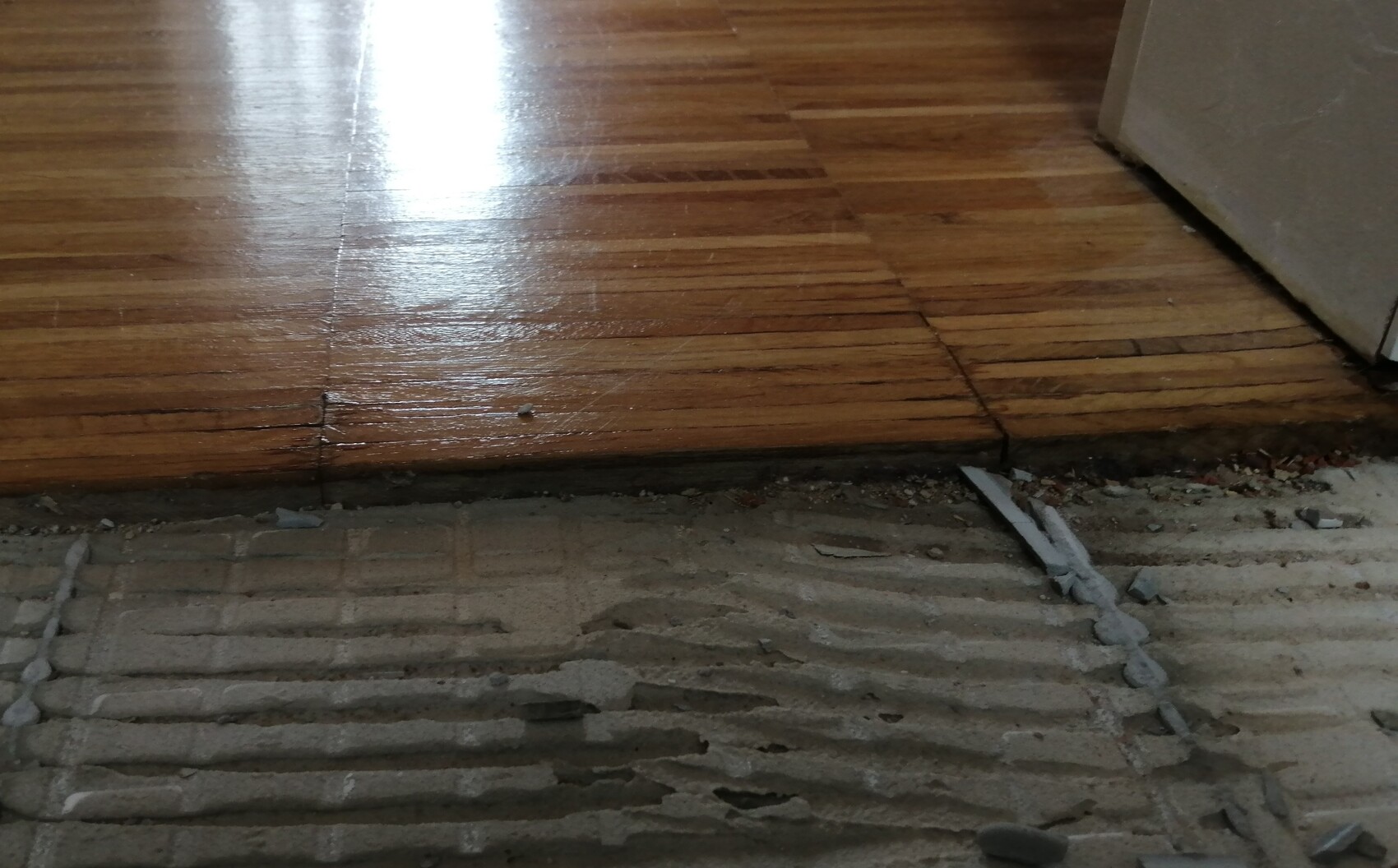
One photo shows the transition to the parquet flooring in the adjacent room.
Thank you
The affected area is about 4 m² (43 sq ft) in a small bathroom in the attic studio.
15 m² (161 sq ft) of floor tiles of the same type in a total of two guest toilets and two bathrooms show no problems at all.
1) How should I proceed with the construction layers?
2) In the pictures, there is a gray substrate. Is that the screed?
3) I could also leave the work to the flooring installer. What would be the approximate cost for tile removal?
4) Is it sufficient to remove the layers with a scraper, or is a grinder needed?
One photo shows the transition to the parquet flooring in the adjacent room.
Thank you
Winniefred schrieb:
If the screed is fine, why should it be removed? What is your plan?The screed will remain, you are right, it is in good condition.Of course, I want to keep the effort as low as possible.
Most of the tiles have been removed; the remaining tiles should not be a problem.
However, there is a “build-up” on top of the screed.
1) A light brown leveling layer, possibly to match the height of the parquet floor in the adjacent room.
2) The actual tile adhesive in gray stripes.
The first three pictures should show the situation clearly. I can provide more photos if needed.
The plan:
I would like to have click vinyl flooring installed for bathrooms.
Possibly on a sound insulation underlay.
 Winniefred21 Apr 2021 20:08
Ah, okay. So I would try to handle the remaining leveling compound and old adhesive as Nordlys suggested. If the height is right, it might also be worth considering only removing what comes off easily and then using new leveling compound to create a flat surface for the vinyl. You can give it a try—maybe it will be easier than expected and everything can be removed without issue. But if not, I would probably go for the path of least resistance.
Winniefred21 Apr 2021 21:14No, certainly not. That’s correct.
Thank you for your help.
I have probably reached the limit of what I can do myself here.
The rest will have to be done by professionals.
Companies have efficient milling machines that handle the tedious removal of the floor covering down to the screed. Once I have removed all the tiles and the floor-mounted toilet, I will get a quote from a tiler. They can then apply the leveling layer at the correct height as well as install the impact sound insulation and click vinyl flooring suitable for bathrooms.
I will keep you updated.
I have probably reached the limit of what I can do myself here.
The rest will have to be done by professionals.
Companies have efficient milling machines that handle the tedious removal of the floor covering down to the screed. Once I have removed all the tiles and the floor-mounted toilet, I will get a quote from a tiler. They can then apply the leveling layer at the correct height as well as install the impact sound insulation and click vinyl flooring suitable for bathrooms.
I will keep you updated.
Similar topics