
Hello everyone
I am new to the forum and hope this is the right section.
We are renovating a house built in 1955 and, like many others, we found a black layer beneath the parquet flooring. An initial lab analysis showed that it is a tar-containing layer with PAHs (polycyclic aromatic hydrocarbons).
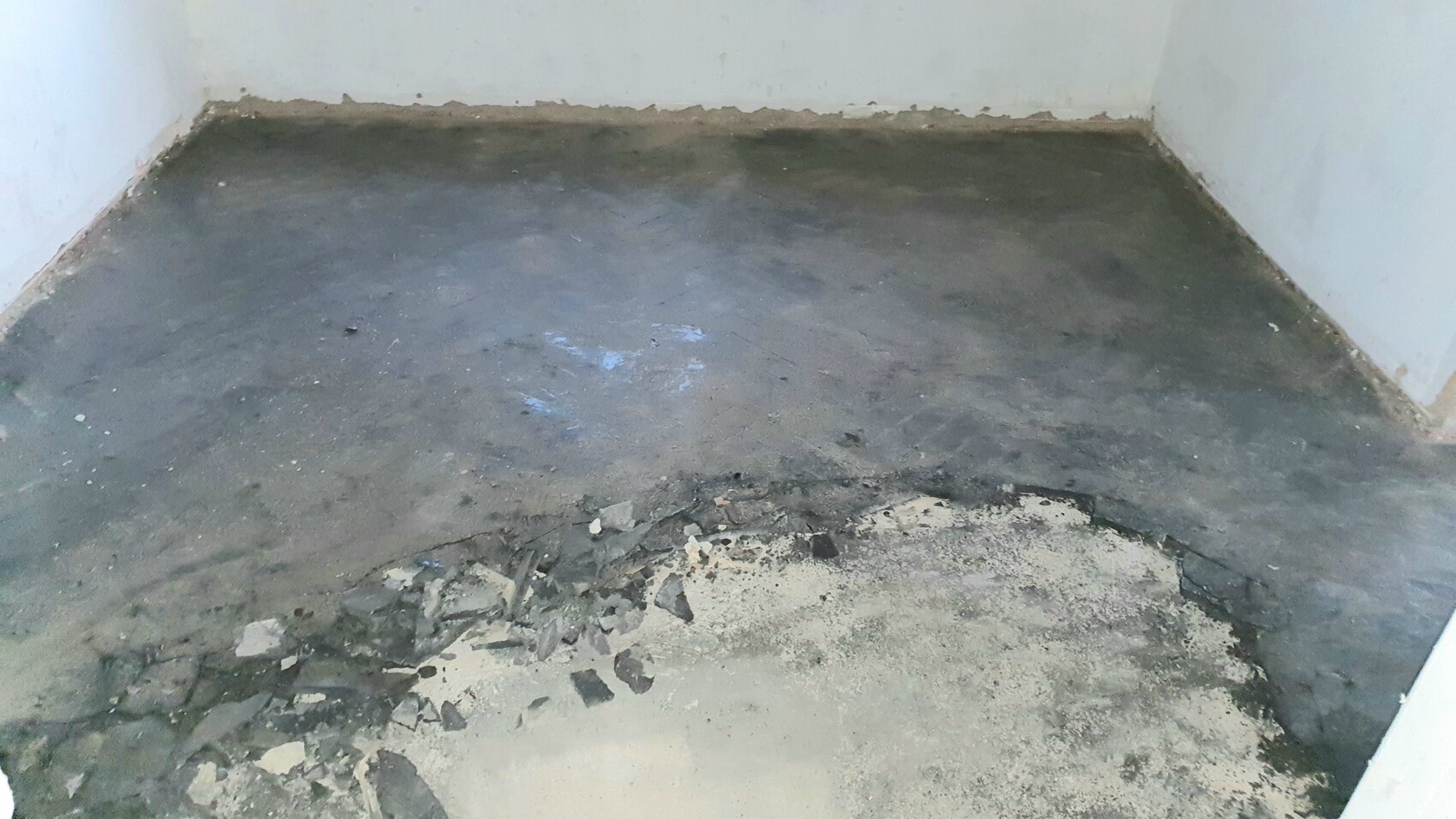
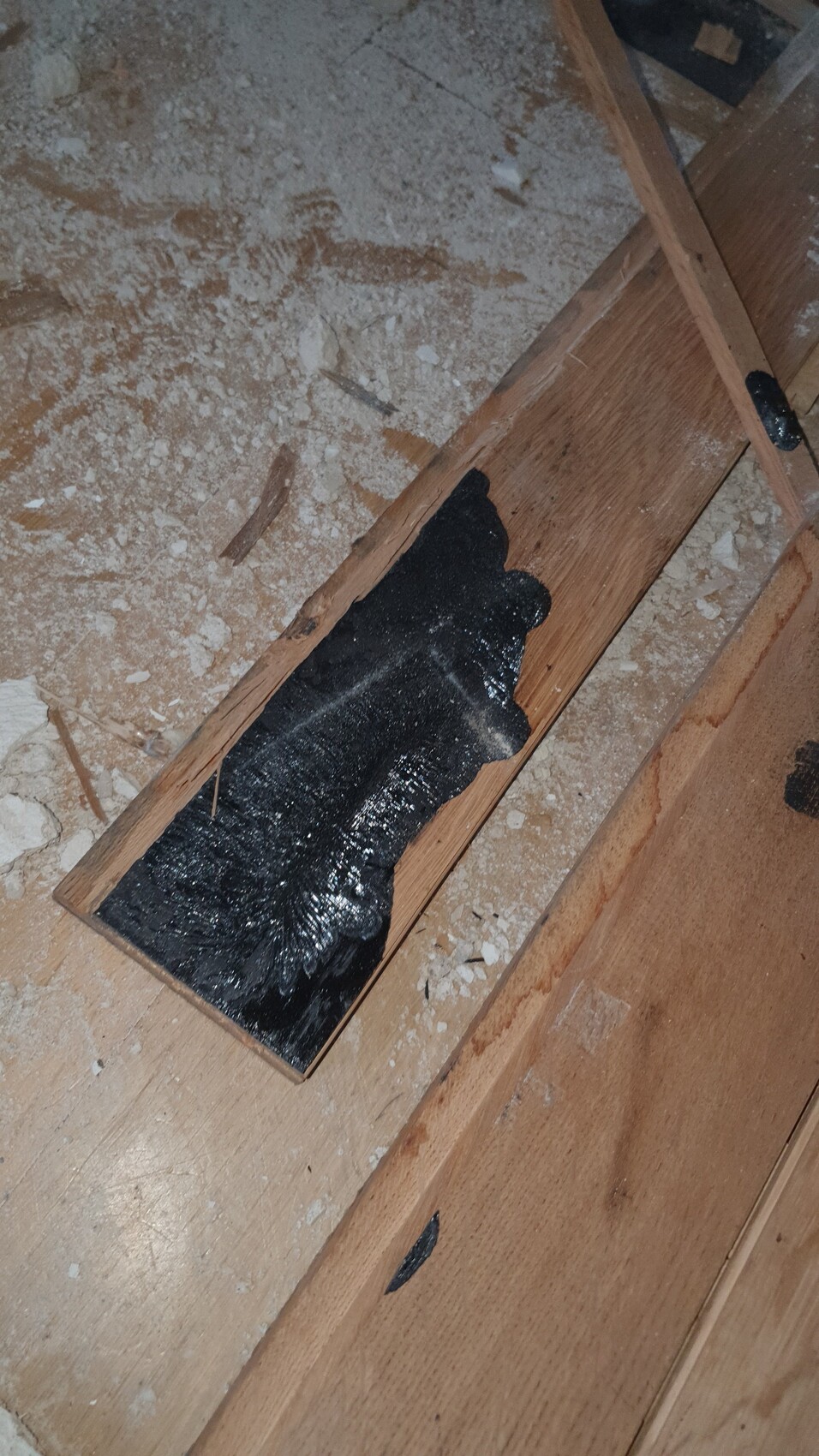
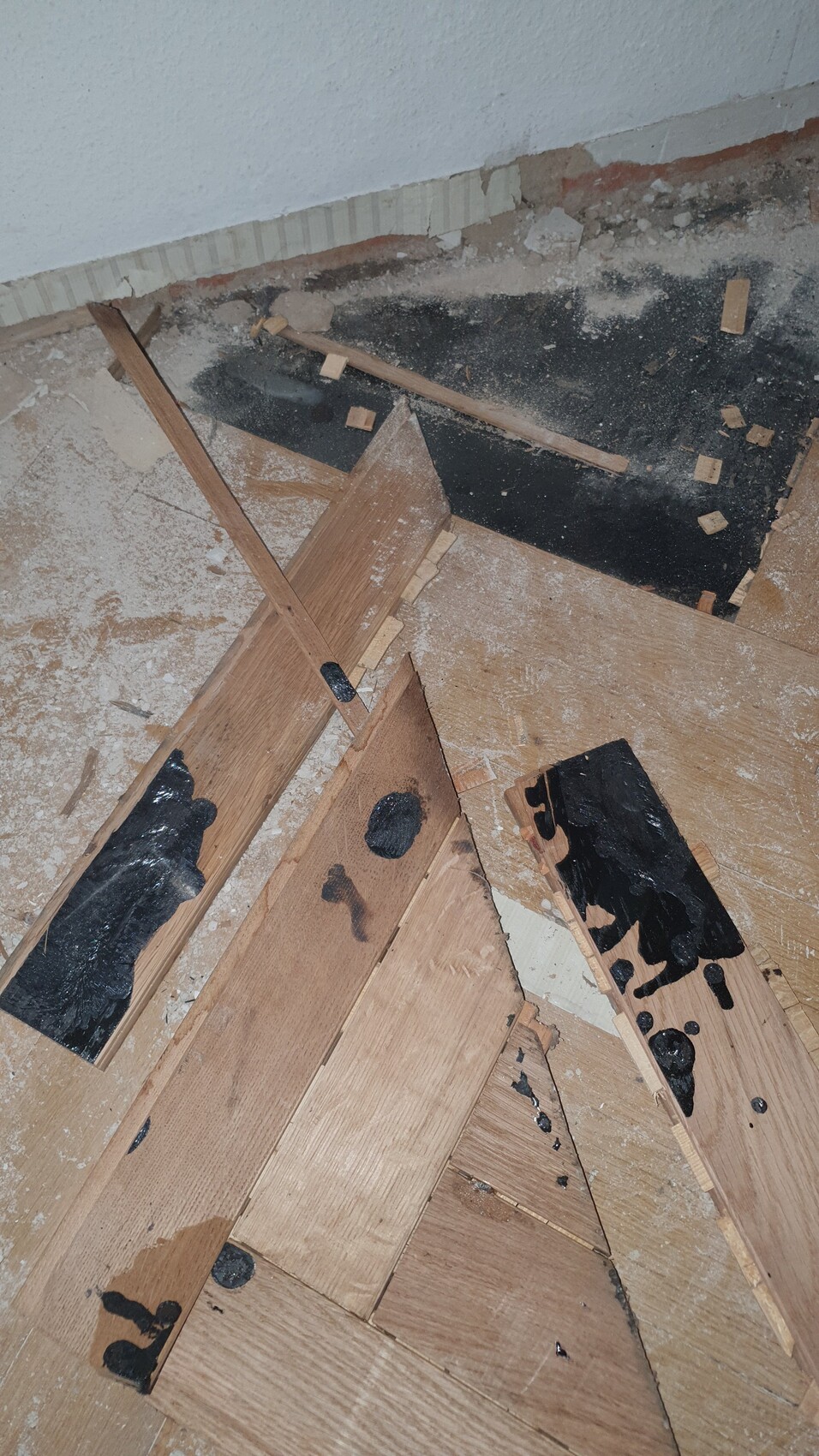
However, this is not just a thin adhesive layer. The floor structure is as follows:
1) Concrete slab
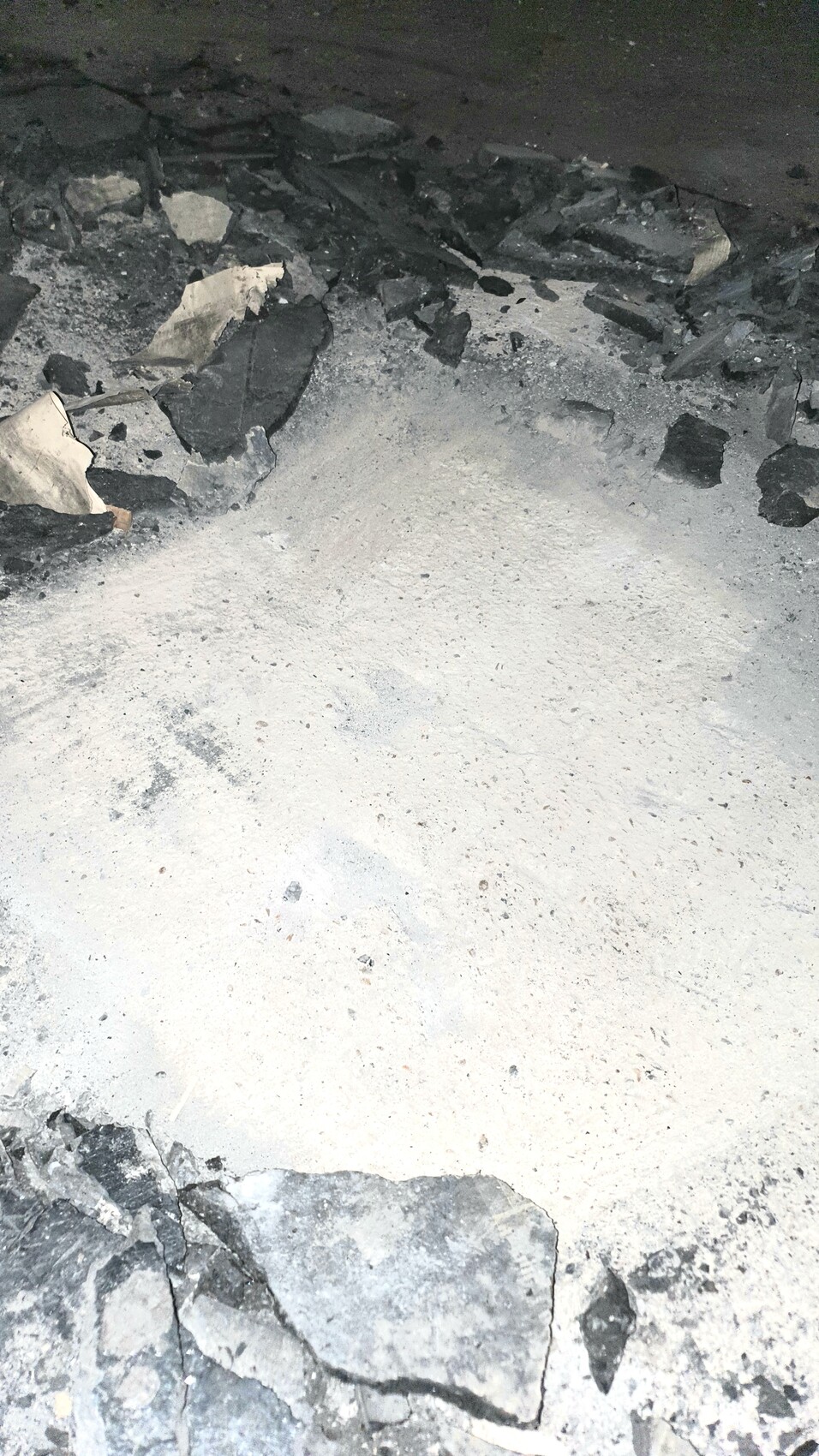
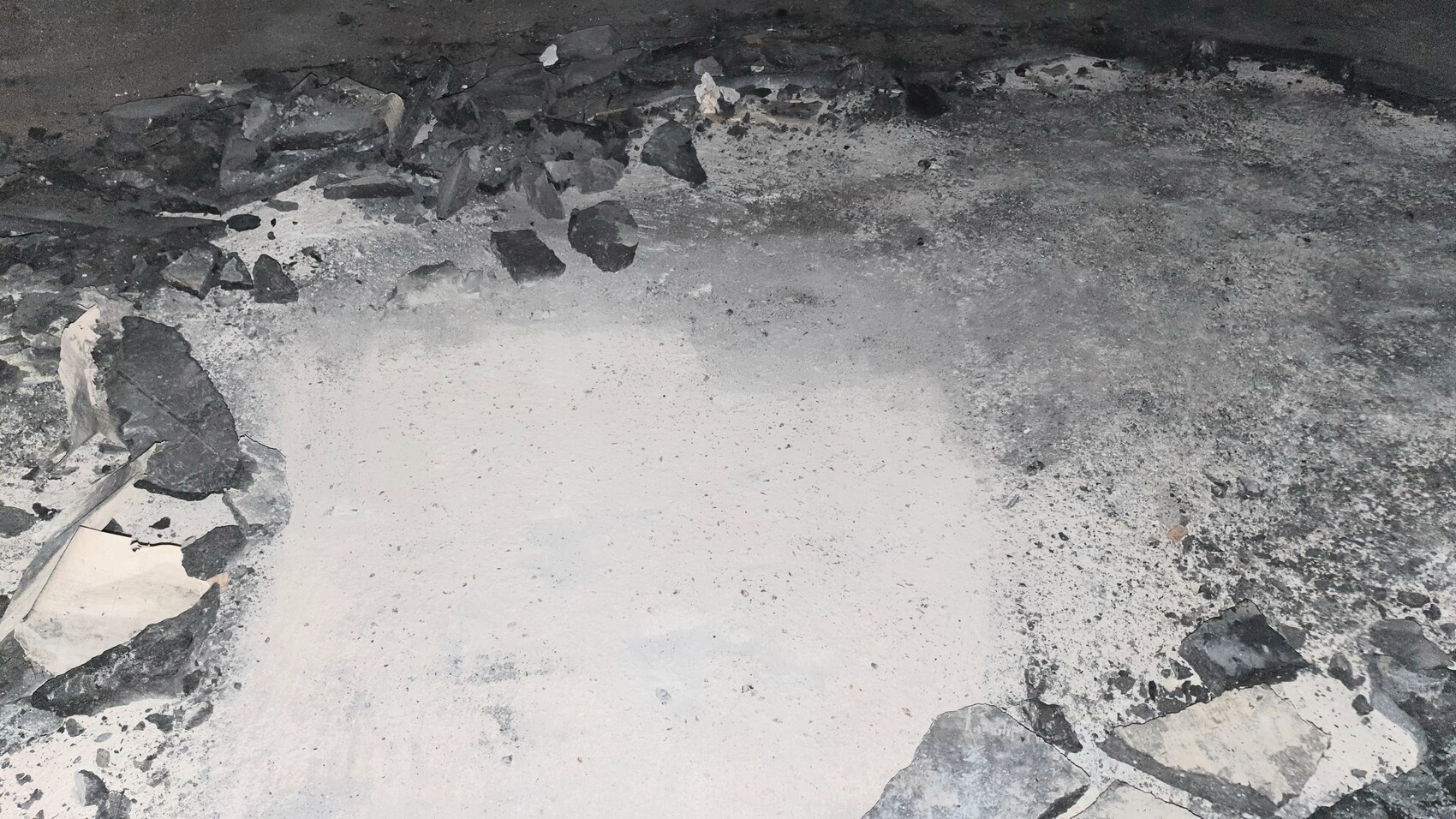
2) Single layer of newspaper, loosely placed as a separation between the black material and the concrete
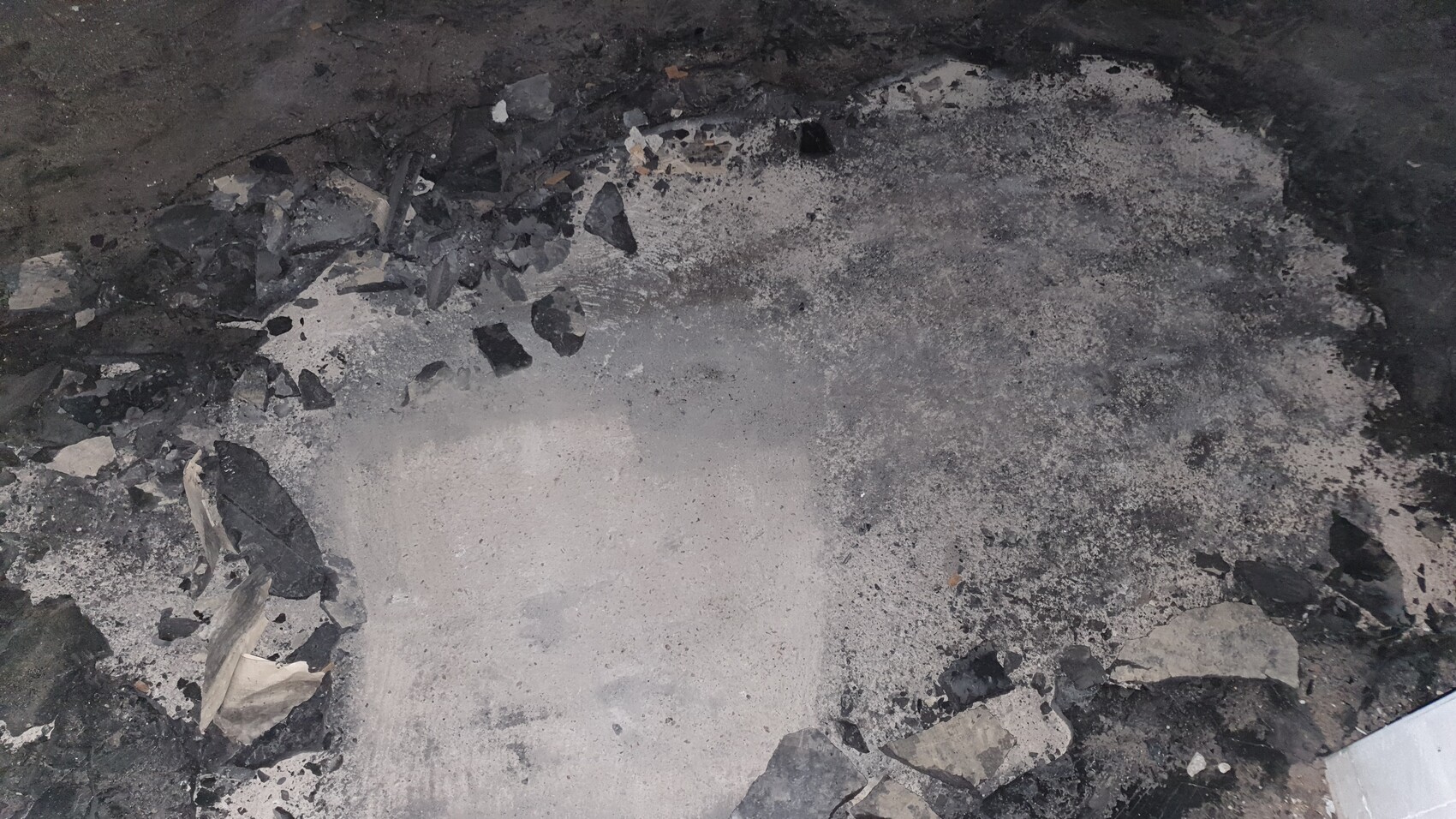
3) Black material (about 2cm (0.8 inches) thick, not sticky but glassy hard, similar to stone)
4) Parquet laid directly on top
The black material weighs roughly as much as stone and rests floating on the concrete. It can be completely levered up and removed without affecting the concrete below or needing to grind it. I suspect this black material was used as a substitute for screed.
Has anyone encountered something like this before?
I have three questions:
1) Can you tell me what this material might be and if it could have any positive properties regarding insulation or impact sound reduction?
2) If that is the case, could the material be left in place and covered with a vapor barrier, underfloor heating, screed, and vinyl flooring, effectively sealing it and making use of it rather than disposing of it?
3) Or would there be significant disadvantages concerning health risks or outdated properties?
Attached are some pictures. The clean light surface is the concrete slab.
I am new to the forum and hope this is the right section.
We are renovating a house built in 1955 and, like many others, we found a black layer beneath the parquet flooring. An initial lab analysis showed that it is a tar-containing layer with PAHs (polycyclic aromatic hydrocarbons).
However, this is not just a thin adhesive layer. The floor structure is as follows:
1) Concrete slab
2) Single layer of newspaper, loosely placed as a separation between the black material and the concrete
3) Black material (about 2cm (0.8 inches) thick, not sticky but glassy hard, similar to stone)
4) Parquet laid directly on top
The black material weighs roughly as much as stone and rests floating on the concrete. It can be completely levered up and removed without affecting the concrete below or needing to grind it. I suspect this black material was used as a substitute for screed.
Has anyone encountered something like this before?
I have three questions:
1) Can you tell me what this material might be and if it could have any positive properties regarding insulation or impact sound reduction?
2) If that is the case, could the material be left in place and covered with a vapor barrier, underfloor heating, screed, and vinyl flooring, effectively sealing it and making use of it rather than disposing of it?
3) Or would there be significant disadvantages concerning health risks or outdated properties?
Attached are some pictures. The clean light surface is the concrete slab.

I am not seriously buying ;-) but I’ll tag @rick2018 in the thread 🙂
https://www.instagram.com/11antgmxde/
https://www.linkedin.com/company/bauen-jetzt/
https://www.instagram.com/11antgmxde/
https://www.linkedin.com/company/bauen-jetzt/

Today's mastic asphalt no longer contains tar and is a bitumen product with low PAH levels (once cooled). Depending on its application, it can be used as a screed replacement. With additives, it is also used as a finished surface, as we do. It is absolutely harmless from a building biology perspective.
You have a tar-containing product that is colloquially also called mastic asphalt. Much of the tar will likely have already evaporated over the years. The asphalt provides an excellent subfloor for your final covering. The impact sound insulation and heat distribution are very good. The final covering will cover the asphalt, so even fewer PAHs could escape.
Personally, I would not remove and dispose of the asphalt. If you are unsure about the PAHs, extremely cautious, or have other concerns, you would need to remove it and install screed or new mastic asphalt. Only you can make that decision. I suspect that in this house, there are much more urgent things to remove (old paint, asbestos…).
You have a tar-containing product that is colloquially also called mastic asphalt. Much of the tar will likely have already evaporated over the years. The asphalt provides an excellent subfloor for your final covering. The impact sound insulation and heat distribution are very good. The final covering will cover the asphalt, so even fewer PAHs could escape.
Personally, I would not remove and dispose of the asphalt. If you are unsure about the PAHs, extremely cautious, or have other concerns, you would need to remove it and install screed or new mastic asphalt. Only you can make that decision. I suspect that in this house, there are much more urgent things to remove (old paint, asbestos…).
Thanks, Rick, for the detailed answer.
A follow-up question:
We want to install underfloor heating. Is cast asphalt suitable for this?
The flooring would be:
Cast asphalt (instead of another type of impact sound insulation)
Separation layer/dimple membrane system
Underfloor heating/pipes
Screed (possibly a bit thinner than usual?)
Vinyl
Does this make sense?
I’m also a bit concerned about the weight and the overall build-up. Although I assume the cast asphalt would be as thick as other types of impact sound insulation.
A follow-up question:
We want to install underfloor heating. Is cast asphalt suitable for this?
The flooring would be:
Cast asphalt (instead of another type of impact sound insulation)
Separation layer/dimple membrane system
Underfloor heating/pipes
Screed (possibly a bit thinner than usual?)
Vinyl
Does this make sense?
I’m also a bit concerned about the weight and the overall build-up. Although I assume the cast asphalt would be as thick as other types of impact sound insulation.
Similar topics