
Hello,
my heating system has been running for just over a year now. By chance, I recently noticed discoloration on the flow meters, see picture.
I filed a defect report with the general contractor, stating that the heating water appears rusty/sludgy, as evidenced by the flow meters. Their response was a casual statement that some discoloration on the flow meters is normal to a certain extent and that if there is a serious malfunction of the underfloor heating, it will of course be fixed.
Do your flow meters look like this as well?
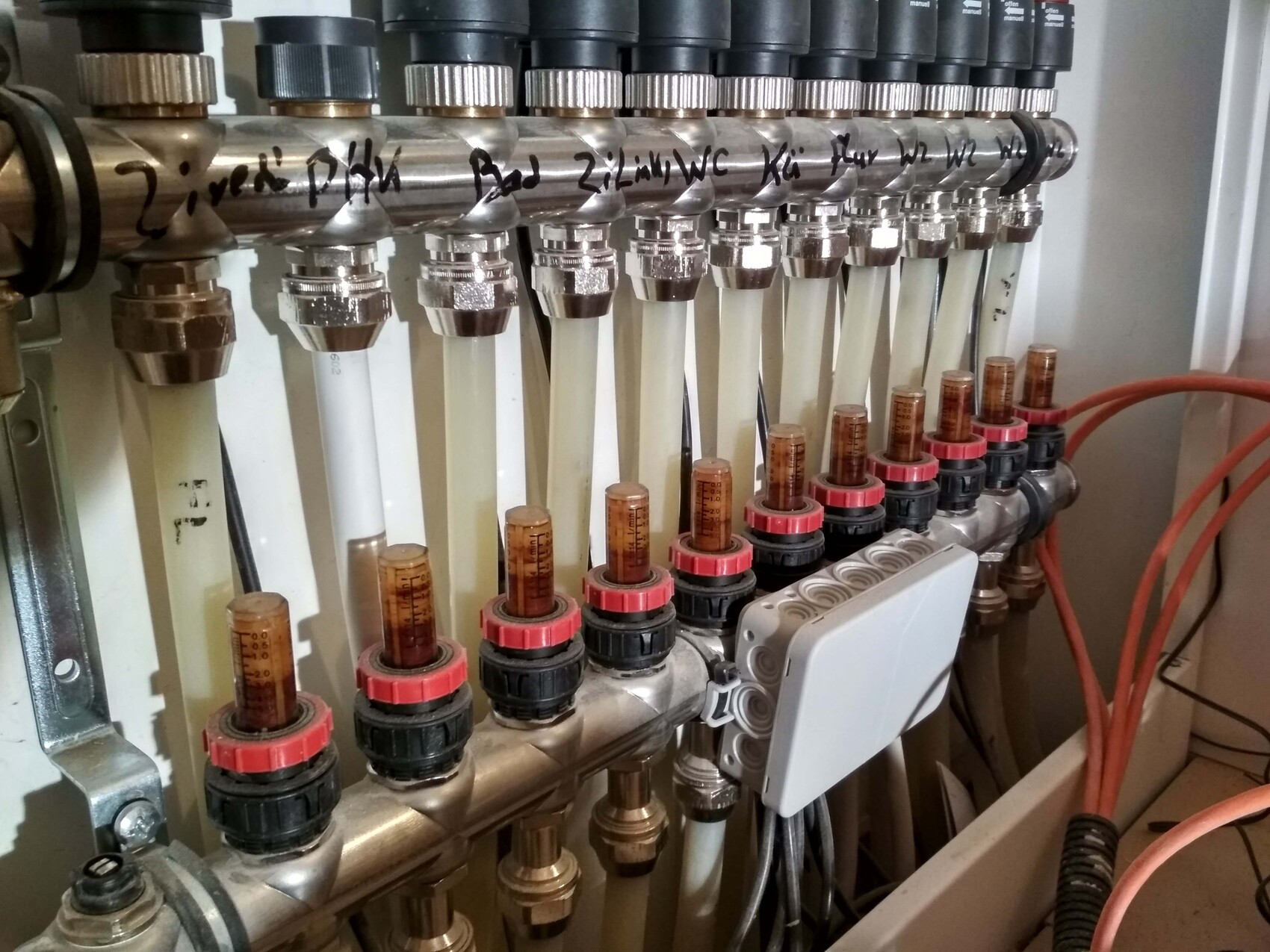
my heating system has been running for just over a year now. By chance, I recently noticed discoloration on the flow meters, see picture.
I filed a defect report with the general contractor, stating that the heating water appears rusty/sludgy, as evidenced by the flow meters. Their response was a casual statement that some discoloration on the flow meters is normal to a certain extent and that if there is a serious malfunction of the underfloor heating, it will of course be fixed.
Do your flow meters look like this as well?
B
Bau-Schmidt13 Dec 2017 20:19Hmm, it doesn't look normal.
hstkai schrieb:
Do your flow meters look like this too?Not really. After six years, see photo (a bit dirty, drilled just above). I can’t say when the slight discoloration appeared, as the property was bought this year...
Best regards

Many do not consider this a defect since it technically isn’t one, as construction still follows the recognized rules of technology (aRdT). Of course, over time the system will fail, but by then it is well beyond the warranty period. You can build it either way—both methods are correct and free of defects. However, one results in a lot of mud and dirt, while the other shows only minimal amounts even after years.
I’m not an expert, so I’m not sure, but I don’t think this complies with generally accepted technical standards.
1. It seems like a sludge and microbubble separator might be missing.
2. There could be a mixed installation here, which often leads to corrosion.
3. It’s possible that the entire system wasn’t flushed before commissioning.
4. It’s possible that no treated water (as often required by manufacturers) was used.
Especially regarding point 4, the manufacturer’s warranty may depend entirely on this.
Mixed installations are more common in older buildings, but who knows who the general contractor hired.
1. It seems like a sludge and microbubble separator might be missing.
2. There could be a mixed installation here, which often leads to corrosion.
3. It’s possible that the entire system wasn’t flushed before commissioning.
4. It’s possible that no treated water (as often required by manufacturers) was used.
Especially regarding point 4, the manufacturer’s warranty may depend entirely on this.
Mixed installations are more common in older buildings, but who knows who the general contractor hired.
Joedreck schrieb:
I’m not sure since I’m not an expert, but I don’t think this complies with the generally accepted rules of technology.
1. It seems like a sludge and microbubble separator is missing.
2. There might be a mixed installation here, which often leads to corrosion.
3. It’s possible the system was not flushed before commissioning.
4. It’s possible that no treated water (as often required by manufacturers) was filled in.
Especially regarding point 4, the manufacturer’s warranty may depend entirely on this.
Mixed installations are more common in older buildings, but who knows whom the general contractor hired.
Could you please explain the mixed installation?
Unfortunately, I don’t know if the system was flushed.
But it was definitely filled with normal drinking water, with a water hardness of 21° dH.
The installed unit is a Vaillant vsc 146/4-5, and the installation manual refers to VDI 2035 concerning the required water quality. Now I just wonder whether my system falls under the category of “no requirements.”
Similar topics