
Hello,
my heating system has been running for just over a year now. By chance, I recently noticed discoloration on the flow meters, see picture.
I filed a defect report with the general contractor, stating that the heating water appears rusty/sludgy, as evidenced by the flow meters. Their response was a casual statement that some discoloration on the flow meters is normal to a certain extent and that if there is a serious malfunction of the underfloor heating, it will of course be fixed.
Do your flow meters look like this as well?
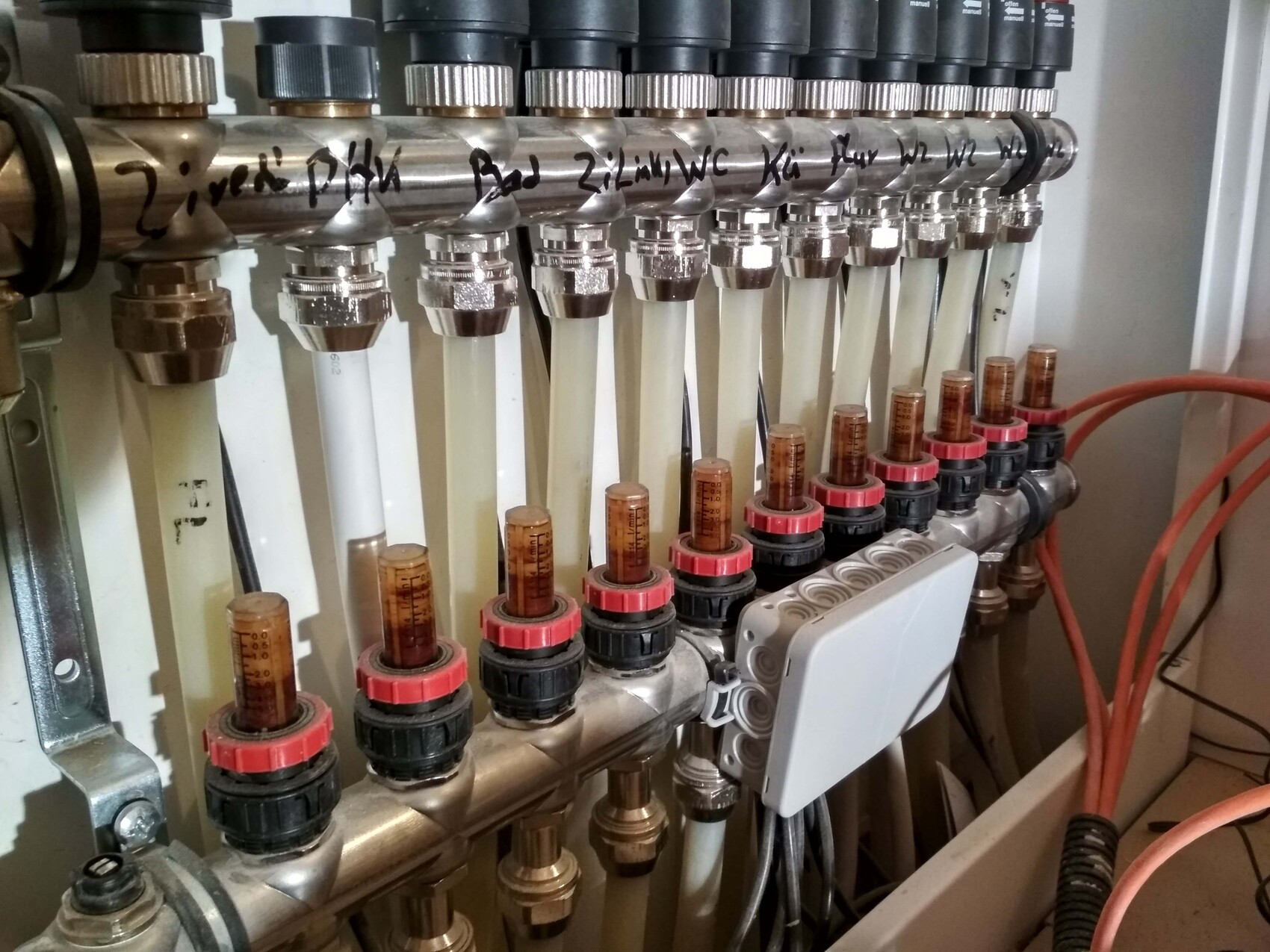
my heating system has been running for just over a year now. By chance, I recently noticed discoloration on the flow meters, see picture.
I filed a defect report with the general contractor, stating that the heating water appears rusty/sludgy, as evidenced by the flow meters. Their response was a casual statement that some discoloration on the flow meters is normal to a certain extent and that if there is a serious malfunction of the underfloor heating, it will of course be fixed.
Do your flow meters look like this as well?
C
cinderella2127 Jan 2019 09:32Ok, thank you.
Since we had the water damage caused by the pipe that rusted through on the outside, we have honestly been very uncertain.
Since we had the water damage caused by the pipe that rusted through on the outside, we have honestly been very uncertain.
@cinderella21 I can understand that you are very unsettled after such damage. Usually, the good old steel pipes hold up well, and as @Nordlys mentioned, there’s nothing obviously wrong with the pipe in the photo.
Even if substandard steel pipes were installed in your case, it doesn’t necessarily mean the entire floor needs to be removed.
The heating loops are made of composite pipes, which should be fine. Odd types of composite pipes did exist 30 years ago… I would wait for the insurance assessment and definitely install the sludge separator.
Even if substandard steel pipes were installed in your case, it doesn’t necessarily mean the entire floor needs to be removed.
The heating loops are made of composite pipes, which should be fine. Odd types of composite pipes did exist 30 years ago… I would wait for the insurance assessment and definitely install the sludge separator.

Composite pipes for underfloor heating or plastic pipes make a difference due to corrosion effects.
With composite pipes, corrosion is not to be expected. That is why a heat exchanger is often omitted in these systems.
So far, so good; however, steel components are still frequently installed in the system, for example, expansion vessels, towel radiators, or sometimes just fittings and connectors.
This leads to rust in the system, which can cause problems for high-efficiency pumps because they are highly magnetic. The consequences are easy to imagine. Rust deposits build up on components such as the heat exchanger, and so on.
With composite pipes, corrosion is not to be expected. That is why a heat exchanger is often omitted in these systems.
So far, so good; however, steel components are still frequently installed in the system, for example, expansion vessels, towel radiators, or sometimes just fittings and connectors.
This leads to rust in the system, which can cause problems for high-efficiency pumps because they are highly magnetic. The consequences are easy to imagine. Rust deposits build up on components such as the heat exchanger, and so on.
C
cinderella2127 Jan 2019 13:22A magnetic sludge separator prevents damage to the high-efficiency pump.
It is now confirmed that the corroded pipe has rusted from the outside, not from the inside.
It is now confirmed that the corroded pipe has rusted from the outside, not from the inside.
cinderella21 schrieb:
Does a magnetic dirt separator prevent damage to the high-efficiency pump?100 points.
It also slows down or prevents corrosion and blockages in plate heat exchangers.
I still need to install one myself sometime, I missed it back then and only have a microbubble separator installed.