
Hello,
my heating system has been running for just over a year now. By chance, I recently noticed discoloration on the flow meters, see picture.
I filed a defect report with the general contractor, stating that the heating water appears rusty/sludgy, as evidenced by the flow meters. Their response was a casual statement that some discoloration on the flow meters is normal to a certain extent and that if there is a serious malfunction of the underfloor heating, it will of course be fixed.
Do your flow meters look like this as well?
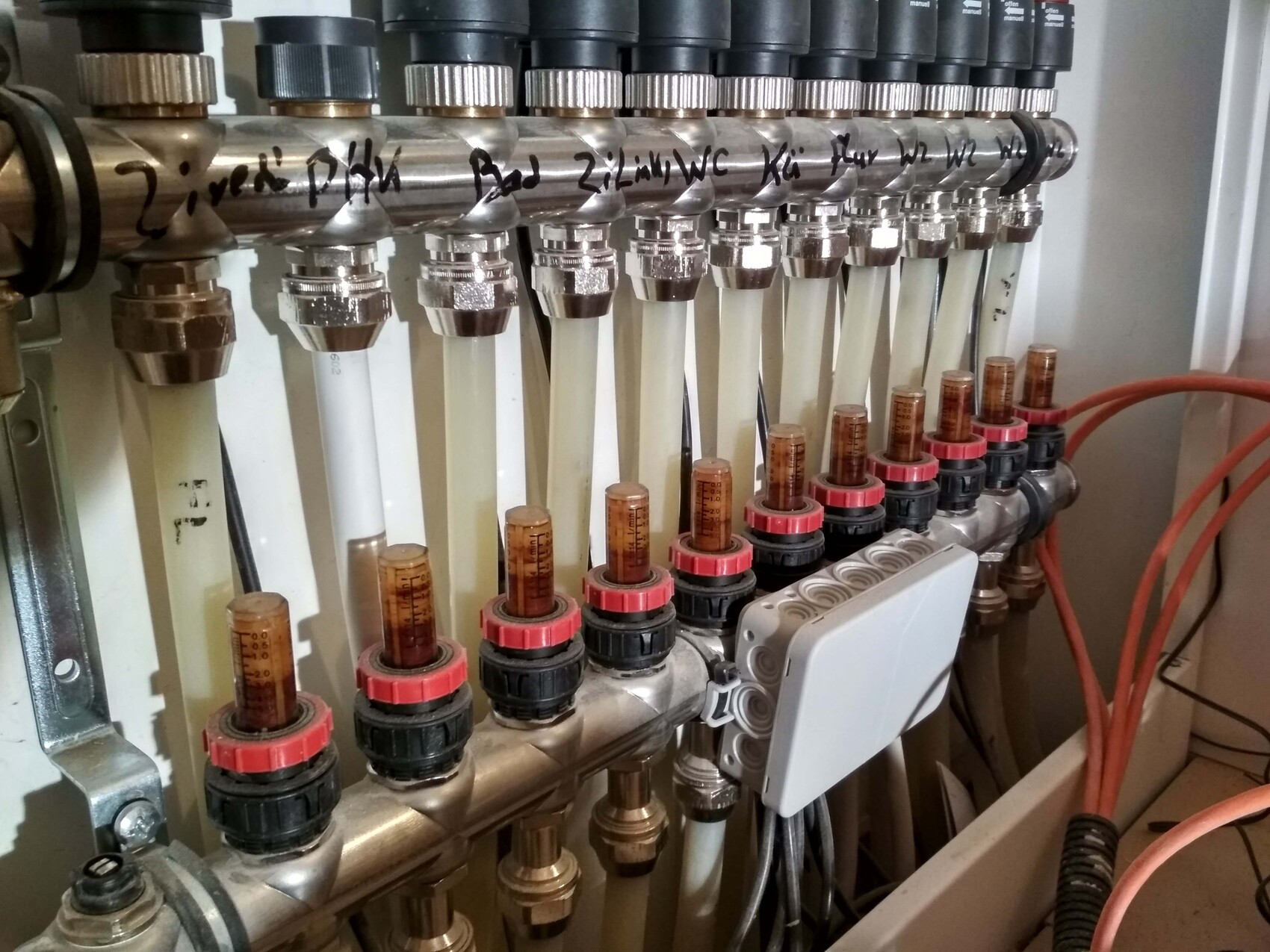
my heating system has been running for just over a year now. By chance, I recently noticed discoloration on the flow meters, see picture.
I filed a defect report with the general contractor, stating that the heating water appears rusty/sludgy, as evidenced by the flow meters. Their response was a casual statement that some discoloration on the flow meters is normal to a certain extent and that if there is a serious malfunction of the underfloor heating, it will of course be fixed.
Do your flow meters look like this as well?
Hello
I had exactly the same problem. The tubes showed brown discoloration. It also happened twice that a heating circuit was blocked. Iron crystals had settled there. This was about 10 years after the heating system was installed.
I discussed all possible options with the installer.
Installing a magnet with a filter. He said, that works, buuuut: the rust has to come from somewhere. And it is usually the expansion vessel. High-quality pipes and the cheapest junk for the vessel. Stainless steel would be appropriate there. Even if a magnet and filter are installed and the water is renewed, the cause will continue to corrode until the damage fails, and then it’s really bad. First check the cause. As I said, it’s usually the expansion vessel. I didn’t pursue the matter further because I sold the apartment.
Steven
I had exactly the same problem. The tubes showed brown discoloration. It also happened twice that a heating circuit was blocked. Iron crystals had settled there. This was about 10 years after the heating system was installed.
I discussed all possible options with the installer.
Installing a magnet with a filter. He said, that works, buuuut: the rust has to come from somewhere. And it is usually the expansion vessel. High-quality pipes and the cheapest junk for the vessel. Stainless steel would be appropriate there. Even if a magnet and filter are installed and the water is renewed, the cause will continue to corrode until the damage fails, and then it’s really bad. First check the cause. As I said, it’s usually the expansion vessel. I didn’t pursue the matter further because I sold the apartment.
Steven
C
cinderella2122 Feb 2019 11:13We have a towel radiator made of steel, as well as C-shaped steel pipes leading to the distribution box and to the towel radiator.
We will now hire an independent expert. However, we have to cover the costs ourselves.
We will now hire an independent expert. However, we have to cover the costs ourselves.
C
cinderella2122 Feb 2019 13:07I think this will also be a lengthy process. Unfortunately, something like this can be quite stressful. I just hope that the general contractor cooperates.
Similar topics