
ᐅ Neighbor building house next to garage, neighbor's wall is damp
Created on: 24 Jun 2020 19:42
U
untergasse43
Hello,
We are currently in a minor dispute with a neighbor regarding our old house. In this residential area, the houses are built directly adjacent to each other in this pattern: House | Garage | House | Garage | House | Garage, and so on.
Our house with garage has been there for almost 35 years. About 10 years ago, the neighbor built his house adjoining our garage and constructed the joint between our garage and his house wall himself. He used a copper sheet and plenty of silicone for this. The wall is on the weather-exposed side, and for some time now he has been complaining that his interior wall becomes damp during prolonged or heavy rain. However, our adjacent garage wall is completely dry (measured). He, or someone he hired who claims to be an expert, now argues that our garage roof drain is not functioning properly and that water from rain flows exclusively over the edge of our garage roof toward his wall. The drain works perfectly, and neither the roof nor our garage shows any signs of moisture intrusion.
I climbed onto the garage roof to take a look myself. At that time, he placed a copper sheet over the edge of our garage roof and covered it with beige plaster. The picture below shows this. My suspicion is that water is simply seeping in between the plaster and the copper sheet, making him responsible. As I said, our garage wall is completely dry.
What is your opinion on this?

The “collar” of our garage roof looks like this, for example:

Here is how it looks along the entire length:
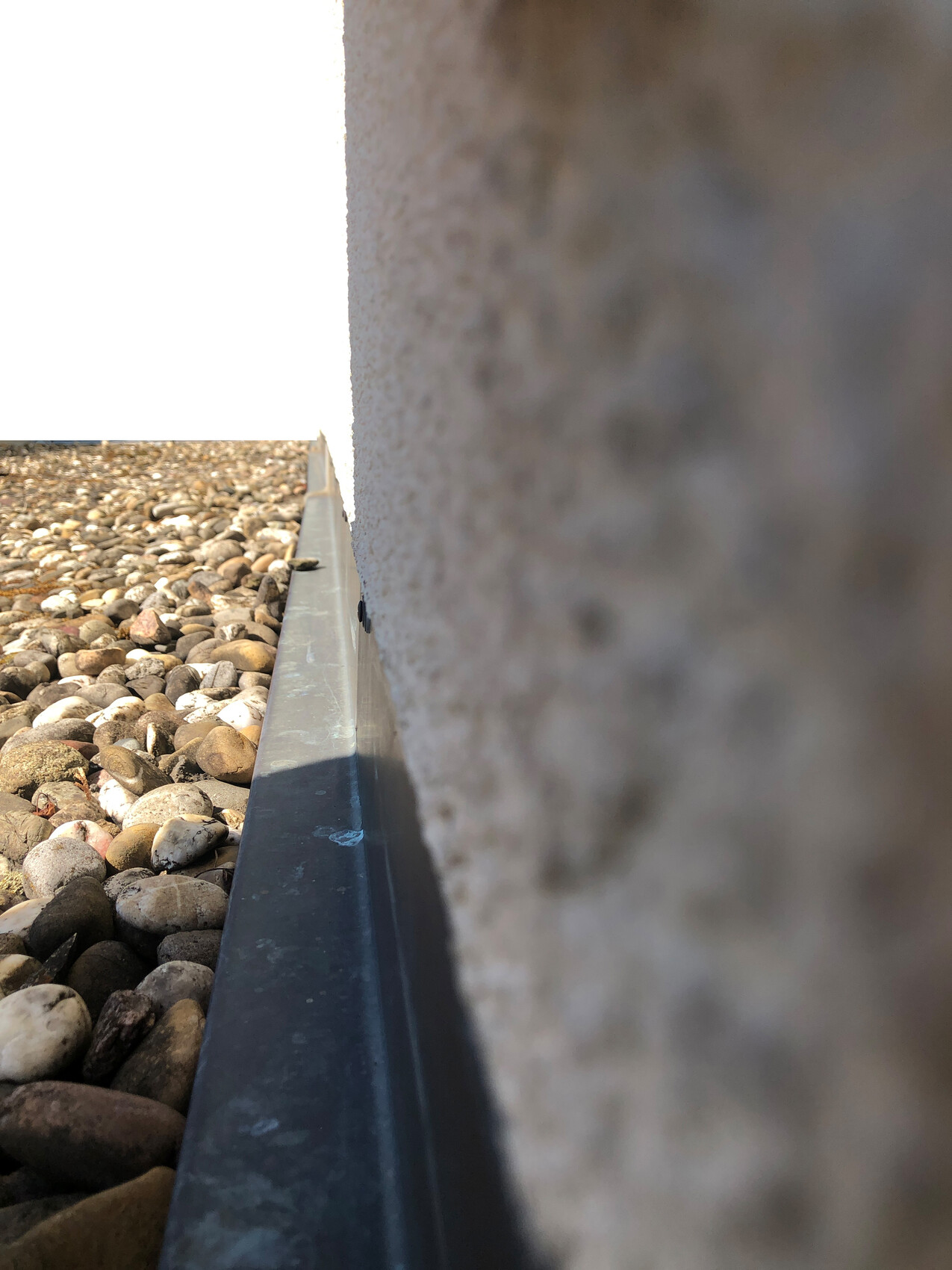
The connection to the neighbor on the other side was done this way, which I believe is better:

We are currently in a minor dispute with a neighbor regarding our old house. In this residential area, the houses are built directly adjacent to each other in this pattern: House | Garage | House | Garage | House | Garage, and so on.
Our house with garage has been there for almost 35 years. About 10 years ago, the neighbor built his house adjoining our garage and constructed the joint between our garage and his house wall himself. He used a copper sheet and plenty of silicone for this. The wall is on the weather-exposed side, and for some time now he has been complaining that his interior wall becomes damp during prolonged or heavy rain. However, our adjacent garage wall is completely dry (measured). He, or someone he hired who claims to be an expert, now argues that our garage roof drain is not functioning properly and that water from rain flows exclusively over the edge of our garage roof toward his wall. The drain works perfectly, and neither the roof nor our garage shows any signs of moisture intrusion.
I climbed onto the garage roof to take a look myself. At that time, he placed a copper sheet over the edge of our garage roof and covered it with beige plaster. The picture below shows this. My suspicion is that water is simply seeping in between the plaster and the copper sheet, making him responsible. As I said, our garage wall is completely dry.
What is your opinion on this?
The “collar” of our garage roof looks like this, for example:
Here is how it looks along the entire length:
The connection to the neighbor on the other side was done this way, which I believe is better:
H
HilfeHilfe25 Jun 2020 08:03It is strange that something is leaking after 10 years, or is this completely normal for older houses? If it is leaking in his place, he should take care of it.
How is this handled in your case?
How is this handled in your case?
 untergasse4325 Jun 2020 09:06
That’s exactly the question—why this is happening now. A few years ago, there were already some insects living between the garage and his house that got through gaps in his silicone sealant between the walls.
In my opinion, it’s his problem. However, he seems to want to shift the responsibility onto us. His relationship with almost all the surrounding neighbors is generally somewhat strained. In the coming days, there will be a conversation involving him, a tradesperson of his, and us. I would have liked to be better prepared for that discussion to determine whether his wall joint shows any obvious defects. It hasn’t escalated to the point of involving expert assessors yet. I just wanted to get a third opinion, ideally from knowledgeable laypeople as well.
In my opinion, it’s his problem. However, he seems to want to shift the responsibility onto us. His relationship with almost all the surrounding neighbors is generally somewhat strained. In the coming days, there will be a conversation involving him, a tradesperson of his, and us. I would have liked to be better prepared for that discussion to determine whether his wall joint shows any obvious defects. It hasn’t escalated to the point of involving expert assessors yet. I just wanted to get a third opinion, ideally from knowledgeable laypeople as well.
 Vicky Pedia25 Jun 2020 09:30
tomtom79 schrieb:
Then he doesn’t need to ask here at all, maybe 1-2 experts who only write something once in a blue moon. ahh! I didn’t know that!My opinion:
If everything is dry for you and the water drains away easily through your drainage system, just stay calm and it should be fine. He extended the building and then took care of the connection between the roof and the facade himself. Of course, it is difficult for him now to admit that he might have done something wrong. But when I see the amount of silicone used, I don’t think the connection was done properly. If he only sealed the gap with metal flashing and a large amount of silicone, the problem is probably located right there. Silicone is not suitable for a permanent seal and needs to be renewed from time to time. Most likely, that time has now come or is overdue.
The correct approach back then would have been to connect to your roof waterproofing and, for example, to extend roofing membrane up onto his house. Only then should the metal flashing be installed on top of the roofing membrane to secure it against detaching or other issues. But this is just my layman’s opinion, describing how I would have carried out this detail.
If everything is dry for you and the water drains away easily through your drainage system, just stay calm and it should be fine. He extended the building and then took care of the connection between the roof and the facade himself. Of course, it is difficult for him now to admit that he might have done something wrong. But when I see the amount of silicone used, I don’t think the connection was done properly. If he only sealed the gap with metal flashing and a large amount of silicone, the problem is probably located right there. Silicone is not suitable for a permanent seal and needs to be renewed from time to time. Most likely, that time has now come or is overdue.
The correct approach back then would have been to connect to your roof waterproofing and, for example, to extend roofing membrane up onto his house. Only then should the metal flashing be installed on top of the roofing membrane to secure it against detaching or other issues. But this is just my layman’s opinion, describing how I would have carried out this detail.

HilfeHilfe schrieb:
But it is strange that after 10 years something is leaking or Could the cause of the problem be related to aging?
Vicky Pedia schrieb:
Ah! I didn’t know that! Even if you are a professional, this is a homeowners’ forum. There are better forums for that, although remote diagnoses are, to put it mildly, nonsense.
tomtom79 schrieb:
Could the cause of the problem be related to the age?I am more inclined to believe that the cause of the problem is the improper installation of the waterproofing. However, regarding the amount of silicone used, you are probably right. In that case, the age is likely the issue.
Similar topics