
ᐅ Masonry - closing/filling the wall cavity behind the underfloor heating manifold
Created on: 2 Jun 2022 23:09
S
selaerb
Dear community,
I am still at the beginning of my journey in the construction industry, but as a homeowner, I want to handle the following challenge myself.
After the back wall of the underfloor heating manifold was closed incorrectly (moisture, the wall never dried), I removed the finished interior plaster wall.
Attached are the pictures, before and after, as well as the other side of the wall.
Am I on the right track if I use XPS boards as the first layer (securing them with foam) and then fill the wall with ready-mixed plaster?
Looking forward to your answers
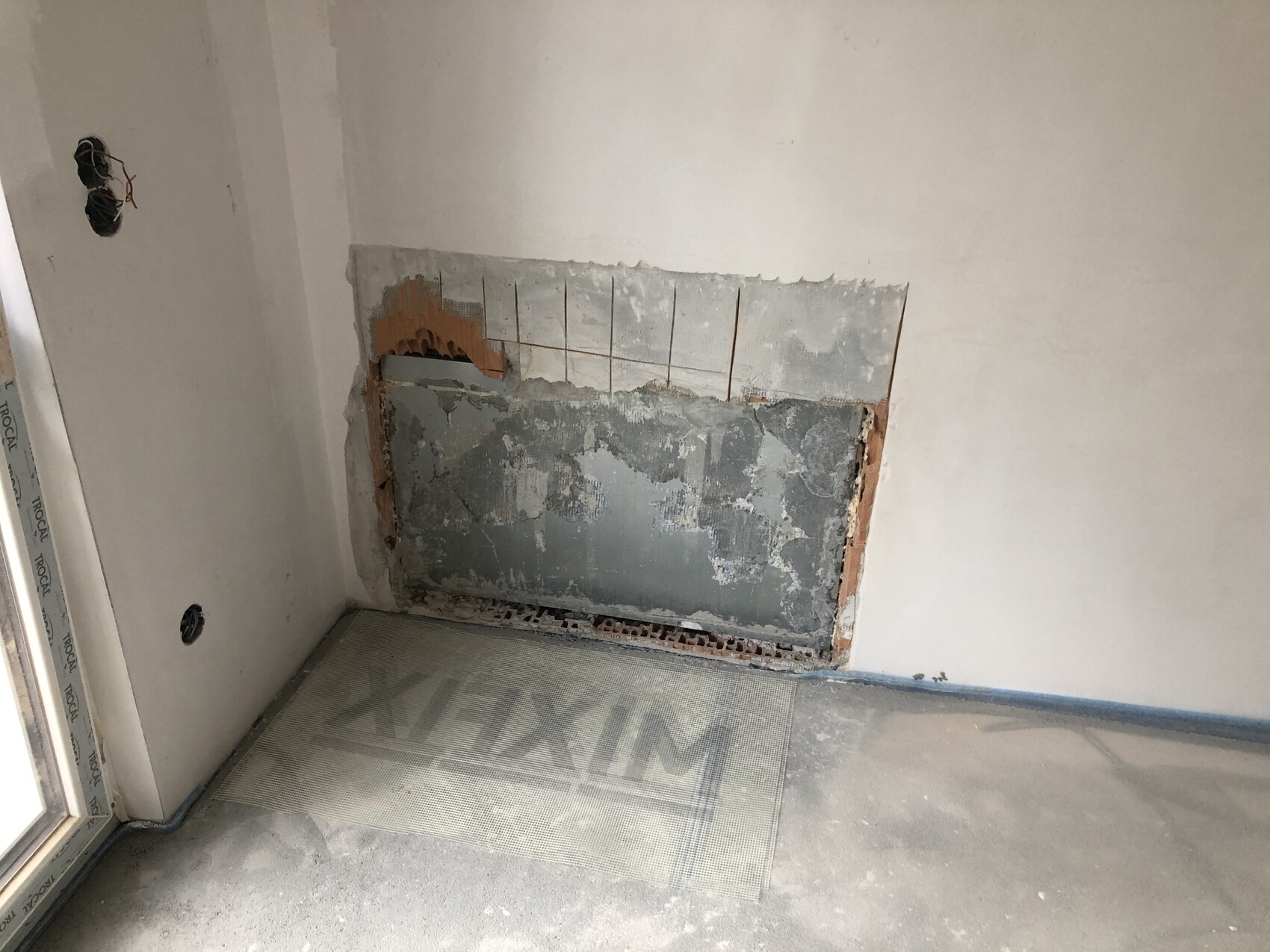
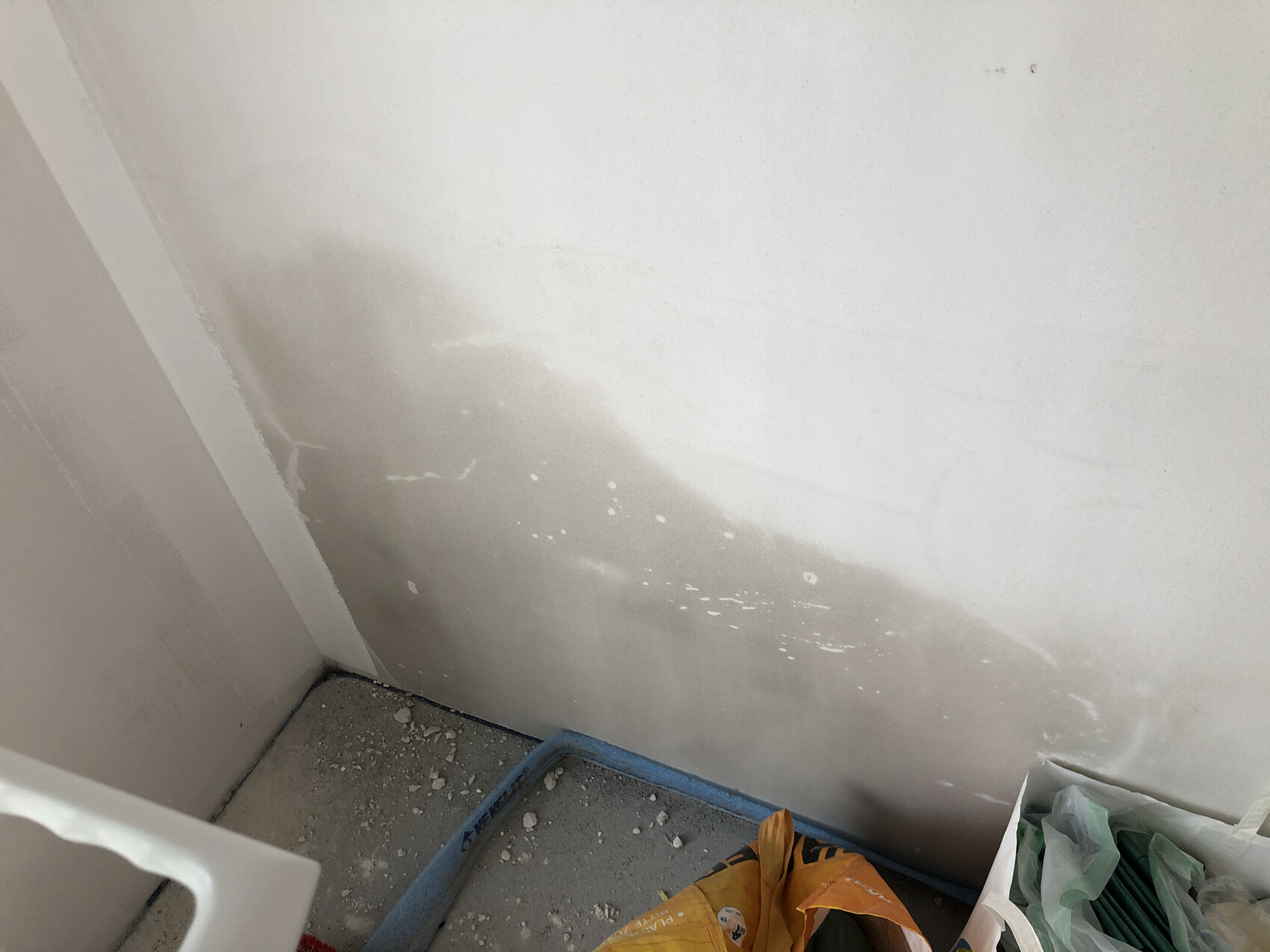
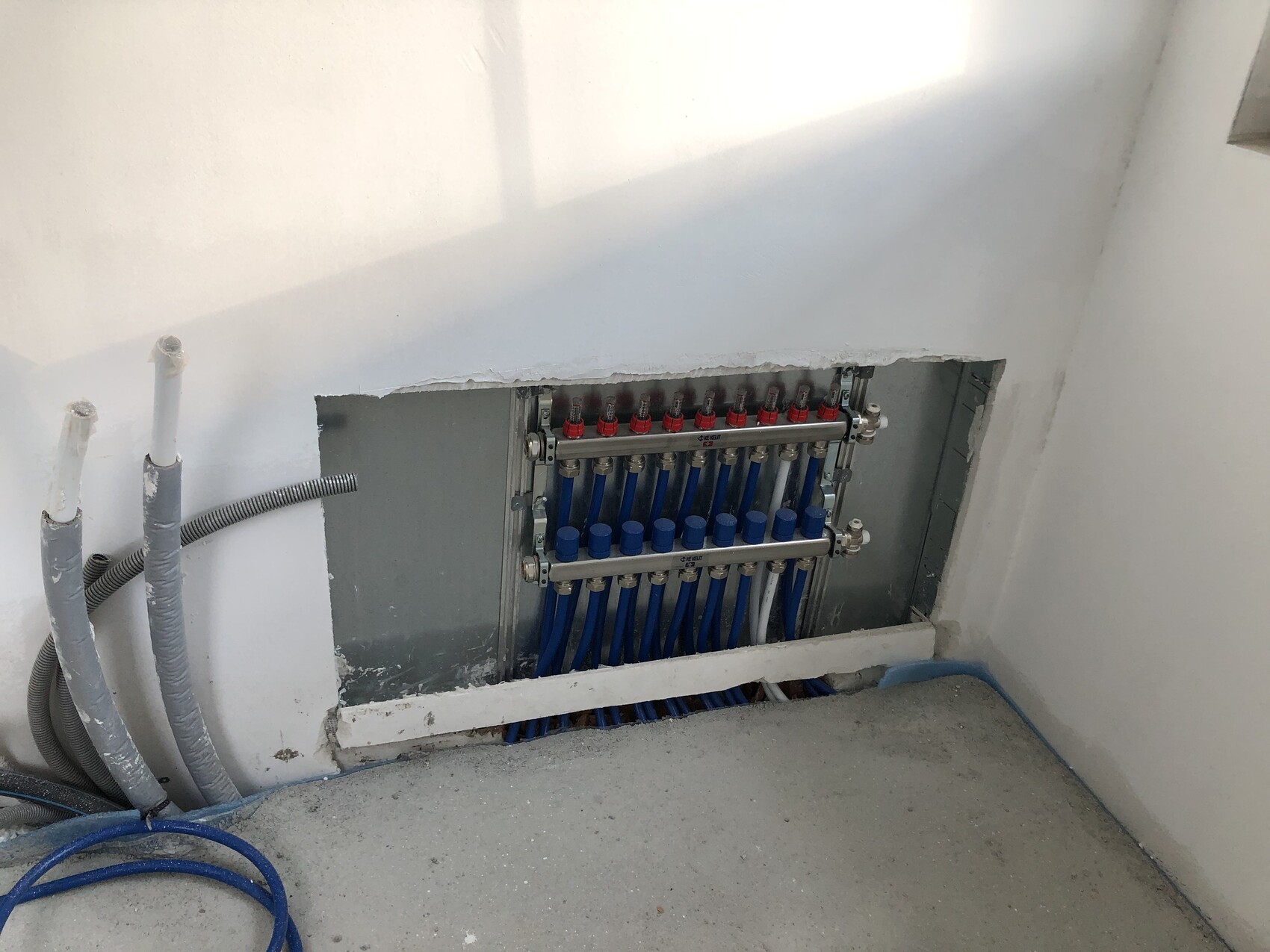
I am still at the beginning of my journey in the construction industry, but as a homeowner, I want to handle the following challenge myself.
After the back wall of the underfloor heating manifold was closed incorrectly (moisture, the wall never dried), I removed the finished interior plaster wall.
Attached are the pictures, before and after, as well as the other side of the wall.
Am I on the right track if I use XPS boards as the first layer (securing them with foam) and then fill the wall with ready-mixed plaster?
Looking forward to your answers
selaerb schrieb:
Finish plaster? Gypsum plaster (from Rimano)? Or something else?It makes sense to use the same material as the rest of the wall. At least the same type of plaster, for example gypsum plaster. Otherwise, the surface will look completely different, and you probably don’t want that. As a layperson, you won’t be able to make it "disappear" anyway.
What do you mean by finish plaster? Something from a bucket? No. A bag, mixed on site.
I still find it interesting why it stayed damp. That’s actually not normal. How thick was the plaster layer?
jcan schrieb:
In theory, you can apply any type of plaster there.
But since you probably want to apply the same plaster that’s already on the wall, it will likely be a gypsum-based plaster. The specific type of gypsum plaster doesn’t really matter. If you have a bigger budget, you could also use a gypsum-based finishing compound.
In the end, it will be the same as what your plasterer did. The primer couldn’t have been so wet that the plaster stayed damp for that long. If it was Styrofoam, he might have applied a thin scratch coat with adhesive. What I suggested, for example, is basically the same, except it’s not Styrofoam but a rigid foam board that already has the primer on it. The main moisture is in the gypsum plaster, and if there’s no other cause, the drying simply takes time. Under poor conditions, drying can take weeks (even if the weather doesn’t suggest it).That’s the issue. The plaster should have been dry by now. Throughout the whole house, the plastering is very well done (machine-applied plaster). But at the spot where the distribution box is, someone else did the work.
- Styrofoam, mesh/fabric, and some kind of adhesive plaster.
I gave the wall 5-7 weeks, and whenever I checked, it was still damp. Sometimes less damp, but it never fully dried. I suspected that the adhesive wasn’t properly dry yet—meaning the plaster was applied too soon. But the plaster itself isn’t at fault...
I will probably start with a layer of rigid foam insulation board (Styrodur), then mesh/fabric, and plaster on top (mixed by myself). I’m just considering whether to use these plaster carrier boards…
Best regards
guckuck2 schrieb:
It makes sense to use the same material as the rest of the wall. At least the same type of plaster, for example, gypsum plaster. Otherwise, the surface will look completely different, and you probably don’t want that—you won’t be able to “blend” it in as an amateur anyway.
What do you mean by ready-mixed plaster? Something from a bucket? No. It should come in a bag and be mixed on site.
I still find the question interesting why it stayed damp. That’s not normal. How thick was the plaster layer? The good thing (for now) is that the room hasn’t been skim-coated or painted yet. That comes last. So I’m not worried that the surface will look different at that spot.
Plaster thickness 2–2.5 cm (0.8–1 inch)
Yes, definitely mixed on site myself
Similar topics