
ᐅ Masonry - closing/filling the wall cavity behind the underfloor heating manifold
Created on: 2 Jun 2022 23:09
S
selaerb
Dear community,
I am still at the beginning of my journey in the construction industry, but as a homeowner, I want to handle the following challenge myself.
After the back wall of the underfloor heating manifold was closed incorrectly (moisture, the wall never dried), I removed the finished interior plaster wall.
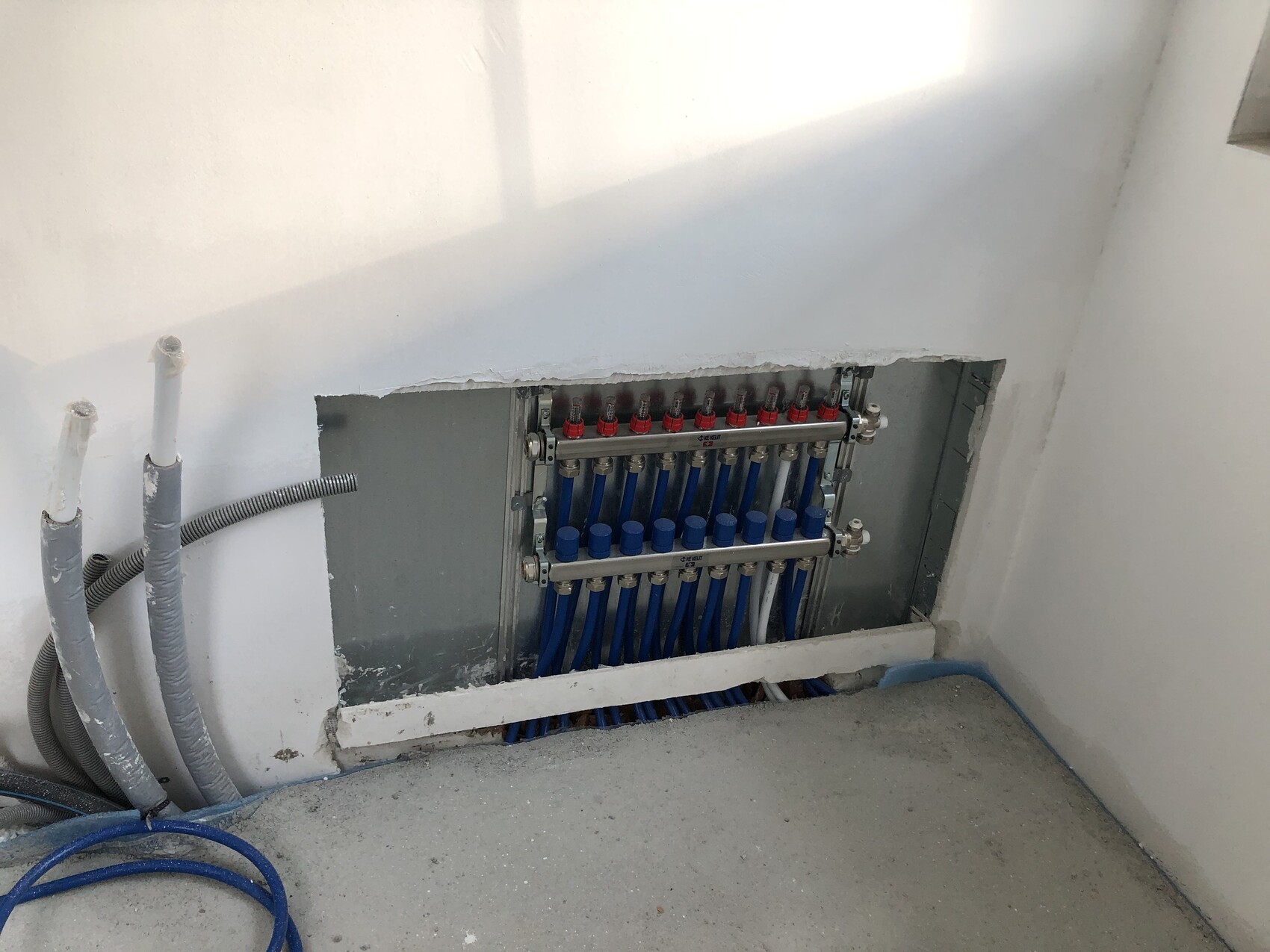
Attached are the pictures, before and after, as well as the other side of the wall.
Am I on the right track if I use XPS boards as the first layer (securing them with foam) and then fill the wall with ready-mixed plaster?
Looking forward to your answers
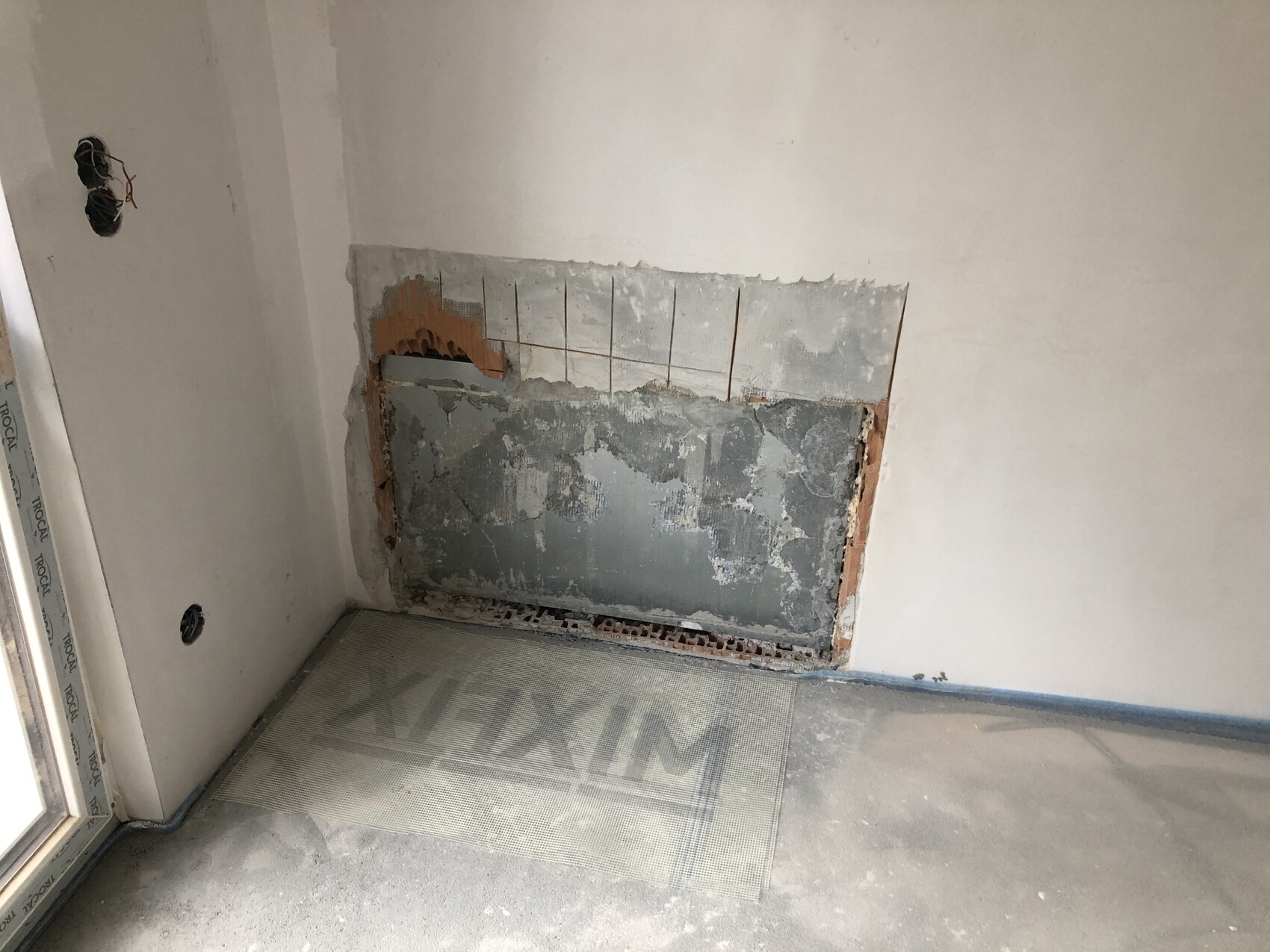
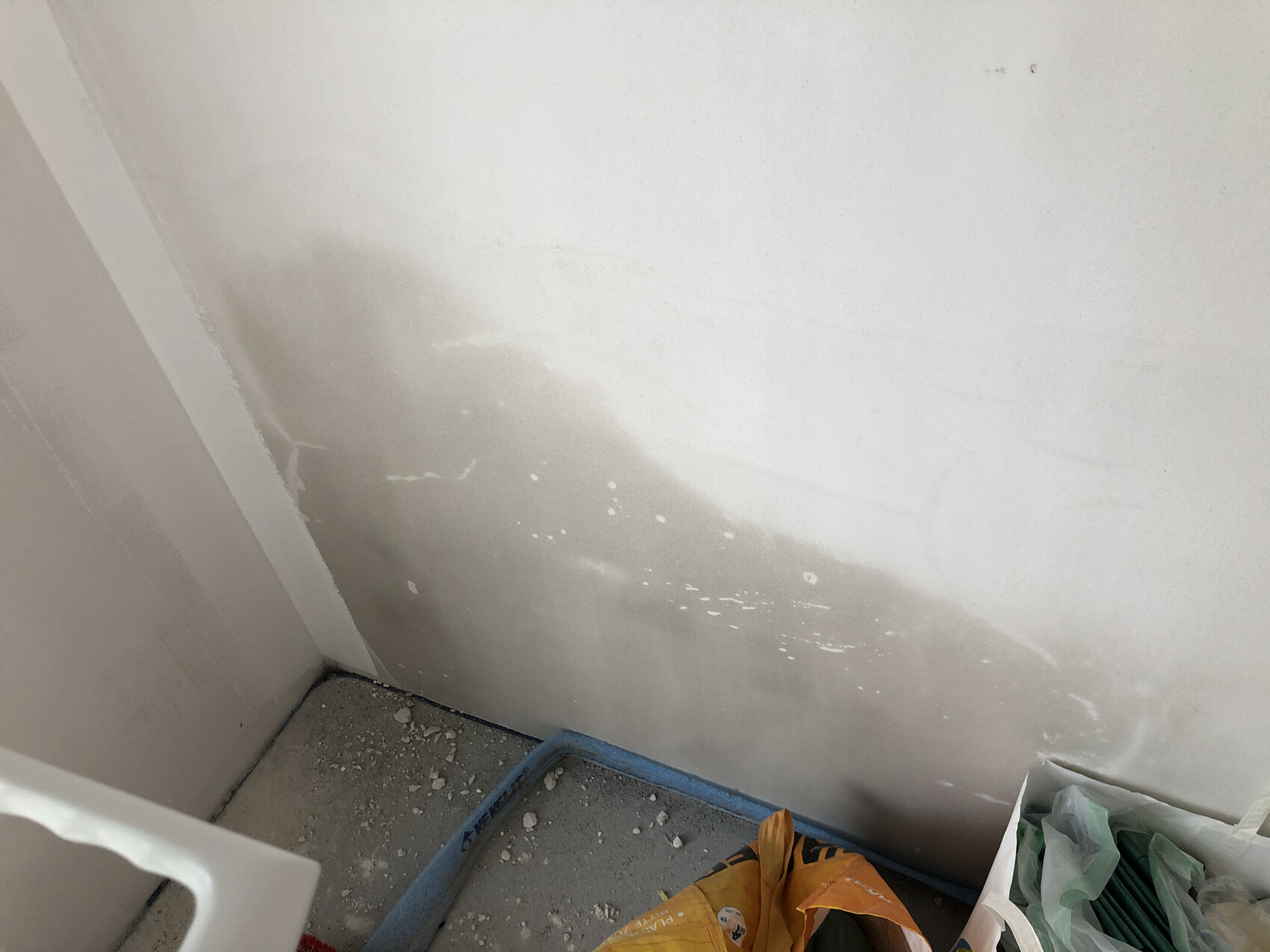
I am still at the beginning of my journey in the construction industry, but as a homeowner, I want to handle the following challenge myself.
After the back wall of the underfloor heating manifold was closed incorrectly (moisture, the wall never dried), I removed the finished interior plaster wall.
Attached are the pictures, before and after, as well as the other side of the wall.
Am I on the right track if I use XPS boards as the first layer (securing them with foam) and then fill the wall with ready-mixed plaster?
Looking forward to your answers
i_b_n_a_n schrieb:
Hello, how can a wall be "closed off" incorrectly so that it doesn’t dry out (releasing moisture into the room)?
Are you sure the moisture is not coming from leaks in the heating manifold and rising up?
Have you ever had to refill water (heating system) or check the pressure?
Otherwise, XPS boards are insulation material; I would rather use plaster carrier boards or calcium silicate boards as the material. It’s a new build. The heating system has never been used before, so it can’t be condensation or the manifold. I think the issue is that simple polystyrene was used, followed by an adhesive layer that didn’t dry properly. Then the plaster was applied right on top...
Pinkiponk schrieb:
I can’t answer your question specifically, but maybe it helps to share how we solved it:
Is there a practical reason why your underfloor heating manifold is hidden behind a “normal” wall? For us, instead of a wall, there is a white door, somewhat similar but nicer than an electrical panel door, so we always have access to the underfloor heating manifold. Though I might be confusing something, since I’m not very familiar with the technical side. I’m not here to chat… sorry.
But the manifold is not hidden. There is a photo attached showing how the manifold looks from the front, and a door will be installed there. I don’t need a door at the back, I want to close it off. But this isn’t really relevant to the topic.
guckuck2 schrieb:
The door is on the other side of the wall (see last picture).
Insert the plaster carrier board and then apply something over it.
Whether XPS would also work... probably yes, but there are more suitable materials for this purpose ;-)
A plasterer would probably just embed a mesh and then cover it using a machine. With what “over it”? What will be applied there?
Pinkiponk schrieb:
I would like to learn more, so here’s my question—no argument intended ;-) is there any downside to having doors on both sides?Aesthetic reasons.
The contents of the heating control valve are also mounted on one side.
selaerb schrieb:
Covered with what? What goes there?Well, plaster?!
guckuck2 schrieb:
Appearance.
The contents of the central heating valve are also mounted on it somewhere.
Well, plaster?! Finished plaster? Gypsum plaster (from Rimano)? Or?
In theory, you can apply any type of plaster there.
However, since you probably want to use the same type that is already on the wall, it will most likely be a gypsum plaster. The specific type of gypsum plaster doesn’t really matter. If you have a generous budget, you could also use a gypsum-based filler.
In the end, it will be the same as what your plasterer applied. The primer couldn’t have been so wet that the plaster stays damp for that long. If it was polystyrene, he might have applied a kind of scratch coat with an adhesive in a thin layer. What I suggested, for example, is essentially the same, except that it’s not polystyrene but a rigid foam that already has the primer on it. The main moisture is in the gypsum plaster, and if there is no other cause, the drying just takes time. Under poor conditions, you might have to wait for weeks (even if the weather doesn’t currently suggest that).
However, since you probably want to use the same type that is already on the wall, it will most likely be a gypsum plaster. The specific type of gypsum plaster doesn’t really matter. If you have a generous budget, you could also use a gypsum-based filler.
In the end, it will be the same as what your plasterer applied. The primer couldn’t have been so wet that the plaster stays damp for that long. If it was polystyrene, he might have applied a kind of scratch coat with an adhesive in a thin layer. What I suggested, for example, is essentially the same, except that it’s not polystyrene but a rigid foam that already has the primer on it. The main moisture is in the gypsum plaster, and if there is no other cause, the drying just takes time. Under poor conditions, you might have to wait for weeks (even if the weather doesn’t currently suggest that).
Similar topics