
ᐅ Lime Efflorescence on Paving Stones: Solutions for Water Accumulation and Waterproofing in Vaulted Cellars
Created on: 2 Dec 2025 20:01
T
TottiF37Hello everyone,
I’m a bit puzzled and hope someone can help me.
About two years ago, we redid our driveway. Since just under one-third of the driveway covers a vaulted cellar, we decided to pave over the concrete surface of the cellar. To be on the safe side, we had this area fully waterproofed so that no water could enter the cellar through minor cracks in the concrete (see pictures). Unfortunately, the paving stones were laid directly against the base of the wall, meaning no drainage membrane or similar was installed. As far as I can tell, the base was professionally plastered with waterproof slurry and base plaster after the paving was completed.
The paving stones near the house side (at the base) develop complete lime efflorescence during cold and wet seasons, which also affects the base. Whenever I brush this area with water, it looks fine momentarily, but after a few days following this “treatment,” the deposits worsen significantly. This area is protected by the roof, so it normally should not get wet. None of the other parts of the driveway show similar efflorescence.
For this reason, I have the following suspicion: Because this area is not regularly washed by rainwater, the lime from the stones is not being washed out. Additionally, I suspect that the gravel underneath the stones in this area cannot dry properly during the cold season, which increases the efflorescence.
Do you have any other ideas? What could be the cause? Any suggestions for solutions?
I appreciate your help!
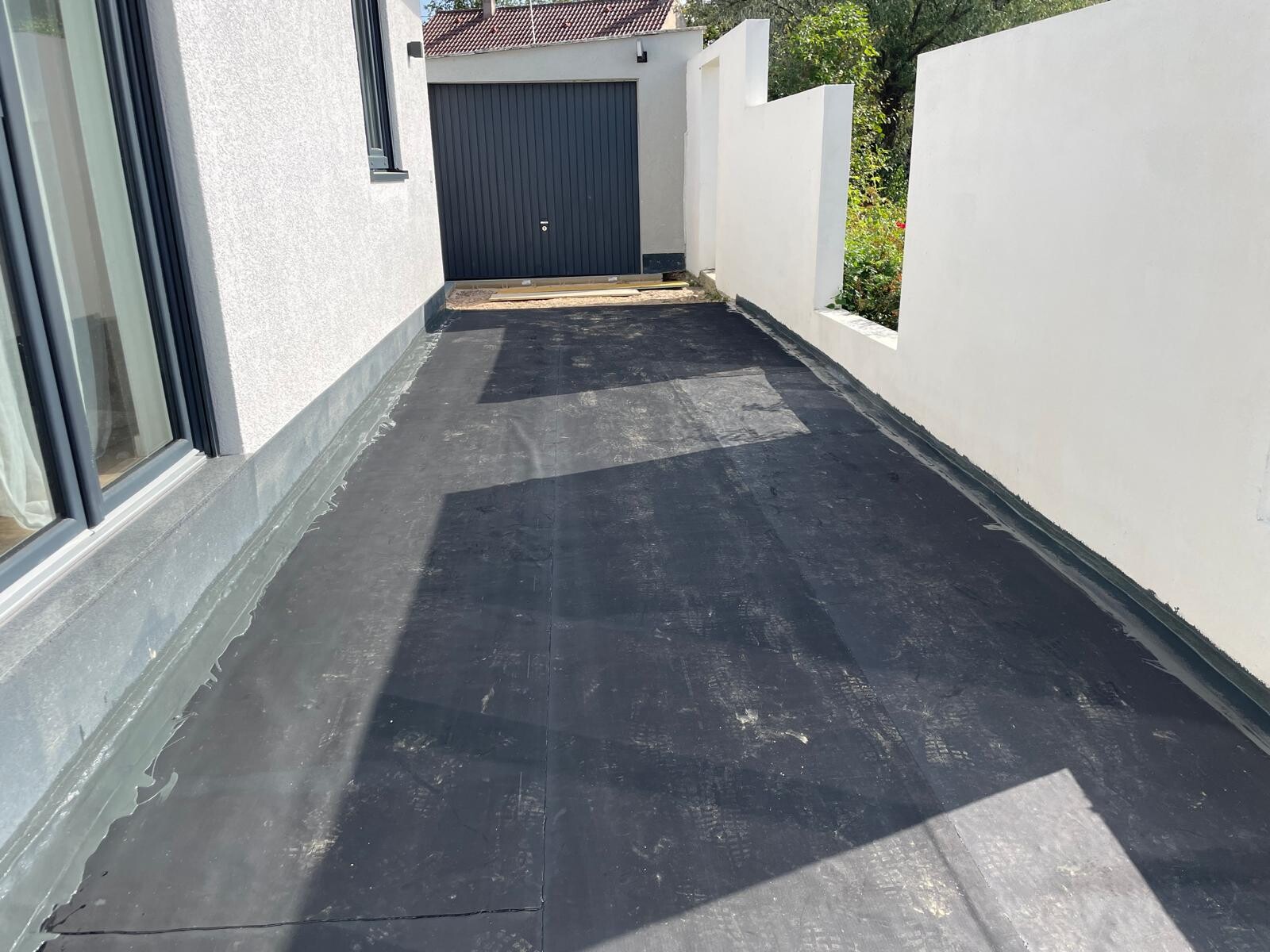
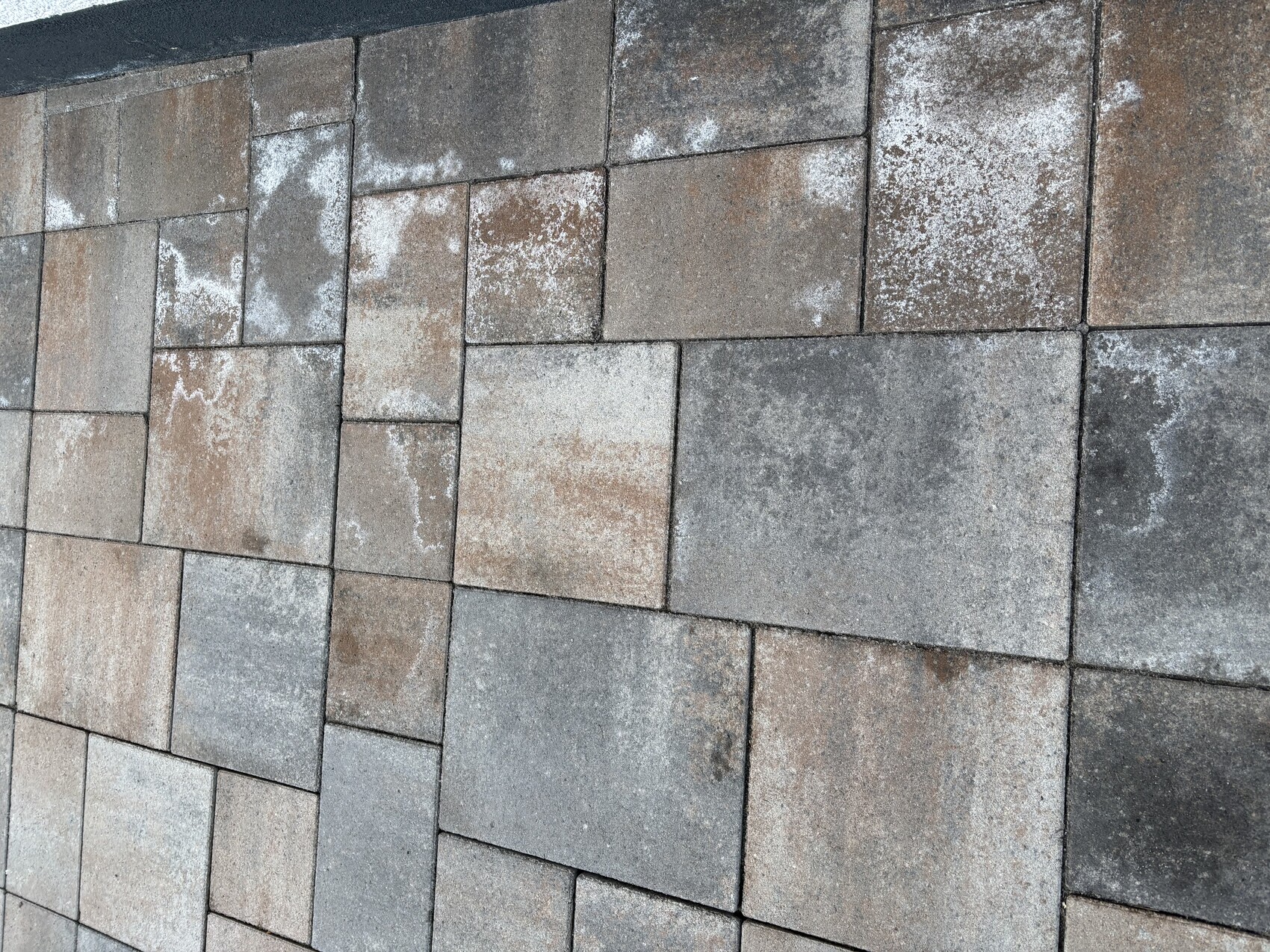

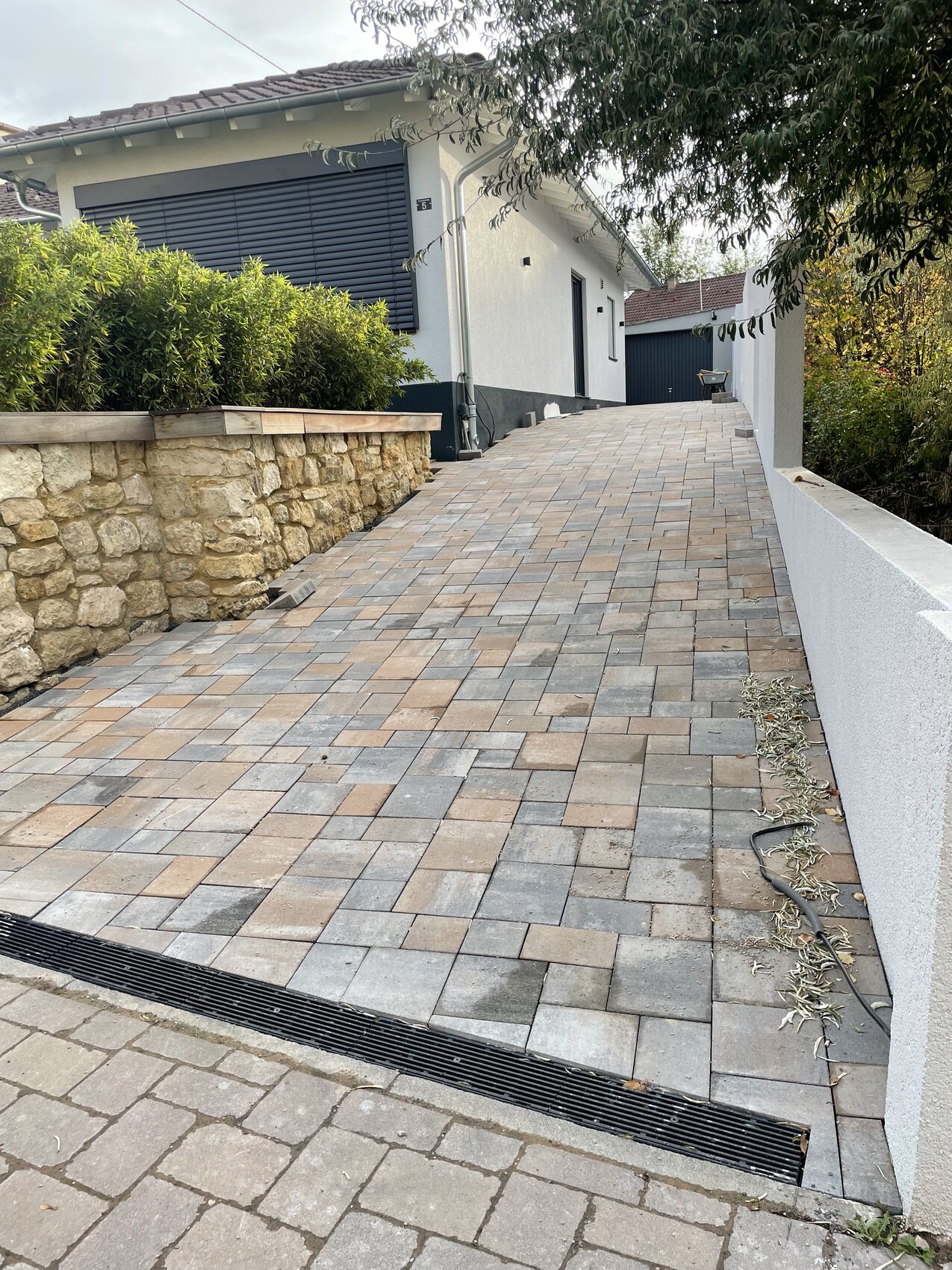
I’m a bit puzzled and hope someone can help me.
About two years ago, we redid our driveway. Since just under one-third of the driveway covers a vaulted cellar, we decided to pave over the concrete surface of the cellar. To be on the safe side, we had this area fully waterproofed so that no water could enter the cellar through minor cracks in the concrete (see pictures). Unfortunately, the paving stones were laid directly against the base of the wall, meaning no drainage membrane or similar was installed. As far as I can tell, the base was professionally plastered with waterproof slurry and base plaster after the paving was completed.
The paving stones near the house side (at the base) develop complete lime efflorescence during cold and wet seasons, which also affects the base. Whenever I brush this area with water, it looks fine momentarily, but after a few days following this “treatment,” the deposits worsen significantly. This area is protected by the roof, so it normally should not get wet. None of the other parts of the driveway show similar efflorescence.
For this reason, I have the following suspicion: Because this area is not regularly washed by rainwater, the lime from the stones is not being washed out. Additionally, I suspect that the gravel underneath the stones in this area cannot dry properly during the cold season, which increases the efflorescence.
Do you have any other ideas? What could be the cause? Any suggestions for solutions?
I appreciate your help!
Hi Totti,
your suspicion is quite close, though I would put it less romantically 😉 The area simply dries too slowly and at the same time has no chance of getting rid of washed-out salts. This exact combination causes efflorescence, which gets slightly worse each year. If the base coat plaster is absorbent, it draws moisture and salts upwards, as you have already observed. Have you checked whether the base waterproofing really extends below the edge of the paving? Many installers miss it by 2 to 3 cm (1 to 1¼ inches) and then wonder why. A vertical separation layer would have been mandatory, at least to limit capillary-active movements. What do you think about retrofitting a narrow perimeter joint with permanently elastic material instead of the current full contact with the wall?
Good luck!
your suspicion is quite close, though I would put it less romantically 😉 The area simply dries too slowly and at the same time has no chance of getting rid of washed-out salts. This exact combination causes efflorescence, which gets slightly worse each year. If the base coat plaster is absorbent, it draws moisture and salts upwards, as you have already observed. Have you checked whether the base waterproofing really extends below the edge of the paving? Many installers miss it by 2 to 3 cm (1 to 1¼ inches) and then wonder why. A vertical separation layer would have been mandatory, at least to limit capillary-active movements. What do you think about retrofitting a narrow perimeter joint with permanently elastic material instead of the current full contact with the wall?
Good luck!
Efflorescence occurs because moisture from the ground cannot drain properly. -> Install a 2-3 cm (1-1¼ inch) gap between the paving and the base using a permanently elastic sealing compound. This prevents capillary action and protects the base. By the way, adding a dimpled membrane or vertical waterproofing afterwards could help…
Good night!
Good night!
Similar topics