
ᐅ Installing pavers with a 2 cm gap, similar to grass joint paving?
Created on: 23 Aug 2024 10:20
D
darksunHello,
we would like to pave our entrance area with paving stones (or have it paved). These are not so-called lawn joint pavers. However, we would still prefer wider joints to sow a special grass mixture in the gaps and allow it to grow.
Lawn joint pavers come from the factory with built-in spacers corresponding to the joint width. Is it possible to install regular paving stones (according to the manufacturer, fill joint material of 1–3 mm (0.04–0.12 inches)) on a gravel base in a way that the stones are stable but still have uniform 2 cm (0.8 inch) joints? Are there spacers available, similar to those used for floor or wall tiles, that can be used as a guide?
This is how it should look in the end, see picture / or this is how it looks when the stones are laid "normally".
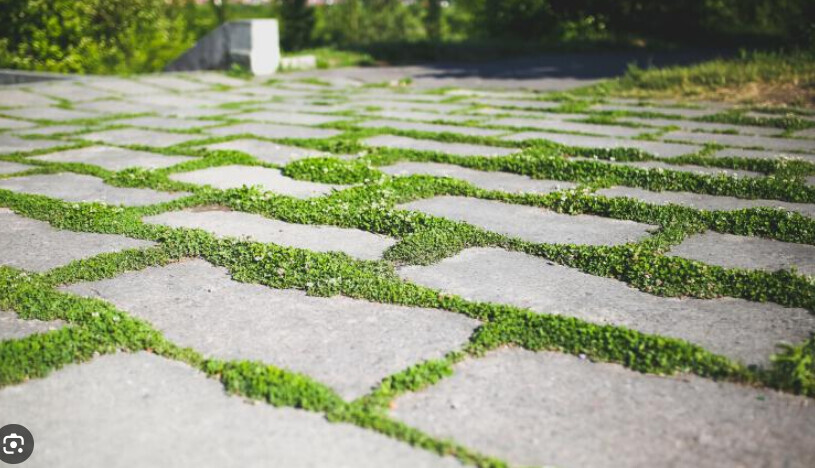
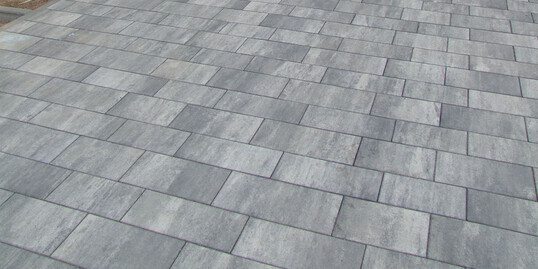
we would like to pave our entrance area with paving stones (or have it paved). These are not so-called lawn joint pavers. However, we would still prefer wider joints to sow a special grass mixture in the gaps and allow it to grow.
Lawn joint pavers come from the factory with built-in spacers corresponding to the joint width. Is it possible to install regular paving stones (according to the manufacturer, fill joint material of 1–3 mm (0.04–0.12 inches)) on a gravel base in a way that the stones are stable but still have uniform 2 cm (0.8 inch) joints? Are there spacers available, similar to those used for floor or wall tiles, that can be used as a guide?
This is how it should look in the end, see picture / or this is how it looks when the stones are laid "normally".
M
MachsSelbst23 Aug 2024 10:25What would be the downside of making or improvising your own spacers?
Yes, it’s possible to do it with wood or similar materials.
But does it actually “work,” and is it “stable” enough so that the joint between the paving stones doesn’t shift?
A paver was on site and was rather reluctant to do it that way... he preferred using open joint grass pavers (which are only available in a few colors that we don’t really like and are smaller).
As a layperson, I could also imagine that it might work (at least with “spacers”), so I’m asking if anyone might have experience with this or something similar...
Also, a professional paver would have to be willing to install it with 2cm (0.8 inches) joints because of their warranty, which might be an issue.
But does it actually “work,” and is it “stable” enough so that the joint between the paving stones doesn’t shift?
A paver was on site and was rather reluctant to do it that way... he preferred using open joint grass pavers (which are only available in a few colors that we don’t really like and are smaller).
As a layperson, I could also imagine that it might work (at least with “spacers”), so I’m asking if anyone might have experience with this or something similar...
Also, a professional paver would have to be willing to install it with 2cm (0.8 inches) joints because of their warranty, which might be an issue.
We installed "true" lawn pavers/pavement stones (meaning, with integrated, invisible spacers), but the manufacturer of our stones (Limex) offers lawn joint crosses and T-pieces in their product range that are specifically designed for these purposes – so you can also lay standard stones with lawn joints in either a basket weave or stretcher bond pattern. I believe they don’t manufacture these themselves but they look very similar to products from Plattenfix.
It makes sense to choose one manufacturer who offers such a system; then you can inquire about the load classes for which these types of installed stones are suitable.
Tip: consider whether you want grass or sedum.
It makes sense to choose one manufacturer who offers such a system; then you can inquire about the load classes for which these types of installed stones are suitable.
Tip: consider whether you want grass or sedum.
M
MachsSelbst23 Aug 2024 12:11Wood weathers over time; I was thinking more of plastic or concrete. For example, joint spacers.
I don’t really believe you’ll find a professional company to install it like that. Especially because it will be quite tricky if the stones don’t have those spacers built in and you have to force them in yourself.
In the end, it will probably come down to people with Eastern European license plates. They’ll also pave your driveway with a slope towards the house, as my neighbor tried out…
I don’t really believe you’ll find a professional company to install it like that. Especially because it will be quite tricky if the stones don’t have those spacers built in and you have to force them in yourself.
In the end, it will probably come down to people with Eastern European license plates. They’ll also pave your driveway with a slope towards the house, as my neighbor tried out…

MachsSelbst schrieb:
Wood weathers, I was thinking about plastic or concrete. Tile spacers, for example. The XXL tile spacers can be made cheaply by a 3D printing enthusiast. Or you can use pipes or hoses.
MachsSelbst schrieb:
In that case, it will probably come down to people with Eastern European license plates. They’ll even pave a driveway with a slope towards the house—I’ve seen my neighbor try that... https://www.instagram.com/11antgmxde/
https://www.linkedin.com/company/bauen-jetzt/
Similar topics