
Hello everyone,
We plan to start the exterior work on our property in autumn this year or spring next year.
We have an area of about 1200 sq m (12,917 sq ft) behind the house, mostly planted with grass. There is a hedge around the perimeter, along with some bushes, and a compost heap for green waste.
We want to install a carport there, as well as a small vegetable garden (~20-30 sq m (215-323 sq ft)).
Everything else, like play equipment for the children, will go on the lawn.
Now to our problem.
The lawn—or rather, there is hardly any grass left. Mostly weeds, moss, and patches of remaining turf.
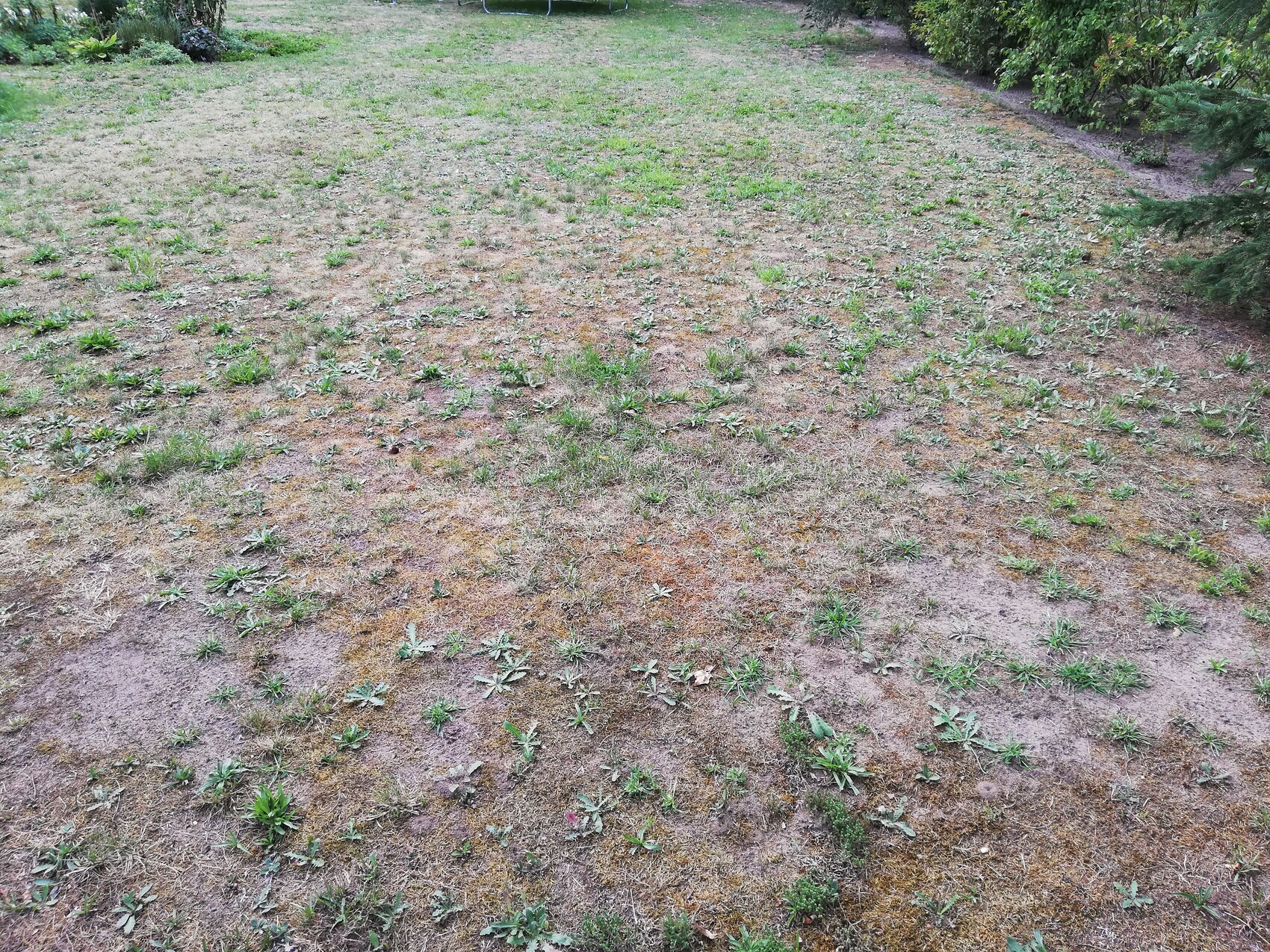
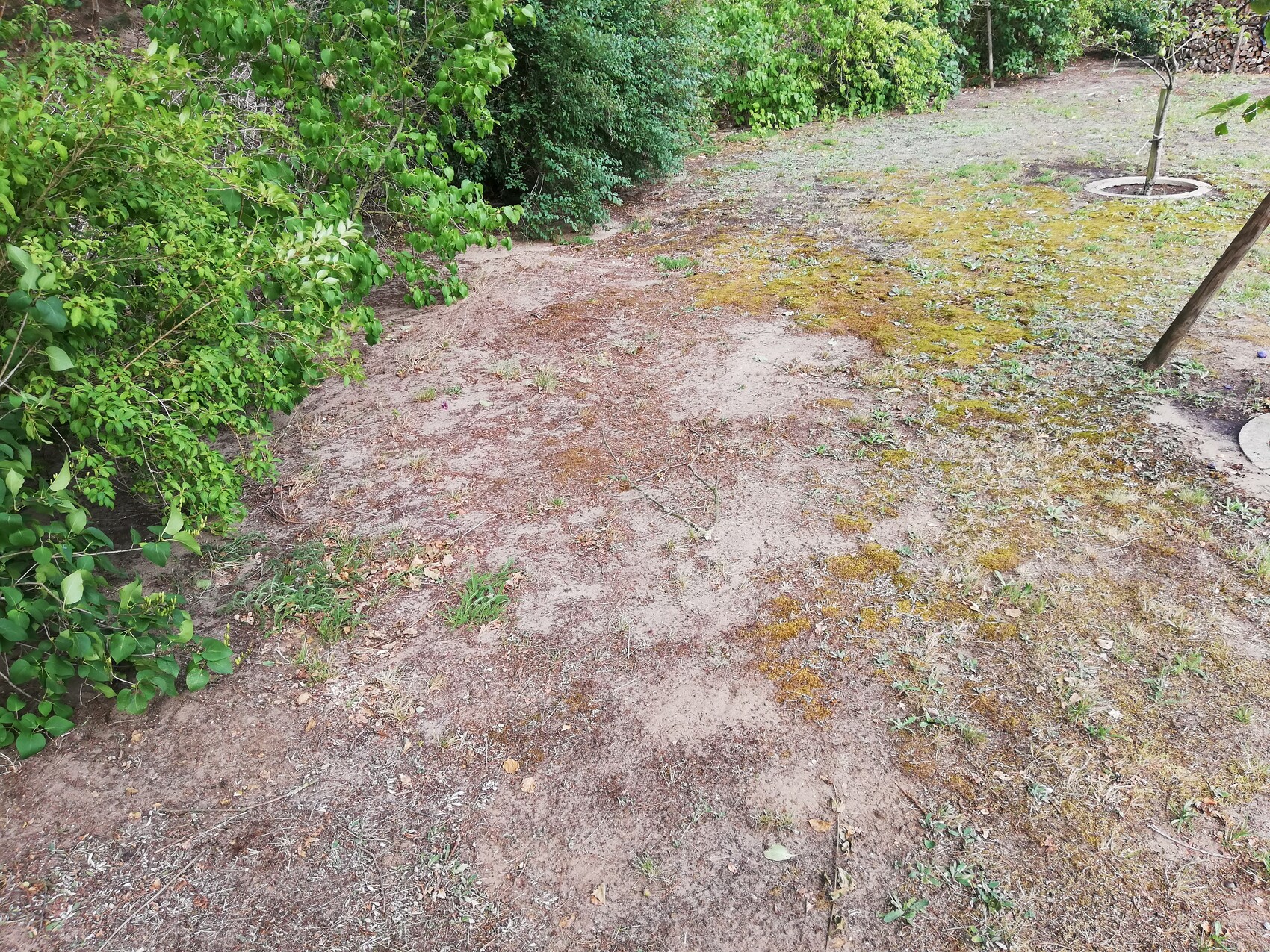
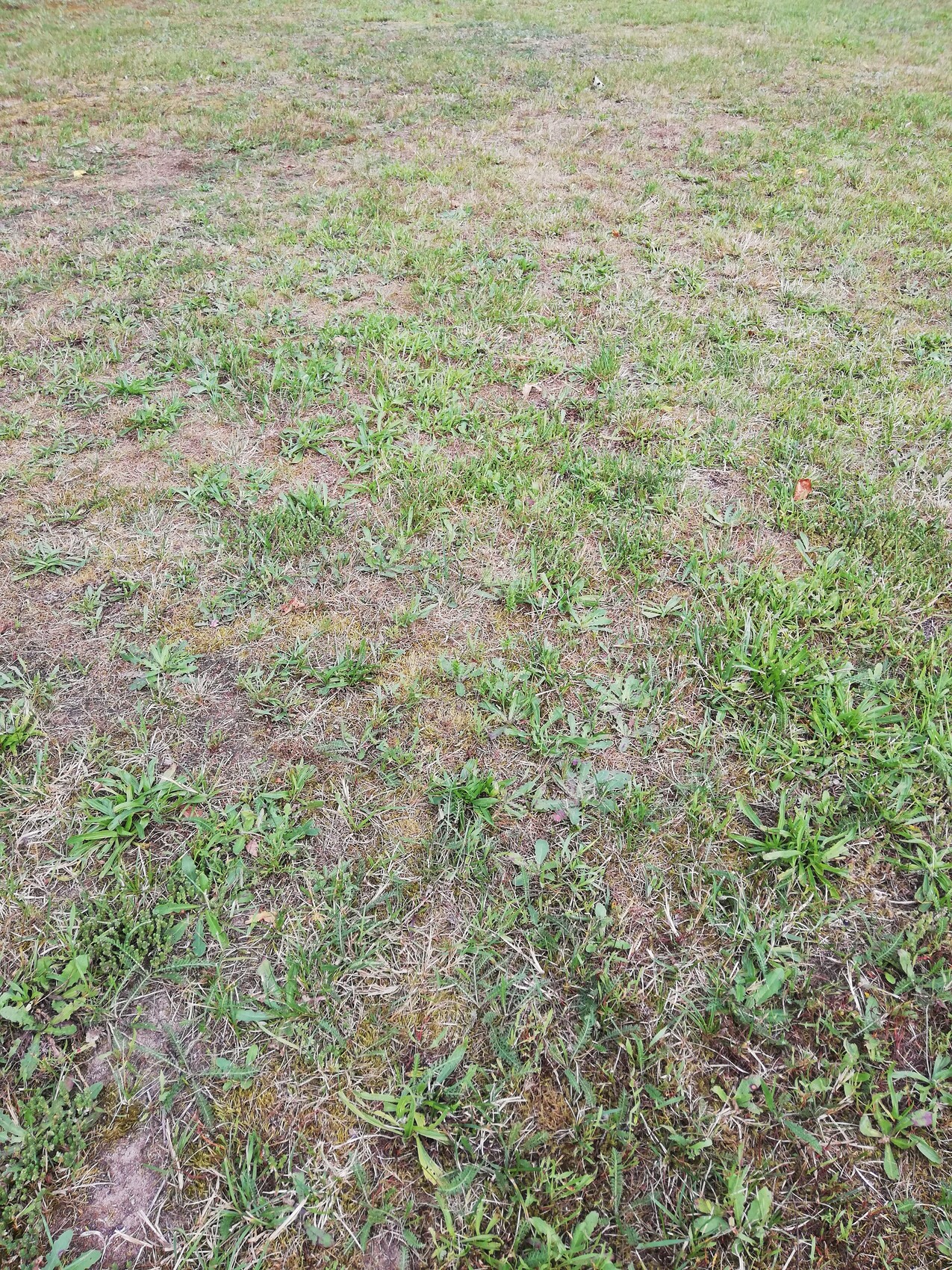
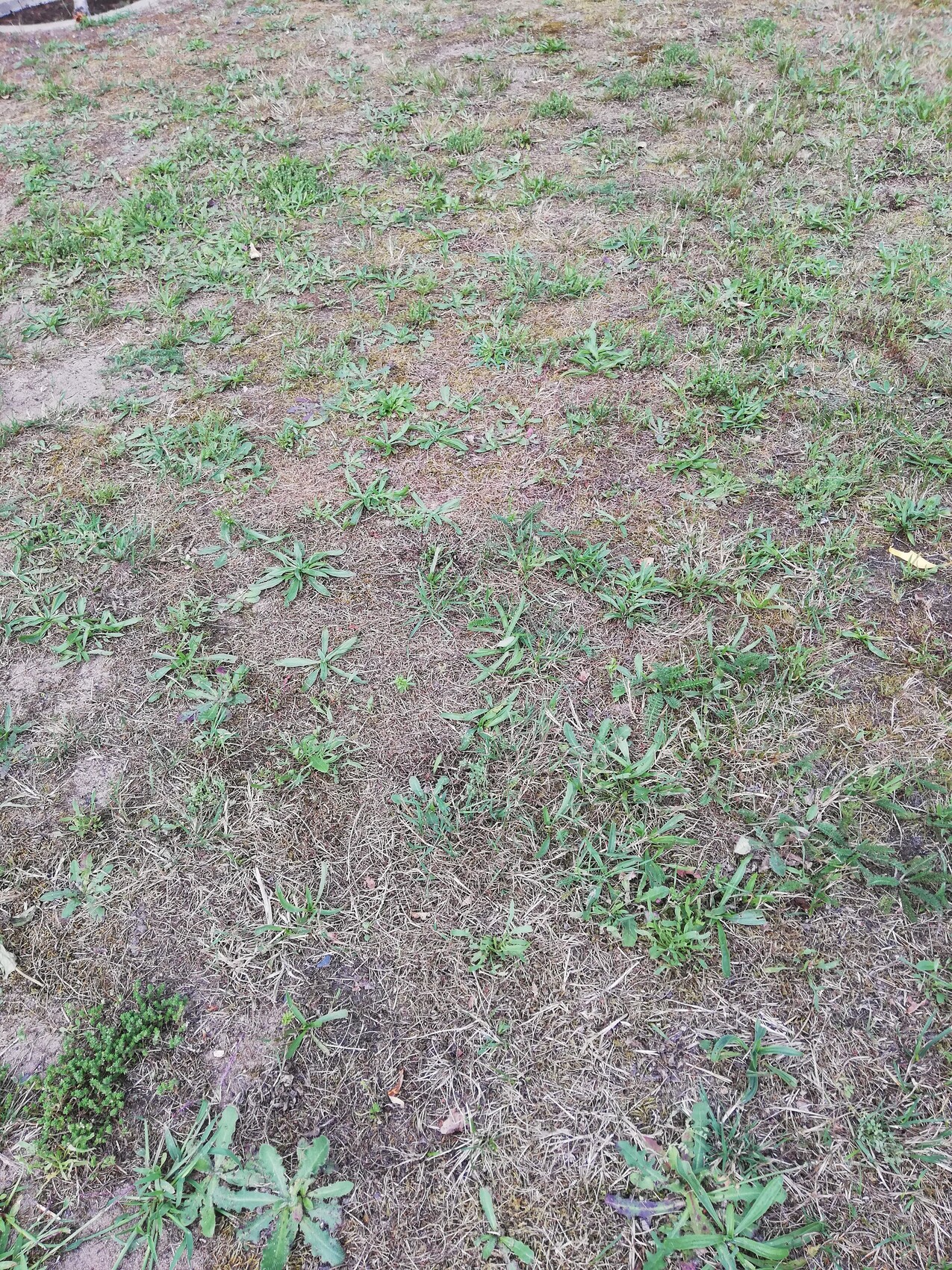
We would now like to ask a farmer to plow the land so we can plant new grass.
Unfortunately, we don’t really know how to proceed and haven’t done much research yet.
We’d appreciate your opinion:
The area is estimated to be around 900-1000 sq m (9,688-10,764 sq ft). If we divide it and have the farmer plow 50% in autumn 2019, then plant grass—would that still be possible before winter?
Then do the other half in spring 2020?
Or is that nonsense?
We have also consulted a landscaping company about some things; they will include a quote for the area as well.
Could you tell us roughly what something like this costs and what would be a fair price?
The offer is not available yet.
Do you have any other tips on what to watch out for if we do everything ourselves?
Or would you approach it in a completely different way?
Thank you very much for your help!
We plan to start the exterior work on our property in autumn this year or spring next year.
We have an area of about 1200 sq m (12,917 sq ft) behind the house, mostly planted with grass. There is a hedge around the perimeter, along with some bushes, and a compost heap for green waste.
We want to install a carport there, as well as a small vegetable garden (~20-30 sq m (215-323 sq ft)).
Everything else, like play equipment for the children, will go on the lawn.
Now to our problem.
The lawn—or rather, there is hardly any grass left. Mostly weeds, moss, and patches of remaining turf.
We would now like to ask a farmer to plow the land so we can plant new grass.
Unfortunately, we don’t really know how to proceed and haven’t done much research yet.
We’d appreciate your opinion:
The area is estimated to be around 900-1000 sq m (9,688-10,764 sq ft). If we divide it and have the farmer plow 50% in autumn 2019, then plant grass—would that still be possible before winter?
Then do the other half in spring 2020?
Or is that nonsense?
We have also consulted a landscaping company about some things; they will include a quote for the area as well.
Could you tell us roughly what something like this costs and what would be a fair price?
The offer is not available yet.
Do you have any other tips on what to watch out for if we do everything ourselves?
Or would you approach it in a completely different way?
Thank you very much for your help!
When a farmer comes to plow, of course, you plow the entire area at once. From the pictures, it seems sufficient to use a motorized tiller to break up the soil, then remove the green debris, and finally level it with a rake. I would think carefully before doing deep plowing.
The first question is, why is nothing growing there now? What do you need to do to grow grass in that area? Unfortunately, I don’t see where you live... We have just had two dry summers in a row, and I would "never ever" try to establish nearly 1000 m² (approximately 10,760 sq ft) of lawn. You simply cannot water that much successfully. Make about 300 to 500 m² (3,230 to 5,380 sq ft) of lawn including planning for irrigation, and plant shrubs or create a meadow on the rest. For the lawn, getting a robotic mower is probably best. I would still sow in the fall (September).
Why would you think twice about deep plowing?
I will take a closer look regarding using a motorized tiller. As I said, we haven’t really dealt with this until now, and I’ve never done it before. I’m a bit apprehensive about it...
We live in Lower Saxony. Here in our village, we have both sandy soil—yay for us—and moor soil. We probably never took good enough care of the lawn. Also, we live at the edge of a forest, surrounded by many oaks and pines... The lawn “in front” on the property is better maintained. You can clearly see the difference, but that’s because we took better care of it there, scarified it, etc.
The lawn “in the back,” the one in question, has just always been there. For playing as children, and that’s it. Also, over half of that area was once a vegetable garden. Long ago, it was an asparagus field...
Thanks for your thoughts. We want to keep part of it as a play meadow for the children. There will be a swing, trampoline, and playhouse, as well as open space for running around. And eventually a dog. We’ve also considered planting a few fruit trees. Maybe that part will just be left fallow.
I still need to think it over.
We will probably start the project next fall. We are busy inside at least until mid-October. Then the contractors need to finish, but we still have to move and finish painting beforehand. So it was perhaps wishful thinking to expect a nice new lawn by NEXT summer. My preference is also to sow grass in the fall.
But a “rush job” doesn’t make sense right now.
I probably just need to educate myself more about the options.
Thanks everyone for your tips and ideas!!!
The first question is, why is nothing growing there now? What do you need to do to grow grass in that area? Unfortunately, I don’t see where you live... We have just had two dry summers in a row, and I would "never ever" try to establish nearly 1000 m² (approximately 10,760 sq ft) of lawn. You simply cannot water that much successfully. Make about 300 to 500 m² (3,230 to 5,380 sq ft) of lawn including planning for irrigation, and plant shrubs or create a meadow on the rest. For the lawn, getting a robotic mower is probably best. I would still sow in the fall (September).
Why would you think twice about deep plowing?
I will take a closer look regarding using a motorized tiller. As I said, we haven’t really dealt with this until now, and I’ve never done it before. I’m a bit apprehensive about it...
We live in Lower Saxony. Here in our village, we have both sandy soil—yay for us—and moor soil. We probably never took good enough care of the lawn. Also, we live at the edge of a forest, surrounded by many oaks and pines... The lawn “in front” on the property is better maintained. You can clearly see the difference, but that’s because we took better care of it there, scarified it, etc.
The lawn “in the back,” the one in question, has just always been there. For playing as children, and that’s it. Also, over half of that area was once a vegetable garden. Long ago, it was an asparagus field...
Thanks for your thoughts. We want to keep part of it as a play meadow for the children. There will be a swing, trampoline, and playhouse, as well as open space for running around. And eventually a dog. We’ve also considered planting a few fruit trees. Maybe that part will just be left fallow.
I still need to think it over.
We will probably start the project next fall. We are busy inside at least until mid-October. Then the contractors need to finish, but we still have to move and finish painting beforehand. So it was perhaps wishful thinking to expect a nice new lawn by NEXT summer. My preference is also to sow grass in the fall.
But a “rush job” doesn’t make sense right now.
I probably just need to educate myself more about the options.
Thanks everyone for your tips and ideas!!!
Usually: spraying, waiting, milling, sowing.
There is currently a rather unfounded hostility toward glyphosate in the media, but this will ease once the lawsuits in the US are settled and the whole issue becomes less emotional and more scientific again.
It’s nice to build a play tower from pine KDI and bury two car tires under the slide, but then dislike glyphosate :P
If you don’t want glyphosate, keep in mind that the other substances you could spray are actually toxic as well. In that case, I would avoid spraying altogether and just mill.
Consider the following: mill now, then sow mustard, lupines, or similar. Let it freeze thoroughly, then cut over it with a heavy mower/mulcher. After the frost, mill again, then sow lawn.
There is currently a rather unfounded hostility toward glyphosate in the media, but this will ease once the lawsuits in the US are settled and the whole issue becomes less emotional and more scientific again.
It’s nice to build a play tower from pine KDI and bury two car tires under the slide, but then dislike glyphosate :P
If you don’t want glyphosate, keep in mind that the other substances you could spray are actually toxic as well. In that case, I would avoid spraying altogether and just mill.
Consider the following: mill now, then sow mustard, lupines, or similar. Let it freeze thoroughly, then cut over it with a heavy mower/mulcher. After the frost, mill again, then sow lawn.
haydee schrieb:
There is also Roundup without glyphosate. Glyphosate is not carcinogenic, at least no more than beef or chamomile tea, and definitely less carcinogenic than alcohol.
Roundup contains a variety of ingredients, and while glyphosate itself is considered safe, the safety of Roundup as a whole is uncertain. This simply has never been scientifically studied.
The "new" Roundup is acetic acid.
The Wikipedia article on the subject is very informative. But it’s similar to vaccinations—many people’s perceived reality is quite different from what the facts show.
The "new" Roundup is acetic acid.
Yes, a clever spin. A substance that nobody uses was introduced just so they can claim there is a "Roundup" without glyphosate. Given the market share, this is completely irrelevant. Truly a brilliant PR move, excellent framing!
Glyphosate is primarily an antibiotic; that was actually the original reason for its approval! The fact is, it severely disrupts the gut microbiome and alters its composition, see bit.ly/2TouSM1
As a chelating agent, it also interferes with the absorption of many minerals.
Yes, a clever spin. A substance that nobody uses was introduced just so they can claim there is a "Roundup" without glyphosate. Given the market share, this is completely irrelevant. Truly a brilliant PR move, excellent framing!
Glyphosate is primarily an antibiotic; that was actually the original reason for its approval! The fact is, it severely disrupts the gut microbiome and alters its composition, see bit.ly/2TouSM1
As a chelating agent, it also interferes with the absorption of many minerals.
To all those stressed about urban living:
Our family is deeply involved in agriculture—real farmers who make their living from it.
There is a rapeseed field that has just been harvested. Since you can’t grow rapeseed continuously on the same land, crop rotation requires planting wheat or brewing barley next. What to do? The Danish method is to burn off the field and then plow the ashes in. This is not allowed in Germany due to CO2 regulations. The common local approach: one application of glyphosate, then plowing, followed by reseeding.
I ask those opposed to glyphosate for alternatives, but alternatives that actually work—without needing about 50 workers to hand-weed the old rapeseed from the wheat. After all, the farmer has to make a living at the end of the day. You won’t find glyphosate residues in rapeseed oil, wheat, or beer. Bet on that? K:
Our family is deeply involved in agriculture—real farmers who make their living from it.
There is a rapeseed field that has just been harvested. Since you can’t grow rapeseed continuously on the same land, crop rotation requires planting wheat or brewing barley next. What to do? The Danish method is to burn off the field and then plow the ashes in. This is not allowed in Germany due to CO2 regulations. The common local approach: one application of glyphosate, then plowing, followed by reseeding.
I ask those opposed to glyphosate for alternatives, but alternatives that actually work—without needing about 50 workers to hand-weed the old rapeseed from the wheat. After all, the farmer has to make a living at the end of the day. You won’t find glyphosate residues in rapeseed oil, wheat, or beer. Bet on that? K:
Similar topics