
I hope this is the right subforum; if not, please move it.
During a conversation yesterday with my potential plasterer, he advised against using brushed plaster, as it tends to get dirty very quickly.
I should mention that I live in a very quiet area (few cars) with not many trees nearby.
The plaster color will be a gray/ochre shade, so not a dirt-prone white.
Now I have an offer, and he wants an additional charge of €11.36 (+ VAT) per m² (square meter) for the brushed plaster.
This seems quite high to me.
Can anyone estimate if this is realistic or just a price meant to discourage me?
During a conversation yesterday with my potential plasterer, he advised against using brushed plaster, as it tends to get dirty very quickly.
I should mention that I live in a very quiet area (few cars) with not many trees nearby.
The plaster color will be a gray/ochre shade, so not a dirt-prone white.
Now I have an offer, and he wants an additional charge of €11.36 (+ VAT) per m² (square meter) for the brushed plaster.
This seems quite high to me.
Can anyone estimate if this is realistic or just a price meant to discourage me?
K
KarstenausNRW8 Nov 2023 15:52Yes, there is a possibility that the facade may get "dirty" faster (although this is relative). This is because you naturally have many horizontal grooves where dust can accumulate (but not necessarily). And this will deteriorate sooner than on smoother facades. However, I would not be discouraged by this.
Regarding the price: Yes, a significant surcharge is justified, as this is indeed a very rare type of plaster. It is almost like handcrafted work – depending on the craftsman and the brush, it can look very different. Achieving this surface is not easy. I wanted this type of finish myself but had to decide against it because I applied the plaster myself. For me, who can apply standard textured or floated plaster, the technique was too difficult. I would consider the surcharge worth it, even though I am not familiar with the usual extra costs charged in the industry.
Regarding the price: Yes, a significant surcharge is justified, as this is indeed a very rare type of plaster. It is almost like handcrafted work – depending on the craftsman and the brush, it can look very different. Achieving this surface is not easy. I wanted this type of finish myself but had to decide against it because I applied the plaster myself. For me, who can apply standard textured or floated plaster, the technique was too difficult. I would consider the surcharge worth it, even though I am not familiar with the usual extra costs charged in the industry.
X
xMisterDx9 Nov 2023 00:33The whole house with a broom finish? That looks really off. Around here, only two or three houses have it, and always just as an accent.
Not the entire house, only the "middle" section; hopefully, the rest (top and bottom) will be made from rhombus cladding.
I want to visually reduce the height of the house here and give it a somewhat more modern look.
However, I am open to suggestions 🙂
North:

East:
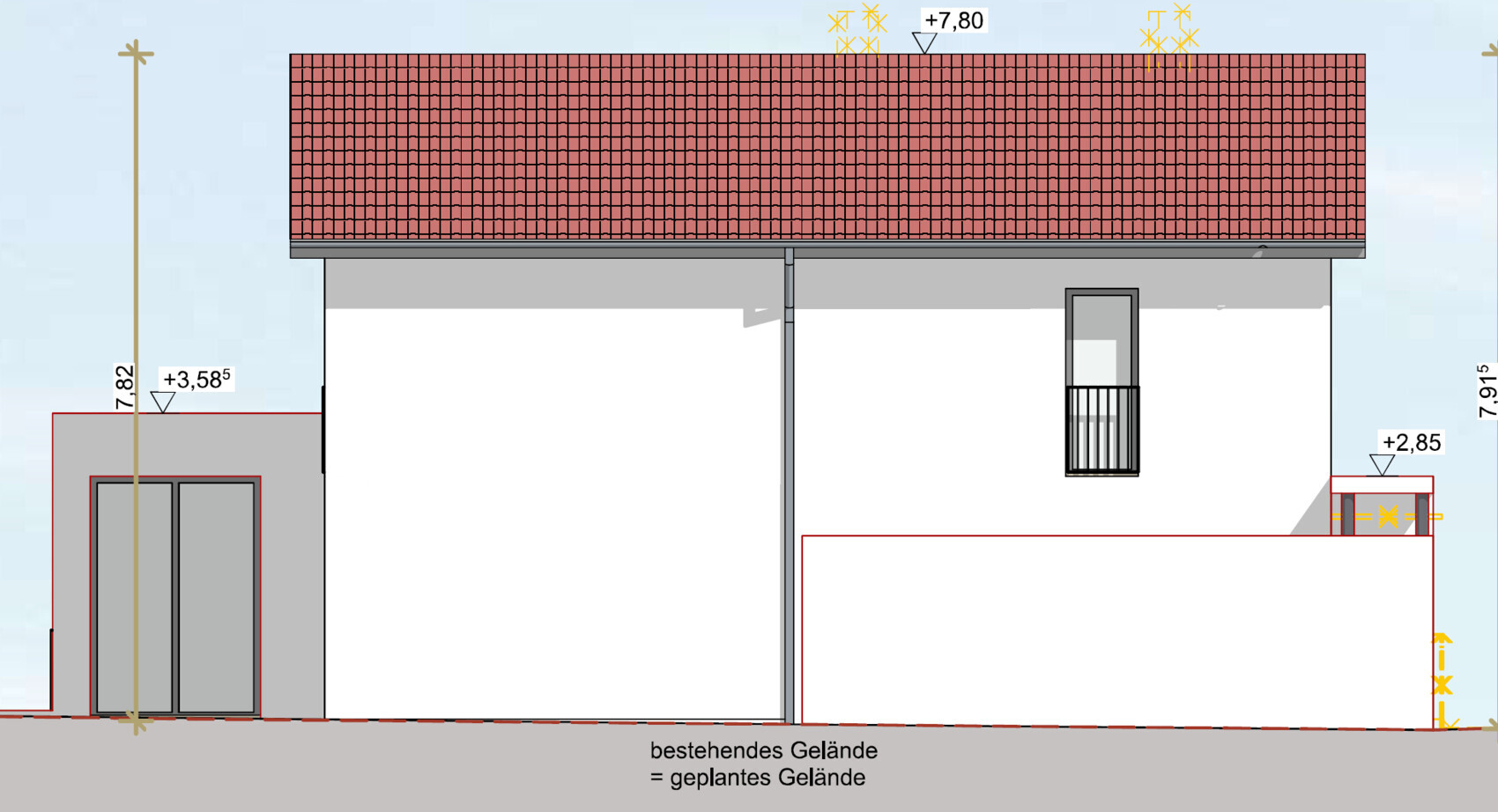
South (the gable is missing the rhombus cladding here)

West (the X marks the boundary build-up; only standard plaster here)
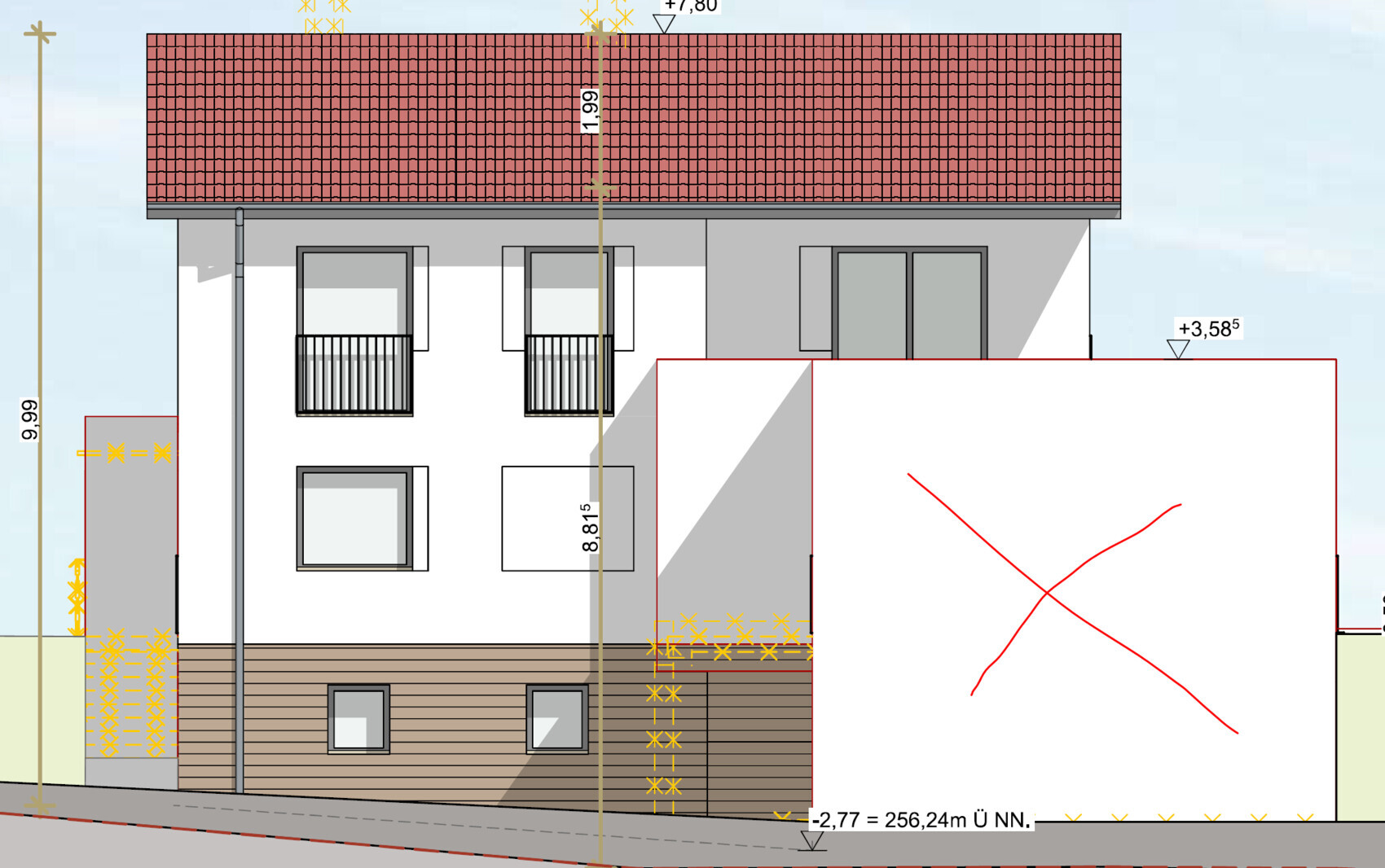
I want to visually reduce the height of the house here and give it a somewhat more modern look.
However, I am open to suggestions 🙂
North:
East:
South (the gable is missing the rhombus cladding here)
West (the X marks the boundary build-up; only standard plaster here)
K
KarstenausNRW9 Nov 2023 07:48xMisterDx schrieb:
The whole house in broom finish? That looks prohibited. Here, 2 or 3 houses have it, but always just as an accent. xMisterDx schrieb:
The whole house in broom finish? That looks prohibited. Here, 2 or 3 houses have it, but always just as an accent. Typical plaster from the late 19th to early 20th century. It was completely normal back then. It doesn’t look prohibited, just unusual because it is now very rarely seen. Regarding application, there is a range from fine to coarse texture, used as an accent or covering the entire house. Applied horizontally or vertically (@TE: vertical application does not cause dirt problems but is even more difficult to execute).
 Winniefred9 Nov 2023 12:00
I would now consider the price reasonable. It can't be that large an area anyway, right? It probably looks very stylish! Not the same old standard houses all the time. When we have new plastering done, I also want a special type of plaster, not just a smooth finish again (we have an old building with standard plaster from 1993).
Similar topics