
Hello everyone,
I have been considering converting the attic in my parents’ house for some time now, and I have already browsed through many relevant forums. The downside is that all the differing opinions have left me quite confused about certain issues.
A few answers upfront to avoid unnecessary questions:
I am 20 years old and just finished my vocational training. I plan to go to university and would prefer to renovate here rather than move out. I don’t have unlimited funds, but that doesn’t mean I want to cut corners—I just want to clarify my financial situation. There is already an inhabited room in the attic, and I would like to extend it to the rest of the attic space. I’m not aiming for an energy-saving miracle, but rather to improve the current situation (over 40°C (104°F) in summer // excessive heating efforts in winter) somewhat. I would complete the conversion gradually to manage it financially, starting with the south side and then working from the east side up to the north.
Regarding the project: I would like to install a non-ventilated insulation between the rafters using mineral wool (of course following all standard building practices—proper vapor barrier, etc.).
My first question is whether the roofing felt (roofing membrane) might be “too airtight” for this type of insulation, since it is generally recommended to build from inside to outside with increasing vapor permeability. If that is the case, could I use materials like expanded polystyrene (EPS) or extruded polystyrene (XPS), or do you recommend ventilation?
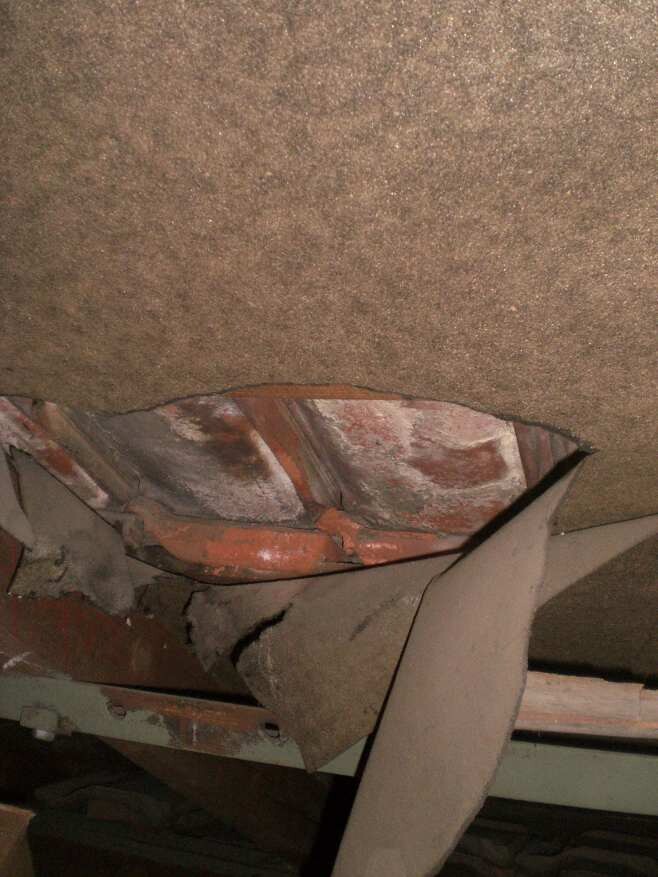
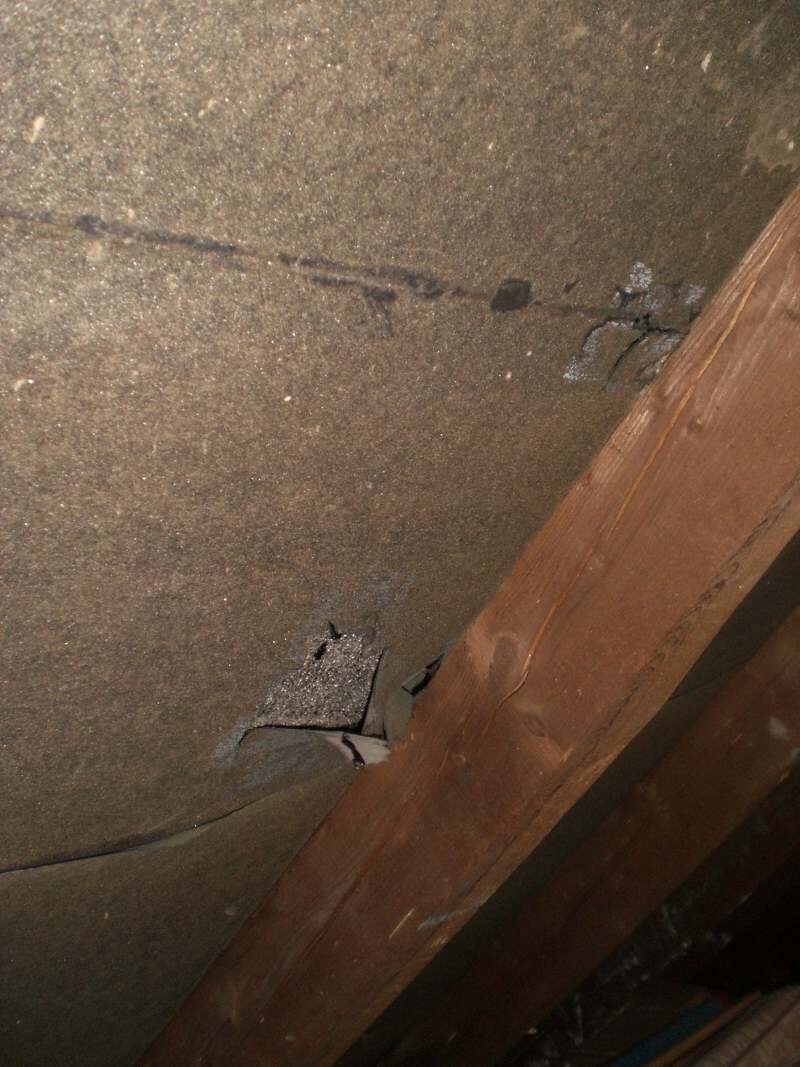
Furthermore, in my specific case, the roofing felt is damaged in several more or less accessible areas (some photos attached). The roof itself is watertight, but to prevent moisture from penetrating the insulation from outside, I would like to repair these spots first. What is the best approach to do this without creating pockets where water might accumulate—melting bitumen sheets onto it or sealing with membranes? Which method do you consider more effective?
So far, that covers the main issues. I expect more questions will arise as I go forward.
Thank you very much in advance, and have a nice Sunday!
Best regards,
Dirk M.
I have been considering converting the attic in my parents’ house for some time now, and I have already browsed through many relevant forums. The downside is that all the differing opinions have left me quite confused about certain issues.
A few answers upfront to avoid unnecessary questions:
I am 20 years old and just finished my vocational training. I plan to go to university and would prefer to renovate here rather than move out. I don’t have unlimited funds, but that doesn’t mean I want to cut corners—I just want to clarify my financial situation. There is already an inhabited room in the attic, and I would like to extend it to the rest of the attic space. I’m not aiming for an energy-saving miracle, but rather to improve the current situation (over 40°C (104°F) in summer // excessive heating efforts in winter) somewhat. I would complete the conversion gradually to manage it financially, starting with the south side and then working from the east side up to the north.
Regarding the project: I would like to install a non-ventilated insulation between the rafters using mineral wool (of course following all standard building practices—proper vapor barrier, etc.).
My first question is whether the roofing felt (roofing membrane) might be “too airtight” for this type of insulation, since it is generally recommended to build from inside to outside with increasing vapor permeability. If that is the case, could I use materials like expanded polystyrene (EPS) or extruded polystyrene (XPS), or do you recommend ventilation?
Furthermore, in my specific case, the roofing felt is damaged in several more or less accessible areas (some photos attached). The roof itself is watertight, but to prevent moisture from penetrating the insulation from outside, I would like to repair these spots first. What is the best approach to do this without creating pockets where water might accumulate—melting bitumen sheets onto it or sealing with membranes? Which method do you consider more effective?
So far, that covers the main issues. I expect more questions will arise as I go forward.
Thank you very much in advance, and have a nice Sunday!
Best regards,
Dirk M.
Hello,
Yes. Roofing felt restricts outward moisture diffusion.
For such a roof construction, you should seek professional assistance. Proper ventilation must be provided, as well as correct connections of the vapor barrier, etc.
Before significant damage occurs, it is better to invest in proper planning and execution.
Best regards
Dirk M. schrieb:
First of all, I wonder if the roofing felt is "too airtight" for the insulation material,
Yes. Roofing felt restricts outward moisture diffusion.
For such a roof construction, you should seek professional assistance. Proper ventilation must be provided, as well as correct connections of the vapor barrier, etc.
Before significant damage occurs, it is better to invest in proper planning and execution.
Best regards
I also believe that you don’t have to do everything by yourself. You can handle many tasks, but when it comes to insulation and indirectly ventilation, if you’re not a skilled tradesperson or don’t have knowledgeable friends, this often leads to problems—even if they only become noticeable years later. Insulation issues, in particular, can cause mold growth, which is definitely not something you want to deal with. Besides, you emphasized that you don’t want to do a poor job. For a start, you can simply get advice from some insulation specialists. Just reach out and see if you can talk to them. Some of them are more helpful than you might expect.
If this house belongs to your parents, they could contribute financially. After all, the renovation is an investment in the future of the house, and their son will be staying with them longer.
If this house belongs to your parents, they could contribute financially. After all, the renovation is an investment in the future of the house, and their son will be staying with them longer.
Similar topics