
Hello fellow home builders,
My partner and I recently became proud owners of an old country house with a sizable plot of land. The ground floor is finished and was mostly renovated when we purchased the property.
Now we are starting the conversion of the attic. I have a few questions about this and would appreciate your expert advice.
So far, the attic has no insulation at all. Installing insulation is our top priority.
The wall insulation is planned as internal insulation. Exterior wall – insulation – interior cladding (gypsum boards).
The structural engineer recommended a minimum of 14cm (5.5 inches) of insulation with WLB035, with at least 4cm (1.5 inches) of ventilation space behind it for internal insulation. Air supply from below and exhaust through the cavity. I understand the basic idea behind this.
However, I’m not clear about the exact construction details.
How does the fresh air enter from below? Will there always be a visible gap between the floor covering and the drywall partition?
And can I omit a vapor barrier with a ventilation cavity? Or is the most sensible build-up exterior wall – 4cm (1.5 inches) ventilation cavity (battens) – mineral wool insulation – vapor barrier – drywall?
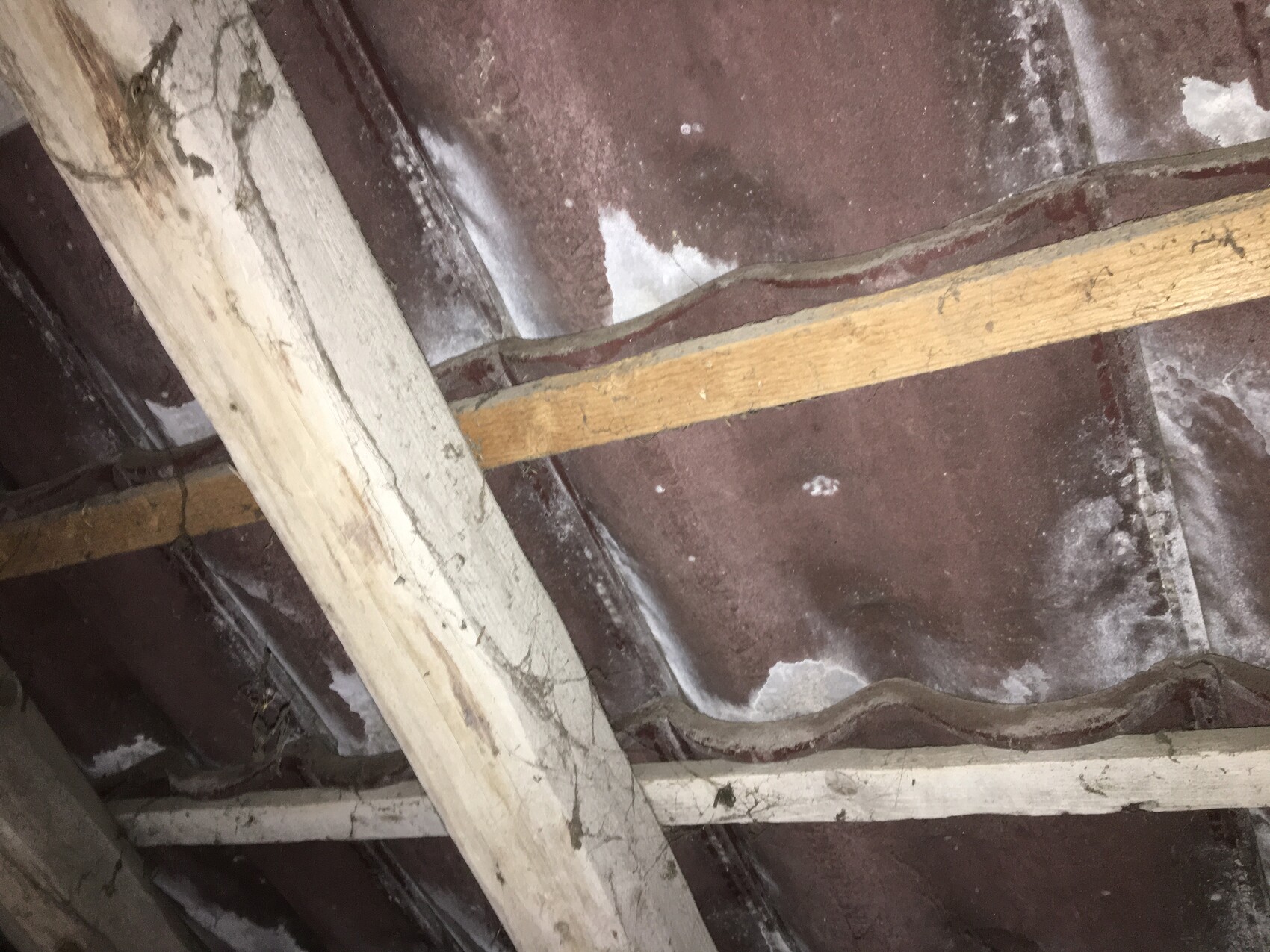
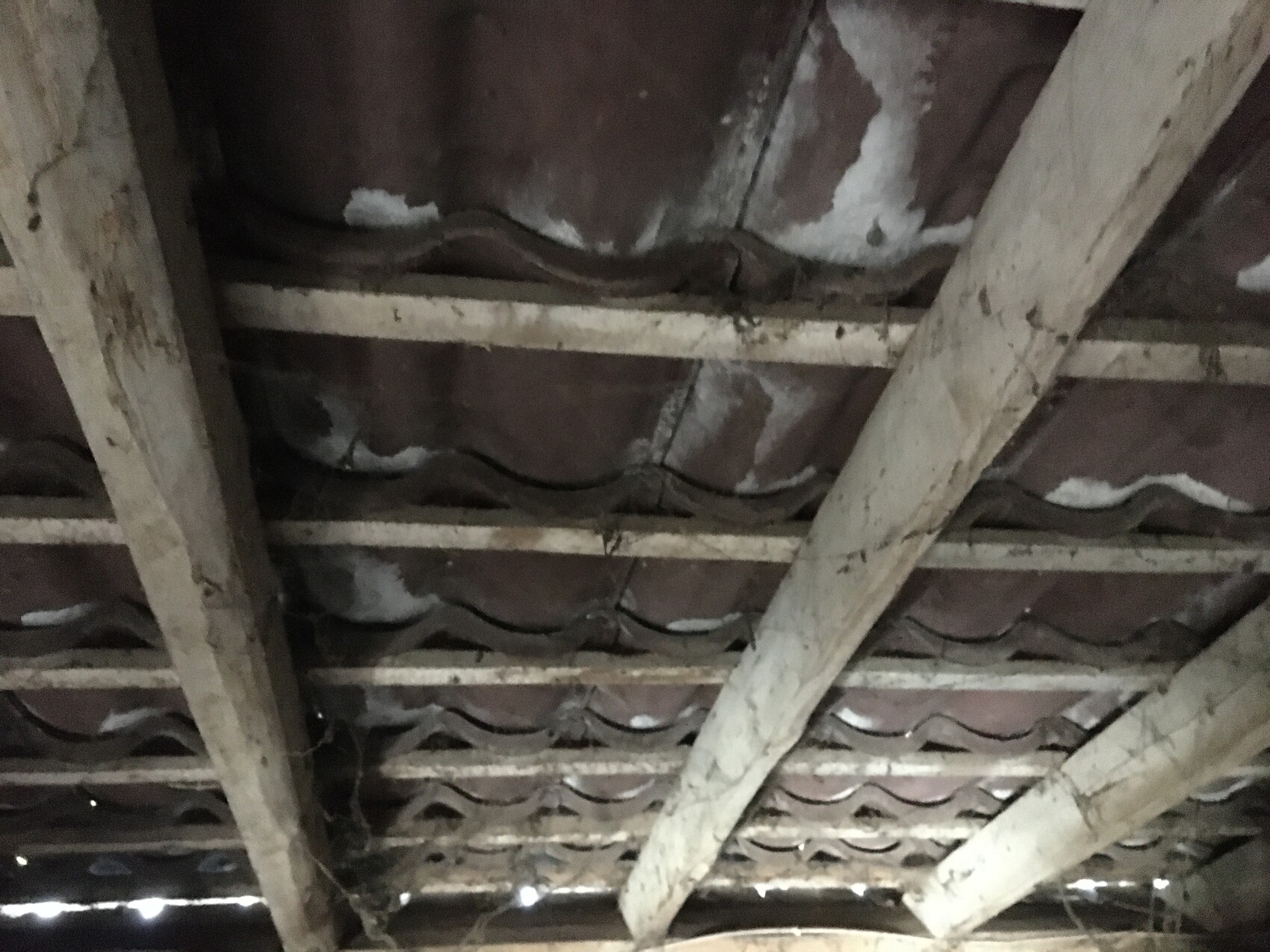
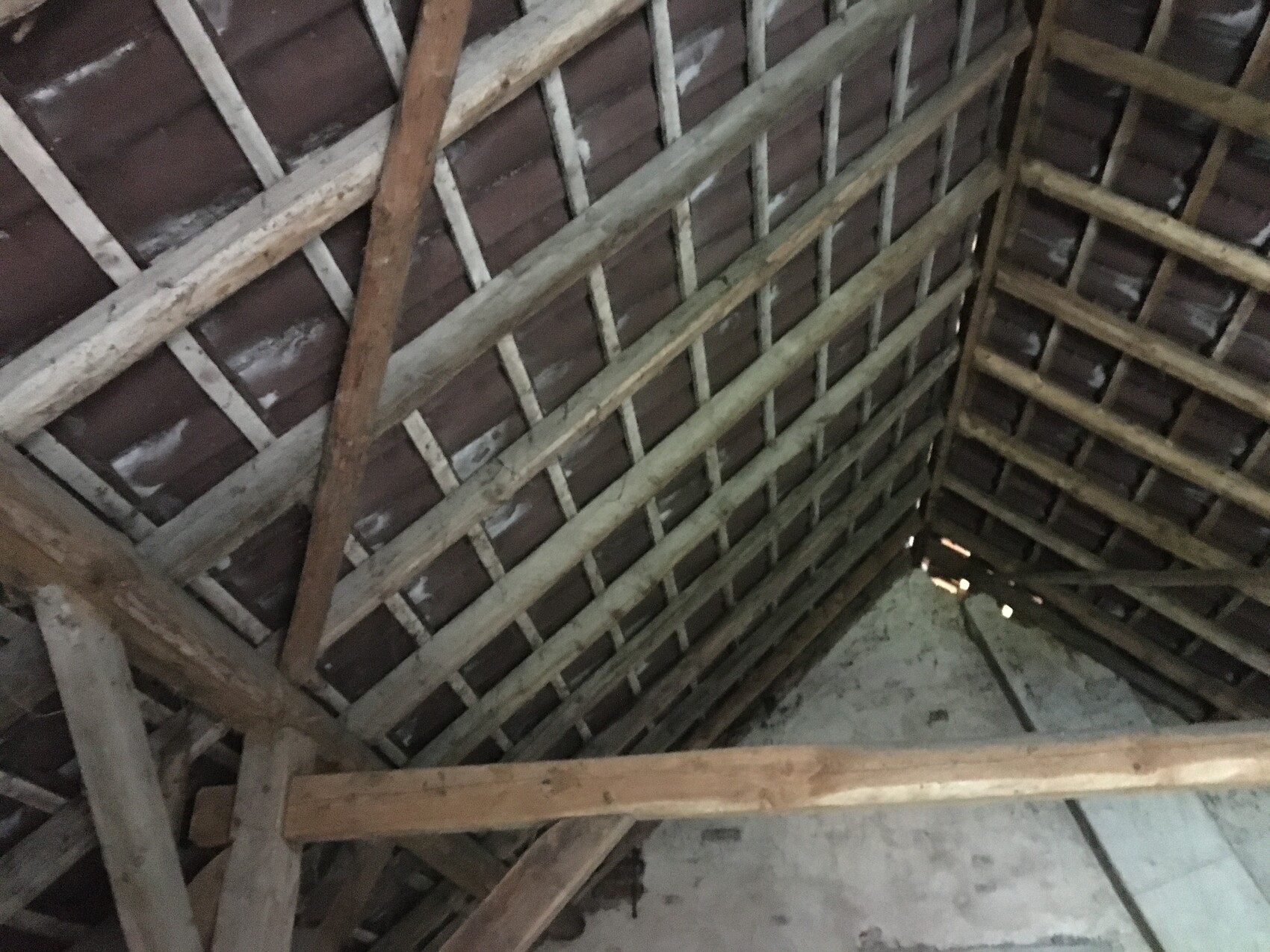
Unfortunately, only the extension roof has an underlay membrane installed. For most of the roof, you can look directly up at the concrete roof tiles from below.
Removing the tiles and installing an underlay membrane is hardly an option due to the effort and costs involved. I have read several times that an alternative looks like this:
Install insulation with at least 4–5cm (1.5–2 inches) of air space to the roof tiles; put the vapor barrier on the inside, followed by the interior cladding (we also want to use gypsum boards here). Essentially, this is just a ventilated roof build-up. Does anyone have experience with this? The roof pitch is 42°.
Many thanks in advance to everyone who can help.
My partner and I recently became proud owners of an old country house with a sizable plot of land. The ground floor is finished and was mostly renovated when we purchased the property.
Now we are starting the conversion of the attic. I have a few questions about this and would appreciate your expert advice.
So far, the attic has no insulation at all. Installing insulation is our top priority.
The wall insulation is planned as internal insulation. Exterior wall – insulation – interior cladding (gypsum boards).
The structural engineer recommended a minimum of 14cm (5.5 inches) of insulation with WLB035, with at least 4cm (1.5 inches) of ventilation space behind it for internal insulation. Air supply from below and exhaust through the cavity. I understand the basic idea behind this.
However, I’m not clear about the exact construction details.
How does the fresh air enter from below? Will there always be a visible gap between the floor covering and the drywall partition?
And can I omit a vapor barrier with a ventilation cavity? Or is the most sensible build-up exterior wall – 4cm (1.5 inches) ventilation cavity (battens) – mineral wool insulation – vapor barrier – drywall?
Unfortunately, only the extension roof has an underlay membrane installed. For most of the roof, you can look directly up at the concrete roof tiles from below.
Removing the tiles and installing an underlay membrane is hardly an option due to the effort and costs involved. I have read several times that an alternative looks like this:
Install insulation with at least 4–5cm (1.5–2 inches) of air space to the roof tiles; put the vapor barrier on the inside, followed by the interior cladding (we also want to use gypsum boards here). Essentially, this is just a ventilated roof build-up. Does anyone have experience with this? The roof pitch is 42°.
Many thanks in advance to everyone who can help.
Attached are pictures of the wall again. I cannot see any gaps in the brickwork.
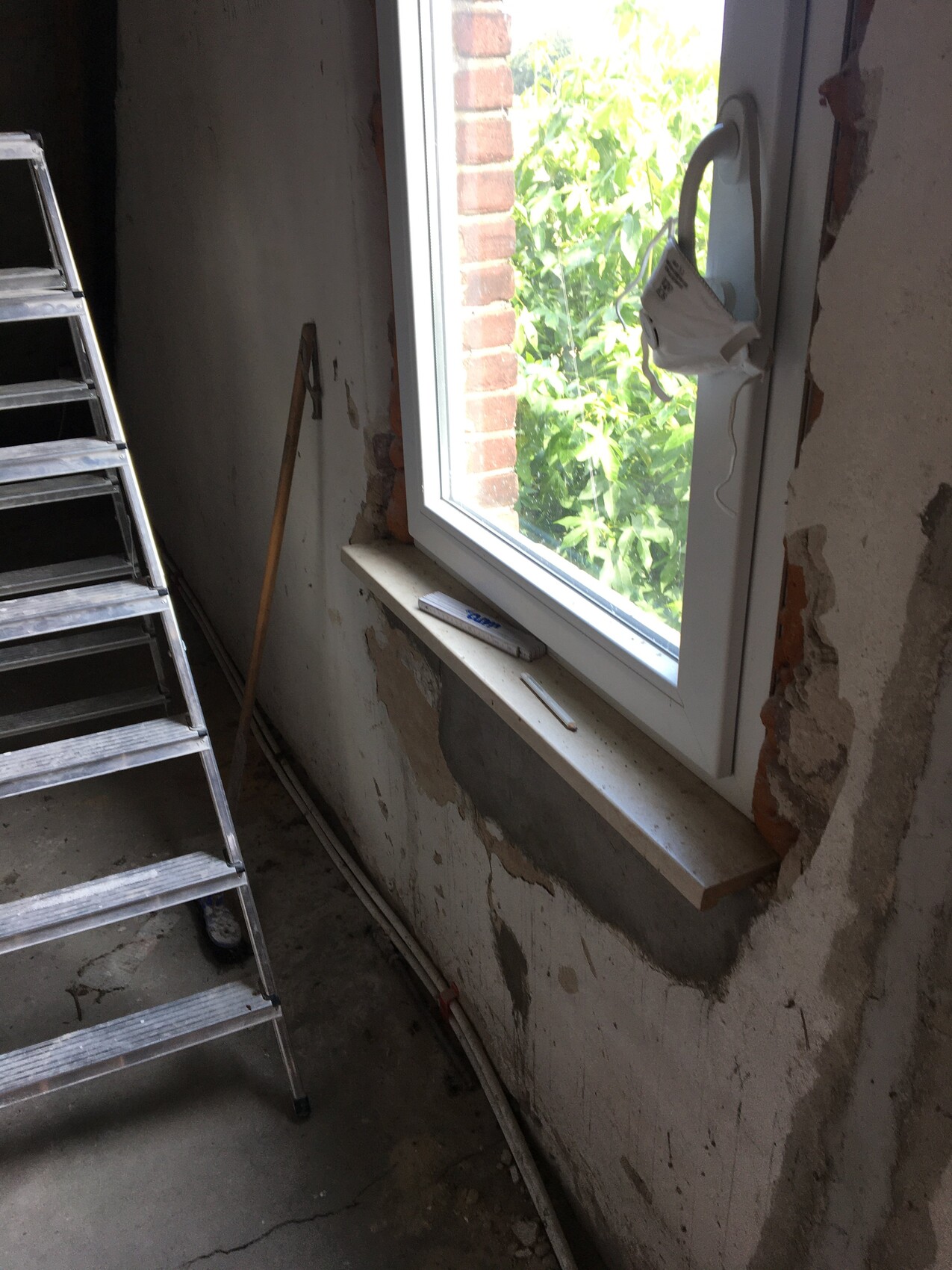
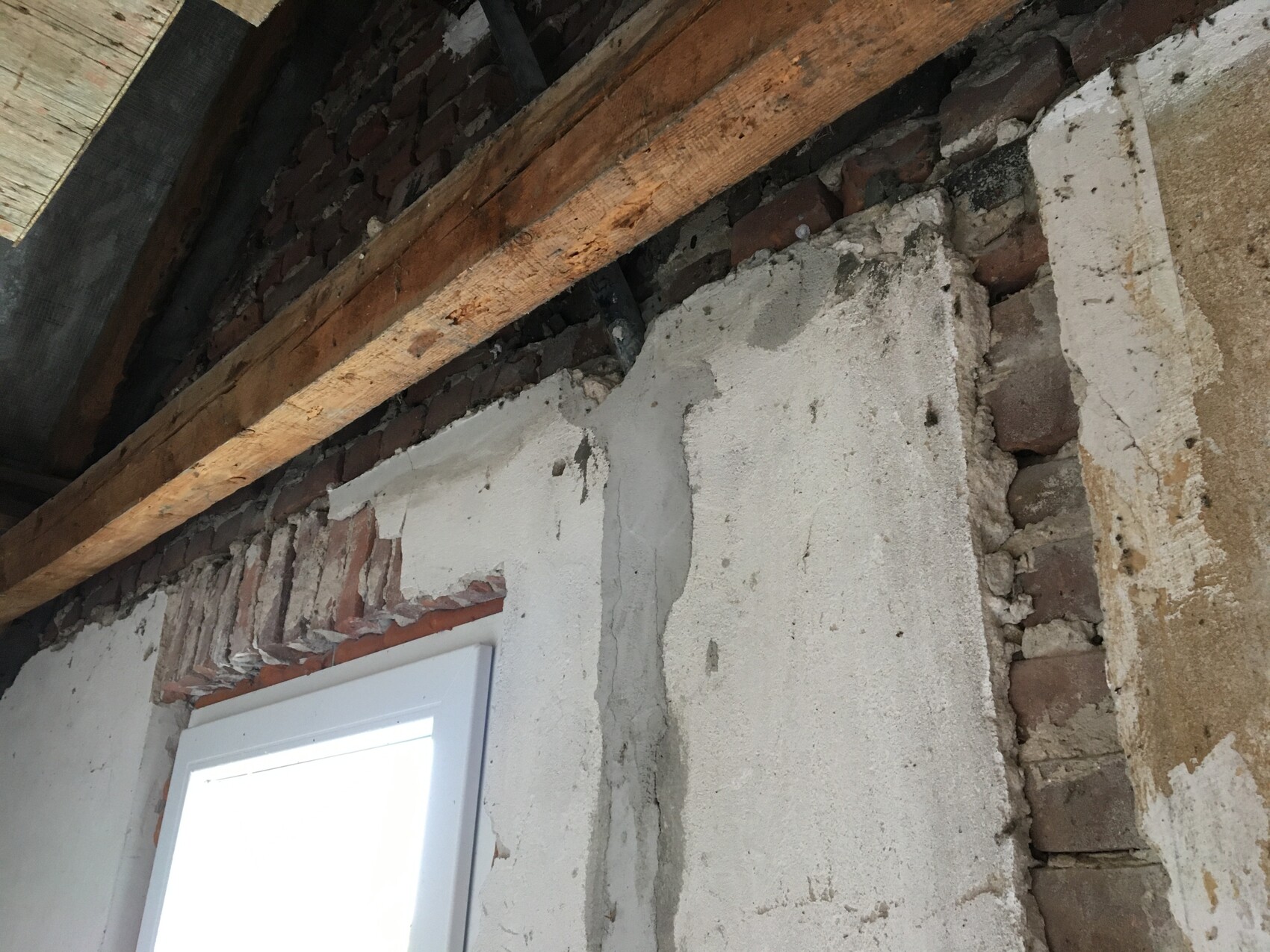
The beams will be extended inward. This will create more space to add sufficient insulation. Airtightness should later be adequately ensured with a vapor barrier.
Grundbuch schrieb:
When I look at the pictures of the roof, just adding insulation in between is not enough. First, the roof is in poor condition (you can partly see through it, semi-circular beams...), second, the achievable insulation thickness is too low, and third, something airtight should be installed beneath the roofing panels. Depending on the type of rooms planned and the available budget, you can make plans.
The beams will be extended inward. This will create more space to add sufficient insulation. Airtightness should later be adequately ensured with a vapor barrier.
As mentioned regarding the roof:
Roof tiles
Battens
Insulation (with about 20cm (8 inches) space to the battens) between the rafters
Counter battens with a maximum (tolerable) thickness
Insulation again in between
Vapor barrier
Plasterboard
Although I would initially choose OSB 3 boards instead of the vapor barrier, this depends on the roof structure and load-bearing capacity. It will definitely be windproof. Personally, I would use mineral wool, as it offers slightly better heat protection due to its thermal mass.
To me, the roof generally does not appear to be damaged or damp. However, I am just an amateur.
For internal insulation, as mentioned, an expert is needed. Intuitively, I would probably prefer wood fiber mats and clay plaster. Whether this is advisable in terms of the dew point and related issues, I cannot say. Besides, this is obviously not the most cost-effective solution.
Roof tiles
Battens
Insulation (with about 20cm (8 inches) space to the battens) between the rafters
Counter battens with a maximum (tolerable) thickness
Insulation again in between
Vapor barrier
Plasterboard
Although I would initially choose OSB 3 boards instead of the vapor barrier, this depends on the roof structure and load-bearing capacity. It will definitely be windproof. Personally, I would use mineral wool, as it offers slightly better heat protection due to its thermal mass.
To me, the roof generally does not appear to be damaged or damp. However, I am just an amateur.
For internal insulation, as mentioned, an expert is needed. Intuitively, I would probably prefer wood fiber mats and clay plaster. Whether this is advisable in terms of the dew point and related issues, I cannot say. Besides, this is obviously not the most cost-effective solution.
Hello,
I have consulted with the structural engineer again.
Roof insulation as follows:
Double the rafters and fill with at least 20cm (8 inches) of mineral wool insulation with a thermal conductivity rating of WLG35. Maintain a minimum 4cm (1.5 inches) gap to the battens for ventilation. Then, install a vapor barrier with an sd-value ≥ 100, followed by the battens and plasterboard.
Wall insulation should also have a 4cm (1.5 inches) ventilation gap, at least 14cm (6 inches) of mineral wool insulation WLG35, and a vapor barrier with sd-value ≥ 100. Incoming air for the ventilation gap comes from the inside through a shadow gap, and outgoing air exits through the cavities or the roof ridge.
Mineral wool is highly recommended because it does not rot if it gets wet.
Everything is clear to me so far, and I will start doubling the rafters in the next few days. I still need to take a closer look at the detailed execution of the shadow gap.
I have consulted with the structural engineer again.
Roof insulation as follows:
Double the rafters and fill with at least 20cm (8 inches) of mineral wool insulation with a thermal conductivity rating of WLG35. Maintain a minimum 4cm (1.5 inches) gap to the battens for ventilation. Then, install a vapor barrier with an sd-value ≥ 100, followed by the battens and plasterboard.
Wall insulation should also have a 4cm (1.5 inches) ventilation gap, at least 14cm (6 inches) of mineral wool insulation WLG35, and a vapor barrier with sd-value ≥ 100. Incoming air for the ventilation gap comes from the inside through a shadow gap, and outgoing air exits through the cavities or the roof ridge.
Mineral wool is highly recommended because it does not rot if it gets wet.
Everything is clear to me so far, and I will start doubling the rafters in the next few days. I still need to take a closer look at the detailed execution of the shadow gap.
Similar topics