
Hello,
our new build was completed in December. On cold days, we noticed that condensation appeared at all four corners on the eaves side above the wall and then ran down the exterior wall.
I reviewed my photos and found that the purlins are likely embedded in the wall without a vapor barrier.
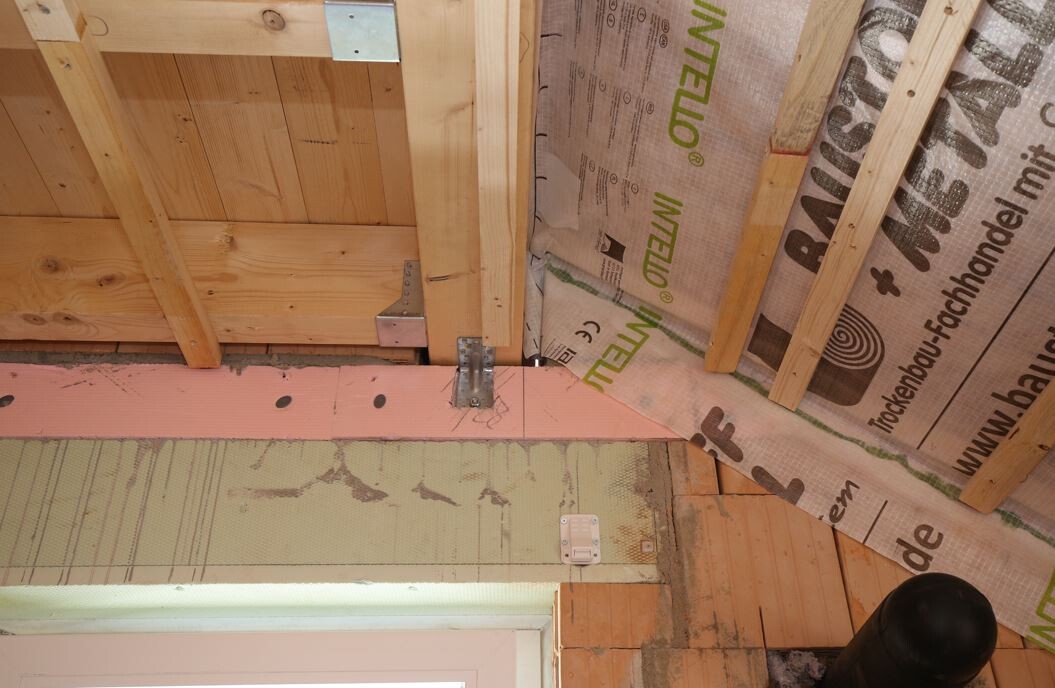
This is how it looked from the inside before the drywall was installed. You can see that the vapor barrier around the beam is open:
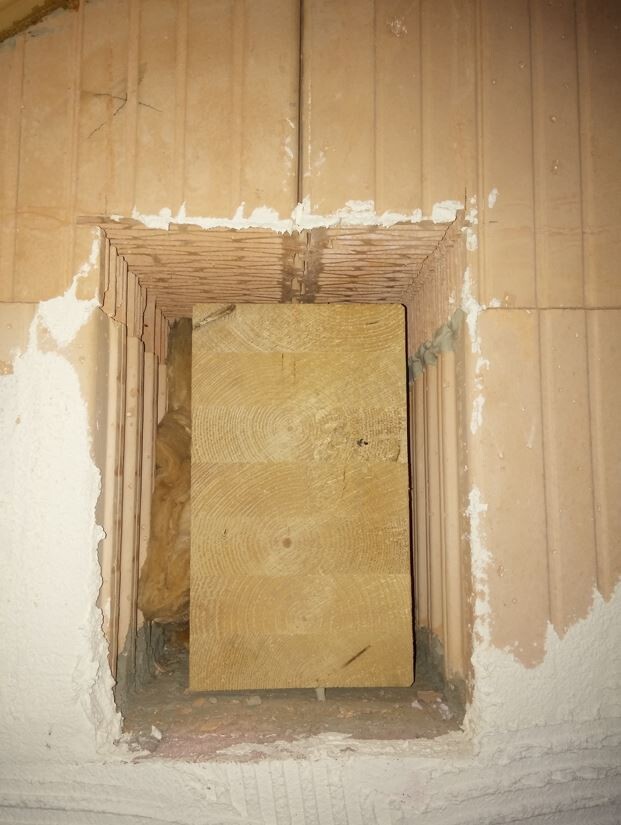
And this is how it looked from the outside before plastering (an insulation board was installed later):
My theory is that warm indoor air can rise freely through the wall cavity, which is only about the height of one brick to the roof. There, the moisture condenses on the cold wooden board and then runs down between the board and the wall.

The drywall installer will come soon to reopen the ceiling. What is the correct method to seal such a wall penetration around the central purlins? Should the vapor barrier be sealed all around? Or would it be sufficient to foam the cavity between the beam and the wall? Or would that eventually cause the beam to rot?
How is this done properly?
our new build was completed in December. On cold days, we noticed that condensation appeared at all four corners on the eaves side above the wall and then ran down the exterior wall.
I reviewed my photos and found that the purlins are likely embedded in the wall without a vapor barrier.
This is how it looked from the inside before the drywall was installed. You can see that the vapor barrier around the beam is open:
And this is how it looked from the outside before plastering (an insulation board was installed later):
My theory is that warm indoor air can rise freely through the wall cavity, which is only about the height of one brick to the roof. There, the moisture condenses on the cold wooden board and then runs down between the board and the wall.
The drywall installer will come soon to reopen the ceiling. What is the correct method to seal such a wall penetration around the central purlins? Should the vapor barrier be sealed all around? Or would it be sufficient to foam the cavity between the beam and the wall? Or would that eventually cause the beam to rot?
How is this done properly?
What does the construction company say about this? The house is no longer insulated on the outside, right? Do you have a picture of the finished "outside"? If the first picture shows the finished state, the sealing is missing everywhere.
Amateur opinion: the vapor barrier and waterproofing are missing, and they have created a perfect thermal bridge. You probably already have mold behind the drywall on the inside as well.
Amateur opinion: the vapor barrier and waterproofing are missing, and they have created a perfect thermal bridge. You probably already have mold behind the drywall on the inside as well.
The construction company has not said much about it so far; people are guessing where the water is coming from, and now they are first checking what the drywall installer has done. I don’t have a picture of the exterior at the moment, but it is simply a closed, plastered surface. So, on the outer wall side, it is more or less airtight, but the stone above is not sealed.
H
hampshire18 Feb 2020 17:36No idea if all of this is done professionally. The photos look like careless work. I would also be concerned.
Similar topics