
ᐅ Glue-based paint – what it is and whether it must be removed
Created on: 13 Feb 2021 18:03
R
Rolexianer
The two photos show the current condition of the ceiling. It is supposed to be white glue paint, which must be completely removed before applying the primer, according to the explanation from the paint specialist I trust.
The photos show scratched plaster; the indentations naturally need to be filled with a filler.
Also visible are two different white surfaces:
- The already scraped-off area is directly on the plaster and smudges heavily when rubbed by hand.
- The raised white surface is the white glue paint, which has already been sanded with a drywall sander (known as a "Giraffe"), but could not be completely removed (the 60-grit sandpaper smeared, as did the sander’s air filter when used too frequently), so now the white glue paint is to be scraped off.
The workers on site have different opinions:
1. Scrape off the white glue paint, then remove the remaining white layer down to the plaster with the drywall sander, then apply the primer.
or
2. Scrape off the white glue paint, apply primer on the remaining white layer, because it is not white glue paint but filler.
My feeling is that everything white belongs to the white glue paint and must be removed—why would there be so much filler on the plaster?
Dear all-knowing forum, please help me to reach a final opinion.
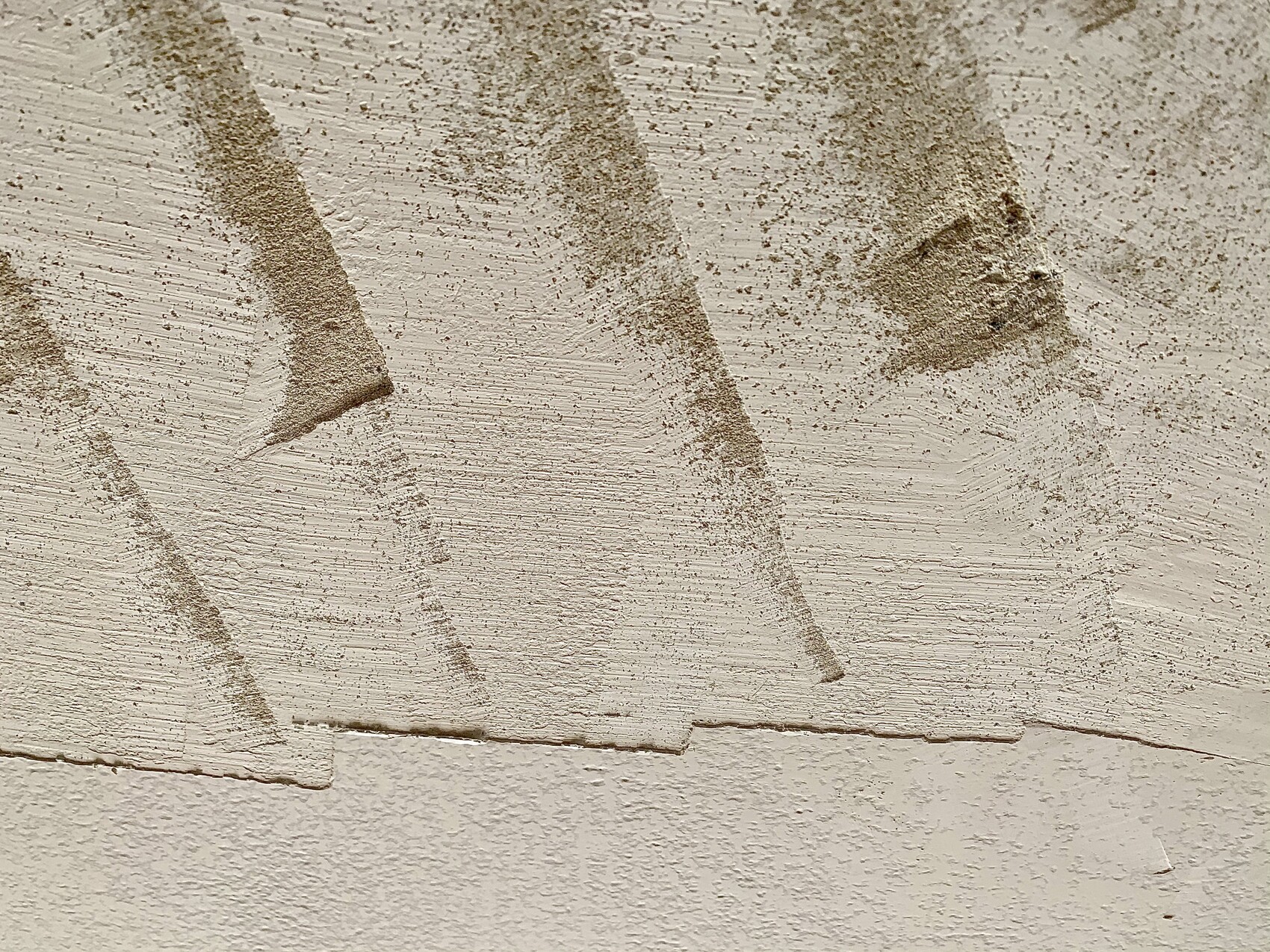
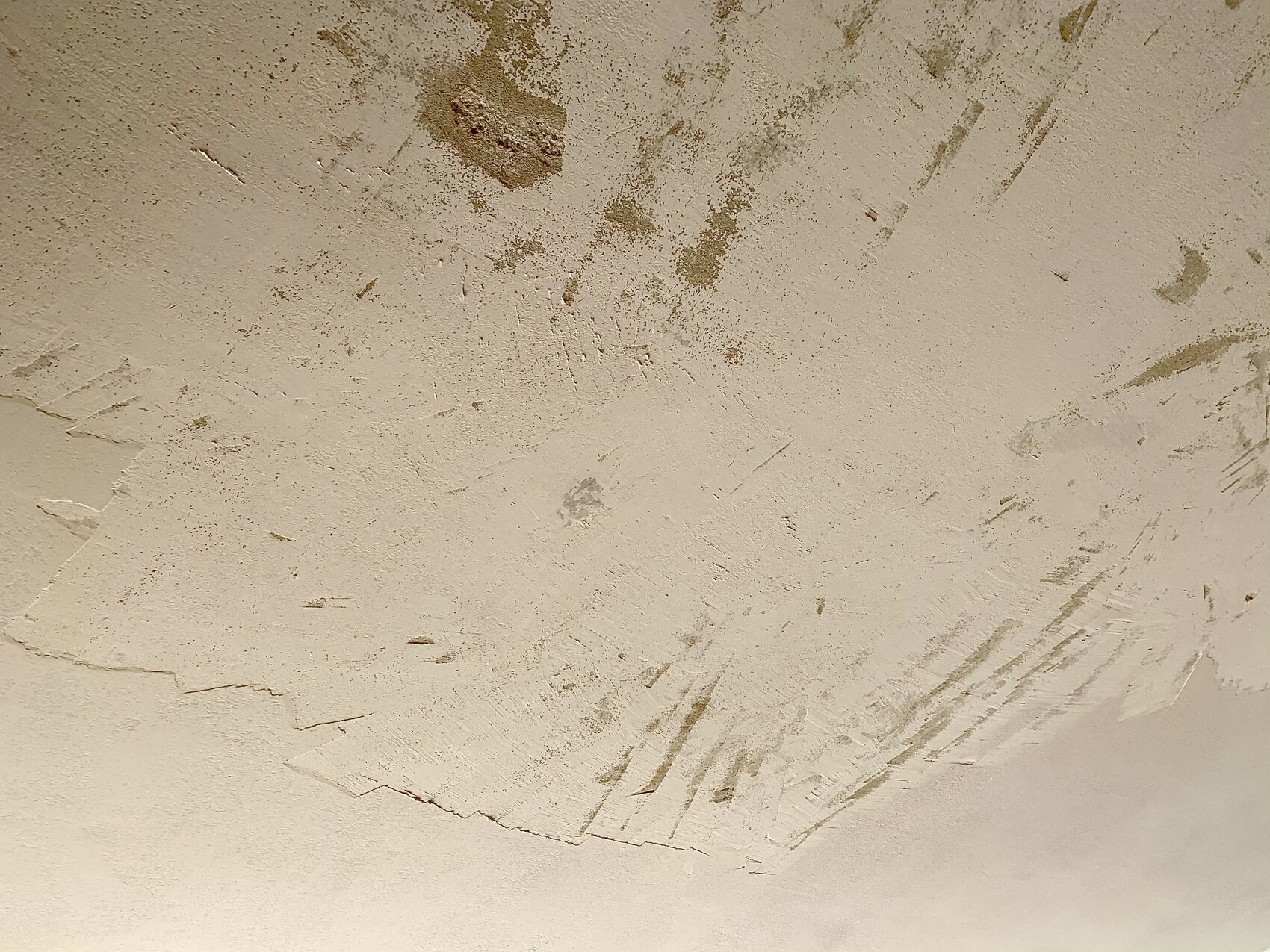
The photos show scratched plaster; the indentations naturally need to be filled with a filler.
Also visible are two different white surfaces:
- The already scraped-off area is directly on the plaster and smudges heavily when rubbed by hand.
- The raised white surface is the white glue paint, which has already been sanded with a drywall sander (known as a "Giraffe"), but could not be completely removed (the 60-grit sandpaper smeared, as did the sander’s air filter when used too frequently), so now the white glue paint is to be scraped off.
The workers on site have different opinions:
1. Scrape off the white glue paint, then remove the remaining white layer down to the plaster with the drywall sander, then apply the primer.
or
2. Scrape off the white glue paint, apply primer on the remaining white layer, because it is not white glue paint but filler.
My feeling is that everything white belongs to the white glue paint and must be removed—why would there be so much filler on the plaster?
Dear all-knowing forum, please help me to reach a final opinion.
R
Rolexianer9 Jul 2021 12:47By now, the casein paint has been removed, the ceiling has been primed with a deep primer, filled, primed again, and so on; in the end, a good result was achieved 🙂
The renovation continues, and the stairwell is next. Again, casein paint, a new painter, same old story: the painter doesn’t want to scrape it off and prefers to just apply deep primer, while the paint specialist strongly recommends scraping off the casein paint first.
In the four rooms renovated recently, the casein paint was scraped off, even though it was an unpleasant, dusty job. The paint was difficult to remove despite using water. I tend to insist on removing the casein paint.
Maybe I’m being too stubborn? Would a professional really scrape it off in their own spaces or simply apply deep primer?
The renovation continues, and the stairwell is next. Again, casein paint, a new painter, same old story: the painter doesn’t want to scrape it off and prefers to just apply deep primer, while the paint specialist strongly recommends scraping off the casein paint first.
In the four rooms renovated recently, the casein paint was scraped off, even though it was an unpleasant, dusty job. The paint was difficult to remove despite using water. I tend to insist on removing the casein paint.
Maybe I’m being too stubborn? Would a professional really scrape it off in their own spaces or simply apply deep primer?
M
Myrna_Loy9 Jul 2021 13:12Casein paint can also be washed off. Based on my experience, using primer on layers of paint containing lime tends to cause flaking rather than proper penetration and strengthening. I’m more of a “thorough approach” person.
R
Rolexianer9 Jul 2021 22:41Alright, let's assume I’m considering repainting the ceiling with glue-based paint. Would this be completely trouble-free, or is there any residual risk associated with repainting?
As the stairwell will be painted white, I’m concerned about color differences between the dispersion paint on the walls and the glue-based paint on the ceiling.
The last paint used in my renovated rooms was “Glemalux ELF 1000.” Is there a glue-based paint available with a similarly “clear” white shade?
Which glue-based paint (manufacturer) would you recommend?
As the stairwell will be painted white, I’m concerned about color differences between the dispersion paint on the walls and the glue-based paint on the ceiling.
The last paint used in my renovated rooms was “Glemalux ELF 1000.” Is there a glue-based paint available with a similarly “clear” white shade?
Which glue-based paint (manufacturer) would you recommend?
R
Rolexianer13 Jul 2021 13:44Just spoke again with the trusted professional painting supplier: the specialist is uncompromising—the distemper paint must be removed. In practical experience, primer is applied over the distemper paint, but if the distemper layer is too thick, it may eventually peel off. Painting distemper over distemper carries the same risk. This is the explanation given by the specialist.
Similar topics