
ᐅ Glue-based paint – what it is and whether it must be removed
Created on: 13 Feb 2021 18:03
R
Rolexianer
The two photos show the current condition of the ceiling. It is supposed to be white glue paint, which must be completely removed before applying the primer, according to the explanation from the paint specialist I trust.
The photos show scratched plaster; the indentations naturally need to be filled with a filler.
Also visible are two different white surfaces:
- The already scraped-off area is directly on the plaster and smudges heavily when rubbed by hand.
- The raised white surface is the white glue paint, which has already been sanded with a drywall sander (known as a "Giraffe"), but could not be completely removed (the 60-grit sandpaper smeared, as did the sander’s air filter when used too frequently), so now the white glue paint is to be scraped off.
The workers on site have different opinions:
1. Scrape off the white glue paint, then remove the remaining white layer down to the plaster with the drywall sander, then apply the primer.
or
2. Scrape off the white glue paint, apply primer on the remaining white layer, because it is not white glue paint but filler.
My feeling is that everything white belongs to the white glue paint and must be removed—why would there be so much filler on the plaster?
Dear all-knowing forum, please help me to reach a final opinion.
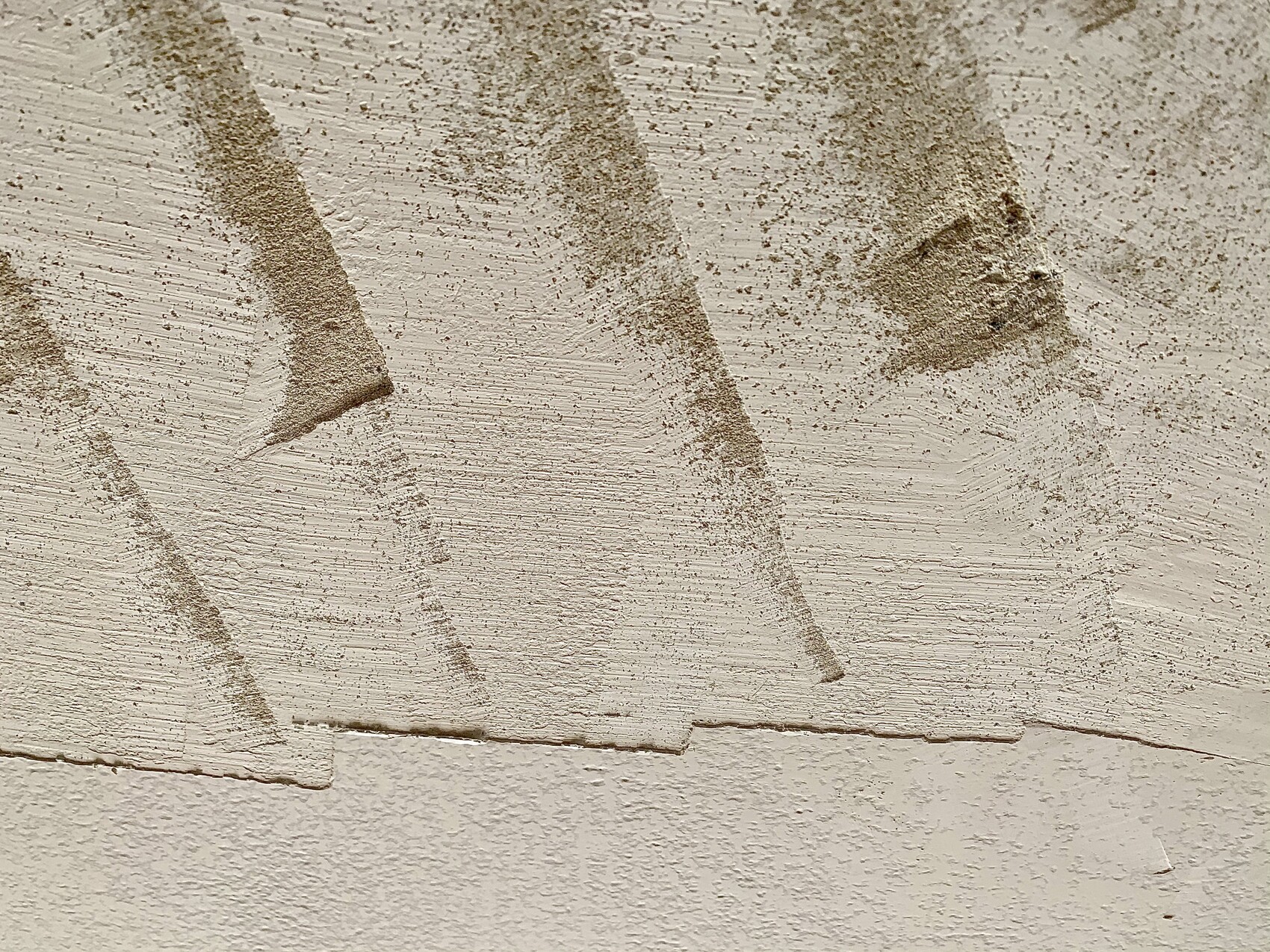
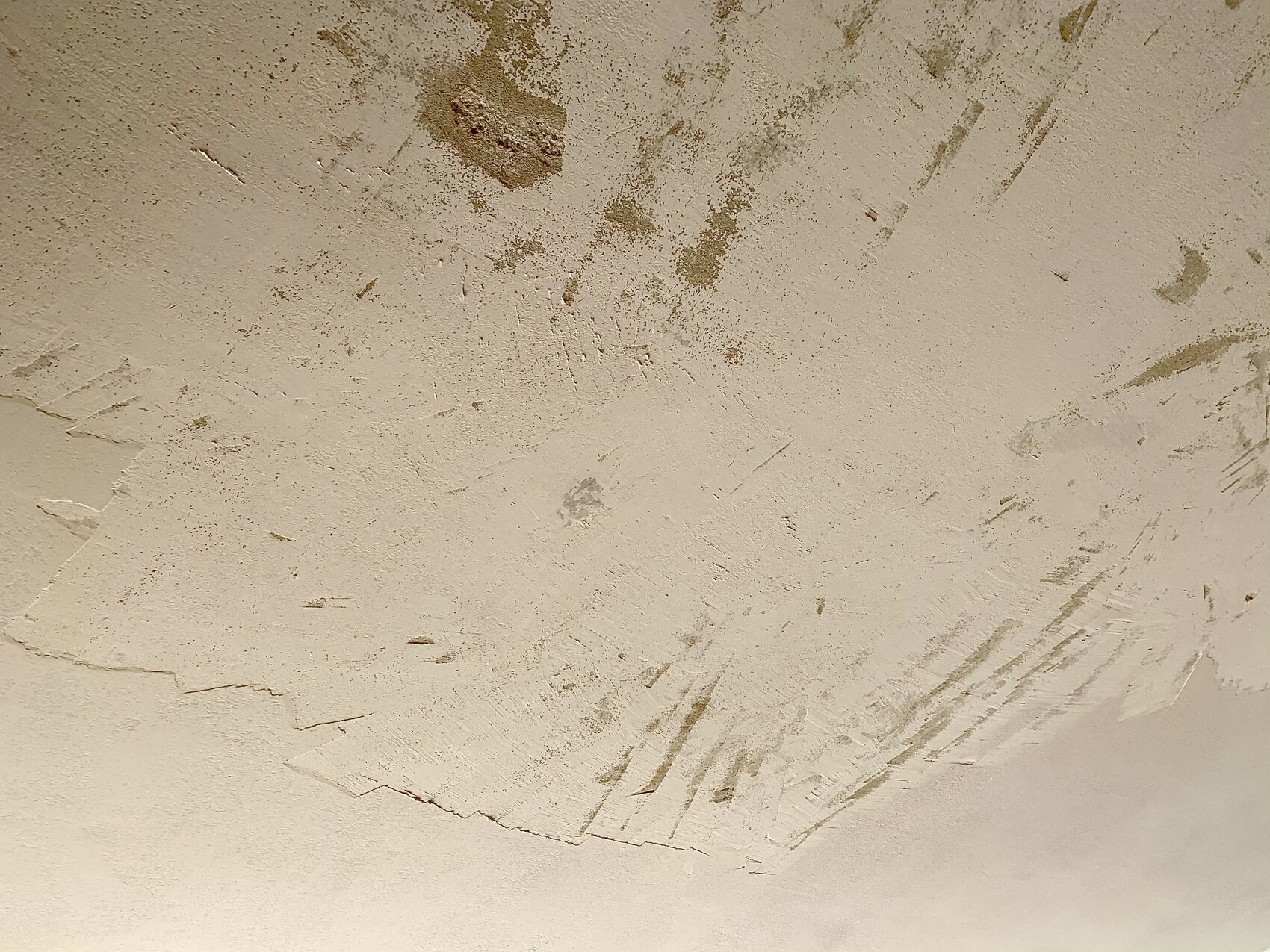
The photos show scratched plaster; the indentations naturally need to be filled with a filler.
Also visible are two different white surfaces:
- The already scraped-off area is directly on the plaster and smudges heavily when rubbed by hand.
- The raised white surface is the white glue paint, which has already been sanded with a drywall sander (known as a "Giraffe"), but could not be completely removed (the 60-grit sandpaper smeared, as did the sander’s air filter when used too frequently), so now the white glue paint is to be scraped off.
The workers on site have different opinions:
1. Scrape off the white glue paint, then remove the remaining white layer down to the plaster with the drywall sander, then apply the primer.
or
2. Scrape off the white glue paint, apply primer on the remaining white layer, because it is not white glue paint but filler.
My feeling is that everything white belongs to the white glue paint and must be removed—why would there be so much filler on the plaster?
Dear all-knowing forum, please help me to reach a final opinion.
R
Rolexianer13 Feb 2021 20:12The magic solution is supposed to cost just under €200, enough for about 70 sqm (750 sq ft) 😳
A building layperson’s question:
What made people 55 years ago apply white gypsum between the plaster and the white glue-based paint...?
A building layperson’s question:
What made people 55 years ago apply white gypsum between the plaster and the white glue-based paint...?
R
Rolexianer13 Feb 2021 20:49@ Nordlys
It’s great that there are people like you.
People who willingly share their experiences to help others. You’re not too proud to answer even basic questions competently and objectively.
Thanks to your responses, I will sleep better tonight.
Respect and thank you!
It’s great that there are people like you.
People who willingly share their experiences to help others. You’re not too proud to answer even basic questions competently and objectively.
Thanks to your responses, I will sleep better tonight.
Respect and thank you!
R
Rolexianer15 Feb 2021 07:55Nordlys schrieb:
By the way, why didn’t you just paint over the glue-based paint? That should be possible.The glue-based paint is still mostly on the ceiling, except for a few square meters where the paint along with the plaster was scraped off.Your question needs to be seriously considered: why not simply paint over the glue-based paint?
The glue-based paint could be beneficial for the flat roof (wooden sheathing) due to its vapor permeability.
Questions:
1 – Assuming the 55-year-old coating really is glue-based paint, then I could paint over it without any pretreatment, right?
2 – How do I restore the plaster base or smooth out the scratches left in the plaster? Can I use any plaster, or does it have to be a specific type? It would probably be ideal if the plaster also creates a white base.
3 – There is also clay paint. Due to COVID-19, a color analysis by a specialist dealer is not possible. What would be the difference in approach if it’s clay paint? How likely is it that it is clay paint?
Similar topics