
Hello everyone,
This is my first post in the forum. I have mostly been reading as a guest in the past to gather information on various topics. Now, I’m hoping to get some feedback because I’m really unsure.
We moved into our new end-of-terrace house near Singen (Htw) at the end of February and are mostly satisfied. However, I’m concerned about the electrical installation:
In our electrical panel, we have three fuses, and I have had to replace one of them several times (two were 10 A fuses, which were replaced by 16 A fuses, and one was a 16 A fuse). This past weekend, for the first time, a 16 A fuse blew, so nothing worked anymore. Unfortunately, I don’t know when it happened because we only noticed it in the morning while showering—no hot water, since the heat pump had no power.
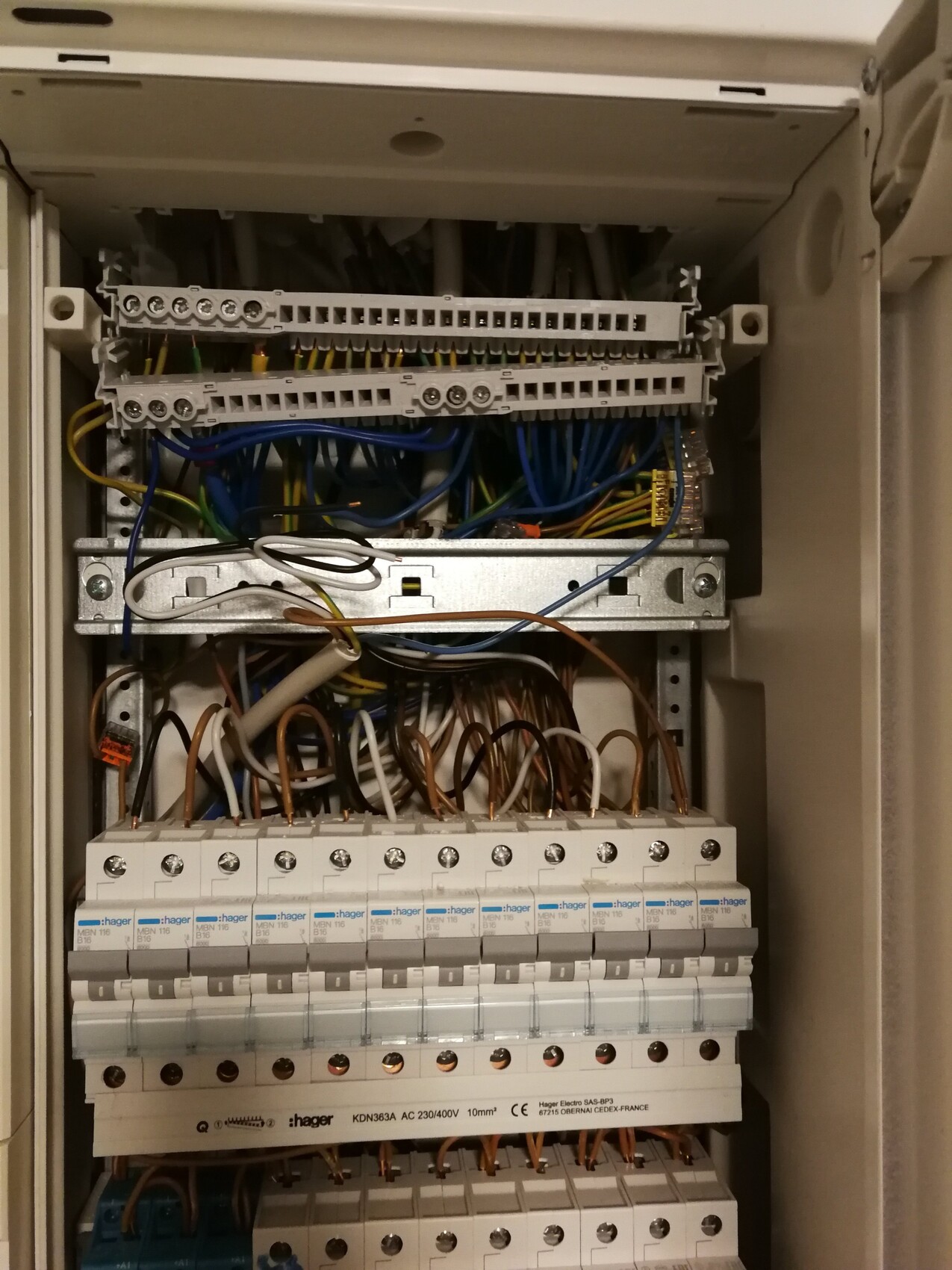
I then looked into the distribution box and removed the cover behind the fuses. You can see the result in the attachment.
What do you think? Is this common or is it poor workmanship? I have no knowledge of electrical work, and the local electrician only said the measurements are all good and that everything else is just cosmetic... is he right?
Thanks in advance for your feedback, I hope you can help me a bit.
Best regards,
SimKN
This is my first post in the forum. I have mostly been reading as a guest in the past to gather information on various topics. Now, I’m hoping to get some feedback because I’m really unsure.
We moved into our new end-of-terrace house near Singen (Htw) at the end of February and are mostly satisfied. However, I’m concerned about the electrical installation:
In our electrical panel, we have three fuses, and I have had to replace one of them several times (two were 10 A fuses, which were replaced by 16 A fuses, and one was a 16 A fuse). This past weekend, for the first time, a 16 A fuse blew, so nothing worked anymore. Unfortunately, I don’t know when it happened because we only noticed it in the morning while showering—no hot water, since the heat pump had no power.
I then looked into the distribution box and removed the cover behind the fuses. You can see the result in the attachment.
What do you think? Is this common or is it poor workmanship? I have no knowledge of electrical work, and the local electrician only said the measurements are all good and that everything else is just cosmetic... is he right?
Thanks in advance for your feedback, I hope you can help me a bit.
Best regards,
SimKN
These are just minor issues. If you look at the DIN rails on the right equipment carrier, the screw hole is at the "top," but it should be at the bottom. When loosening the screws, the part should not fall out. Since this is the case for all visible DIN rails on the main carrier, I assume the entire assembly was installed upside down. This also leads to different mounting heights of the devices compared to the other equipment carriers.
The cabinet itself is a SKII type; to maintain this classification, the DIN rails where the terminal blocks are mounted must be insulated. Otherwise, the entire cabinet is grounded, which means it would no longer be SKII. Labeling the terminal blocks is for easier maintenance—try troubleshooting without knowing which terminal block is which.
As I said, these are minor details, but if you notice something, it’s worth mentioning.
The cabinet itself is a SKII type; to maintain this classification, the DIN rails where the terminal blocks are mounted must be insulated. Otherwise, the entire cabinet is grounded, which means it would no longer be SKII. Labeling the terminal blocks is for easier maintenance—try troubleshooting without knowing which terminal block is which.
As I said, these are minor details, but if you notice something, it’s worth mentioning.
Hello everyone,
a quick update:
The situation now is that I have suggested to the general contractor as the next step to involve an independent expert after an electrician refused to install lighting in my house.
The contractor forwarded my email directly to the electrician without any changes.
The electrician has now hired an expert from DEKRA to inspect the installation at the beginning of July.
What do you think? Is this okay? Can I rely on the impartiality of the expert? Or do I need to take any further action?
Thanks!
a quick update:
The situation now is that I have suggested to the general contractor as the next step to involve an independent expert after an electrician refused to install lighting in my house.
The contractor forwarded my email directly to the electrician without any changes.
The electrician has now hired an expert from DEKRA to inspect the installation at the beginning of July.
What do you think? Is this okay? Can I rely on the impartiality of the expert? Or do I need to take any further action?
Thanks!
No, that approach is completely unacceptable.
You are the one hiring the expert (inspector), so you also choose and contract them. I would neither accept nor pay for the electrician to arrange this on your behalf.
Find a publicly appointed and sworn expert. In my experience, the truly qualified ones usually are not affiliated with TÜV or DEKRA...
You are the one hiring the expert (inspector), so you also choose and contract them. I would neither accept nor pay for the electrician to arrange this on your behalf.
Find a publicly appointed and sworn expert. In my experience, the truly qualified ones usually are not affiliated with TÜV or DEKRA...
SimKN schrieb:
Thanks for the advice.
I pointed this out right away. My concern is that the expert and electrician "know each other well."Don’t just point it out, insist on it and take care of it yourself. Yes, you have to pay the expert yourself initially. It’s frustrating, but better than having a permanently faulty electrical system.
Similar topics