
ᐅ Dimple membrane and drainage for basement – useful as a temporary solution?
Created on: 6 Sep 2022 13:33
M
Metalhead
Hello everyone!
First of all:
I am aware that external waterproofing is essential and must be carried out.
The problem:
We bought a house with a basement underneath. The most recently added room unfortunately has leaks from the outside. In several spots on the wall, just above the horizontal damp-proof course (bitumen sheet), water runs into the room during heavy or prolonged rain.
Since it is a terraced house and the neighbor on that side has no basement in that area, the basement is below ground level.
Now, aside from the water issue, here is the situation:
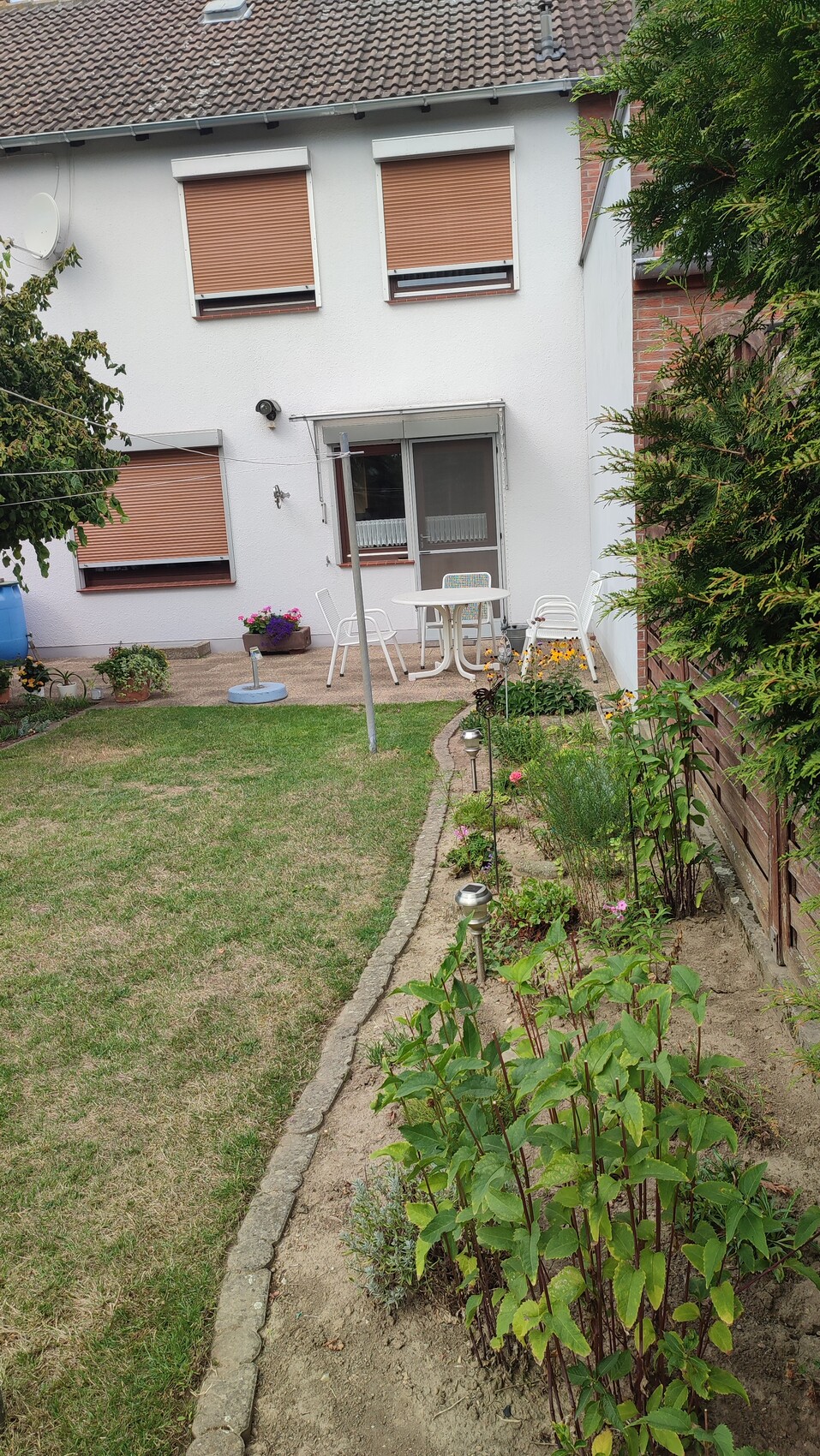
The lady is 85 years old and her garden is her place to stay active. In the photo, you can see that her patio starts exactly where I would have to excavate in order to waterproof my wall from the outside.
I would prefer not to do this while my neighbor still uses her garden.
My question:
Is it a (reasonable) temporary alternative to remove one patio stone on that side and install a one-meter-deep (about 3 feet) dimpled membrane and a drainage pipe there to divert most of the water away from the house for now? It has been agreed with my neighbor’s son that I can carry out proper waterproofing once the house is vacated, before he sells it.
I cannot bring myself to disturb the elderly lady’s garden, especially since her permission is required anyway.
Regarding the pictures:
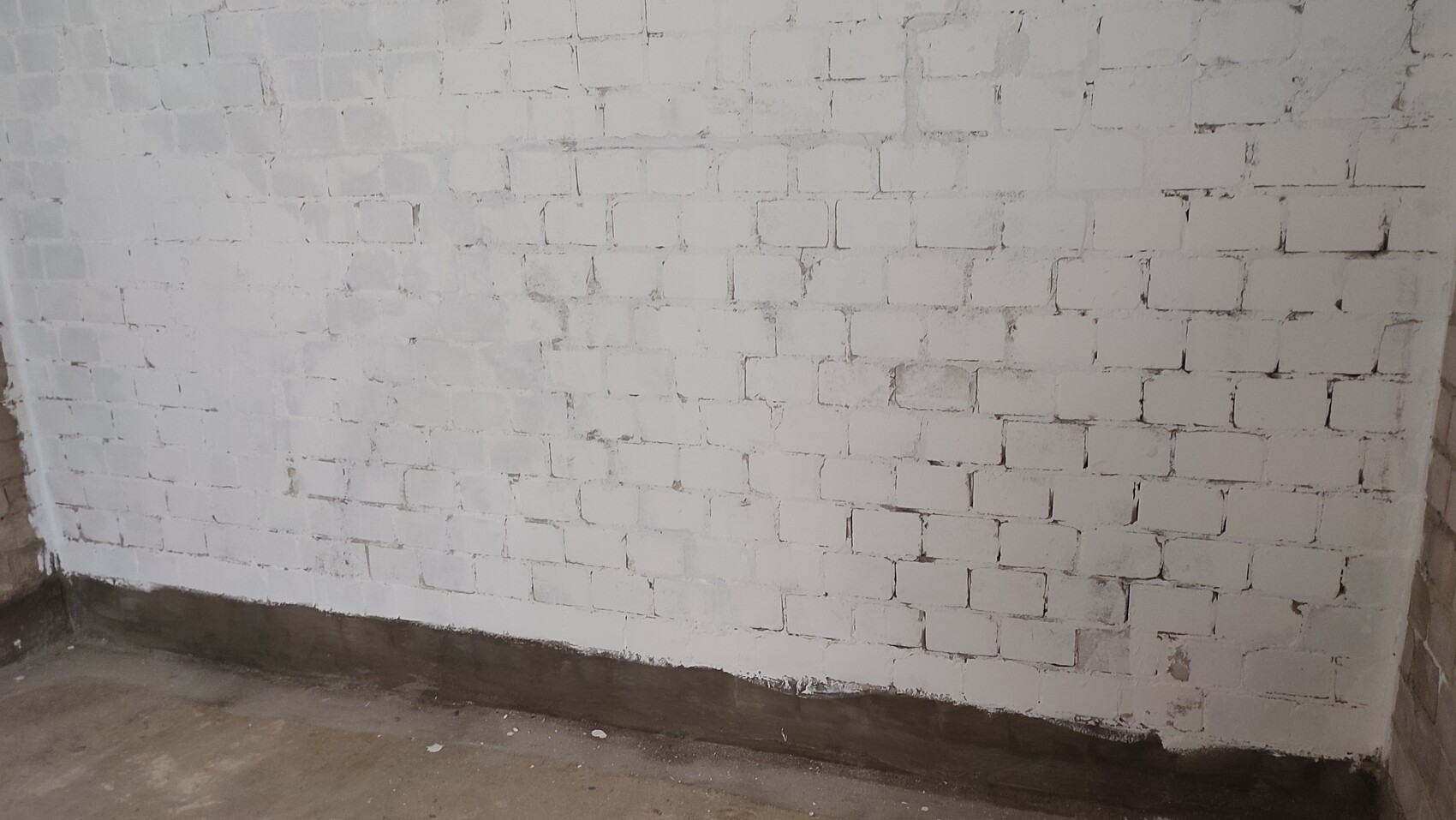
1. Shows the poorly plastered wall from the inside. The previous owner tried before his death to counteract or redirect moisture with waterproof slurry and silicate paint.
2. Shows the neighbor’s garden. Where the edge protection stops is where the wall begins; I would go at least one meter (about 3 feet) further.
Since the wall has certainly not been leaking for just two years but for longer, a delay of one to two years should not make much difference, right? The stones can breathe; after all, it’s a shell structure. Or am I mistaken?
I would be very grateful for any assessment, tips, advice, or also a professional evaluation.
Thank you very much in advance,
Florian
First of all:
I am aware that external waterproofing is essential and must be carried out.
The problem:
We bought a house with a basement underneath. The most recently added room unfortunately has leaks from the outside. In several spots on the wall, just above the horizontal damp-proof course (bitumen sheet), water runs into the room during heavy or prolonged rain.
Since it is a terraced house and the neighbor on that side has no basement in that area, the basement is below ground level.
Now, aside from the water issue, here is the situation:
The lady is 85 years old and her garden is her place to stay active. In the photo, you can see that her patio starts exactly where I would have to excavate in order to waterproof my wall from the outside.
I would prefer not to do this while my neighbor still uses her garden.
My question:
Is it a (reasonable) temporary alternative to remove one patio stone on that side and install a one-meter-deep (about 3 feet) dimpled membrane and a drainage pipe there to divert most of the water away from the house for now? It has been agreed with my neighbor’s son that I can carry out proper waterproofing once the house is vacated, before he sells it.
I cannot bring myself to disturb the elderly lady’s garden, especially since her permission is required anyway.
Regarding the pictures:
1. Shows the poorly plastered wall from the inside. The previous owner tried before his death to counteract or redirect moisture with waterproof slurry and silicate paint.
2. Shows the neighbor’s garden. Where the edge protection stops is where the wall begins; I would go at least one meter (about 3 feet) further.
Since the wall has certainly not been leaking for just two years but for longer, a delay of one to two years should not make much difference, right? The stones can breathe; after all, it’s a shell structure. Or am I mistaken?
I would be very grateful for any assessment, tips, advice, or also a professional evaluation.
Thank you very much in advance,
Florian
 bauenmk20209 Sep 2022 08:15
Hello,
to install 1 meter (3.3 feet) of dimpled membrane and a drainage pipe, you will need more than just removing one stone. You need enough working space to work properly and to prevent soil or debris from sliding into the trench.
Is the wall where the chair on the right is located?
I would either wait until spring or start now. It’s becoming autumn, and the terrace will probably be used less. For a depth of one meter (3.3 feet), I would also plan for a one meter (3.3 feet) wide working area, including slope. You could alternatively install a channel drain (an inexpensive plastic drain), but that would be on the neighbor’s property and likely not ideal—though possibly acceptable as a temporary solution. This drain would only carry surface water, but maybe the water is coming from the terrace itself (slope)?
to install 1 meter (3.3 feet) of dimpled membrane and a drainage pipe, you will need more than just removing one stone. You need enough working space to work properly and to prevent soil or debris from sliding into the trench.
Is the wall where the chair on the right is located?
I would either wait until spring or start now. It’s becoming autumn, and the terrace will probably be used less. For a depth of one meter (3.3 feet), I would also plan for a one meter (3.3 feet) wide working area, including slope. You could alternatively install a channel drain (an inexpensive plastic drain), but that would be on the neighbor’s property and likely not ideal—though possibly acceptable as a temporary solution. This drain would only carry surface water, but maybe the water is coming from the terrace itself (slope)?
Hello,
I don’t think your suggestion will be very effective.
With this “drainage,” you would probably create a “bathtub effect.” Since the water is not mechanically removed, it will accumulate there. Contrary to your goal of keeping water away from the house, it could actually lead to water being directed toward that area.
I also don’t think a drainage system along the entire length is practical unless it is connected to a pump that reliably removes the water.
Your previous owner’s solution can’t work either, since water enters on the “adhesive side” of the materials, making it ineffective.
Regarding the previous comment:
A channel on top of the floor construction?
I suspect it is not surface water draining directly there, but rather that the former basement workspace is flooding from underground.
Best regards,
Jann
I don’t think your suggestion will be very effective.
With this “drainage,” you would probably create a “bathtub effect.” Since the water is not mechanically removed, it will accumulate there. Contrary to your goal of keeping water away from the house, it could actually lead to water being directed toward that area.
I also don’t think a drainage system along the entire length is practical unless it is connected to a pump that reliably removes the water.
Your previous owner’s solution can’t work either, since water enters on the “adhesive side” of the materials, making it ineffective.
Regarding the previous comment:
A channel on top of the floor construction?
I suspect it is not surface water draining directly there, but rather that the former basement workspace is flooding from underground.
Best regards,
Jann
Hello to both of you and thanks for the responses!
@bauenmk2020:
That is exactly the wall in question. I don’t think adding a channel would help much.
@Jann St Thanks to you as well.
Over the past few days, I have noticed the following:
We have had quite a bit of rain here in the last three days. However, it wasn’t in short bursts, but rather spread out over the day.
During this rainfall, the basement stayed completely dry.
That surprised me somewhat.
My explanation leans toward what both of you have more or less suggested.
I believe that a sort of water column forms between the basement wall and the soil when a lot of water arrives at once and there isn’t enough time for it to drain away.
I’m afraid I might not have any other way to handle this except sealing it from the outside.
So I’ll probably have to talk to my lovely neighbor about it.
Thanks again anyway.
@bauenmk2020:
That is exactly the wall in question. I don’t think adding a channel would help much.
@Jann St Thanks to you as well.
Over the past few days, I have noticed the following:
We have had quite a bit of rain here in the last three days. However, it wasn’t in short bursts, but rather spread out over the day.
During this rainfall, the basement stayed completely dry.
That surprised me somewhat.
My explanation leans toward what both of you have more or less suggested.
I believe that a sort of water column forms between the basement wall and the soil when a lot of water arrives at once and there isn’t enough time for it to drain away.
I’m afraid I might not have any other way to handle this except sealing it from the outside.
So I’ll probably have to talk to my lovely neighbor about it.
Thanks again anyway.
Hello,
this phenomenon is called temporary rising seepage water – I described it here as the bathtub effect. The work area was backfilled with more permeable material than the underlying soil, so water collects there, builds up, and then slowly seeps away.
When it rains less heavily, the water can probably infiltrate well enough through the surrounding terrain.
Good luck!
this phenomenon is called temporary rising seepage water – I described it here as the bathtub effect. The work area was backfilled with more permeable material than the underlying soil, so water collects there, builds up, and then slowly seeps away.
When it rains less heavily, the water can probably infiltrate well enough through the surrounding terrain.
Good luck!
Similar topics