
S
stromneuling18 Dec 2025 18:45Good evening,
I have black spots in the joints of my skylight in one corner.
Can an expert assess whether this is mold or how I can find out?
If so, what should I do in the short term and long term to address it?
The pictures are heavily zoomed in. The affected area is about the size of a fingernail.
![IMG_7297.jpg"]94319[/ATTACH]<br />
<br />
[ATTACH type="full" alt="Corner area with cracks and flaking in wall and floor joints](/attachments/94320/)
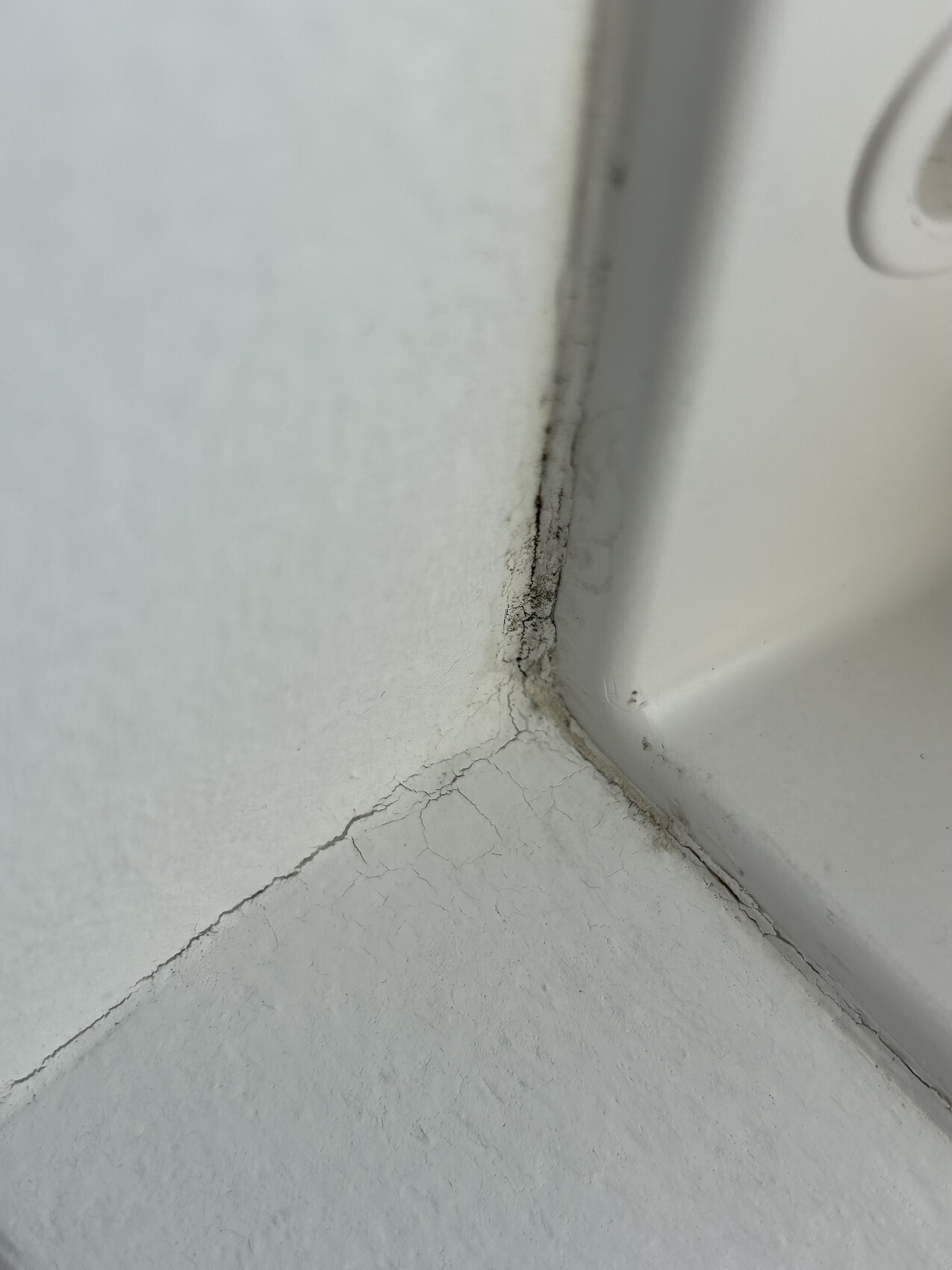
I have black spots in the joints of my skylight in one corner.
Can an expert assess whether this is mold or how I can find out?
If so, what should I do in the short term and long term to address it?
The pictures are heavily zoomed in. The affected area is about the size of a fingernail.
I came here from the other thread.
Yes, that could be mold.
It looks like the waterproofing has already suffered some damage. It might help to remove it and redo it. I assume the mold only forms because moisture accumulates here due to ventilation and is not dried out by heating.
Yes, that could be mold.
It looks like the waterproofing has already suffered some damage. It might help to remove it and redo it. I assume the mold only forms because moisture accumulates here due to ventilation and is not dried out by heating.
S
stromneuling12 Jan 2026 23:12Thank you for your reply. I cleaned it off with isopropanol, and since then it looks better (I still need to take another picture), but I don’t think this is a long-term solution.
By sealing, do you mean the (silicone?) joint?
By sealing, do you mean the (silicone?) joint?
D
derdietmar13 Jan 2026 08:59Hello,
this is mold. The cause is a thermal bridge at this location. This is a common issue, especially where roof windows are installed with drywall reveals. It is difficult to completely avoid the thermal bridge here. The mold will keep recurring, even if everything is properly sealed.
The only solution is ventilation and heating—plenty of both. You can also temporarily improve air circulation at this spot, for example with a fan. Moist air tends to accumulate by the window and also cools down there.
Best regards
this is mold. The cause is a thermal bridge at this location. This is a common issue, especially where roof windows are installed with drywall reveals. It is difficult to completely avoid the thermal bridge here. The mold will keep recurring, even if everything is properly sealed.
The only solution is ventilation and heating—plenty of both. You can also temporarily improve air circulation at this spot, for example with a fan. Moist air tends to accumulate by the window and also cools down there.
Best regards
 HausiKlausi13 Jan 2026 09:27
How are the roof windows cut at the bottom? Straight or sloping? Can you show a picture of the entire window?
S
stromneuling13 Jan 2026 12:20derdietmar schrieb:
That is mold. The cause is a thermal bridge at this spot. This is a common issue, as roof windows are often finished with drywall reveals. It is difficult to avoid the thermal bridge at this location. The mold will keep returning, even if everything is properly sealed.
The only solution is ventilation and heating. A lot of both. You can also temporarily improve air circulation here, for example with a fan. That’s what I feared. I ventilate and heat regularly, and I also have a hygrometer inside, but that doesn’t help much at this spot. What is your advice for cleaning it properly and solving it in the short term?
I have already read about the fan, but implementing that isn’t so easy.
derdietmar schrieb:
Because moist air collects at the window and also cools down there. That’s why I am asking whether a foil or membrane might help instead of a fan. Does something like that exist?
HausiKlausi schrieb:
How are the roof windows cut at the bottom? Straight or sloped? Can you show a picture of the entire window? Straight down at 90 degrees. There is no slope, but there is underfloor heating, which apparently isn’t sufficient to transfer enough heat “up” to the window.
Similar topics