
Hello dear forum members,
We are currently building our dream home with a general contractor and I would like to ask for your advice on one of the remaining issues. The single-family house measures 14m x 8m (46ft x 26ft) and is fully clad with brick veneer. During an inspection by our independent expert, they criticized the absence of expansion joints. Apparently, these were not included in our general contractor’s plans, and the bricklayer did not install them accordingly. After a thorough review of the situation by the general contractor and the bricklayer, it was decided to cut a total of four expansion joints afterwards. Unfortunately, we are more than disappointed with the result—my wife even cried the first time she saw the joints. Unlike the approximately 1.5cm (0.6 inches) width of all the other joints, the cut expansion joints measure almost exclusively more than 3cm (1.2 inches). If a regular joint happens to be next to a cut joint, their widths add up, resulting in a visually quite disastrous effect (see photos).
The construction manager gave us hope that the appearance would improve after grouting the joints, but from our point of view, this has not been the case. Our expert also says he has never seen anything like this before. With the final inspection approaching quickly, we are wondering what to do. Of course, we have already informed the construction manager that we consider the execution of the joints to be defective. At the moment, we are planning to somehow conceal the joints after handover—either by coloring them to match the bricks or by using a trim. However, at least a substantial compensation from the general contractor would be expected. This can’t be acceptable, can it? If not, how would you assess the damage? Is this “just” a visual defect, or is it also a functional problem? Could we, in theory, demand that the affected section of the facade be replaced?
I would really appreciate your expert opinion. If I have forgotten any important details, please let me know briefly.
Thank you in advance and best regards from the north,
Simon
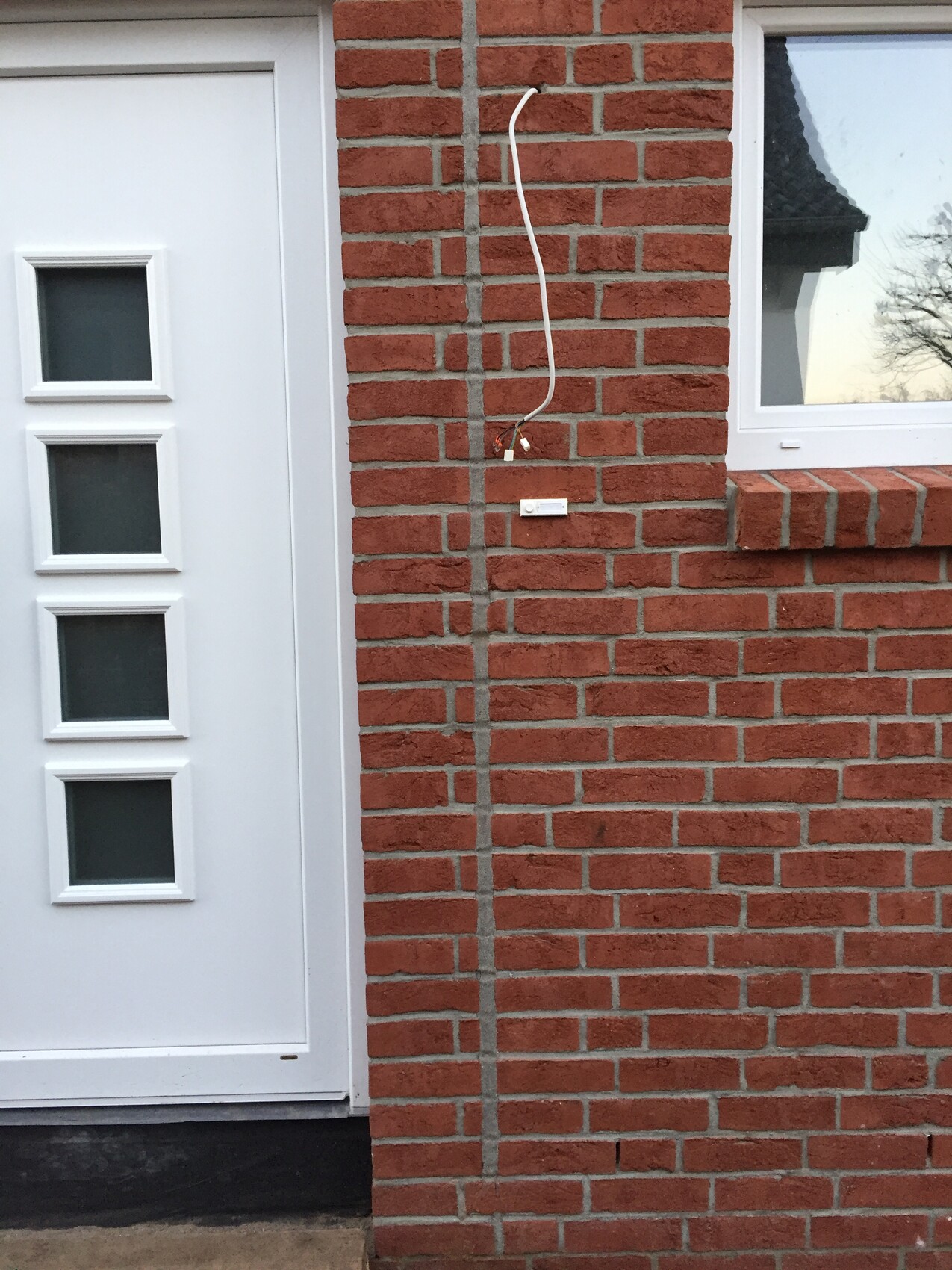
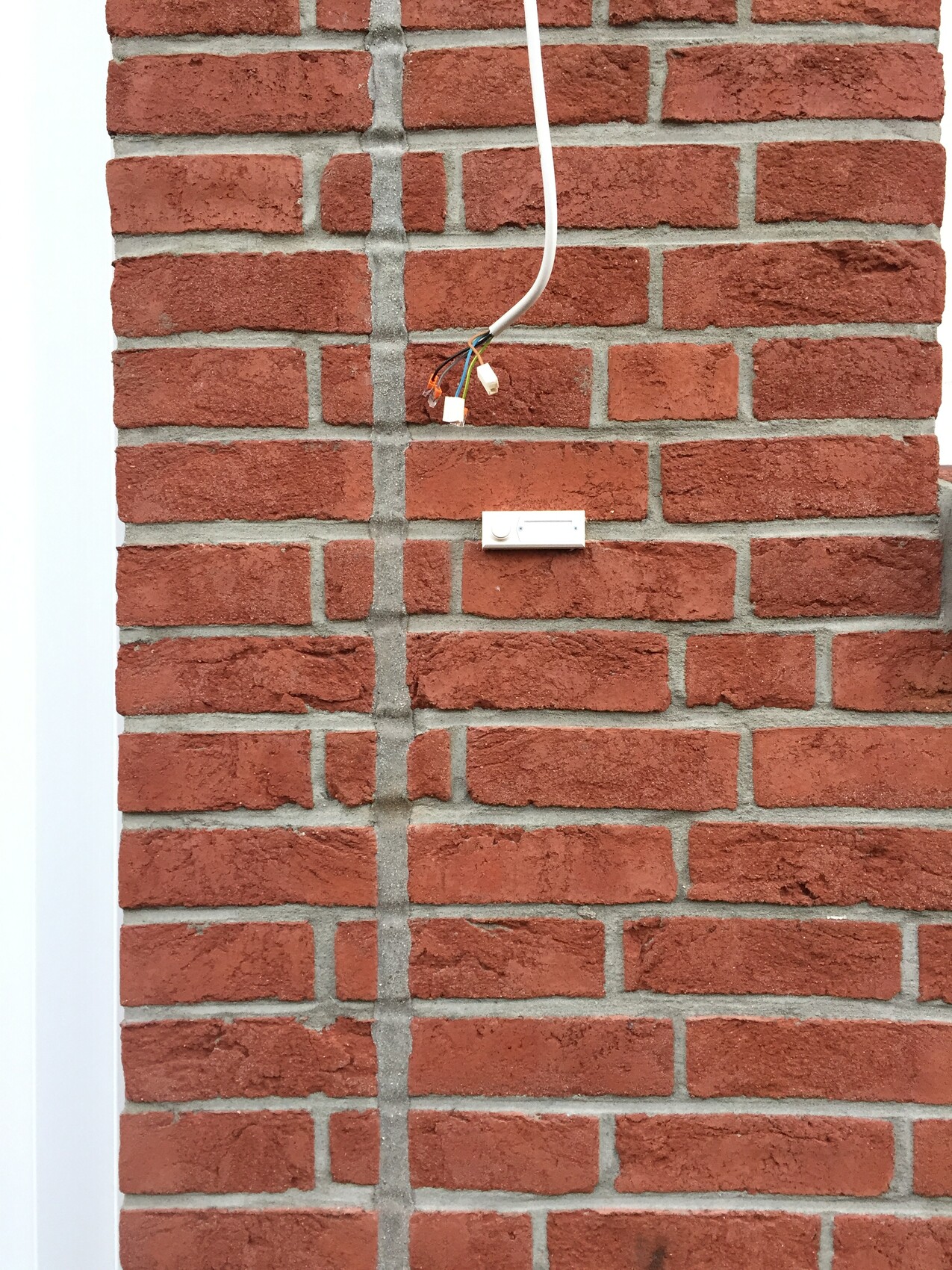
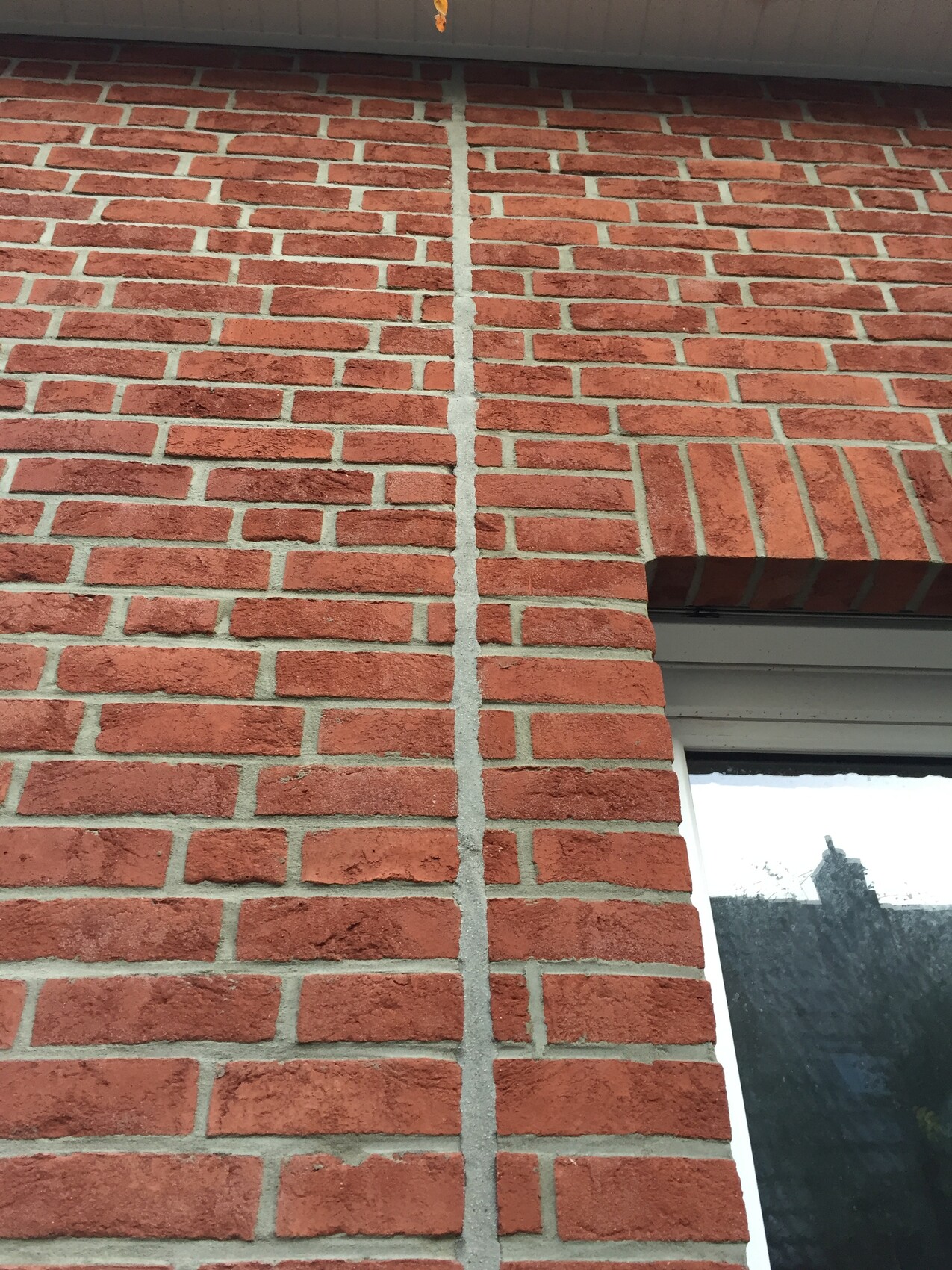
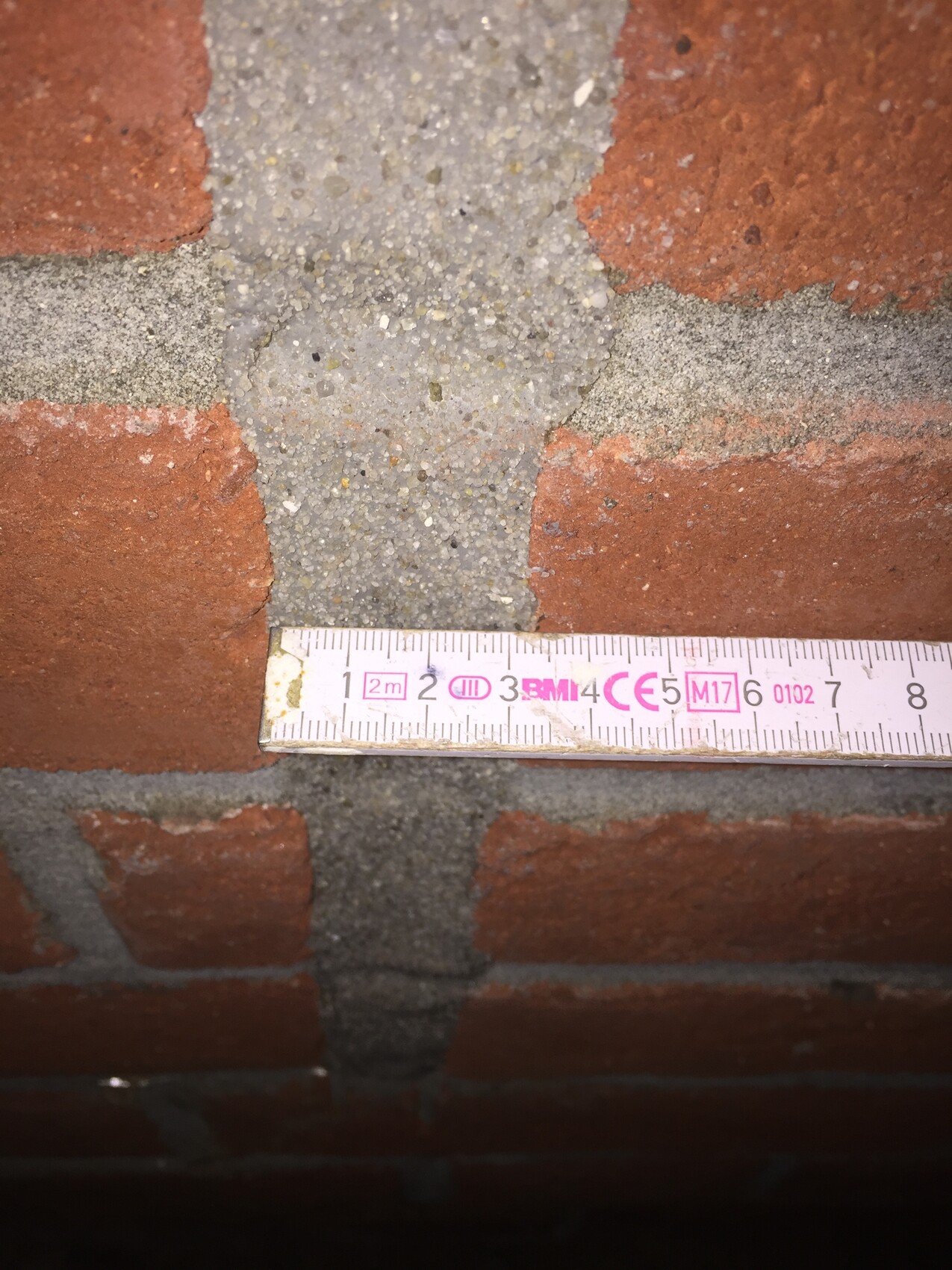
We are currently building our dream home with a general contractor and I would like to ask for your advice on one of the remaining issues. The single-family house measures 14m x 8m (46ft x 26ft) and is fully clad with brick veneer. During an inspection by our independent expert, they criticized the absence of expansion joints. Apparently, these were not included in our general contractor’s plans, and the bricklayer did not install them accordingly. After a thorough review of the situation by the general contractor and the bricklayer, it was decided to cut a total of four expansion joints afterwards. Unfortunately, we are more than disappointed with the result—my wife even cried the first time she saw the joints. Unlike the approximately 1.5cm (0.6 inches) width of all the other joints, the cut expansion joints measure almost exclusively more than 3cm (1.2 inches). If a regular joint happens to be next to a cut joint, their widths add up, resulting in a visually quite disastrous effect (see photos).
The construction manager gave us hope that the appearance would improve after grouting the joints, but from our point of view, this has not been the case. Our expert also says he has never seen anything like this before. With the final inspection approaching quickly, we are wondering what to do. Of course, we have already informed the construction manager that we consider the execution of the joints to be defective. At the moment, we are planning to somehow conceal the joints after handover—either by coloring them to match the bricks or by using a trim. However, at least a substantial compensation from the general contractor would be expected. This can’t be acceptable, can it? If not, how would you assess the damage? Is this “just” a visual defect, or is it also a functional problem? Could we, in theory, demand that the affected section of the facade be replaced?
I would really appreciate your expert opinion. If I have forgotten any important details, please let me know briefly.
Thank you in advance and best regards from the north,
Simon

Dr Hix schrieb:
Where do you see such an enormous effort? The damaged bricks on both sides of the control joint scar need to be chiseled out. Replacing them so they fit flush is more difficult than during the continuous bricklaying process. The adjustment is basically similar to wall tiling. And if you’re unlucky enough to have to use replacement bricks from a different batch, this "mark" will stand out from a few meters away — even more than when viewed up close — due to differences in color tones. That’s why I recommend letting a meticulously precise painter apply a light spray coat. Of course, this has to be done before repointing. Repairing accident damage so it’s inconspicuous in terms of color is always more complex than a standard factory finish. This inspector’s joke alone can add up to several working days.
Pinky0301 schrieb:
I think that’s a bit exaggerated. You probably can’t expect the general contractor to just cut open the facade somewhere. That absolutely must be done: if you just throw the layperson builder an unexplained fragment, implying there should have been a movement joint there, they’ll naturally think: oh no, my bricks are encroaching into a no-parking zone, now I need to have a groove cut quickly with a grinder. That’s why it’s negligent to say something like that without planning the specific execution. Of course, fear leads to knee-jerk reactions — a professional must stay clear-headed.
https://www.instagram.com/11antgmxde/
https://www.linkedin.com/company/bauen-jetzt/

kaho674 schrieb:
So, scan the color, mix it, and paint over it.This could theoretically work here if one were satisfied with color matching the mortar joint (which I would consider too lenient toward the party responsible for the damage). However, when replacing the bricks, simply "mixing" a uniform paint won't work, especially due to the variegated appearance of the rough clinker bricks.https://www.instagram.com/11antgmxde/
https://www.linkedin.com/company/bauen-jetzt/
I am still not convinced that the fault lies with the surveyor here (let alone that it should be taken to court). If they note that, in their opinion, an expansion joint is generally necessary for this wall length, that doesn’t necessarily mean the wall has to look so unsightly. I see the mason and, accordingly, the main contractor as responsible here, since they handled the detailed planning and execution (following the motto: shall we just use the angle grinder here?).
Regarding the projected costs, I have now read quite a wide range. Getting a quote from the main contractor of €2000-3000 per joint (so about €10,000) seems unrealistic to me. We will probably need to find a more cost-effective solution. Either only replacing the most visible cuts on the street side or covering them up. I have heard that instead of regular paint, a mixture made from ground stones (however that is produced) could be used. We still have plenty of old stone pieces... Regarding color differences from a replacement, I remain hopeful. We have already experienced walls built from different batches in large sections and, luckily, this is not visible. The facing bricks therefore seem to be quite “color-stable.”
Many thanks again for your numerous comments. With the house inspection coming up soon (hopefully before Christmas), I at least feel somewhat encouraged not to let the main contractor off the hook so easily.
Regarding the projected costs, I have now read quite a wide range. Getting a quote from the main contractor of €2000-3000 per joint (so about €10,000) seems unrealistic to me. We will probably need to find a more cost-effective solution. Either only replacing the most visible cuts on the street side or covering them up. I have heard that instead of regular paint, a mixture made from ground stones (however that is produced) could be used. We still have plenty of old stone pieces... Regarding color differences from a replacement, I remain hopeful. We have already experienced walls built from different batches in large sections and, luckily, this is not visible. The facing bricks therefore seem to be quite “color-stable.”
Many thanks again for your numerous comments. With the house inspection coming up soon (hopefully before Christmas), I at least feel somewhat encouraged not to let the main contractor off the hook so easily.
sunnyage schrieb:
I am still not convinced that the fault lies with the inspector here (let alone that it can be legally claimed). If the inspector notes that, in his opinion, an expansion joint is generally necessary for this length of wall, that does not automatically mean the wall must look so unsightly. I see the responsibility more with the bricklayer and, accordingly, the general contractor, who carried out the detailed planning and execution (loosely translated: “shall we just cut here?”).I do not know exactly how the inspector worded his observation or how it can be proven. The fact is: you have been damaged by an unsightly facade, which cannot be justified by any benefit, since no benefit was created by this approach. A bricklayer is not responsible for execution planning — he builds what he is told to build.sunnyage schrieb:
Regarding the predicted costs, I have read quite a wide range here. Receiving 2,000–3,000€ per joint (which is about 10,000€ total) from the general contractor seems unrealistic to me. So, we will probably have to find a more cost-effective solution somehow. Either just replacing the particularly noticeable cuts on the street side or concealing them.Counterargument: I consider significantly cheaper “solutions” unsatisfactory. In car accident repairs, a culture of repair appropriate to actual value has become established — in that sense, no makeshift repair should be aimed for on a brand-new house. Realistically, it’s probably to be expected for one or two court instances that the judge will not assess the situation with sufficient expertise and will pragmatically lean toward a weak settlement. That, in turn, can be negotiated more cheaply out of court.https://www.instagram.com/11antgmxde/
https://www.linkedin.com/company/bauen-jetzt/
Similar topics