
Hello everyone,
we are currently building a solid structure, and the construction is almost complete, with the final inspection coming up. However, I have increasingly noticed damp spots on the brickwork (see picture). They are less visible on dry days but still appear even when it’s not raining.
What could this be? Is it possibly normal?
Thanks for any tips and your answers.
Best regards
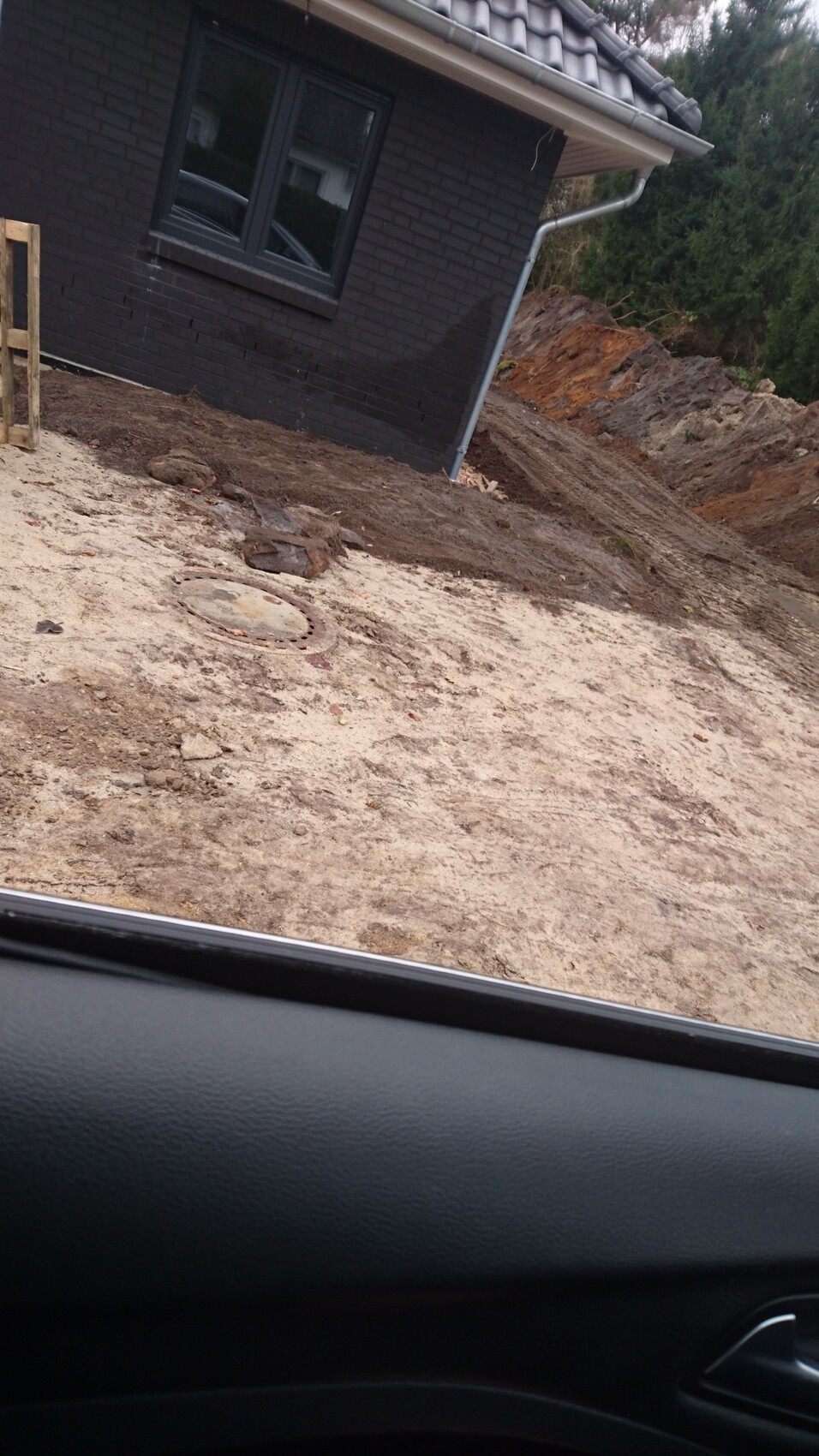
we are currently building a solid structure, and the construction is almost complete, with the final inspection coming up. However, I have increasingly noticed damp spots on the brickwork (see picture). They are less visible on dry days but still appear even when it’s not raining.
What could this be? Is it possibly normal?
Thanks for any tips and your answers.
Best regards
B
Bauexperte4 Dec 2016 11:18ah-1986 schrieb:
However, I am increasingly noticing 'wet' spots on the brickwork (see picture). They are less visible on dry days but still appear even when it is not raining. This is not "normal." Find a qualified expert and discuss these and any other issues with them _before_ you proceed to the building inspection.
Regards, Bauexperte
K
Knallkörper4 Dec 2016 11:24Sometimes water leaks through the open vertical joints in our walls. However, I have never seen stains like these before. It could be that the surface of the facing brick promotes condensation more than usual. Maybe moisture becomes visible on the surface more quickly. But that does not explain why the brickwork seems to be almost constantly damp.
Measuring the moisture levels is probably the best way to gain new insights.
Measuring the moisture levels is probably the best way to gain new insights.
Payday schrieb:
Below the window, the windowsill plus 2-3 rows of bricks underneath is normal (the water hitting the window needs to be able to drain somewhere).
In the picture it looks strange and gives the impression that water collects in the corner there and cannot drain properly.
Do you have an inspector for the final inspection?Hello,
yes, we already had the inspector here, who is now coming to the final stage and the official inspection. I’m curious what he will say. It doesn’t seem normal to me either. It’s especially wet today.
Of course, water in the brickwork freezes if it is damp or wet there, since the insulation behind it only starts after the brick layer. If the damp brick freezes, the ice could easily damage (crack) the bricks. If new moisture continues to accumulate there after rain, rainwater may be pooling somewhere, or there might be a defect in the downpipe?!
This definitely needs to be addressed.
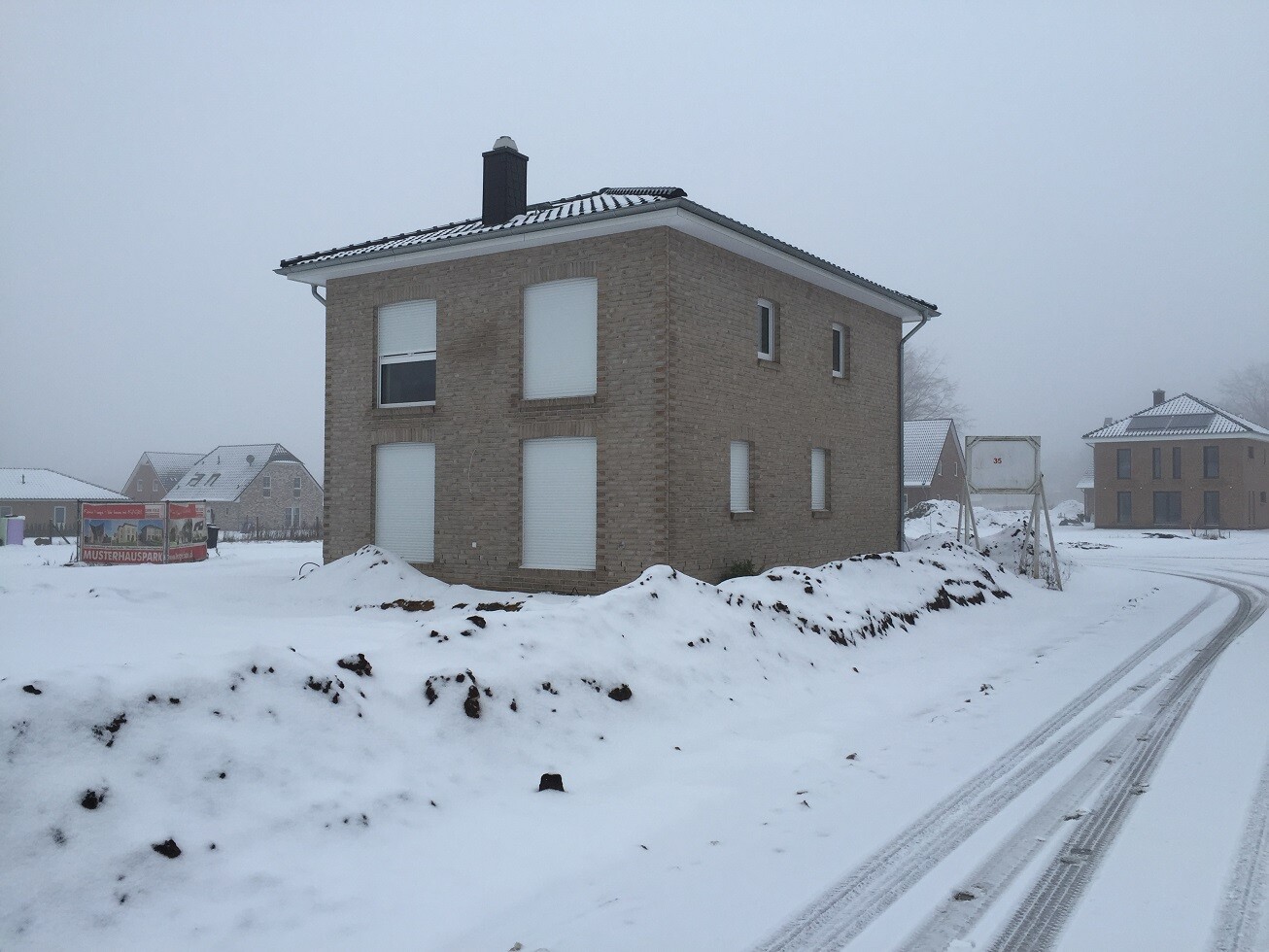
Attached is a photo of our house during the first winter. Moisture tends to collect on the windward side under the window because all the water that hits the glass gathers there. This can be avoided by using metal window sills, which are quite rare in brick-clad houses. We consulted with an inspector and the construction company, asked neighbors, and looked at other houses. All of these homes show this appearance and it is completely normal. Of course, it also depends on the color of the bricks. Some colors are visually much more prone to this than others.
At a corner of the house, however, this hardly makes sense because no more moisture accumulates there than at any other spot. A single window cannot absorb moisture but rather sheds it downwards, where it may then collect.
Otherwise, a nice house
This definitely needs to be addressed.
Attached is a photo of our house during the first winter. Moisture tends to collect on the windward side under the window because all the water that hits the glass gathers there. This can be avoided by using metal window sills, which are quite rare in brick-clad houses. We consulted with an inspector and the construction company, asked neighbors, and looked at other houses. All of these homes show this appearance and it is completely normal. Of course, it also depends on the color of the bricks. Some colors are visually much more prone to this than others.
At a corner of the house, however, this hardly makes sense because no more moisture accumulates there than at any other spot. A single window cannot absorb moisture but rather sheds it downwards, where it may then collect.
Otherwise, a nice house
Similar topics