
Hello dear forum members,
We are currently building our dream home with a general contractor and I would like to ask for your advice on one of the remaining issues. The single-family house measures 14m x 8m (46ft x 26ft) and is fully clad with brick veneer. During an inspection by our independent expert, they criticized the absence of expansion joints. Apparently, these were not included in our general contractor’s plans, and the bricklayer did not install them accordingly. After a thorough review of the situation by the general contractor and the bricklayer, it was decided to cut a total of four expansion joints afterwards. Unfortunately, we are more than disappointed with the result—my wife even cried the first time she saw the joints. Unlike the approximately 1.5cm (0.6 inches) width of all the other joints, the cut expansion joints measure almost exclusively more than 3cm (1.2 inches). If a regular joint happens to be next to a cut joint, their widths add up, resulting in a visually quite disastrous effect (see photos).
The construction manager gave us hope that the appearance would improve after grouting the joints, but from our point of view, this has not been the case. Our expert also says he has never seen anything like this before. With the final inspection approaching quickly, we are wondering what to do. Of course, we have already informed the construction manager that we consider the execution of the joints to be defective. At the moment, we are planning to somehow conceal the joints after handover—either by coloring them to match the bricks or by using a trim. However, at least a substantial compensation from the general contractor would be expected. This can’t be acceptable, can it? If not, how would you assess the damage? Is this “just” a visual defect, or is it also a functional problem? Could we, in theory, demand that the affected section of the facade be replaced?
I would really appreciate your expert opinion. If I have forgotten any important details, please let me know briefly.
Thank you in advance and best regards from the north,
Simon
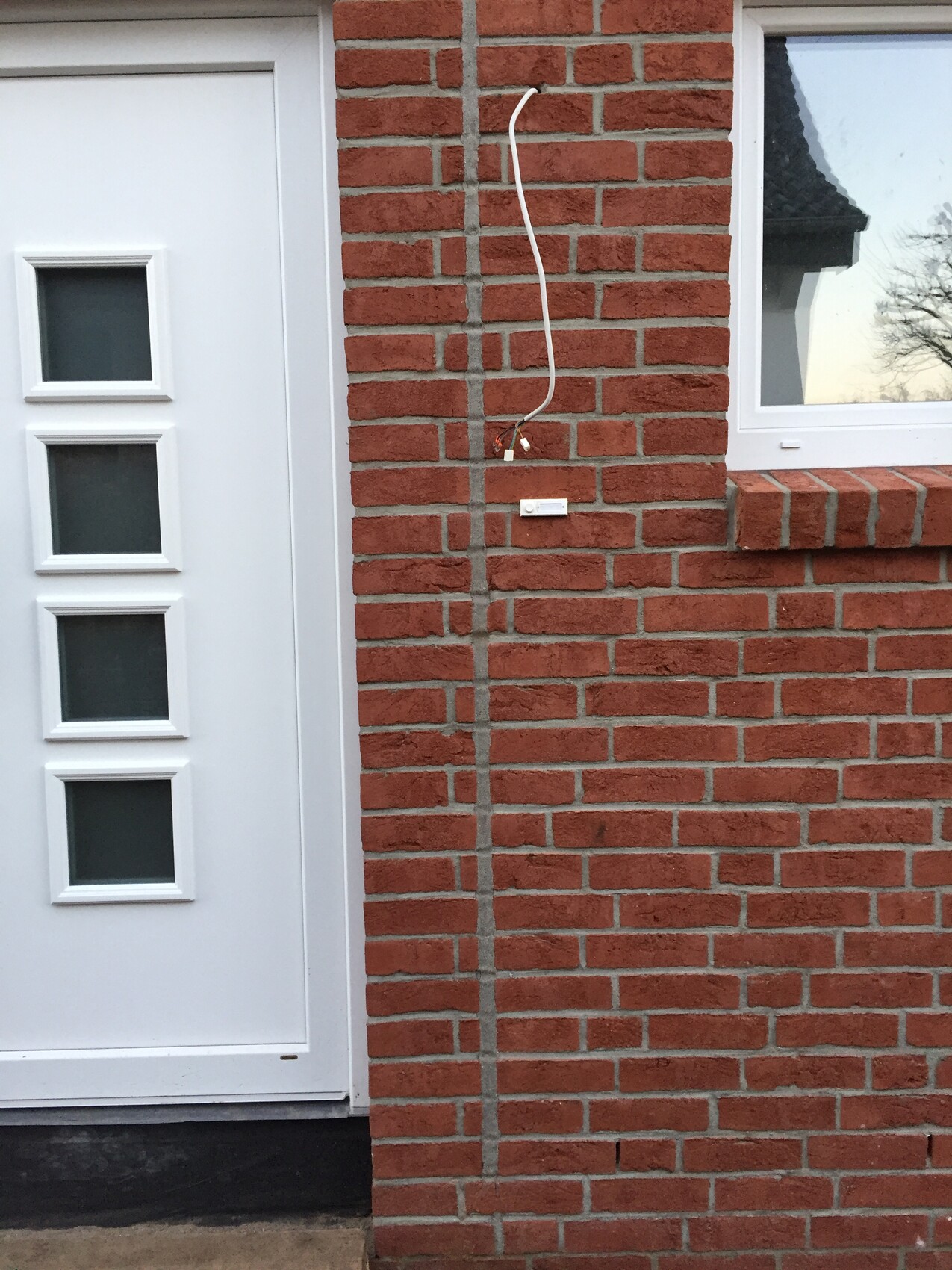
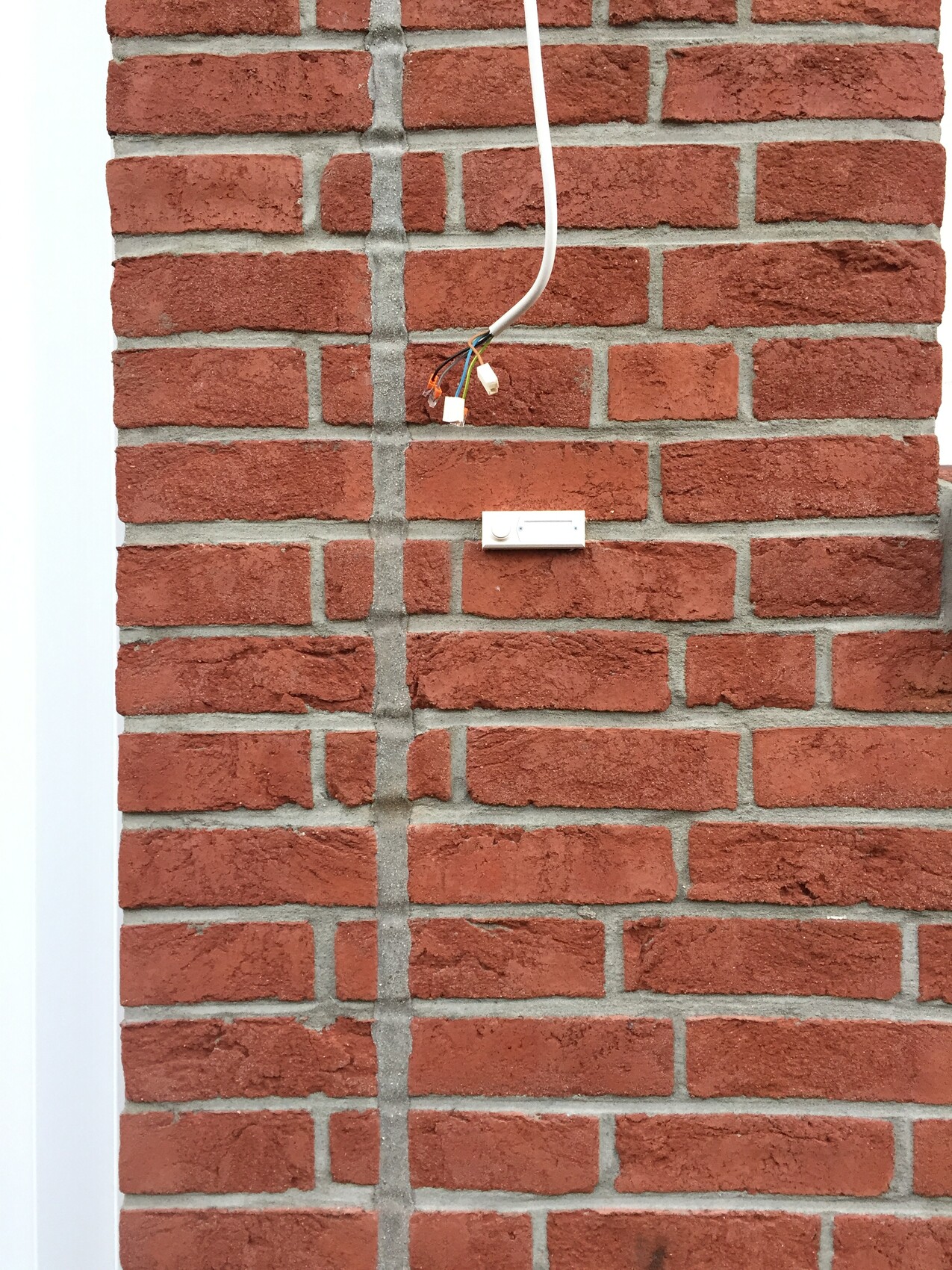
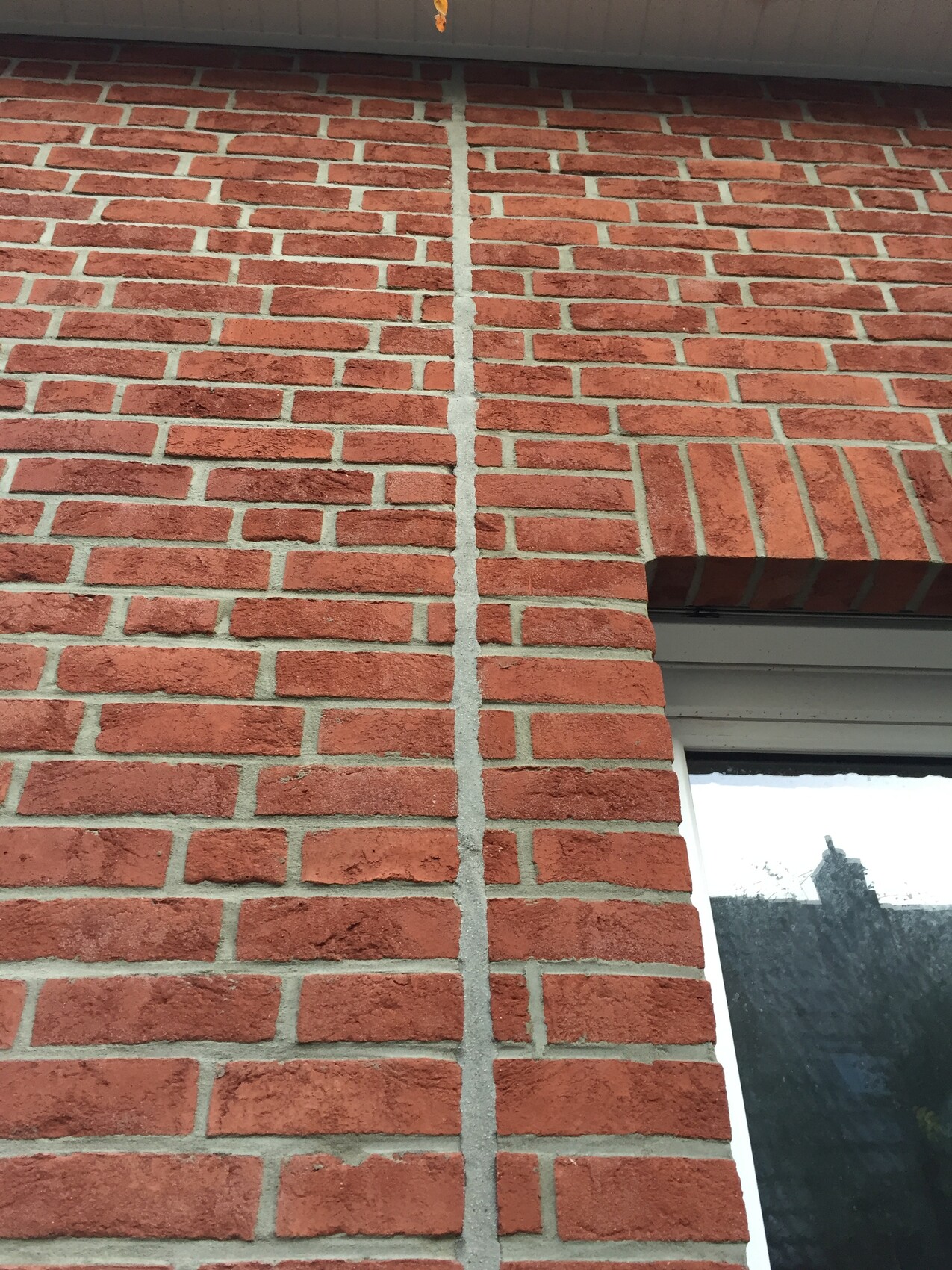
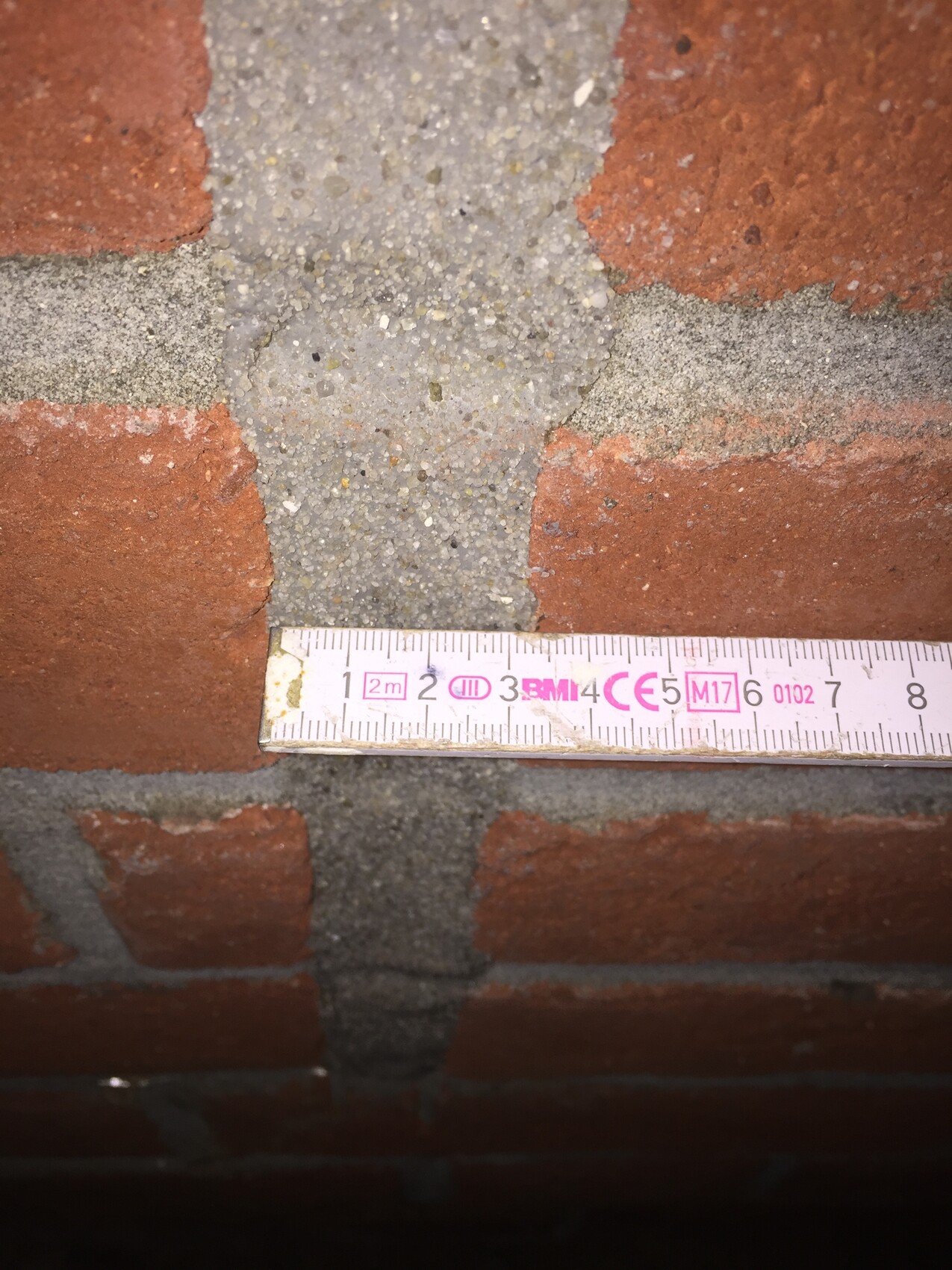
We are currently building our dream home with a general contractor and I would like to ask for your advice on one of the remaining issues. The single-family house measures 14m x 8m (46ft x 26ft) and is fully clad with brick veneer. During an inspection by our independent expert, they criticized the absence of expansion joints. Apparently, these were not included in our general contractor’s plans, and the bricklayer did not install them accordingly. After a thorough review of the situation by the general contractor and the bricklayer, it was decided to cut a total of four expansion joints afterwards. Unfortunately, we are more than disappointed with the result—my wife even cried the first time she saw the joints. Unlike the approximately 1.5cm (0.6 inches) width of all the other joints, the cut expansion joints measure almost exclusively more than 3cm (1.2 inches). If a regular joint happens to be next to a cut joint, their widths add up, resulting in a visually quite disastrous effect (see photos).
The construction manager gave us hope that the appearance would improve after grouting the joints, but from our point of view, this has not been the case. Our expert also says he has never seen anything like this before. With the final inspection approaching quickly, we are wondering what to do. Of course, we have already informed the construction manager that we consider the execution of the joints to be defective. At the moment, we are planning to somehow conceal the joints after handover—either by coloring them to match the bricks or by using a trim. However, at least a substantial compensation from the general contractor would be expected. This can’t be acceptable, can it? If not, how would you assess the damage? Is this “just” a visual defect, or is it also a functional problem? Could we, in theory, demand that the affected section of the facade be replaced?
I would really appreciate your expert opinion. If I have forgotten any important details, please let me know briefly.
Thank you in advance and best regards from the north,
Simon
H
HilfeHilfe10 Dec 2019 18:49pffreestyler schrieb:
I’m referring to your previous “pat on the back” thread where you noticed you were near the top in the post count. No desire to look it up, have better things to do.
Last post from me off-topic. Otherwise, feel free to message me privately. Yes, I’m still near the front in posting.

HilfeHilfe schrieb:
why?!
I just want to see this as a followed thread among so many others. I find it an interesting topic. Have you seriously not realized after six thousand posts that you don’t need to write an empty post (and in my opinion, shouldn’t do so as a matter of netiquette) just to subscribe to the thread in question? ? ? ? ?
Otus11 schrieb:
I already pointed out the missing expansion joint at 14 m during acceptance. An expansion joint “at 14 m” is a misunderstanding: a recommendation to provide an expansion joint for lengths over 14 m means that if a component is longer than 14 m (45 feet 11 inches), it should be fitted with an expansion joint at a suitable location; it does not mean that you have to put an expansion joint somewhere along the free span exactly at the 14-meter mark measured from one end!
Otus11 schrieb:
So far, only the damaged, winding joint at the front corner has been separated. But I think a separation is also necessary at the start of each lintel. What do you mean by this damaged joint? – By the way, for an expansion joint subject to shear and shrinkage, it is not a problem if it runs in a toothed (interlocked) pattern. It is therefore not necessary to interrupt the bonding pattern at a construction joint, which is usually a well-suited location. A discreet blending of the expansion joint into the bonding pattern is not a defect in proper workmanship. It only becomes problematic when so-called “experts” with half-knowledge start to intervene.
https://www.instagram.com/11antgmxde/
https://www.linkedin.com/company/bauen-jetzt/
11ant schrieb:
It is not necessary to interrupt the bonding pattern at a junction between building components, which is generally a suitable location for this. Nonsense.
See above #6, the quote from the brick industry itself:
"To prevent cracks caused by internal stresses in the outer veneer, all prefabricated lintels fixed to the backing masonry must be separated from the adjacent masonry by vertical expansion joints (see Figure 17), because the deformation properties of the two layers of a cavity wall are completely different. While the structural inner leaf undergoes creep and shrinkage depending on the type of masonry unit used, the outer veneer must be expected to experience thermo-hygrometric length changes."
Otus11 schrieb:
Nonsense.
See above #6, the quote from the brick industry itself:
"To prevent cracks caused by stress in the cladding shell, all prefabricated lintels fixed to the backing masonry must be separated from the adjacent masonry by installing vertical movement joints [...] thermal and moisture-related length changes must be taken into account in the cladding shell." Precisely not nonsense:
"Vertical" does not necessarily mean "plumb" but that vertical joints, not horizontal ones, are required here; see: "length" rather than "height" changes. Interpretation of standards is a field of its own. It is clear that some readers of standards and processing recommendations lack the imagination to understand the content in question.
https://www.instagram.com/11antgmxde/
https://www.linkedin.com/company/bauen-jetzt/

Dr Hix schrieb:
Search engine: "Vertical expansion joint meander"Only, in our case, it is not about the "how" (to meander), but about the "whether" to separate—specifically on both sides of the lintels...