
ᐅ Severe weather warning level red for our construction area tomorrow!
Created on: 12 May 2018 21:13
K
KingSong
Hello everyone,
A severe weather warning has been issued for our building site tomorrow from 2 p.m. to 5 a.m. the following day. It is a red alert with warnings of heavy rain, hail, and hurricane-force winds.
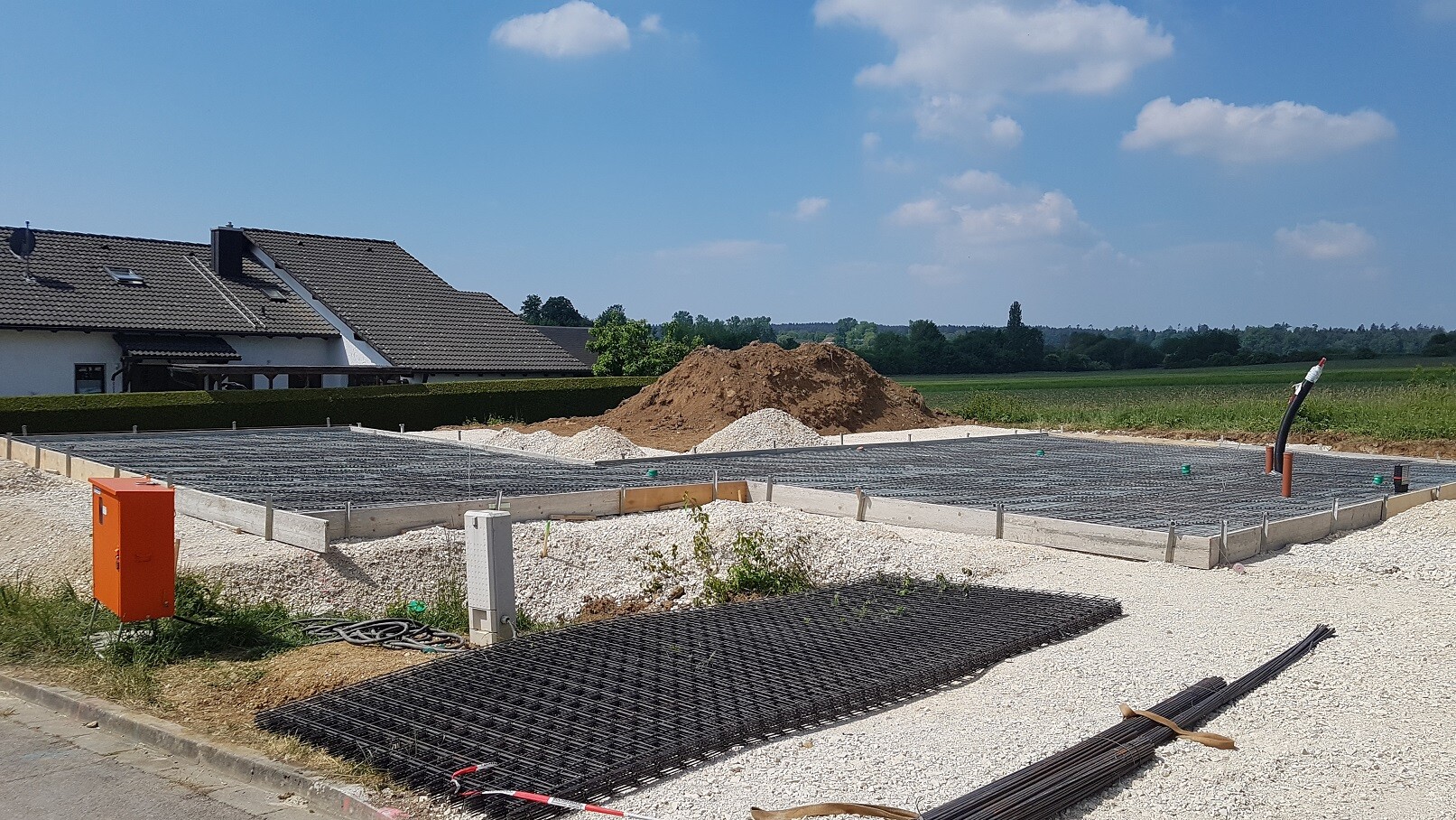
At the moment, our base slab is prepared for the concrete pour scheduled on Monday.
Current status:
- 18 cm (7 inches) of perimeter insulation installed
- plastic sheeting on top
- spacers and one layer of reinforcement steel
Can I leave everything as it is shown in the picture without worry, or should I secure anything or take other precautions?
Could hail cause serious damage to the plastic sheeting or the perimeter insulation?
Thanks in advance,
greetz Jörg
A severe weather warning has been issued for our building site tomorrow from 2 p.m. to 5 a.m. the following day. It is a red alert with warnings of heavy rain, hail, and hurricane-force winds.
At the moment, our base slab is prepared for the concrete pour scheduled on Monday.
Current status:
- 18 cm (7 inches) of perimeter insulation installed
- plastic sheeting on top
- spacers and one layer of reinforcement steel
Can I leave everything as it is shown in the picture without worry, or should I secure anything or take other precautions?
Could hail cause serious damage to the plastic sheeting or the perimeter insulation?
Thanks in advance,
greetz Jörg

Here is a small update! Last night was really intense, but the prepared concrete slab as well as the “commander’s hill” held up perfectly. The water just rushed down the street, and there wasn’t even a puddle on the gravel base.
A completely different story today. At exactly 12:00, they started pouring the concrete slab. By 2:30 PM they were finished, then the slab was thoroughly watered and everything was good... until about 3:00 PM, when the next thunderstorm hit with the same heavy rain as yesterday—unbelievable. In my opinion, a lot of the binder material was washed out. I don’t know if it can be left like that or not. If not, I don’t yet have a plan for what will be done. The site manager has been informed and will come to inspect it tomorrow.
Here are a few pictures, what do you think? Normal condition? Washed out? Still usable?
A completely different story today. At exactly 12:00, they started pouring the concrete slab. By 2:30 PM they were finished, then the slab was thoroughly watered and everything was good... until about 3:00 PM, when the next thunderstorm hit with the same heavy rain as yesterday—unbelievable. In my opinion, a lot of the binder material was washed out. I don’t know if it can be left like that or not. If not, I don’t yet have a plan for what will be done. The site manager has been informed and will come to inspect it tomorrow.
Here are a few pictures, what do you think? Normal condition? Washed out? Still usable?
That is only superficial. As long as it’s not pouring down like buckets during the concrete pour itself, not much should have happened. Go there tomorrow and scrape at it a bit, then you’ll know what I mean. It only becomes a problem if, like I did, you use a power trowel to create a smooth surface. Then you’ll end up with lots of dents. If there is insulation and screed coming on top anyway, you don’t have to worry about it.
It is important to understand what concrete actually is. It is a mixture of three parts sand, one part cement, stirred with water into a slurry. Concrete does not dry; it cures. The water acts as a catalyst that initiates a chemical reaction, causing the molecules to link together while releasing heat. This process can take up to six months for the concrete to reach its full final strength. The initial hardness develops within a few hours, and after one day it can be walked on. What concrete does not tolerate well is water drying out too quickly, for example, in direct sunlight. It needs the water for the chemical reaction. If it dries too fast, the concrete becomes crumbly and not truly hard. The molecular chains end up too short.
For this reason, I consider an unexpected heavy rain harmless. The curing process has already started. The concrete does not turn into mush and wash away. The water does not harm the reaction. Concrete is very hygroscopic; it draws the moisture it requires for the reaction. The excess water will simply evaporate.
Karsten
For this reason, I consider an unexpected heavy rain harmless. The curing process has already started. The concrete does not turn into mush and wash away. The water does not harm the reaction. Concrete is very hygroscopic; it draws the moisture it requires for the reaction. The excess water will simply evaporate.
Karsten
Similar topics