
ᐅ Vapor diffusion resistance of exterior plaster and its impact on insulation
Created on: 6 Mar 2016 20:00
M
Michael CHM
Michael CH6 Mar 2016 20:00Hello everyone
For my renovation project, the facade work is planned for the next few months. We have decided on a ventilated timber cladding. The house from the 1960s consists of 12cm (5 inches) red brick with an exterior plaster finish. It currently has no insulation.
Our architect suggests that we can install the insulation (20cm (8 inches) wood fiber insulation board) directly onto the old (original) plaster. A vapor retarder is not considered necessary. I can understand this concerning the brick. However, I wonder if the plaster does not have a higher vapor diffusion resistance (µ) than the bricks. As far as I know, the highest resistance should be on the warm side of the wall and decrease continuously towards the outside. Otherwise, could condensation form inside the insulation?
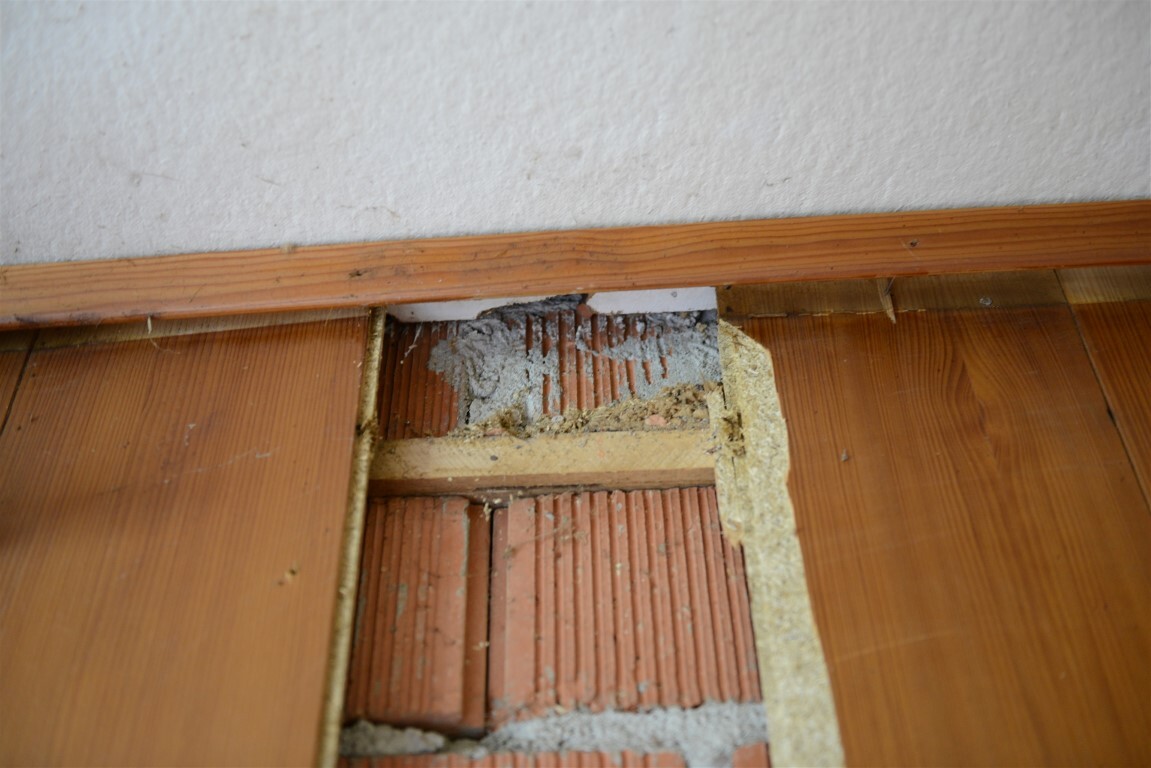
I am also concerned that the bricks were not mortared on the head joints. This means moist air can pass freely all the way to the plaster (part of the walls will be panelled on the inside; the rest is plastered with clay. The paneling is not really airtight).
If there are any fine cracks in the plaster, which is quite possible after 70 years, high vapor pressure can be expected. The architect mentioned that a vapor retarder could possibly be applied on the outside, but that doesn’t really make sense to me. I’m not sure...
The pictures are a bit older. In the meantime, quite a bit has already been hollowed out.
Does the plaster need to be removed?
Should I properly repoint the bricks?
Michael

For my renovation project, the facade work is planned for the next few months. We have decided on a ventilated timber cladding. The house from the 1960s consists of 12cm (5 inches) red brick with an exterior plaster finish. It currently has no insulation.
Our architect suggests that we can install the insulation (20cm (8 inches) wood fiber insulation board) directly onto the old (original) plaster. A vapor retarder is not considered necessary. I can understand this concerning the brick. However, I wonder if the plaster does not have a higher vapor diffusion resistance (µ) than the bricks. As far as I know, the highest resistance should be on the warm side of the wall and decrease continuously towards the outside. Otherwise, could condensation form inside the insulation?
I am also concerned that the bricks were not mortared on the head joints. This means moist air can pass freely all the way to the plaster (part of the walls will be panelled on the inside; the rest is plastered with clay. The paneling is not really airtight).
If there are any fine cracks in the plaster, which is quite possible after 70 years, high vapor pressure can be expected. The architect mentioned that a vapor retarder could possibly be applied on the outside, but that doesn’t really make sense to me. I’m not sure...
The pictures are a bit older. In the meantime, quite a bit has already been hollowed out.
Does the plaster need to be removed?
Should I properly repoint the bricks?
Michael
Similar topics