
ᐅ Tiles in the Kitchen – Issue with Screed/Connection to Living Room with Expansion Joint
Created on: 26 Feb 2022 21:53
R
raphylusHello everyone,
I’m currently renovating my kitchen. While preparing the floor for tiling, I came across an unpleasant situation with my screed. Next to the living room, there is apparently a screed joint—I assume it is the living room screed, which extends up to the inside edge of the door frame.
I know that the old tiles had a silicone joint exactly at that spot. It didn’t seem too problematic because the tiles were very small. I will be installing 60x60 cm (24x24 inches) porcelain tiles.
Now to my question: Is there any way to avoid installing just a 5 cm (2 inch) strip of tiles there and decouple the whole area with a silicone joint? It would fit perfectly with a whole tile in the layout.
My bricklayer friend told me that you could stick tape like duct tape on the strip and then tile over it. Of course, without any guarantee—I understand that. I was considering some kind of mesh to embed in the area, but I’m not sure if that would really hold. There is underfloor heating underneath!
Is there a professional here who could give me some advice? I understand that, if done strictly according to regulations, the only option here would be to use a silicone joint.
Thank you very much and have a nice evening,
Raphael

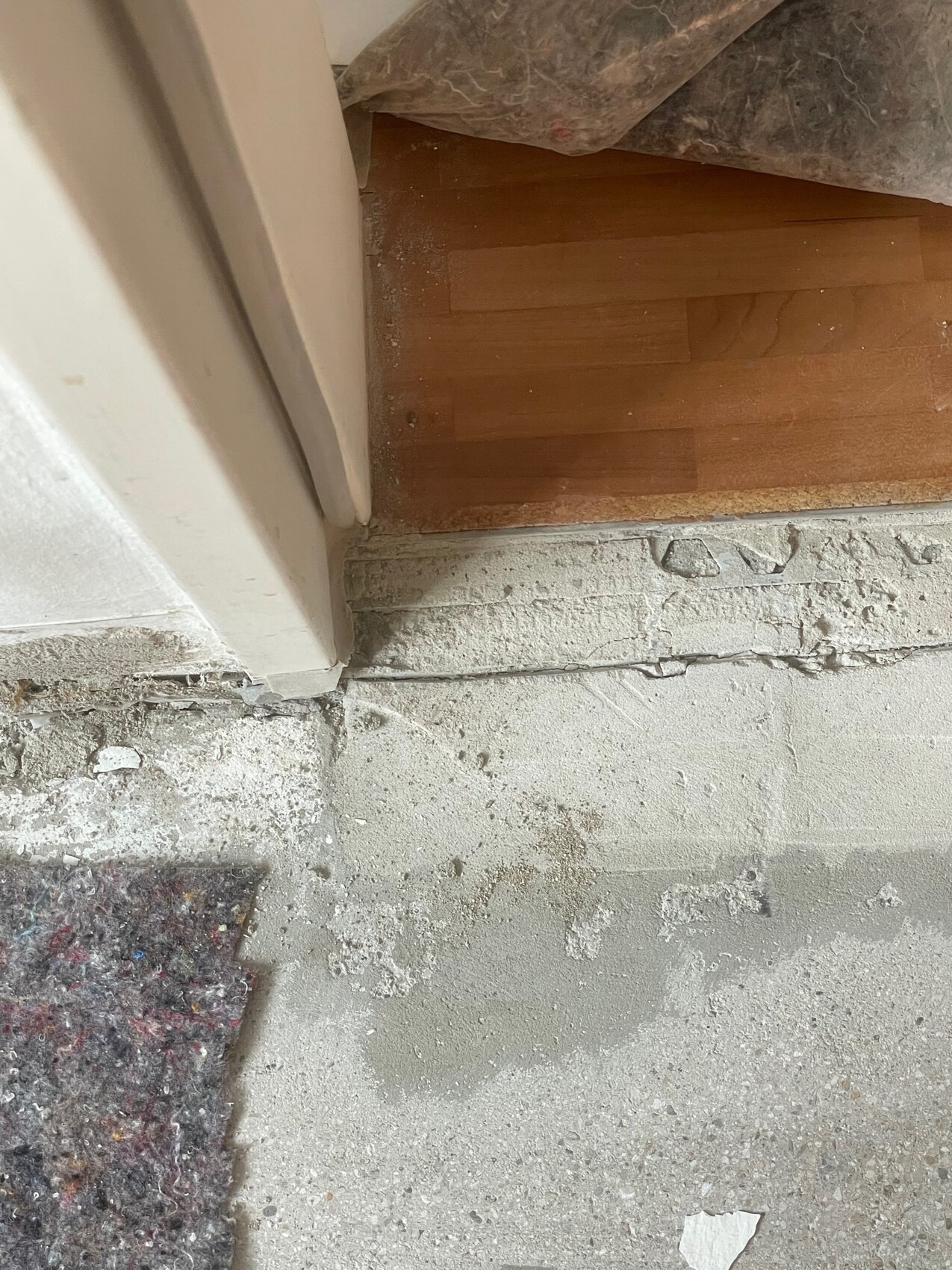
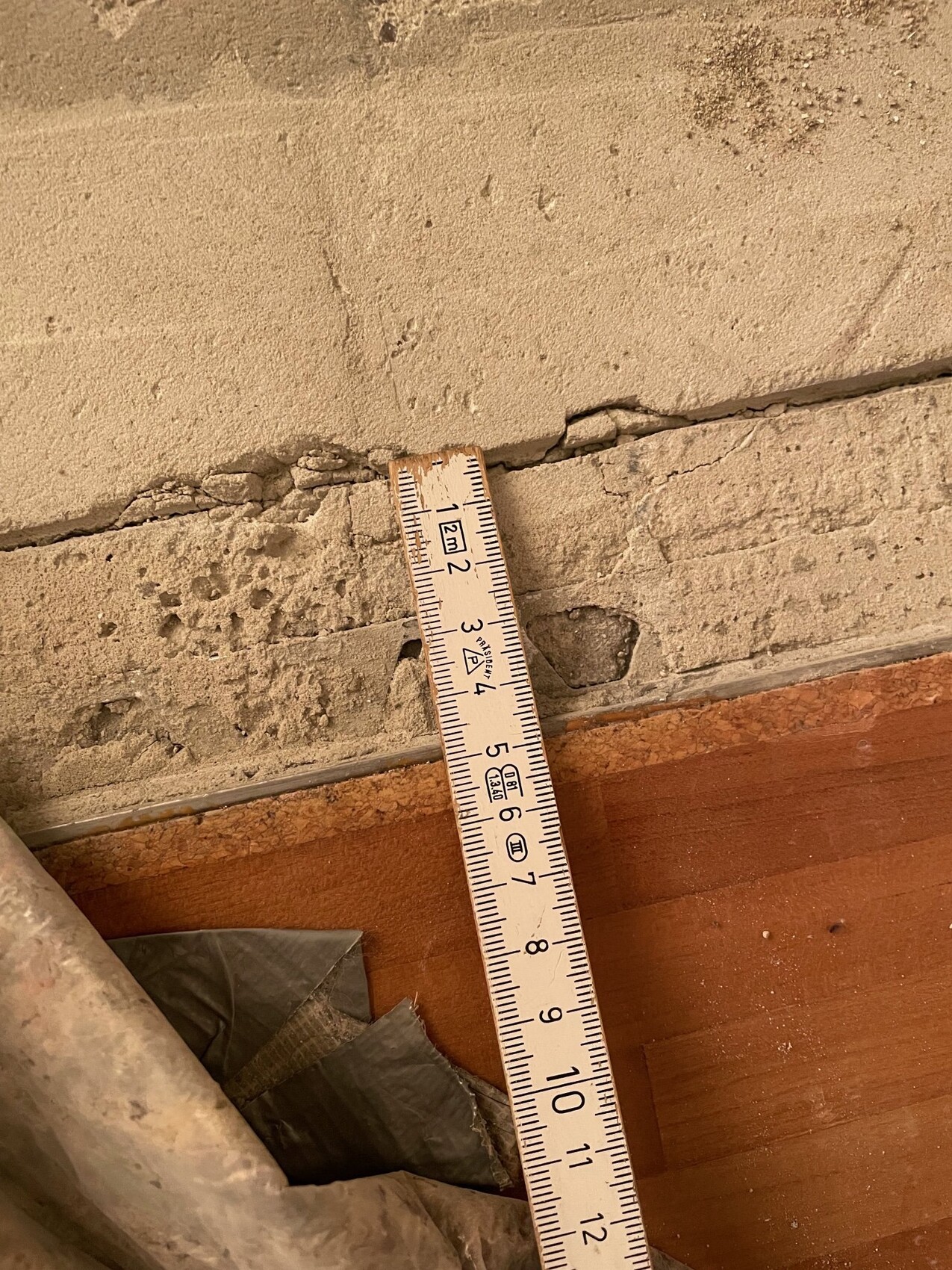
I’m currently renovating my kitchen. While preparing the floor for tiling, I came across an unpleasant situation with my screed. Next to the living room, there is apparently a screed joint—I assume it is the living room screed, which extends up to the inside edge of the door frame.
I know that the old tiles had a silicone joint exactly at that spot. It didn’t seem too problematic because the tiles were very small. I will be installing 60x60 cm (24x24 inches) porcelain tiles.
Now to my question: Is there any way to avoid installing just a 5 cm (2 inch) strip of tiles there and decouple the whole area with a silicone joint? It would fit perfectly with a whole tile in the layout.
My bricklayer friend told me that you could stick tape like duct tape on the strip and then tile over it. Of course, without any guarantee—I understand that. I was considering some kind of mesh to embed in the area, but I’m not sure if that would really hold. There is underfloor heating underneath!
Is there a professional here who could give me some advice? I understand that, if done strictly according to regulations, the only option here would be to use a silicone joint.
Thank you very much and have a nice evening,
Raphael
B
Benutzer20026 Feb 2022 23:36I would simply continue the tile across this small section. If it should crack for any reason, you can replace it—so just keep a spare tile on hand.
I would just lay it over as well. Since you’re doing it yourself anyway, just set aside an extra tile in case something cracks.
You can resin the screed joints or at least cover them with mesh. Flexible adhesive is obvious, of course. But naturally, all without guarantee.
You can resin the screed joints or at least cover them with mesh. Flexible adhesive is obvious, of course. But naturally, all without guarantee.

Hello "[B]raphylus".
If the screed is designed to be heated (a heated screed), which no one has asked about so far, the approach differs from that of a non-heated screed.
If I interpret the photos correctly, it looks like a cementitious mix in the door passage.
Here are two options:
a) If the approximately 5cm (2 inches) wide strip is unstable, meaning it crumbles under light mechanical stress such as a gentle hammer tap, I would remove the entire strip, prime the exposed screed edges, and fill the entire transition area with a durable repair mortar.
b) The movement joint has fulfilled its function once the old screed has reached maturity, and in smaller projects where there are no significant vibrations (unlike, for example, in a hospital corridor), it can be rigidly sealed.
To do this, widen the visible joint to about 3cm (1 inch) depth using an angle grinder (be careful and check beforehand that there are no improperly installed pipes or cables there), vacuum out the fine debris, and bond the joint cavity firmly with a reactive resin (do not use viscous pastes like polyester!!).
Both of these methods are safe procedures. Please omit the cardboard and take the secure approach as described above!
----------------
Best of luck: KlaRa
If the screed is designed to be heated (a heated screed), which no one has asked about so far, the approach differs from that of a non-heated screed.
If I interpret the photos correctly, it looks like a cementitious mix in the door passage.
Here are two options:
a) If the approximately 5cm (2 inches) wide strip is unstable, meaning it crumbles under light mechanical stress such as a gentle hammer tap, I would remove the entire strip, prime the exposed screed edges, and fill the entire transition area with a durable repair mortar.
b) The movement joint has fulfilled its function once the old screed has reached maturity, and in smaller projects where there are no significant vibrations (unlike, for example, in a hospital corridor), it can be rigidly sealed.
To do this, widen the visible joint to about 3cm (1 inch) depth using an angle grinder (be careful and check beforehand that there are no improperly installed pipes or cables there), vacuum out the fine debris, and bond the joint cavity firmly with a reactive resin (do not use viscous pastes like polyester!!).
Both of these methods are safe procedures. Please omit the cardboard and take the secure approach as described above!
----------------
Best of luck: KlaRa
Similar topics