
Hello everyone,
We plan to install the insulation between the rafters in our new build starting this weekend, now that the screed and plaster have dried for some time. However, I have noticed stains on the underlay membrane and the roof beams. Almost the entire attic is affected. Can anyone tell me what this might be and how to remove it?
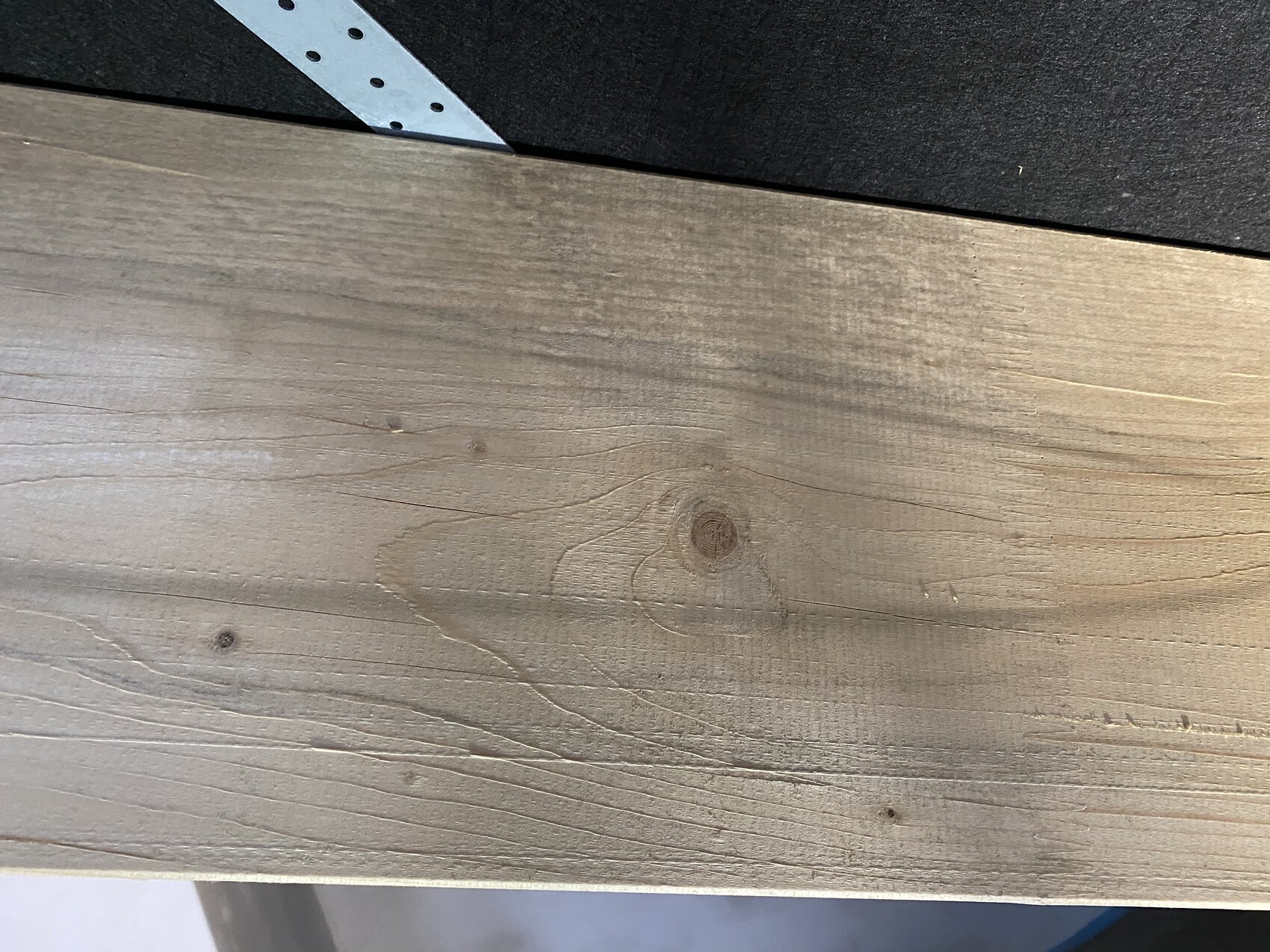
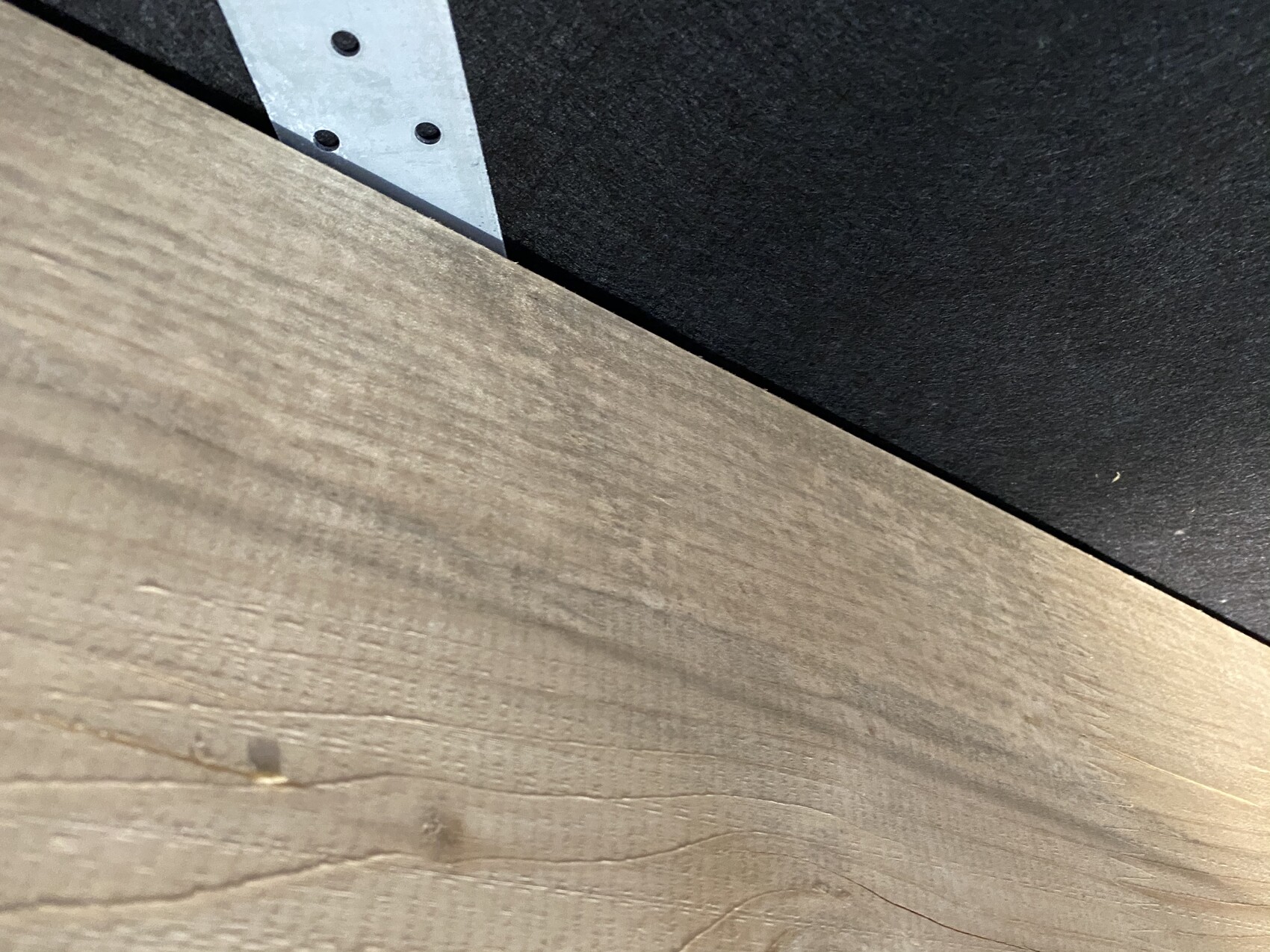
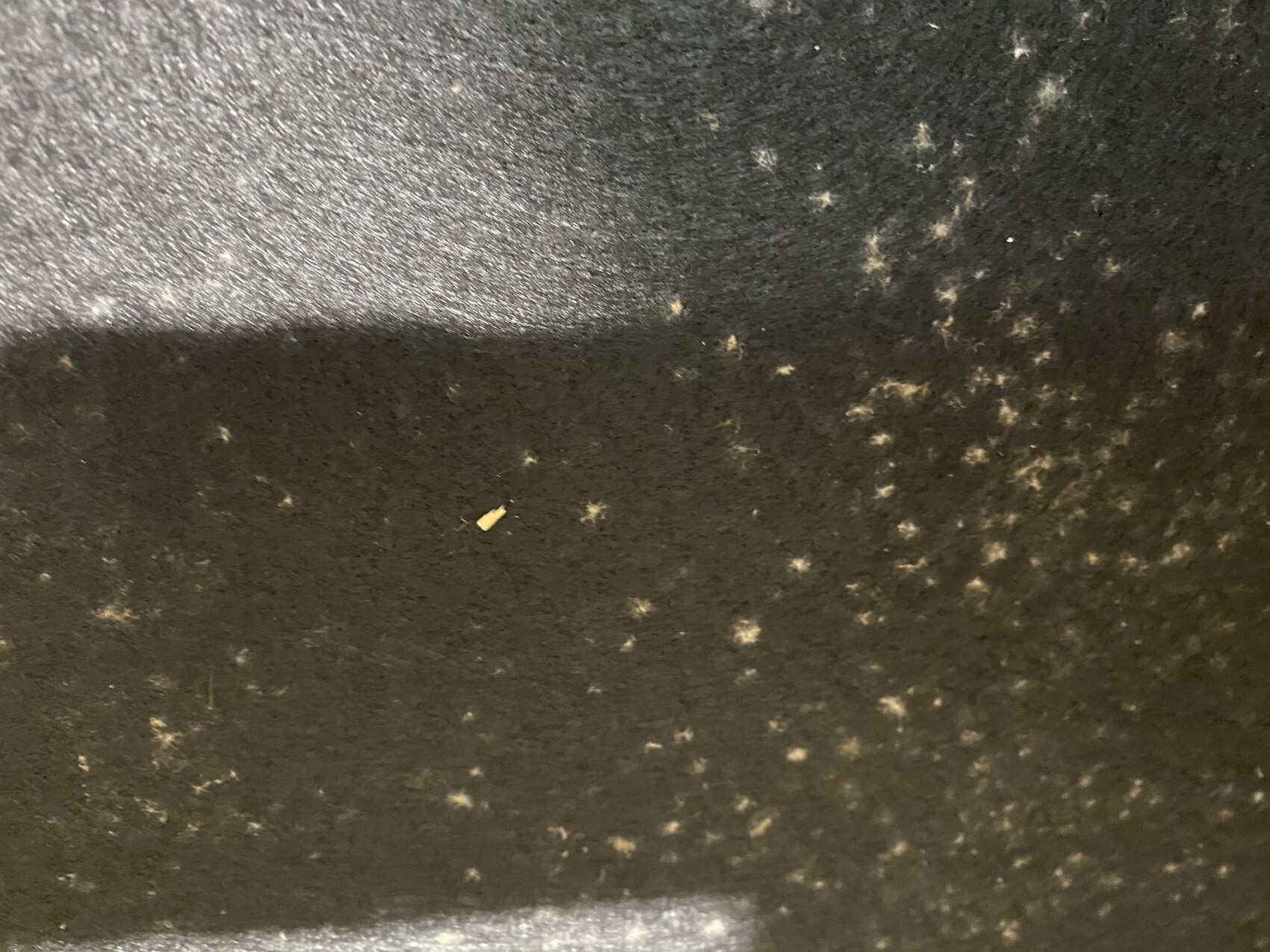
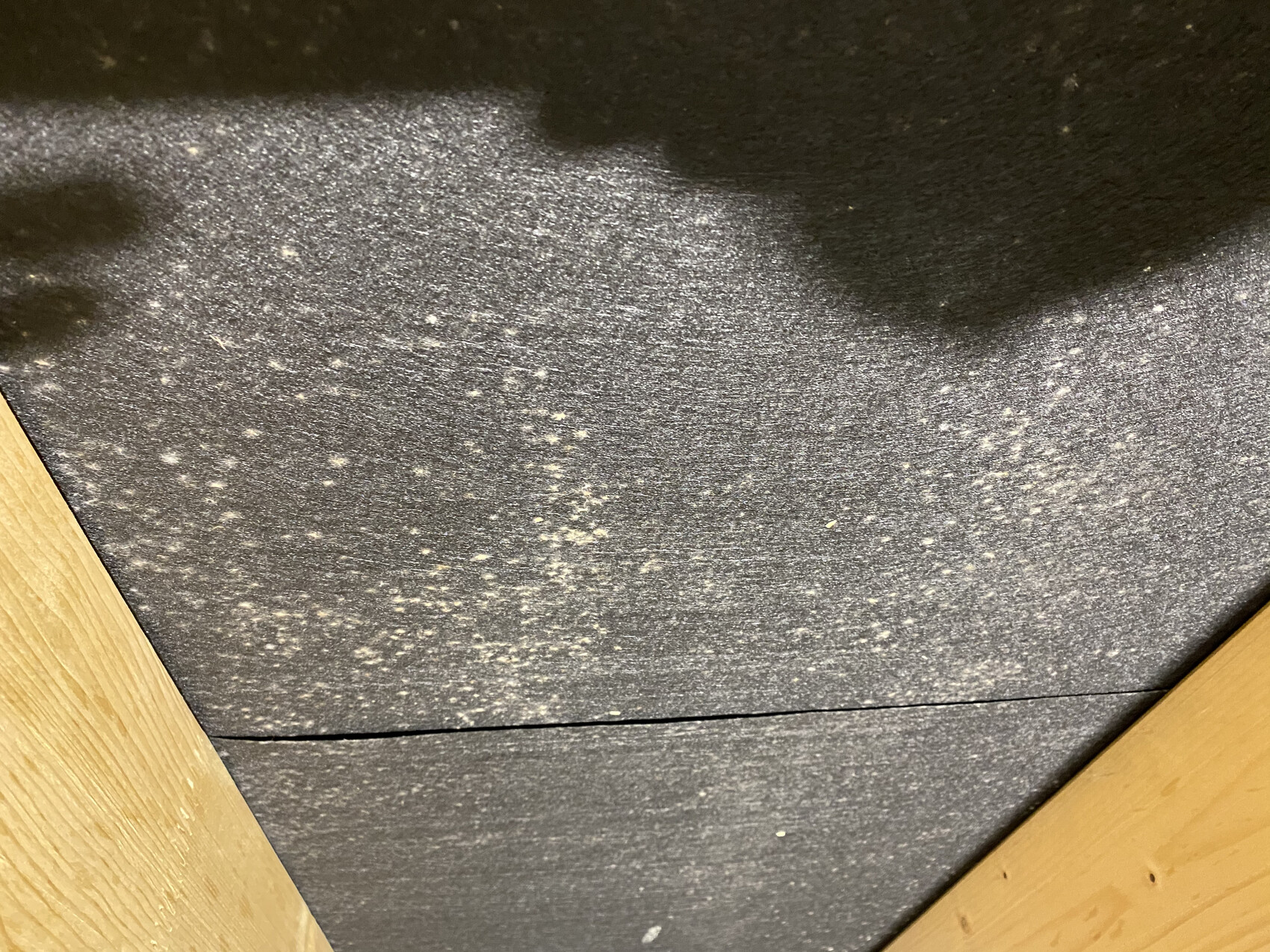
We plan to install the insulation between the rafters in our new build starting this weekend, now that the screed and plaster have dried for some time. However, I have noticed stains on the underlay membrane and the roof beams. Almost the entire attic is affected. Can anyone tell me what this might be and how to remove it?
@Brainstorming
The process after the shell construction is that the roof is completed first, before any water vapor or condensation can occur. This also happens before installing the windows, ensuring that moisture from masonry or concrete work can dry out beforehand.
(The windows and doors usually also have a delivery time.)
If the attic space is not a heated living area, the thermal envelope would be constructed incorrectly.
I have encountered a case where, in an insulated top-floor ceiling, the vapor retarder was missing beneath the wooden ceiling.
This caused mold to form on the vapor barrier as well as on the beams. Cleaning only improved the appearance because the vapor barrier had pores allowing water vapor diffusion.
The treatment penetrated these pores and the joint between the vapor barrier and the rafter did not seal properly. (The rafter was wider than the base battens.)
Since mold kept reappearing, the vapor barrier was later replaced.
The process after the shell construction is that the roof is completed first, before any water vapor or condensation can occur. This also happens before installing the windows, ensuring that moisture from masonry or concrete work can dry out beforehand.
(The windows and doors usually also have a delivery time.)
If the attic space is not a heated living area, the thermal envelope would be constructed incorrectly.
I have encountered a case where, in an insulated top-floor ceiling, the vapor retarder was missing beneath the wooden ceiling.
This caused mold to form on the vapor barrier as well as on the beams. Cleaning only improved the appearance because the vapor barrier had pores allowing water vapor diffusion.
The treatment penetrated these pores and the joint between the vapor barrier and the rafter did not seal properly. (The rafter was wider than the base battens.)
Since mold kept reappearing, the vapor barrier was later replaced.
B
Brainstorming20 Feb 2021 19:35The process for us was the same: first the roof (October 2020), then the windows (November 2020), followed by the plaster (December 2020), and later the screed (January 2021) was installed in the house. I suspect that the mold appeared after the screed was laid because, according to the screed installer, we were not allowed to enter or ventilate the house for 7 days. The mold on the underlay membrane can almost be wiped off. However, I have treated both the membrane and the beams with a mold remover just to be safe.
Since the roof is insulated, it forms the boundary of the heated building envelope for the living space.
The roof is considered complete at this stage when the insulation and vapor retarder are installed. Interior finishes, such as thermal protection, can be added later.
This also simplifies the work because the insulation does not need to be installed overhead but can be placed on the vapor retarder before roofing is applied.
The roof is considered complete at this stage when the insulation and vapor retarder are installed. Interior finishes, such as thermal protection, can be added later.
This also simplifies the work because the insulation does not need to be installed overhead but can be placed on the vapor retarder before roofing is applied.
B
Brainstorming22 Feb 2021 15:46I don’t understand. The process is: install the roof beams and ridge, underlay membrane, roof tiles, insulation, and then the vapor barrier.
The order of the individual steps does not matter and depends on the weather.
It is advisable to install a vapor retarder against moisture from the inside. This should prevent condensation within the insulation.
Otherwise, the only solution is thorough ventilation of the attic.
It is advisable to install a vapor retarder against moisture from the inside. This should prevent condensation within the insulation.
Otherwise, the only solution is thorough ventilation of the attic.
Similar topics