
Hello everyone,
After our new build was finally completed in December, we had our garden landscaped at the end of May. Unfortunately, we had a bit of a dispute with the company that installed our garden. Therefore, this company is not our first choice for obtaining information.
We have a total of about 80 sqm (860 sq ft) of lawn area, where Sport & Play turf was laid.
According to the gardener, some fertilizer was spread directly under the turf. Approximately 60 cm (24 inches) of nutrient-enriched soil was distributed and rolled under the turf.
Unfortunately, our turf was laid at a time when the midday sun was already around 25-30°C (77-86°F).
The Sport & Play turf has now been down for about 8 weeks.
Unfortunately, we have had problems from the very beginning.
Weeks 1-4 = Watered daily with about 15 L/m² (0.37 gallons/sq ft), yet the individual turf strips were still visible and there were gaps between them.
When walking on the lawn, there was a strong sinking feeling. After mowing, it was also noticeable how uneven the turf surface was.
Weeks 4-7 = Watered daily with about 10 L/m² (0.25 gallons/sq ft). The individual turf strips were no longer visible, but the lawn still seemed uneven and felt like sinking when walking on it.
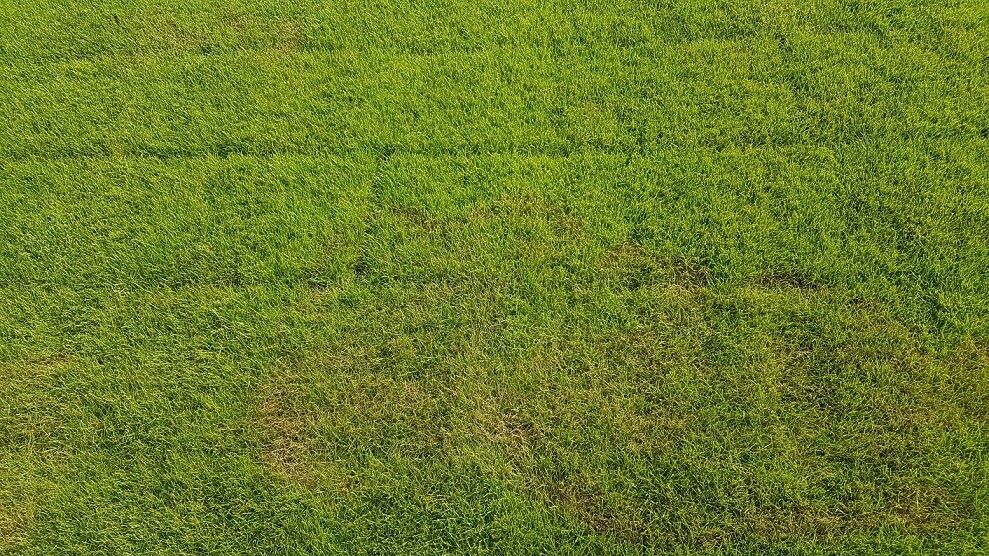
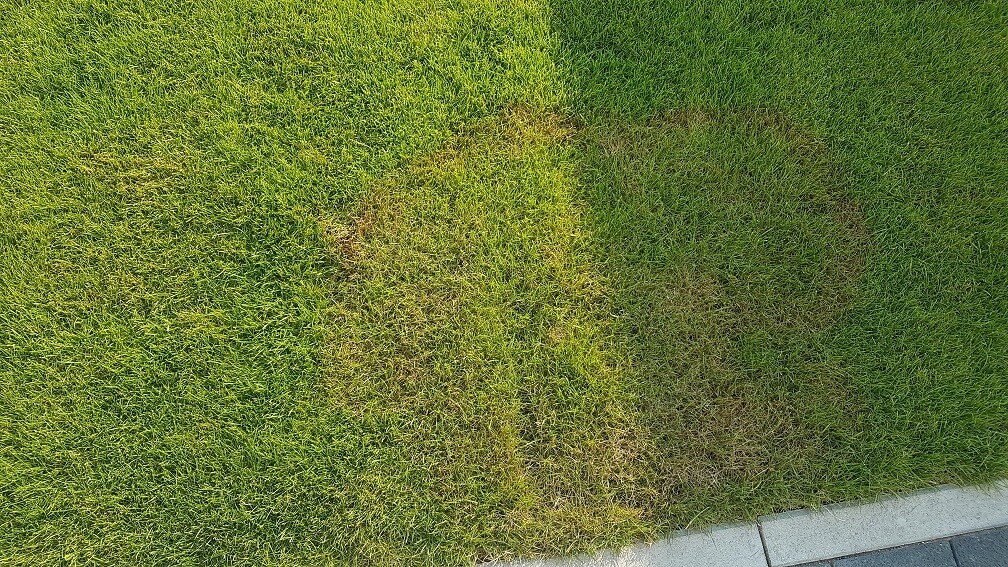
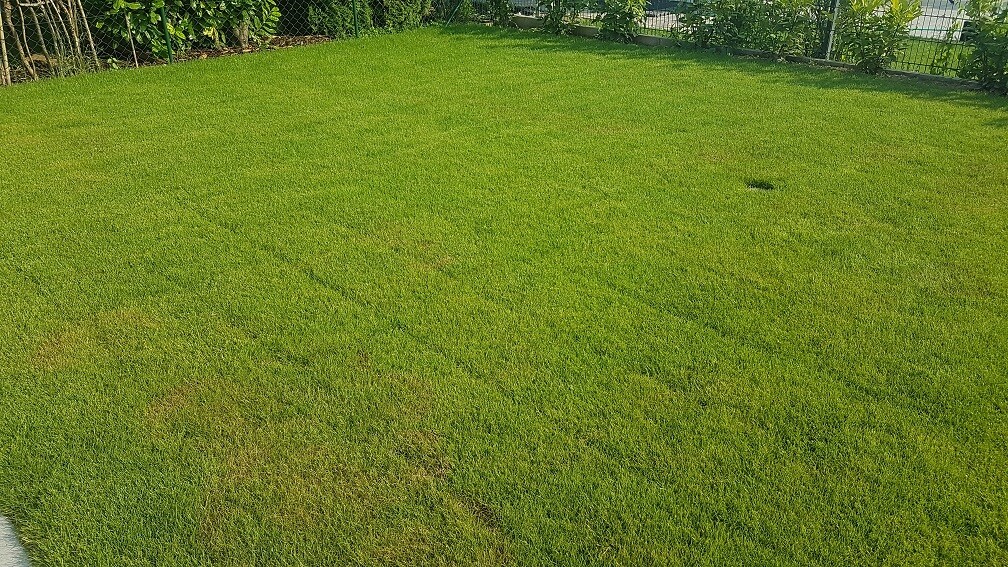
Weeks 7-8 = Summer temperatures have now soared. I water on day 1 with 20 L/m² (0.5 gallons/sq ft) and on day 2 with 15 L/m² (0.37 gallons/sq ft). Nevertheless, large parts of the lawn appear green/brown and many areas look dried out! When walking on the lawn now, you no longer sink in.
The irrigation runs depending on intensity between 11 p.m. and 3 a.m.
Watering is done using household water and a Gardena sprinkler system.
Now we have the following questions:
- Why do we have so many brown patches despite this amount of water?
- Is there a way to make the lawn more even? (Currently it looks uneven, almost like cobblestones)
- Should we possibly fertilize? If so, is that advisable with the current temperatures?
- How should I adjust the watering amount or the watering times?
Thank you very much

After our new build was finally completed in December, we had our garden landscaped at the end of May. Unfortunately, we had a bit of a dispute with the company that installed our garden. Therefore, this company is not our first choice for obtaining information.
We have a total of about 80 sqm (860 sq ft) of lawn area, where Sport & Play turf was laid.
According to the gardener, some fertilizer was spread directly under the turf. Approximately 60 cm (24 inches) of nutrient-enriched soil was distributed and rolled under the turf.
Unfortunately, our turf was laid at a time when the midday sun was already around 25-30°C (77-86°F).
The Sport & Play turf has now been down for about 8 weeks.
Unfortunately, we have had problems from the very beginning.
Weeks 1-4 = Watered daily with about 15 L/m² (0.37 gallons/sq ft), yet the individual turf strips were still visible and there were gaps between them.
When walking on the lawn, there was a strong sinking feeling. After mowing, it was also noticeable how uneven the turf surface was.
Weeks 4-7 = Watered daily with about 10 L/m² (0.25 gallons/sq ft). The individual turf strips were no longer visible, but the lawn still seemed uneven and felt like sinking when walking on it.
Weeks 7-8 = Summer temperatures have now soared. I water on day 1 with 20 L/m² (0.5 gallons/sq ft) and on day 2 with 15 L/m² (0.37 gallons/sq ft). Nevertheless, large parts of the lawn appear green/brown and many areas look dried out! When walking on the lawn now, you no longer sink in.
The irrigation runs depending on intensity between 11 p.m. and 3 a.m.
Watering is done using household water and a Gardena sprinkler system.
Now we have the following questions:
- Why do we have so many brown patches despite this amount of water?
- Is there a way to make the lawn more even? (Currently it looks uneven, almost like cobblestones)
- Should we possibly fertilize? If so, is that advisable with the current temperatures?
- How should I adjust the watering amount or the watering times?
Thank you very much
M
Mottenhausen27 Jul 2018 11:53A 60cm (24 inches) layer of topsoil was applied under the turf? Seriously? Was this before or after compaction?
I think two issues may be coming together here:
1. For such a deep fill, a layered soil structure would have been more appropriate, with the lower layer consisting of coarser and ideally crushed mineral material. The interlocking stones prevent localized sinking. Topsoil alone, especially without root penetration at a thickness of 60cm (24 inches), tends to "wash away." Grass roots alone cannot penetrate and stabilize a 60cm (24 inches) layer effectively.
2. I suspect that a kind of basin was created, filled with currently very loose topsoil. When watering (a lot of water in a short time), the upper soil absorbs little water; it flows down to the original soil, creating an underground pool or swamp. Your 60cm (24 inches) of topsoil then effectively floats back and forth, and with every step on the turf, everything shifts.
The problem is, this will not improve on its own in the long term; after every rain, the muddy basin re-fills, and the surface becomes bumpier and bumpier.
My amateur solution: Plant shrubs or trees with sufficiently deep roots that 1. stabilize the soil and 2. penetrate through the basin to allow water to drain.
Of course, it would be better to call in the company responsible and have them fix the problem—after all, that's why you hire professionals, so exactly this does not happen (warranty).
P.S. To check what is really going on, I would dig a 0.5 x 0.5m (20 x 20 inches) deep hole at a particularly bad spot and see what’s happening there. If the soil is loose but dry near the surface and becomes muddy and wet from 0.5m (20 inches) down, the problem described above is exactly what you have. The hole can then be used as a planting pit.
I think two issues may be coming together here:
1. For such a deep fill, a layered soil structure would have been more appropriate, with the lower layer consisting of coarser and ideally crushed mineral material. The interlocking stones prevent localized sinking. Topsoil alone, especially without root penetration at a thickness of 60cm (24 inches), tends to "wash away." Grass roots alone cannot penetrate and stabilize a 60cm (24 inches) layer effectively.
2. I suspect that a kind of basin was created, filled with currently very loose topsoil. When watering (a lot of water in a short time), the upper soil absorbs little water; it flows down to the original soil, creating an underground pool or swamp. Your 60cm (24 inches) of topsoil then effectively floats back and forth, and with every step on the turf, everything shifts.
The problem is, this will not improve on its own in the long term; after every rain, the muddy basin re-fills, and the surface becomes bumpier and bumpier.
My amateur solution: Plant shrubs or trees with sufficiently deep roots that 1. stabilize the soil and 2. penetrate through the basin to allow water to drain.
Of course, it would be better to call in the company responsible and have them fix the problem—after all, that's why you hire professionals, so exactly this does not happen (warranty).
P.S. To check what is really going on, I would dig a 0.5 x 0.5m (20 x 20 inches) deep hole at a particularly bad spot and see what’s happening there. If the soil is loose but dry near the surface and becomes muddy and wet from 0.5m (20 inches) down, the problem described above is exactly what you have. The hole can then be used as a planting pit.
Yep, 60cm (24 inches) of topsoil would be quite excessive.
However, I would be surprised since that would involve a significant amount of material removal; why would the company put in so much work?
Otherwise, the lawn looks pretty good considering the current climatic conditions.
However, I would be surprised since that would involve a significant amount of material removal; why would the company put in so much work?
Otherwise, the lawn looks pretty good considering the current climatic conditions.
The visible gaps between the strips appear when the strips are simply laid side by side without pressing them properly together. When installing, always make sure to press the strips firmly against each other (including the joints); any waves will be smoothed out anyway.
It just takes some time for the areas between the strips to grow together, but afterwards, they won’t be noticeable anymore.
Depending on how absorbent and loose the topsoil is, the water will naturally drain away again. It’s possible that the roots haven’t yet spread far enough to absorb the water.
I have seen sod already installed at our place (I believe it was laid in May) that is completely brown. At my parents’ house, they laid it in June and it is still nice and green, but watered sparingly. At a friend’s place, we laid sod three weeks ago and it is also nice and green, but there it is receiving an excessive amount of water.
It just takes some time for the areas between the strips to grow together, but afterwards, they won’t be noticeable anymore.
Depending on how absorbent and loose the topsoil is, the water will naturally drain away again. It’s possible that the roots haven’t yet spread far enough to absorb the water.
I have seen sod already installed at our place (I believe it was laid in May) that is completely brown. At my parents’ house, they laid it in June and it is still nice and green, but watered sparingly. At a friend’s place, we laid sod three weeks ago and it is also nice and green, but there it is receiving an excessive amount of water.
Similar topics