
ᐅ Protecting the Freshwater Supply Line on a Building Plot from Freezing
Created on: 25 Oct 2021 17:23
A
AlleFreiHello,
I’m looking for suggestions or advice regarding the following concern:
My driveway was very steep, and I wanted to level it. During the work, we found that the water pipe was positioned too high, and lowering it by another meter was not an option. 4000 euros. I decided to leave that part of the ground as it was so that the pipe would remain unchanged and partially leveled the driveway.
This resulted in a sort of land tongue. Unfortunately, when building a small stone wall, we didn’t pay close enough attention and excavated so much soil for the adjacent stone wall that now there are only 40cm (16 inches) of soil protecting the pipe from frost up to the wall. The depth below is already about 80cm (31 inches), but laterally it is not.
On top of this wall, a staircase was built. This removed even more soil, and I know that directly under the stone stairs there is only about 50cm (20 inches) of vertical soil mass and even less on the sides of the steps.
I believe the pipe under the stairs could freeze and burst if we have a week of continuous subzero temperatures, which is very likely to happen within the next 10 years here in the Lüneburg Heath region.
Since this damage would involve the water supplier’s pipe, the repair would cost at least 4000 euros, possibly more, including a penalty for indirectly damaging the pipe due to negligent construction work. I want to avoid this risk at all costs!
Should I move the wall 20cm (8 inches) back, fill the gap, cover the staircase with soil again, and build a new staircase? This would result in losing only three steps.
Or am I overreacting?
Thank you for your tips and experiences. I have also attached pictures. The red marking shows where the pipe lies in depth, with the staircase visible in the background.
Thanks again
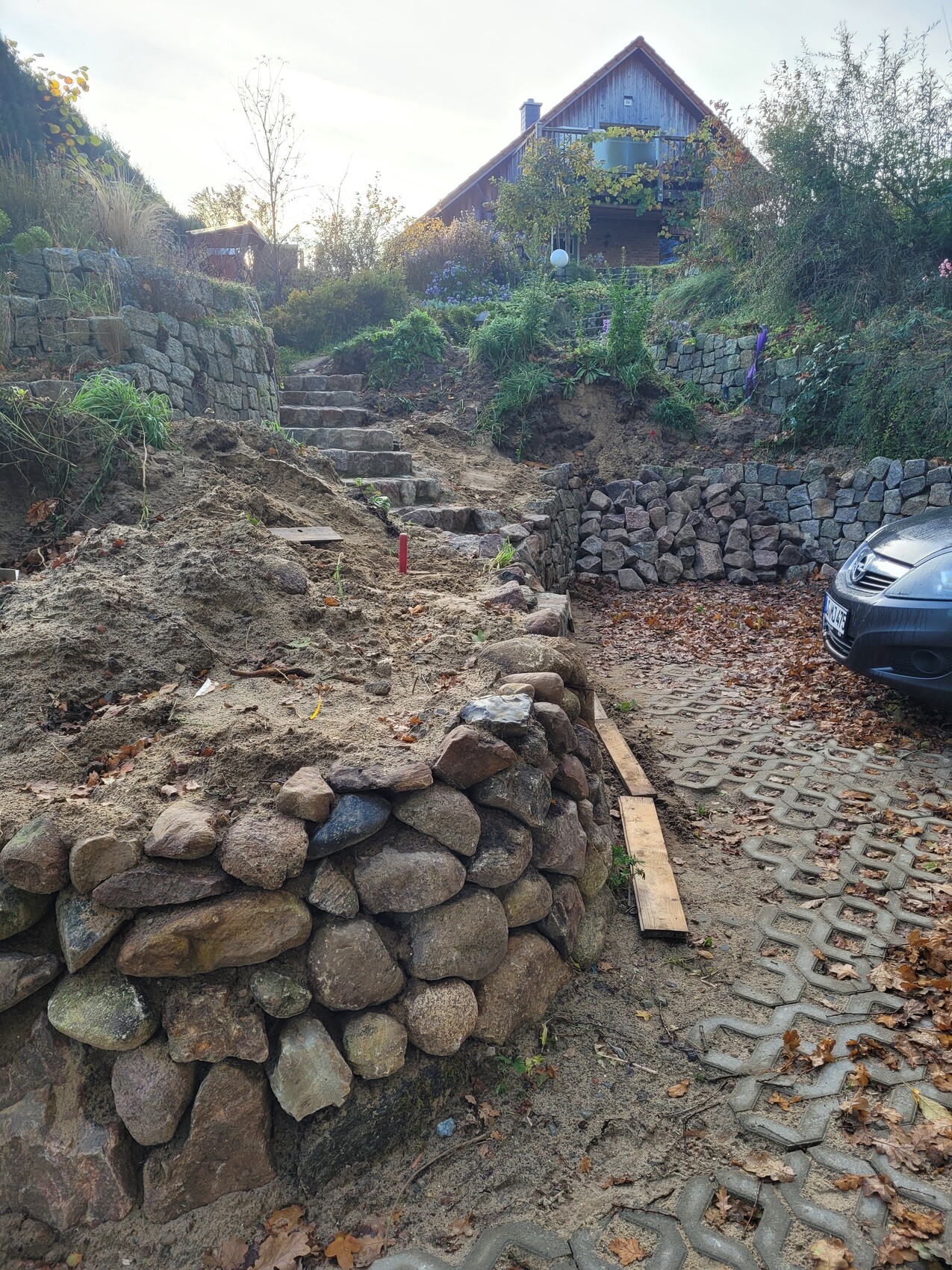
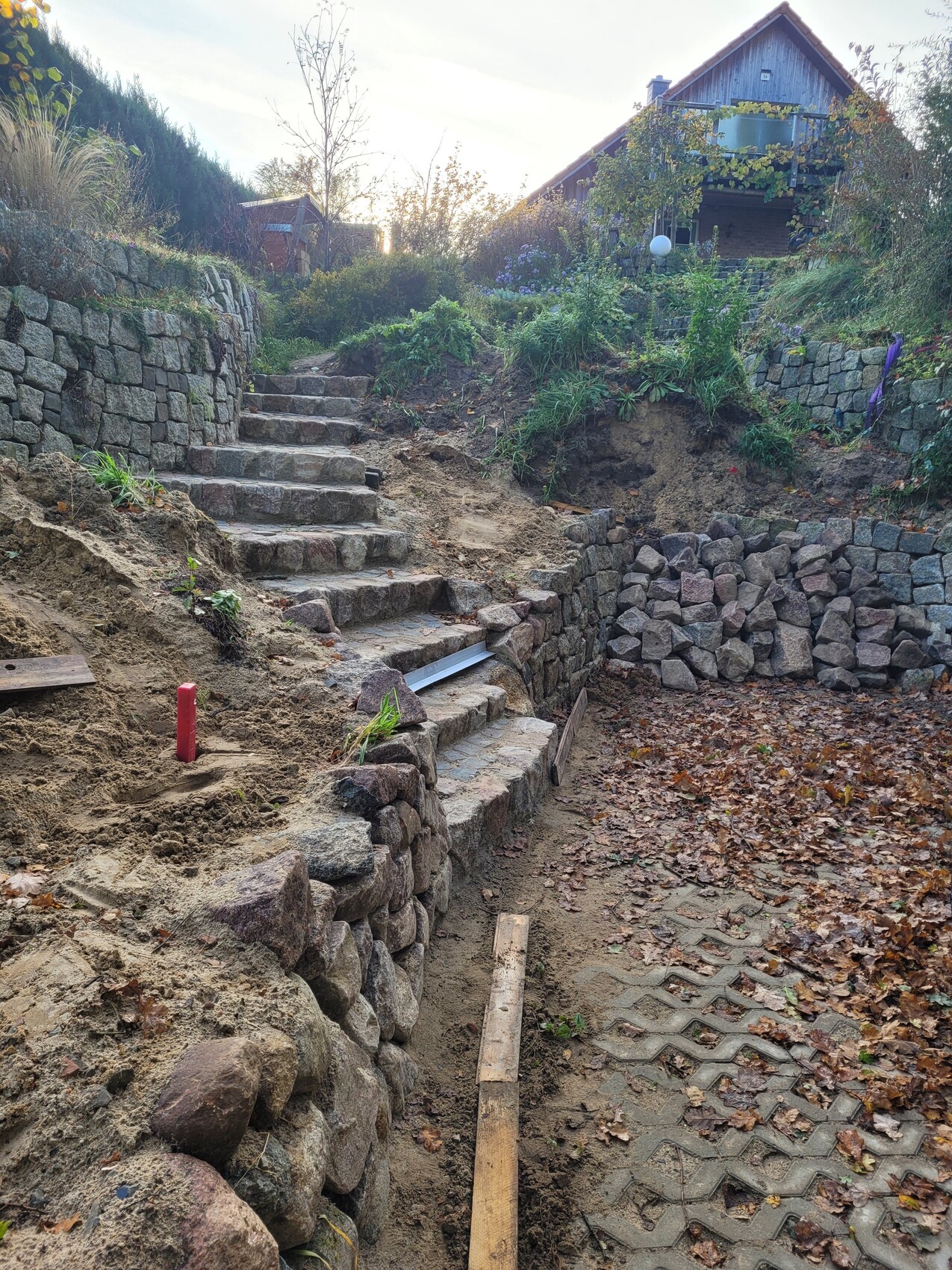
I’m looking for suggestions or advice regarding the following concern:
My driveway was very steep, and I wanted to level it. During the work, we found that the water pipe was positioned too high, and lowering it by another meter was not an option. 4000 euros. I decided to leave that part of the ground as it was so that the pipe would remain unchanged and partially leveled the driveway.
This resulted in a sort of land tongue. Unfortunately, when building a small stone wall, we didn’t pay close enough attention and excavated so much soil for the adjacent stone wall that now there are only 40cm (16 inches) of soil protecting the pipe from frost up to the wall. The depth below is already about 80cm (31 inches), but laterally it is not.
On top of this wall, a staircase was built. This removed even more soil, and I know that directly under the stone stairs there is only about 50cm (20 inches) of vertical soil mass and even less on the sides of the steps.
I believe the pipe under the stairs could freeze and burst if we have a week of continuous subzero temperatures, which is very likely to happen within the next 10 years here in the Lüneburg Heath region.
Since this damage would involve the water supplier’s pipe, the repair would cost at least 4000 euros, possibly more, including a penalty for indirectly damaging the pipe due to negligent construction work. I want to avoid this risk at all costs!
Should I move the wall 20cm (8 inches) back, fill the gap, cover the staircase with soil again, and build a new staircase? This would result in losing only three steps.
Or am I overreacting?
Thank you for your tips and experiences. I have also attached pictures. The red marking shows where the pipe lies in depth, with the staircase visible in the background.
Thanks again

AlleFrei schrieb:
Should I move the wall by 20cm (8 inches), fill the gap, cover the stairs, and build a new staircase? I would only lose 3 steps.
Or am I overreacting??? You’re probably overdoing it, especially with the “do first, think later” approach. I suggest you expose the pipe and insulate it properly—just avoid doing this during freezing nighttime temperatures.
https://www.instagram.com/11antgmxde/
https://www.linkedin.com/company/bauen-jetzt/
Thank you, 11ant,
I also saw insulation online.
Heating tape wrapped around, foam insulation plus a rigid protective casing for the refrigeration pipe. All ends sealed tightly with silicone to prevent water ingress.
I would need to do this for 5 meters (16 feet), but then I would have to break the staircase. Man.
I also saw insulation online.
Heating tape wrapped around, foam insulation plus a rigid protective casing for the refrigeration pipe. All ends sealed tightly with silicone to prevent water ingress.
I would need to do this for 5 meters (16 feet), but then I would have to break the staircase. Man.
S
Smialbuddler26 Oct 2021 07:41Maybe you could check with a local landscape architect, for example, about how deep the ground freezes in your area and after how long. This varies quite a bit, and the usual 80cm (31.5 inches) depth is often not actually necessary.
On the other hand, you are significantly higher up, and insulation only delays freezing – a professional assessment would be helpful here as well. Especially if you are away during the winter and the water remains standing for a long time, it can become problematic.
As an alternative to insulation, possibly a small solar-powered heating loop. With some effort, you might even be able to fit it under the stairs.
Off topic: Your entrance area has turned out really nicely – I like it a lot.
On the other hand, you are significantly higher up, and insulation only delays freezing – a professional assessment would be helpful here as well. Especially if you are away during the winter and the water remains standing for a long time, it can become problematic.
As an alternative to insulation, possibly a small solar-powered heating loop. With some effort, you might even be able to fit it under the stairs.
Off topic: Your entrance area has turned out really nicely – I like it a lot.
Hi, and thank you very much for all the suggestions. After gathering a few opinions and thinking about it for a long time, I am inclined to implement the practical and sustainable solution to the problem.
I will move the wall 20cm (8 inches) to the right to provide more mass or soil around the water pipe. The stairs, or rather the 3 steps, I will cover with insulating foam over an area of 1 square meter (11 square feet), fill in properly, and say goodbye to them.
Then I know the pipe will be protected forever.
No matter which solution I choose, I will have to carry out earthworks. Also, these heating cables do have a warranty, but not for several decades. And who will pay the electricity to protect the pipe for the next 40 years??? So, if I invest money in insulation and heating, I could also use that money to build 3 new steps somewhere else.
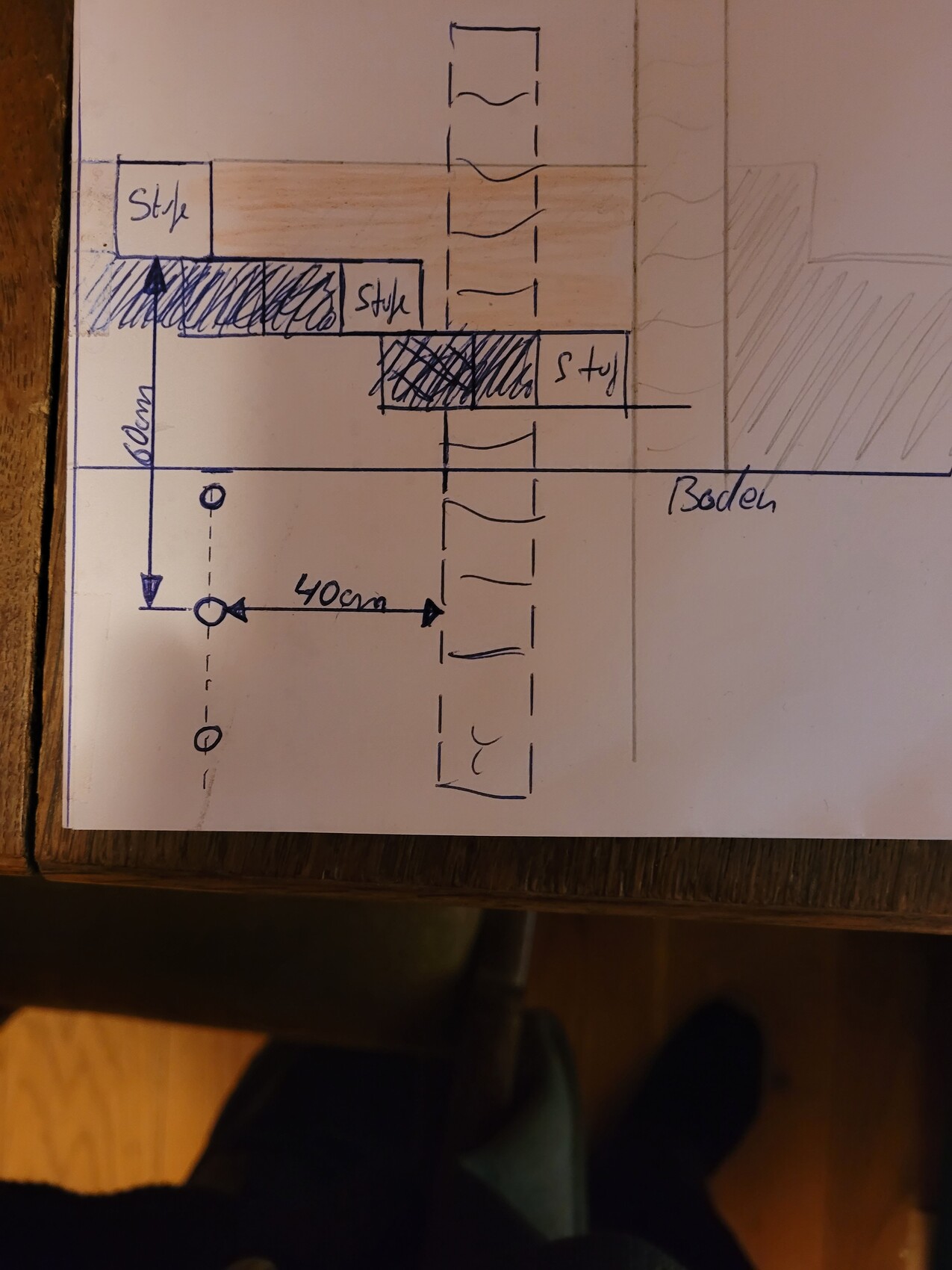
Attached is my provisional decision table.

I will move the wall 20cm (8 inches) to the right to provide more mass or soil around the water pipe. The stairs, or rather the 3 steps, I will cover with insulating foam over an area of 1 square meter (11 square feet), fill in properly, and say goodbye to them.
Then I know the pipe will be protected forever.
No matter which solution I choose, I will have to carry out earthworks. Also, these heating cables do have a warranty, but not for several decades. And who will pay the electricity to protect the pipe for the next 40 years??? So, if I invest money in insulation and heating, I could also use that money to build 3 new steps somewhere else.
Attached is my provisional decision table.
AlleFrei schrieb:
Attached is my provisional decision table.Ah, a business economist. That certainly explains why someone would model a site without first investigating the layout of the utility lines 🙂https://www.instagram.com/11antgmxde/
https://www.linkedin.com/company/bauen-jetzt/
Similar topics