
ᐅ Single-family house with approximately 150 sqm floor area – how to plan the staircase?
Created on: 15 Oct 2017 20:12
M
manyyuuWe are currently in the middle of planning our dream house and have now finished the initial drafts. We would greatly appreciate any suggestions, critiques, or improvement ideas. Our main priorities were a large, bright, and open living/dining area, a home office on the ground floor that can also accommodate a pull-out sofa bed, two showers—one being a walk-in shower upstairs alongside a bathtub—and two children's bedrooms of approximately equal size.
We are still uncertain about the following: a separate dressing room (advantages: my husband leaves for work earlier in the morning and can get dressed in a separate room, plus more sound insulation to the children’s room, which will later be a teenager’s room), a small pantry behind the kitchen and whether it should be open or have a narrow sliding door, and whether the staircase should be open or closed with space for a wardrobe underneath. We are also open to general advice on other aspects.
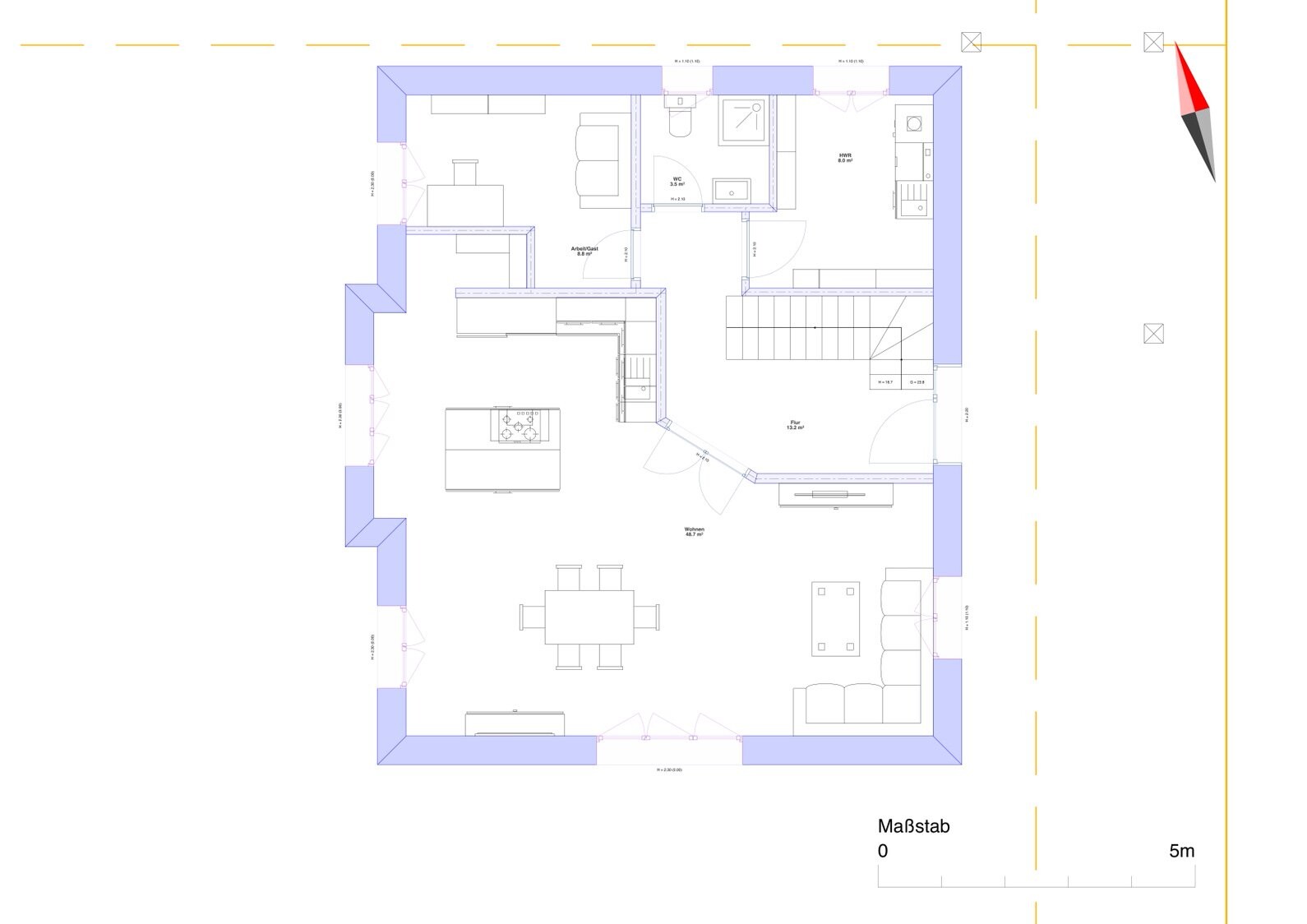
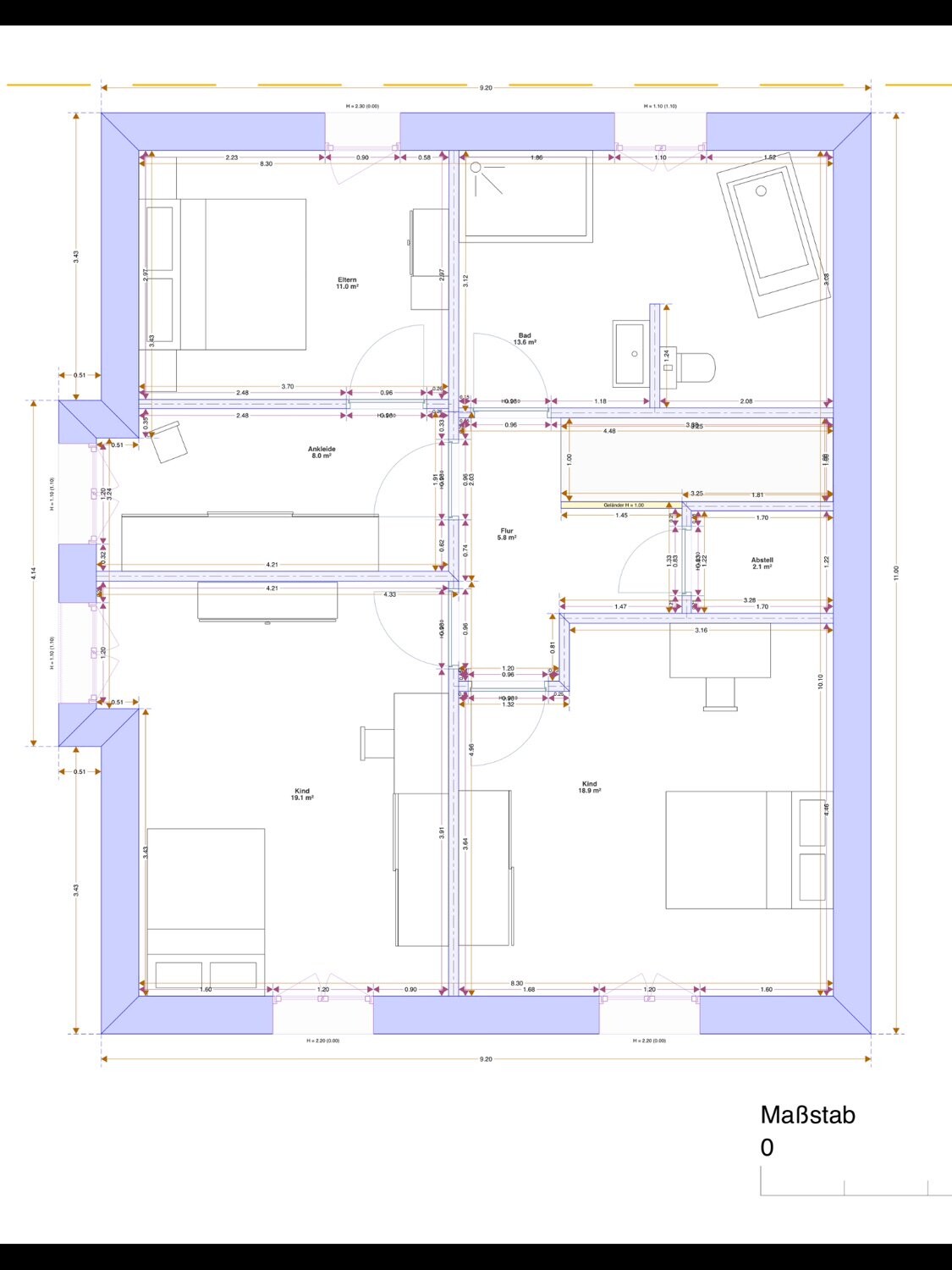
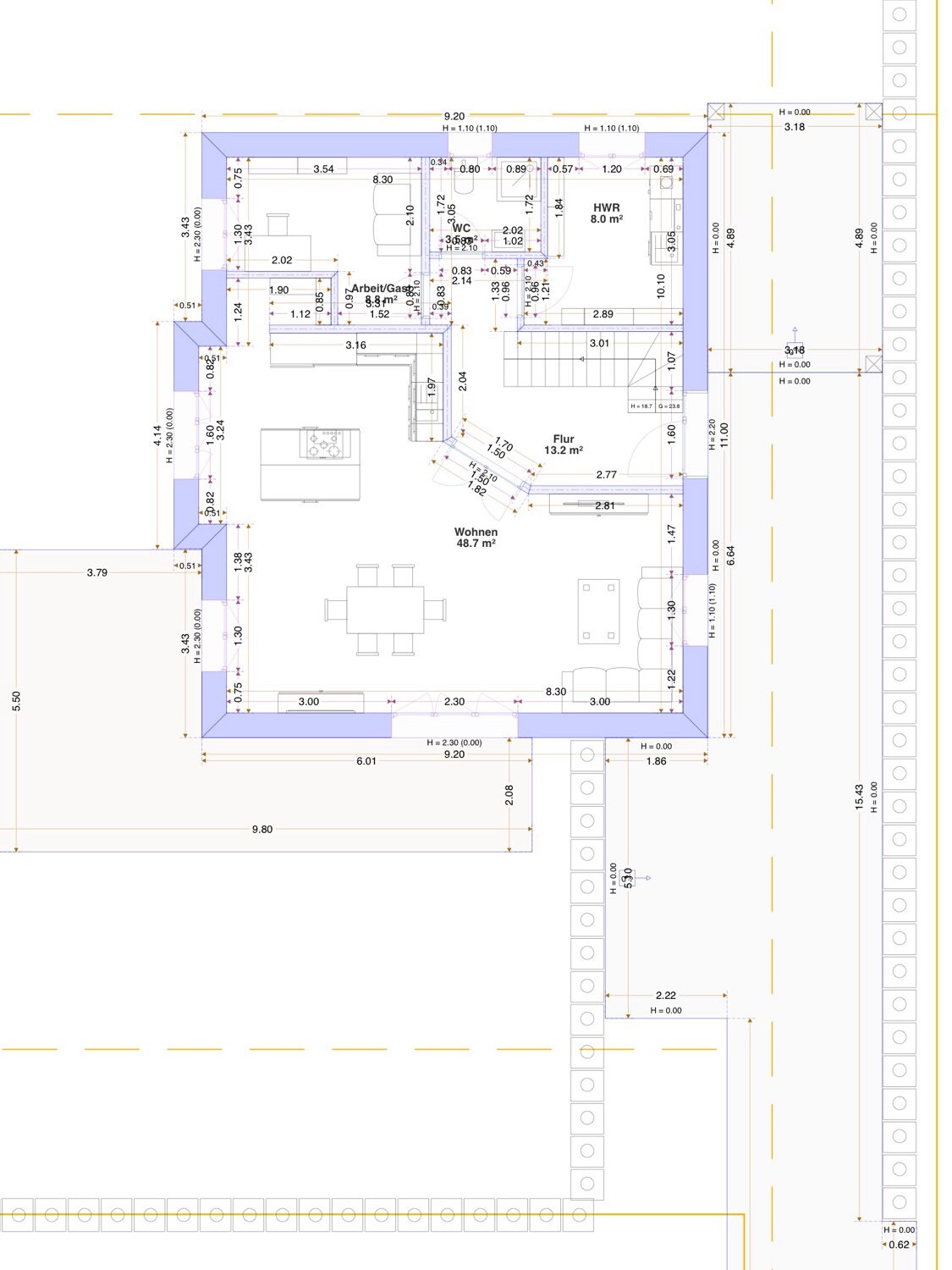
The house will have a gable roof with a 44° pitch and a slightly projecting captain’s gable. The knee wall (kniestock) will be about 1 meter (3 feet) high. Attached are the floor plans for the ground floor and upper floor, as well as the ground floor with the dimensions and outlines of the plot, terrace, and carport. Thank you very much!
Development plan/restrictions
Plot size: 600 m² (90 m² of which is driveway, due to rear development)
Slope: none
Site coverage ratio: 0.3
Floor area ratio: no specification
Building line and boundary: building line on the north side is 5 meters (16 feet) from the property boundary
Boundary setback: 3 meters (10 feet)
Number of parking spaces: 2
Number of floors: 1 full floor
Roof type: gable roof
Architectural style
Orientation
Maximum height/limits: 8.50 meters (28 feet)
Other specifications: none
Owner requirements
Architectural style, roof type, building type: captain’s house
Basement, floors: no basement, 1.5 floors
Number of residents, ages: 4 people, two adults, 2 children aged 3 years each
Space requirements on ground floor and upper floor
Office: family use or home office: home office once per week
Guest sleepers per year: 3
Open or closed architecture
Conservative or modern design
Open kitchen, kitchen island: open living-dining area with kitchen island
Fireplace: no
Carport
Additional wishes/special features/daily routine, including reasons why certain features are included or excluded
House design
Planner: Do-it-Yourself
What do you especially like? Why? The open and bright living area.
What do you not like? Why? The hallway, not enough space for the wardrobe, floor plan not optimal
Personal budget limit for the house including fittings: 300,000 euros (including development but excluding other additional construction costs and land), building in Schleswig-Holstein.
Preferred heating technology: gas boiler with solar thermal for hot water
If you have to do without, which details/features could you forego: pantry, separate dressing room
Why has the design developed the way it is now?
A mix of many examples from various sources.
We are still uncertain about the following: a separate dressing room (advantages: my husband leaves for work earlier in the morning and can get dressed in a separate room, plus more sound insulation to the children’s room, which will later be a teenager’s room), a small pantry behind the kitchen and whether it should be open or have a narrow sliding door, and whether the staircase should be open or closed with space for a wardrobe underneath. We are also open to general advice on other aspects.
The house will have a gable roof with a 44° pitch and a slightly projecting captain’s gable. The knee wall (kniestock) will be about 1 meter (3 feet) high. Attached are the floor plans for the ground floor and upper floor, as well as the ground floor with the dimensions and outlines of the plot, terrace, and carport. Thank you very much!
Development plan/restrictions
Plot size: 600 m² (90 m² of which is driveway, due to rear development)
Slope: none
Site coverage ratio: 0.3
Floor area ratio: no specification
Building line and boundary: building line on the north side is 5 meters (16 feet) from the property boundary
Boundary setback: 3 meters (10 feet)
Number of parking spaces: 2
Number of floors: 1 full floor
Roof type: gable roof
Architectural style
Orientation
Maximum height/limits: 8.50 meters (28 feet)
Other specifications: none
Owner requirements
Architectural style, roof type, building type: captain’s house
Basement, floors: no basement, 1.5 floors
Number of residents, ages: 4 people, two adults, 2 children aged 3 years each
Space requirements on ground floor and upper floor
Office: family use or home office: home office once per week
Guest sleepers per year: 3
Open or closed architecture
Conservative or modern design
Open kitchen, kitchen island: open living-dining area with kitchen island
Fireplace: no
Carport
Additional wishes/special features/daily routine, including reasons why certain features are included or excluded
House design
Planner: Do-it-Yourself
What do you especially like? Why? The open and bright living area.
What do you not like? Why? The hallway, not enough space for the wardrobe, floor plan not optimal
Personal budget limit for the house including fittings: 300,000 euros (including development but excluding other additional construction costs and land), building in Schleswig-Holstein.
Preferred heating technology: gas boiler with solar thermal for hot water
If you have to do without, which details/features could you forego: pantry, separate dressing room
Why has the design developed the way it is now?
A mix of many examples from various sources.
Ground floor:
The hallway is not small in terms of space. Perhaps the coat rack could go under the stairs? Should it be open?
Change the direction of the utility room door swing. What connections are there for utilities, gas boiler, etc.? With the given depth, I only see space for a washing machine, dryer, and similar appliances.
In the guest toilet, swap the shower and the toilet so the toilet is not immediately visible when the door is open (also from the hallway).
You would need to measure if the couch in the guest room is a pull-out; it will be tight. However, moving around would then be very limited. If guests are important to you, I would sacrifice this storage corner, which would greatly benefit the guest room. The access to the guest room is wasted space.
The corner of the kitchen island at the wall facing west is very tight (about 70cm (28 inches)?), which doesn’t make much sense. In my opinion, this is a typical forced island. Does it have to be there?
For example, you could consider a peninsula or a second kitchen run right along the west wall.
What flooring do you plan for the open-plan area—continuous tiling throughout? If you plan a mix, it will be interesting in terms of the kitchen/island layout to determine where the tiles end and the other flooring begins.
The dining table is drawn very small. Consider the actual size and then check the walking clearance.
Upper floor:
The hallway feels quite dark.
The bedroom is very minimalist but should work. However, the walk-in closet is a waste of space in its current form; only about 3 to 3.5 meters (10 to 11.5 feet) of wardrobe space fits. The closet conflicts with the window.
The children’s room is very large. I would furnish the east/south-facing child’s room differently to create a larger contiguous play area. The bed currently takes up a lot of space. Are the children old enough for beds this large?
In both children’s rooms, I don’t like how the access is placed—you have to walk directly in front of the wardrobe.
The hallway is not small in terms of space. Perhaps the coat rack could go under the stairs? Should it be open?
Change the direction of the utility room door swing. What connections are there for utilities, gas boiler, etc.? With the given depth, I only see space for a washing machine, dryer, and similar appliances.
In the guest toilet, swap the shower and the toilet so the toilet is not immediately visible when the door is open (also from the hallway).
You would need to measure if the couch in the guest room is a pull-out; it will be tight. However, moving around would then be very limited. If guests are important to you, I would sacrifice this storage corner, which would greatly benefit the guest room. The access to the guest room is wasted space.
The corner of the kitchen island at the wall facing west is very tight (about 70cm (28 inches)?), which doesn’t make much sense. In my opinion, this is a typical forced island. Does it have to be there?
For example, you could consider a peninsula or a second kitchen run right along the west wall.
What flooring do you plan for the open-plan area—continuous tiling throughout? If you plan a mix, it will be interesting in terms of the kitchen/island layout to determine where the tiles end and the other flooring begins.
The dining table is drawn very small. Consider the actual size and then check the walking clearance.
Upper floor:
The hallway feels quite dark.
The bedroom is very minimalist but should work. However, the walk-in closet is a waste of space in its current form; only about 3 to 3.5 meters (10 to 11.5 feet) of wardrobe space fits. The closet conflicts with the window.
The children’s room is very large. I would furnish the east/south-facing child’s room differently to create a larger contiguous play area. The bed currently takes up a lot of space. Are the children old enough for beds this large?
In both children’s rooms, I don’t like how the access is placed—you have to walk directly in front of the wardrobe.
I agree with Alex85 on all points and would add that I find the master bedroom space too tight. The room width is 287 cm (113 inches). A bed with a 180 cm (71 inches) wide mattress is at least 190 cm (75 inches) wide including the frame. This leaves just under 45 cm (18 inches) of clearance on each side of the bed for passage, and that’s also under the sloped ceiling.
The dormer with the gable end is a rather impractical area due to the room division, especially unsuitable for wardrobes.
The staircase could cause an issue when going downstairs if the ceiling opening is limited only to the straight part of the stairs, as you would already be standing on the third step at the beginning of the opening.
Otherwise, I think the approach is correct to already plan for 140 cm (55 inches) wide beds in the children’s rooms.
The dormer with the gable end is a rather impractical area due to the room division, especially unsuitable for wardrobes.
The staircase could cause an issue when going downstairs if the ceiling opening is limited only to the straight part of the stairs, as you would already be standing on the third step at the beginning of the opening.
Otherwise, I think the approach is correct to already plan for 140 cm (55 inches) wide beds in the children’s rooms.
My predecessors have sharp eyes.
A pantry with a rough structural width of 85cm (33 inches) is a real challenge for your shoulders, or you have to do without a shelf. It’s better to skip the pantry and instead add another kitchen cabinet.
The office benefits from this, as @Alex85 already mentioned—because 200cm (79 inches) rough structural width for the room is also very tight, leaving almost no usable space.
The kitchen island can be narrower and positioned a bit closer to the main counter.
Cabinet placement is not really planned. In the bedroom, the wardrobe blocks the window, and in the utility room, it blocks the door.
A pantry with a rough structural width of 85cm (33 inches) is a real challenge for your shoulders, or you have to do without a shelf. It’s better to skip the pantry and instead add another kitchen cabinet.
The office benefits from this, as @Alex85 already mentioned—because 200cm (79 inches) rough structural width for the room is also very tight, leaving almost no usable space.
The kitchen island can be narrower and positioned a bit closer to the main counter.
Cabinet placement is not really planned. In the bedroom, the wardrobe blocks the window, and in the utility room, it blocks the door.
A cloakroom under the closed staircase is one of our considerations. Regarding the utility room: we actually overlooked the door swing, thank you for pointing that out. Most of the technical equipment (gas boiler with storage tank, ventilation system) is planned to be located in the attic. We will definitely reconsider the bathroom layout on the ground floor.
The additional room on the ground floor is intended much more as a study than a guest room, since we do not expect overnight guests often, and in a pinch the desk can be moved a bit... therefore, I would be reluctant to give up the small pantry, as we currently have a similar small pantry in our apartment that I really appreciate. However, I will think about it again.
The corner from the kitchen island to the wall is actually only 80 cm (31 inches) at the narrowest point, but compared to the display models I have seen so far, the island has been planned relatively large at 180 x 130 cm (71 x 51 inches) and could perhaps be a little smaller. Since there is a walkway of 1 m (39 inches) on the other side and 1.20 m (47 inches) between the island and the counters, I considered the overall space sufficient for a “real” island. We have not yet decided on the flooring, but that is also a good point and something we will consider. I imagine a second countertop row would be difficult, especially since floor-to-ceiling windows are planned at the gable on the west wall. The dining table at 2 x 1 m (79 x 39 inches) still fits; only the cabinet on the south wall would need to be moved slightly to the left. For the upstairs hallway, we have planned a skylight (although we are still uncertain about this, since the gallery was sacrificed for the storage room and it would be impossible to clean...). The closet in the dressing room is not intended to remain; rather, we are thinking of open shelves along the entire wall, which we have seen in a room of this size and liked. I assumed this could be coordinated properly with the window. The dressing room would be very practical because my husband leaves the house very early and could get dressed there without waking me. It would also provide additional sound insulation for the future teenage bedrooms. We know that the gable upstairs is not used optimally due to the division, but it was important to us to have two roughly equal-sized children’s rooms, and this was the only way to achieve that. The furnishing of the children’s rooms is not yet finalized; so far we have only checked whether a 140 cm (55 inch) bed, desk, etc., would fit later on.
We will take another look at the ceiling opening above the staircase as well; thanks again for the tip.
The additional room on the ground floor is intended much more as a study than a guest room, since we do not expect overnight guests often, and in a pinch the desk can be moved a bit... therefore, I would be reluctant to give up the small pantry, as we currently have a similar small pantry in our apartment that I really appreciate. However, I will think about it again.
The corner from the kitchen island to the wall is actually only 80 cm (31 inches) at the narrowest point, but compared to the display models I have seen so far, the island has been planned relatively large at 180 x 130 cm (71 x 51 inches) and could perhaps be a little smaller. Since there is a walkway of 1 m (39 inches) on the other side and 1.20 m (47 inches) between the island and the counters, I considered the overall space sufficient for a “real” island. We have not yet decided on the flooring, but that is also a good point and something we will consider. I imagine a second countertop row would be difficult, especially since floor-to-ceiling windows are planned at the gable on the west wall. The dining table at 2 x 1 m (79 x 39 inches) still fits; only the cabinet on the south wall would need to be moved slightly to the left. For the upstairs hallway, we have planned a skylight (although we are still uncertain about this, since the gallery was sacrificed for the storage room and it would be impossible to clean...). The closet in the dressing room is not intended to remain; rather, we are thinking of open shelves along the entire wall, which we have seen in a room of this size and liked. I assumed this could be coordinated properly with the window. The dressing room would be very practical because my husband leaves the house very early and could get dressed there without waking me. It would also provide additional sound insulation for the future teenage bedrooms. We know that the gable upstairs is not used optimally due to the division, but it was important to us to have two roughly equal-sized children’s rooms, and this was the only way to achieve that. The furnishing of the children’s rooms is not yet finalized; so far we have only checked whether a 140 cm (55 inch) bed, desk, etc., would fit later on.
We will take another look at the ceiling opening above the staircase as well; thanks again for the tip.
@ypg: I'm not really sure anymore if these are just the basic shell dimensions. What else would be added on top of this, or how much closer would everything actually be? We still have the option to extend the house by a few centimeters (inches), but I'm seriously reconsidering whether I even need the storage room...
Similar topics