
Hello,
I need your advice.
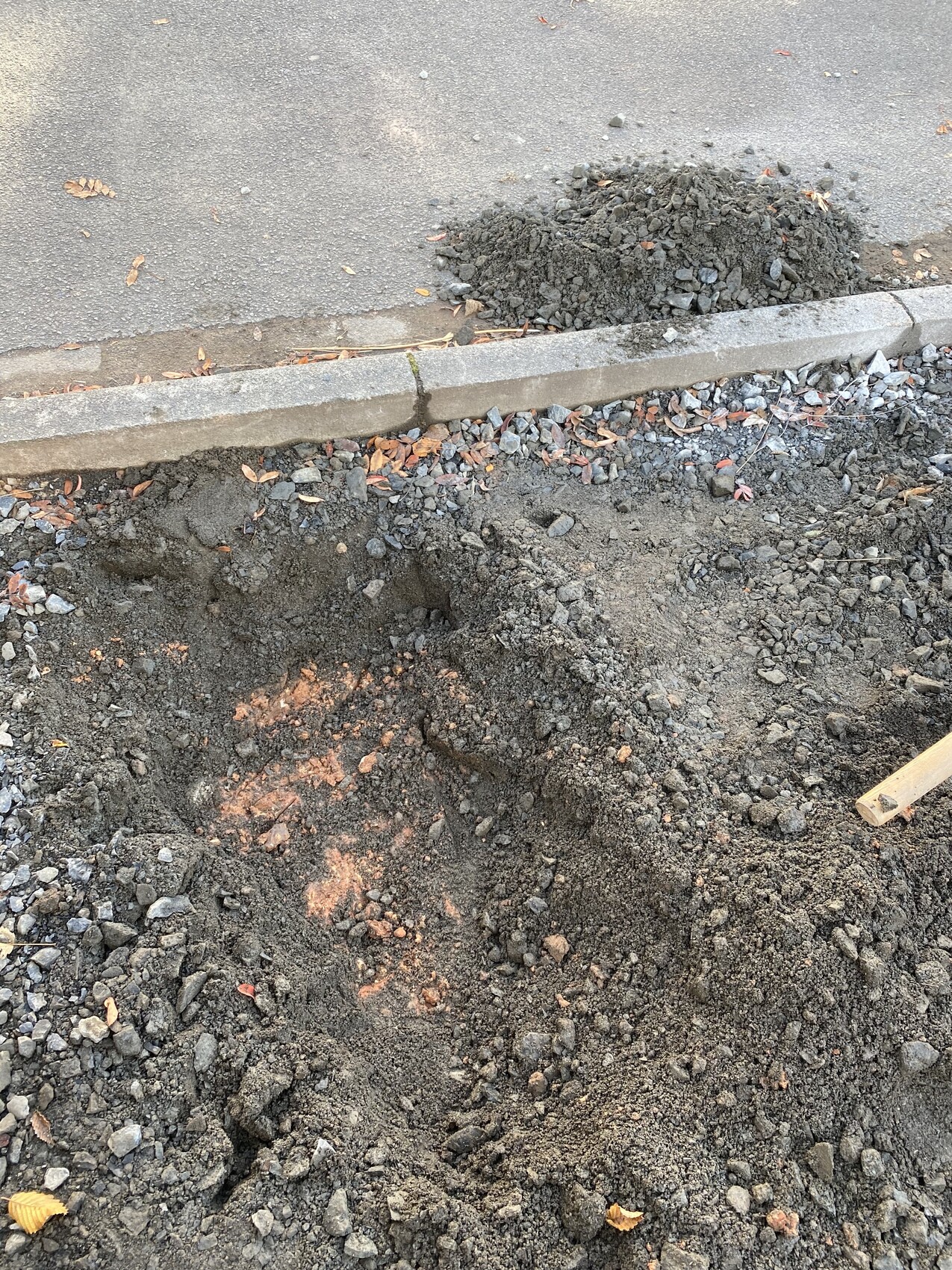
We want to renew our driveway and have found that beneath the paving there is fine basalt sand instead of gravel as a base layer.
We planned to replace it with gravel.
Our excavator operator said he would leave it in place, as it would be wasteful to remove it.
We listened to him, but now our glazier thinks that material might not be stable enough and there is a risk it could settle.
Does anyone have experience with this?
I need your advice.
We want to renew our driveway and have found that beneath the paving there is fine basalt sand instead of gravel as a base layer.
We planned to replace it with gravel.
Our excavator operator said he would leave it in place, as it would be wasteful to remove it.
We listened to him, but now our glazier thinks that material might not be stable enough and there is a risk it could settle.
Does anyone have experience with this?
W
WilderSueden27 Oct 2022 14:15I’ve read what feels like 20 books and about 15 different recommendations regarding the subbase. That makes sense, since not every region has a gravel quarry every 10 kilometers (6 miles). Generally, crushed stone is better than gravelly sand, and slightly larger grain sizes are better than finer ones (sand). Also, paving is not done over a suspended base but on natural ground, which has a major impact on the appropriate load-bearing layer. You mentioned you are renewing the driveway, so have cars been driving on it for 30 years already? It will probably hold up in the future as well, even if it’s not according to textbook standards.
The other aspect is the matter of warranty. Ultimately, the landscape contractor decides. If they require a different subbase, you will need to use one, or they won’t do the job.
The other aspect is the matter of warranty. Ultimately, the landscape contractor decides. If they require a different subbase, you will need to use one, or they won’t do the job.

DaGoodness schrieb:
And if he says the ground is not load-bearing, then make the ground stable according to the garden landscaper's specifications. That is the crucial point,
you specify the future load and usage,
there are already differences between a baby stroller, a car with maneuvering area, a tradesperson’s van, a furniture moving truck, and a tanker truck,
let the garden and landscape contractor decide how to carry it out,
he will only get upset later if the driving track collapses.
It can work, but it doesn’t have to...
It depends on the installation thickness of the material and the subsoil. If you really want to keep the material in place, then compact it and perform a plate load test. A falling weight deflectometer should be sufficient. An E_vd below 40 MN should be achieved at minimum.
The question is whether the risk is worth the effort, especially if it might still not work in the end.
At least you can suggest this to the landscaping contractor.
Regards
It depends on the installation thickness of the material and the subsoil. If you really want to keep the material in place, then compact it and perform a plate load test. A falling weight deflectometer should be sufficient. An E_vd below 40 MN should be achieved at minimum.
The question is whether the risk is worth the effort, especially if it might still not work in the end.
At least you can suggest this to the landscaping contractor.
Regards
Similar topics