
ᐅ Plastic Windows in Apartments: Installing Additional Ventilation
Created on: 3 May 2021 19:53
M
mwyalchen
Hello!
I live in a relatively small apartment (50m² (540 sq ft)). Last week, I bought CO2 sensors and was totally shocked: after closing the windows, the CO2 level stays below the recommended 1000ppm only for the first 30 minutes and then rises quickly. If I close the bedroom door, the CO2 level can reach 3000-4000ppm by the next morning.
Apparently, my windows do not have micro-ventilation, and since the apartment was built in the 1970s, there is no ventilation system either.
I have researched the topic and understand that a proper ventilation system is necessary. However, I live in a rental apartment that I plan to leave within the next three years. Therefore, expensive solutions are not suitable.
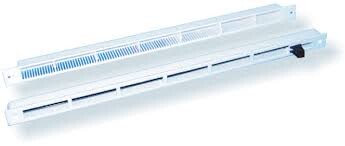
During my research, I came across a solution shown in the photo attached to my post: simply two plastic parts. You drill the frame, then screw the parts onto both sides. The inner one can be closed.
This sounds better than nothing, but I have some questions I would like to ask here in the forum:
1) Is it even a good idea to drill through the frame? I know that in places where air meets cold outdoor temperatures during winter ventilation, moisture can accumulate and cause mold. If this were to happen inside the frame itself, it could be very serious: it would not be visible, and there would be enough space for mold growth. Right?
2) If you do this, do you drill into the outer frame (the part fixed to the wall) or the window sash/frame (where the glass is installed)?
I live in a relatively small apartment (50m² (540 sq ft)). Last week, I bought CO2 sensors and was totally shocked: after closing the windows, the CO2 level stays below the recommended 1000ppm only for the first 30 minutes and then rises quickly. If I close the bedroom door, the CO2 level can reach 3000-4000ppm by the next morning.
Apparently, my windows do not have micro-ventilation, and since the apartment was built in the 1970s, there is no ventilation system either.
I have researched the topic and understand that a proper ventilation system is necessary. However, I live in a rental apartment that I plan to leave within the next three years. Therefore, expensive solutions are not suitable.
During my research, I came across a solution shown in the photo attached to my post: simply two plastic parts. You drill the frame, then screw the parts onto both sides. The inner one can be closed.
This sounds better than nothing, but I have some questions I would like to ask here in the forum:
1) Is it even a good idea to drill through the frame? I know that in places where air meets cold outdoor temperatures during winter ventilation, moisture can accumulate and cause mold. If this were to happen inside the frame itself, it could be very serious: it would not be visible, and there would be enough space for mold growth. Right?
2) If you do this, do you drill into the outer frame (the part fixed to the wall) or the window sash/frame (where the glass is installed)?
M
mwyalchen3 May 2021 21:38ypg schrieb:
I have no idea what that device needs or does, but if you move out of my apartment and leave drill holes in the window frames without prior agreement, which are not strictly necessary for permanently installing any interior shading, that counts as property damage. And I am a nice landlord! Huh? I don’t leave holes, but rather a custom-made ventilation system that is almost indistinguishable from one supplied with the window itself.
But I basically understand your point. In the end, it really is your responsibility.
However, nothing gets done with her unless you arrange it yourself. You can wait years for my landlord.
And I wish for technical advice, not legal advice 😉
Ask the landlord if you are allowed to install trickle vents in the window frame. Also, check if you are permitted to do the installation yourself. This way, you will be on the safe side. Make a note of the conversation and inform the landlord that you are making this note. He should receive a copy. Then you can cut the sealing gaskets and install the trickle vents. If V. says no, then do not proceed.
M
mwyalchen3 May 2021 22:02Nordlys schrieb:
Ask the landlord if you are allowed to install window frame vents and whether you can do it yourself. That way, you’re on the safe side. Make a note of the conversation and inform the landlord that you are doing so. Give them a copy. Then you can cut the sealing gaskets and install the frame vents. If the landlord says no, then don’t proceed.For frame vents, you only have to cut the sealing gasket, right? Sorry, but I wouldn’t even ask my landlord about that. The gasket costs nothing, and I have already replaced it myself. If I asked about such minor things, I’d be sleeping on the floor and washing my face in a bucket 😀 In case of doubt, I’ll install a fresh gasket when I move out or the next tenant might have ventilation. Who can say otherwise?N
nordanney3 May 2021 22:14Nordlys schrieb:
Ask the landlord if you are allowed to install trickle vents in the window frame. Also, whether you are permitted to do the installation yourself. That way, you would be on the safe side. Not necessarily. If it is a condominium, the owners' association would actually need to decide if the original poster is allowed to do it—if you want to do it properly. Because in such cases, the windows are part of the common property. *Know-it-all mode off*
Similar topics