
ᐅ Plastic Windows in Apartments: Installing Additional Ventilation
Created on: 3 May 2021 19:53
M
mwyalchenM
mwyalchen3 May 2021 19:53Hello!
I live in a relatively small apartment (50m² (540 sq ft)). Last week, I bought CO2 sensors and was totally shocked: after closing the windows, the CO2 level stays below the recommended 1000ppm only for the first 30 minutes and then rises quickly. If I close the bedroom door, the CO2 level can reach 3000-4000ppm by the next morning.
Apparently, my windows do not have micro-ventilation, and since the apartment was built in the 1970s, there is no ventilation system either.
I have researched the topic and understand that a proper ventilation system is necessary. However, I live in a rental apartment that I plan to leave within the next three years. Therefore, expensive solutions are not suitable.
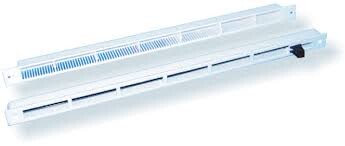
During my research, I came across a solution shown in the photo attached to my post: simply two plastic parts. You drill the frame, then screw the parts onto both sides. The inner one can be closed.
This sounds better than nothing, but I have some questions I would like to ask here in the forum:
1) Is it even a good idea to drill through the frame? I know that in places where air meets cold outdoor temperatures during winter ventilation, moisture can accumulate and cause mold. If this were to happen inside the frame itself, it could be very serious: it would not be visible, and there would be enough space for mold growth. Right?
2) If you do this, do you drill into the outer frame (the part fixed to the wall) or the window sash/frame (where the glass is installed)?
I live in a relatively small apartment (50m² (540 sq ft)). Last week, I bought CO2 sensors and was totally shocked: after closing the windows, the CO2 level stays below the recommended 1000ppm only for the first 30 minutes and then rises quickly. If I close the bedroom door, the CO2 level can reach 3000-4000ppm by the next morning.
Apparently, my windows do not have micro-ventilation, and since the apartment was built in the 1970s, there is no ventilation system either.
I have researched the topic and understand that a proper ventilation system is necessary. However, I live in a rental apartment that I plan to leave within the next three years. Therefore, expensive solutions are not suitable.
During my research, I came across a solution shown in the photo attached to my post: simply two plastic parts. You drill the frame, then screw the parts onto both sides. The inner one can be closed.
This sounds better than nothing, but I have some questions I would like to ask here in the forum:
1) Is it even a good idea to drill through the frame? I know that in places where air meets cold outdoor temperatures during winter ventilation, moisture can accumulate and cause mold. If this were to happen inside the frame itself, it could be very serious: it would not be visible, and there would be enough space for mold growth. Right?
2) If you do this, do you drill into the outer frame (the part fixed to the wall) or the window sash/frame (where the glass is installed)?
 Baugrübchen3 May 2021 20:21
Basically, I would not drill into the windows in a rental apartment.
3000-4000 ppm is not an ideal level, but it can be improved more effectively with proper cross-ventilation than with minimal passive ventilation, especially in a small apartment.
3000-4000 ppm is not an ideal level, but it can be improved more effectively with proper cross-ventilation than with minimal passive ventilation, especially in a small apartment.
M
mwyalchen3 May 2021 20:33Baugrübchen schrieb:
Basically, I wouldn’t drill into the windows in a rental apartment.
3000–4000 ppm is not a good value, but it can be improved more effectively by regular airing out (shock ventilation) than through minimal passive ventilation, especially in a small apartment.Thank you. I wouldn’t have a problem with "drilling in a rental apartment," my landlord is quite nice and wouldn’t mind a plastic piece on the window at all. So, you can ignore that question and consider the situation as if it were my own apartment.
Shock ventilation helps, but as I mentioned, only very temporarily. Right now, I have to walk between rooms all day and open windows to keep the level below 2000 ppm.
Do you think that kind of micro-ventilation wouldn’t help much?
Baugrübchen3 May 2021 20:50Yes, it is more of a “guess” than “knowledge.”
In our new build, we also do not have a mechanical ventilation system, but rather window rebate vents. Basically the same principle. However, these rebate vents work through their placement throughout the entire house and the gentle airflow. At just one window, the air exchange will never be sufficient to permanently reduce your CO2 concentration.
Just a simple question: Is sleeping with a tilted window not an option? We still live in a 1950s building with poor windows. When we come home, we ventilate the space, then during the afternoon and evening we air out the rooms several times with short bursts of ventilation.
Since the concentration is noticeably higher, it might be worth discussing with the landlord the possibility of professionally retrofitting window rebate vents. The financial expense should not be too high.
In our new build, we also do not have a mechanical ventilation system, but rather window rebate vents. Basically the same principle. However, these rebate vents work through their placement throughout the entire house and the gentle airflow. At just one window, the air exchange will never be sufficient to permanently reduce your CO2 concentration.
Just a simple question: Is sleeping with a tilted window not an option? We still live in a 1950s building with poor windows. When we come home, we ventilate the space, then during the afternoon and evening we air out the rooms several times with short bursts of ventilation.
Since the concentration is noticeably higher, it might be worth discussing with the landlord the possibility of professionally retrofitting window rebate vents. The financial expense should not be too high.
M
mwyalchen3 May 2021 20:56Well, of course we try to sleep with the window tilted or open whenever possible. In the summer, this is not a problem at all. But once it’s around +5°C (41°F) outside, it becomes difficult. It’s always worse in small apartments since you are basically always next to a window.
Okay, good point. I’ll call a company and see what they recommend.
Thanks!
Okay, good point. I’ll call a company and see what they recommend.
Thanks!
Drilling is not the same as boring through.
I have no idea what the device needs or does, but if you move out of my apartment and leave drill holes on the window frames without prior agreement, which are not absolutely necessary to permanently install a shading device on the inside, then that is property damage. And I am a nice landlord!
That is up to the owner.
I have no idea what the device needs or does, but if you move out of my apartment and leave drill holes on the window frames without prior agreement, which are not absolutely necessary to permanently install a shading device on the inside, then that is property damage. And I am a nice landlord!
mwyalchen schrieb:
I wouldn’t have a problem, my landlord is quite nice and won’t mind a plastic part on the window at all.
mwyalchen schrieb:
Okay, good point. I will call a company and see what they recommend.
That is up to the owner.
Similar topics