
ᐅ Newly built apartment (KfW-55 standard) cannot be cooled below at least 25 °C.
Created on: 21 Aug 2022 08:52
F
Forsberg21
Hello,
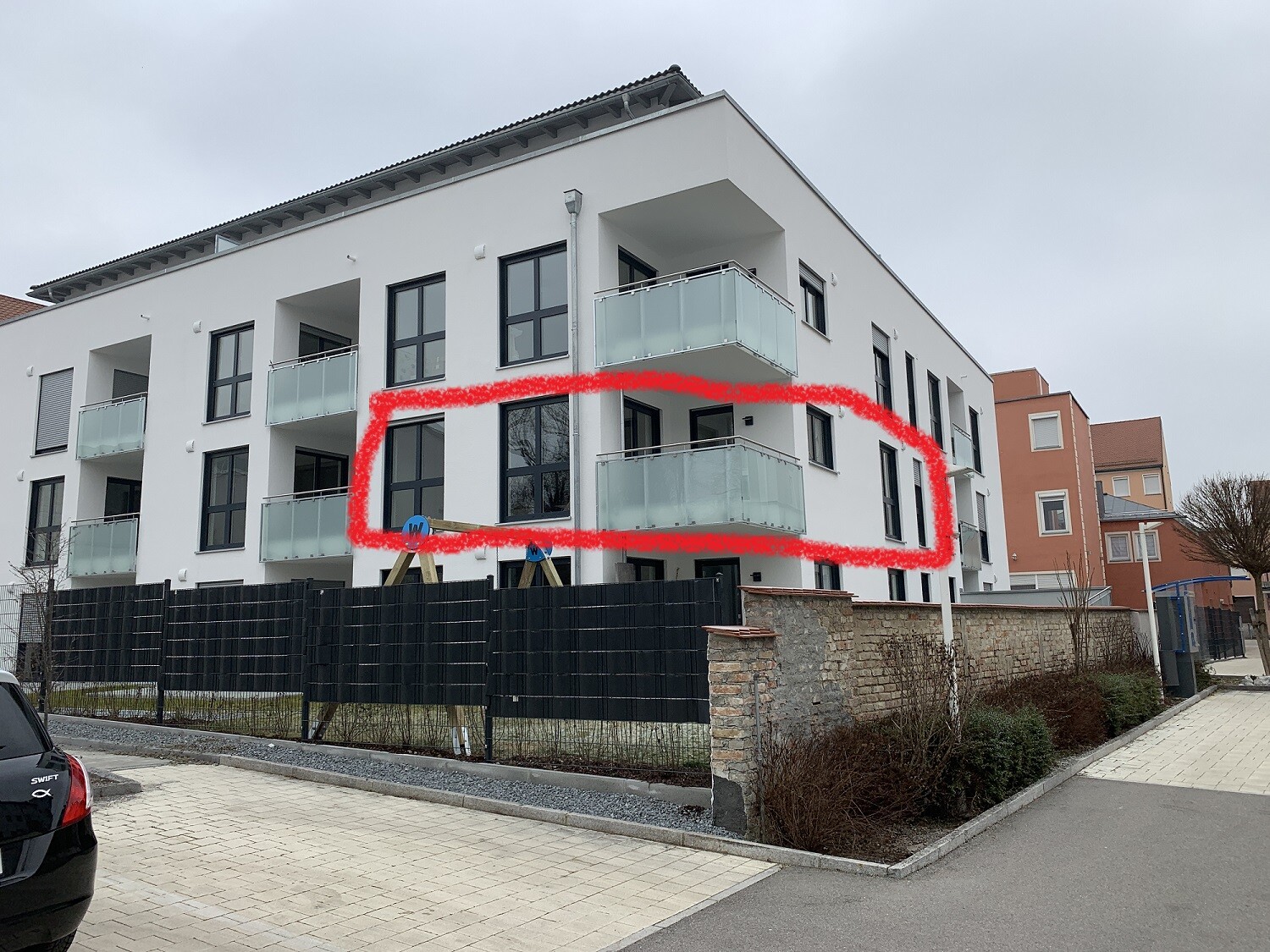
I have rented out a new apartment (built in 2021, KfW-55 standard). The tenant recently informed me that since spring, the indoor temperatures have consistently been at least 25°C (77°F) or higher. On warm days, it even reaches up to 28°C (82°F), although she keeps all the aluminum shutters closed during the day (no home office). Cross-ventilation at night doesn’t bring the temperature below 25°C (77°F). She is asking for advice on how to cool the apartment down a bit during the summer.
What could be causing this?
The apartment has a decentralized ventilation system and underfloor heating, which is naturally turned off in summer.
The apartment faces southwest and has large window areas.
Could it be that the ventilation system continuously brings in warm outside air on hot days, causing the temperature to rise so much?
Should the ventilation system be turned off during the day?
But why doesn’t the apartment cool down at night, even though there seems to be cross-ventilation and the nights are cooler?
Do you have any tips? I am a bit overwhelmed.
Best regards,
Robert

I have rented out a new apartment (built in 2021, KfW-55 standard). The tenant recently informed me that since spring, the indoor temperatures have consistently been at least 25°C (77°F) or higher. On warm days, it even reaches up to 28°C (82°F), although she keeps all the aluminum shutters closed during the day (no home office). Cross-ventilation at night doesn’t bring the temperature below 25°C (77°F). She is asking for advice on how to cool the apartment down a bit during the summer.
What could be causing this?
The apartment has a decentralized ventilation system and underfloor heating, which is naturally turned off in summer.
The apartment faces southwest and has large window areas.
Could it be that the ventilation system continuously brings in warm outside air on hot days, causing the temperature to rise so much?
Should the ventilation system be turned off during the day?
But why doesn’t the apartment cool down at night, even though there seems to be cross-ventilation and the nights are cooler?
Do you have any tips? I am a bit overwhelmed.
Best regards,
Robert
B
Bertram10021 Aug 2022 11:00driver55 schrieb:
You can’t really get rid of it with those great cloths either; at best, they just stop the temperature from rising further. Oh man, I didn’t say or mean to imply that these cloths are the best solution out there. They are actually a very good option for tenants who, right now in August, have a problem that can potentially reduce quality of life if they struggle with the heat or have trouble sleeping.
Because unlike the best quality blinds or shutters, this solution can be installed very quickly. Blinds, on the other hand, will probably only be available by the next summer season.
If I had a problem with the temperature in my apartment, I would already be very happy with preventing any further temperature increase. Better than nothing on short notice.

Internal shading, in my opinion, is most effective because it prevents direct heating of furniture or floors by sunlight.
After that, heat inside stays inside. The "insulation effect" can only work if I can actively remove the heat trapped behind the curtains.
If the ventilation does not provide passive cooling – which I assume with decentralized systems – it will get increasingly warmer in summer. It must be completely turned off during the day.
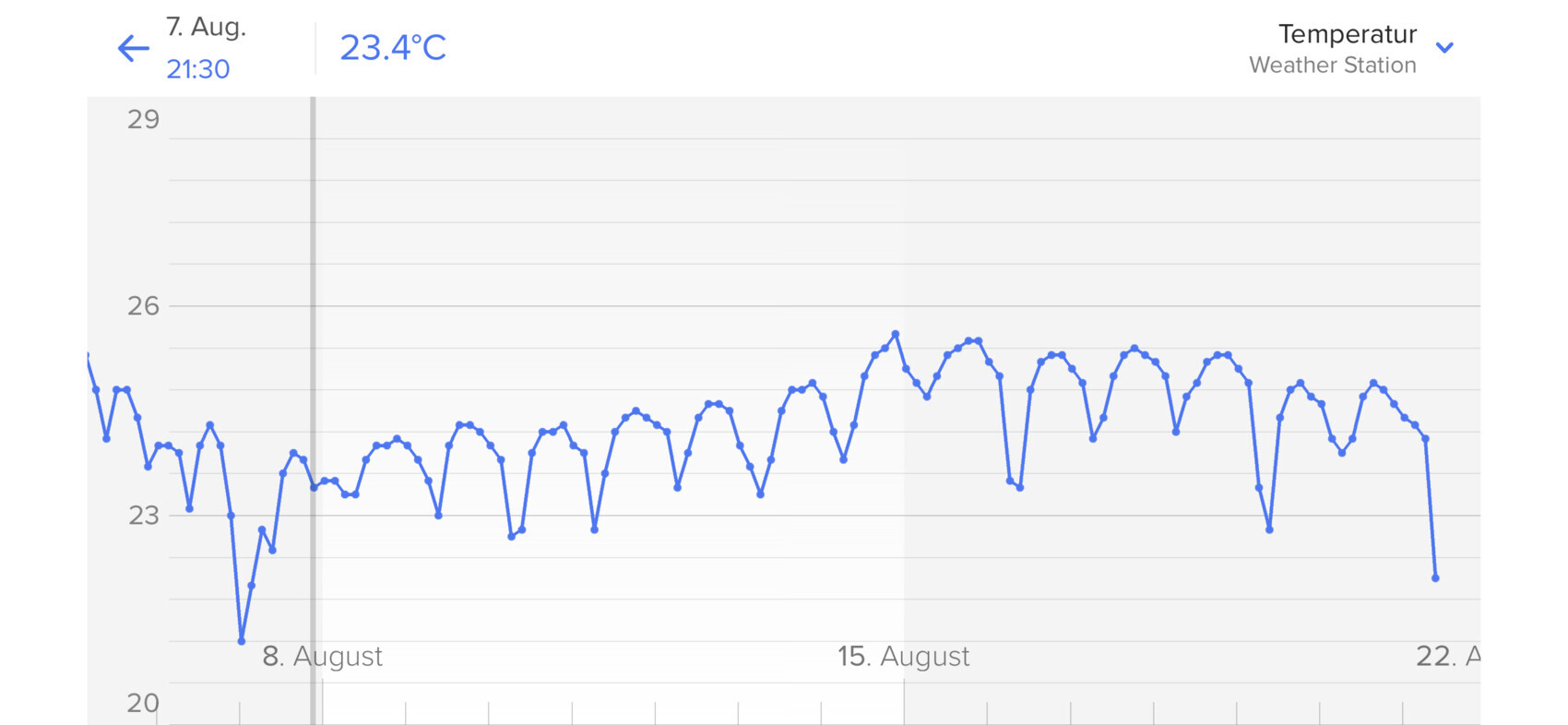
We also consistently use external aluminum roller shutters. Still, you can clearly see how the heat gradually builds up.
It cannot be aired out. The building structure has simply warmed up. The floor and walls consistently have around 24°C (75°F), even after airing for 2 hours.
Only if I ventilate crosswise all night might I possibly manage it. However, that brings all sorts of insects into the house, and I close the bedroom door, so it doesn’t work there either.
This physical effect is completely new to me. How does that work? I believe the opposite. Plants increase humidity through moist soil and evaporation from leaves, which raises the dew point and the perceived temperature.
After that, heat inside stays inside. The "insulation effect" can only work if I can actively remove the heat trapped behind the curtains.
If the ventilation does not provide passive cooling – which I assume with decentralized systems – it will get increasingly warmer in summer. It must be completely turned off during the day.
We also consistently use external aluminum roller shutters. Still, you can clearly see how the heat gradually builds up.
It cannot be aired out. The building structure has simply warmed up. The floor and walls consistently have around 24°C (75°F), even after airing for 2 hours.
Only if I ventilate crosswise all night might I possibly manage it. However, that brings all sorts of insects into the house, and I close the bedroom door, so it doesn’t work there either.
Bertram100 schrieb:
Plants inside the house also help make the indoor climate feel less warm.
This physical effect is completely new to me. How does that work? I believe the opposite. Plants increase humidity through moist soil and evaporation from leaves, which raises the dew point and the perceived temperature.
B
Bertram10021 Aug 2022 11:14OWLer schrieb:
This physical effect is completely new to me so far.I can't explain it properly from a physics perspective. I would say that the plants create evaporative cooling. The rest is probably placebo for me. When I see the green plants, I just think that it can't be bad. That probably helps too. 😀F
Forsberg2121 Aug 2022 11:29driver55 schrieb:
I also seriously doubt that the installed heat pump has a cooling function.
The most power-consuming option would then be the air-to-air heat pump, while the ground source only uses a bit of pump electricity.
And once the heat is inside the house, you can’t get it out with those fancy cloths; at best, you can stop the temperature from rising further.
I have been reading since spring? The underfloor heating was still on then.
Has the tenant ever asked the other residents in the building? Especially those on the same side and directly above. I don’t think she has asked anyone yet. I have now contacted the company that installed the ventilation systems, the heating engineer, and the property management to inquire. Maybe they’ll provide some clues.
I also wonder whether 25°C (77°F) is really that high for an apartment in summer? I live myself in a flat built in 1992 (facing south) and it can reach up to 28°C (82°F) during midsummer. I never get the apartment below 23°C (73°F) in summer.
OWLer schrieb:
It can’t be ventilated out either. The building fabric has simply heated up. The floor and walls consistently stay at a comfortable 24°C (75°F), even after ventilating for 2 hours. Exactly!
Just because it’s a new build doesn’t mean you can fully control the environment and temperatures.
If there are 13 hours of sunshine outside and you have 10 sqm (108 sq ft) of windows facing south and west, you have to expect that after a few days the heat will also stay inside. Even at 25°C (77°F)! This applies to single-family homes as well as apartments, which is uncomfortable for owners and tenants alike.
Anyone who can afford it now installs air conditioning right away. Those who can’t, or who installed large windows generously 10 years ago or today, end up buying a fan for the bedroom, possibly living with dark blinds, and then can look forward to cooler days in autumn when the sun coming through the oversized windows brings a warmly pleasant and welcome effect. The tenant probably appreciates this too. That’s likely why she chose this apartment: bright and airy thanks to (oversized) windows. Rented as seen 😉
If I were you, as the landlord, I would explain the physics to her. Because I think you have taken good measures with technology and thermal protection. You can’t do anything about extremely hot weather. It will change again…
F
Forsberg2121 Aug 2022 11:38OWLer schrieb:
In my opinion, internal shading is most effective because it prevents direct heating of furniture or floors by sunlight.
After that, heat that’s inside stays inside. The "insulation effect" can only work if I can specifically remove the heat behind the curtains.
If the ventilation system doesn’t include passive cooling—which I assume is the case with decentralized ventilation—then it will only get warmer in the summer. It must be turned off completely during the day.
[ATTACH alt="D2FAC6FD-3126-4FCD-A72F-A87B04B53133.png"]74143[/ATTACH]
We also use external aluminum roller shutters consistently. Still, you can clearly see how the heat keeps building up.
You can’t ventilate it away either. The building structure simply absorbs the heat. The floors and walls stay nicely around 24°C (75°F), even if I ventilate for 2 hours.
Only if I ventilate crosswise all night long could I possibly get it under control. But then I end up with all sorts of insects in the house, and I close the bedroom door, so it doesn’t work there either.
This physical effect is completely unknown to me until now. How does it work? I have the opposite view. Plants increase humidity through the moist soil and evaporation from leaves, which raises the humidity and therefore the dew point / perceived temperature. So you have a similar situation to the apartment I described. If I understand correctly, the first step is to turn off the decentralized ventilation during the day and consistently close the aluminum roller shutters during the day—especially since the tenant isn’t in the apartment anyway.
Are there any drawbacks to not ventilating during the day? Like stuffy air?
Regarding other heat sources: As far as I know, only a large refrigerator-freezer combo is running in the apartment. Otherwise, there are no other heat sources.
Similar topics