
ᐅ Newly built apartment (KfW-55 standard) cannot be cooled below at least 25 °C.
Created on: 21 Aug 2022 08:52
F
Forsberg21
Hello,
I have rented out a new apartment (built in 2021, KfW-55 standard). The tenant recently informed me that since spring, the indoor temperatures have consistently been at least 25°C (77°F) or higher. On warm days, it even reaches up to 28°C (82°F), although she keeps all the aluminum shutters closed during the day (no home office). Cross-ventilation at night doesn’t bring the temperature below 25°C (77°F). She is asking for advice on how to cool the apartment down a bit during the summer.
What could be causing this?
The apartment has a decentralized ventilation system and underfloor heating, which is naturally turned off in summer.
The apartment faces southwest and has large window areas.
Could it be that the ventilation system continuously brings in warm outside air on hot days, causing the temperature to rise so much?
Should the ventilation system be turned off during the day?
But why doesn’t the apartment cool down at night, even though there seems to be cross-ventilation and the nights are cooler?
Do you have any tips? I am a bit overwhelmed.
Best regards,
Robert
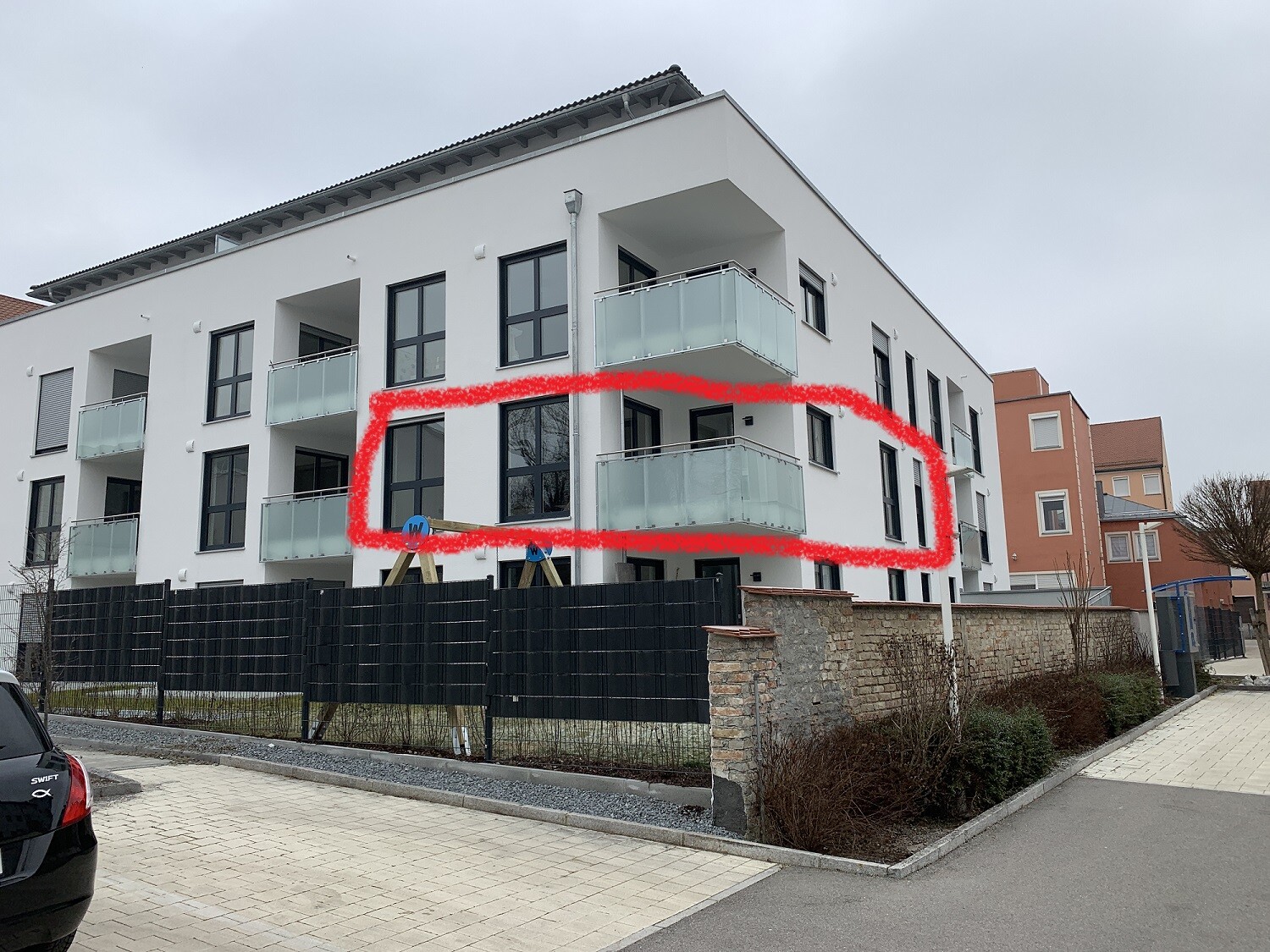

I have rented out a new apartment (built in 2021, KfW-55 standard). The tenant recently informed me that since spring, the indoor temperatures have consistently been at least 25°C (77°F) or higher. On warm days, it even reaches up to 28°C (82°F), although she keeps all the aluminum shutters closed during the day (no home office). Cross-ventilation at night doesn’t bring the temperature below 25°C (77°F). She is asking for advice on how to cool the apartment down a bit during the summer.
What could be causing this?
The apartment has a decentralized ventilation system and underfloor heating, which is naturally turned off in summer.
The apartment faces southwest and has large window areas.
Could it be that the ventilation system continuously brings in warm outside air on hot days, causing the temperature to rise so much?
Should the ventilation system be turned off during the day?
But why doesn’t the apartment cool down at night, even though there seems to be cross-ventilation and the nights are cooler?
Do you have any tips? I am a bit overwhelmed.
Best regards,
Robert
I
Interrupt21 Aug 2022 11:45I am surprised that on the previous four pages no one has considered the waste heat generated. Cooktops, ovens, refrigerators, washing machines, dryers, dishwashers, vacuum cleaners, large flat-screen TVs, computers (with home building forums), and of course the human body all produce waste heat, which can reach significant levels in a household of four people. When it is warmer outside than inside, this waste heat has no chance to escape. This alone can raise the indoor temperature by a few degrees in a well-insulated house. The only counteracting factor is the thermal mass of the building structure. However, this also has its limits, as @OWLer has correctly pointed out.
That is a common observation but it has nothing to do with physics. Thermal insulation always works in both directions by definition.
Heat either comes from outside or is generated inside and cannot escape. These are the two main driving factors. External shading and high-quality glazing help against the first, while a change in one’s own behavior helps against the second. But we all know how difficult it is to change one’s own behavior. 😉
Bertram100 schrieb:
Yes, almost everyone is surprised at how poorly a new build insulates against heat.
That is a common observation but it has nothing to do with physics. Thermal insulation always works in both directions by definition.
Heat either comes from outside or is generated inside and cannot escape. These are the two main driving factors. External shading and high-quality glazing help against the first, while a change in one’s own behavior helps against the second. But we all know how difficult it is to change one’s own behavior. 😉
Finally, a thread that really concerns me... What materials are the buildings being discussed here made of? Do you think the material makes a difference? We have a monolithic KfW 55 house, our relatives have a KfW 55 lime sand brick house with insulation, and a KfW 40 timber house. In our house, I almost melted last summer. It was 26°C (79°F) in the ground floor that wouldn’t cool down. Even yesterday, with 17°C (63°F) outside, we ventilated all day, and today it’s back up to 23.5°C (74°F). I can live with that, but it’s shocking how quickly the temperature rises. The worst is our bedroom (east side) because we don’t get any airflow even when the window is open. I always thought new buildings offered a higher quality of life than old ones—no way. Well, with current prices, I’m happy about the heating cost savings, but generally, I’d prefer to heat a bit more in winter than have to install air conditioning plus photovoltaics for the price it costs here just so I don’t bake. Working from home at 26°C (79°F) is just not for me.
In the KfW 40 timber house, I had the impression that the 24°C (75°F) inside felt a bit cooler, even though they have ventilation and we don’t.
We have been sleeping in the basement for the last few weeks, which is great but also kind of frustrating. Expensive house, expensive bed, and yet I’m sleeping in the basement on the guest bed—great.
To the original poster: definitely reprogram the ventilation system so it does not bring warm air inside during the day! At night, it should not bring the cool air in through the heat recovery unit—so it cools without running through the exchanger. This doesn’t cool the air, but it prevents additional heating.
In the KfW 40 timber house, I had the impression that the 24°C (75°F) inside felt a bit cooler, even though they have ventilation and we don’t.
We have been sleeping in the basement for the last few weeks, which is great but also kind of frustrating. Expensive house, expensive bed, and yet I’m sleeping in the basement on the guest bed—great.
To the original poster: definitely reprogram the ventilation system so it does not bring warm air inside during the day! At night, it should not bring the cool air in through the heat recovery unit—so it cools without running through the exchanger. This doesn’t cool the air, but it prevents additional heating.
S
SaniererNRW12321 Aug 2022 12:38Forsberg21 schrieb:
The apartment has a decentralized residential ventilation systemWith heat recovery? If so, do not turn it off during the day. Because if it is warmer outside than inside, the controlled residential ventilation tends to cool (the heat stays on the warm side – just the opposite of summer). And at night – depending on the settings – set some units to supply air and others to exhaust air.F
Forsberg2121 Aug 2022 12:48This is a building with 36.5cm (14.4 inches) thick brick exterior walls (thermal insulation bricks with insulating mortar). No additional insulation has been applied.
I do not understand this sentence: "Dafür soll sie nachts dann die kühle Luft nicht über die Wärmerückgewinnung wieder reinlassen also kühl ohne das sie über den Tauscher läuft . Das kühlt zwar nicht aber verhindert zusätzliches aufheizen."
The ventilation settings only include exhaust-only mode (heat recovery deactivated), supply-only mode (heat recovery deactivated), and regeneration mode (alternates every 70 seconds between exhaust and supply modes, heat recovery active).
I do not understand this sentence: "Dafür soll sie nachts dann die kühle Luft nicht über die Wärmerückgewinnung wieder reinlassen also kühl ohne das sie über den Tauscher läuft . Das kühlt zwar nicht aber verhindert zusätzliches aufheizen."
The ventilation settings only include exhaust-only mode (heat recovery deactivated), supply-only mode (heat recovery deactivated), and regeneration mode (alternates every 70 seconds between exhaust and supply modes, heat recovery active).
F
Forsberg2121 Aug 2022 12:51SaniererNRW123 schrieb:
With heat recovery? If so, don’t turn it off during the day. Because when it’s warmer outside than inside, the mechanical ventilation with heat recovery actually cools (the heat stays on the warm side – just reversed compared to summer). And at night – depending on the settings – set some units to supply air and others to exhaust air. Yes, with heat recovery. Unfortunately, there is only one central switch, so you can set all 5 fans either to supply air, exhaust air, or heat recovery mode. And now I am really a bit confused because we are supposed to keep the MVHR running...
M
motorradsilke21 Aug 2022 12:56Snowy36 schrieb:
Finally, a thread that really concerns me... What are the buildings being discussed here made of? Do you think the material makes a difference? We have a kfw 55 monolithic house, relatives have a kfw 55 sand-lime brick house with insulation and a kfw 40 wooden house. In our house, I nearly overheated this summer. It was 26 degrees Celsius (79°F) on the ground floor and the heat wouldn’t go away. Even yesterday, with 17 degrees Celsius (63°F) outside, I ventilated all day and today it’s back up to 23.5 degrees Celsius (74°F). I can live with that, but it’s surprising how quickly the temperature rises again. The worst is our bedroom on the east side because there’s no airflow even when the window is open. I always thought new builds offered better living conditions than older houses—guess not. Well, with today’s prices I’ll be happy about saved heating costs, but in general, I would have preferred to heat a bit more in winter instead of having to install air conditioning plus photovoltaics for the price just to avoid overheating. Working from home at 26 degrees Celsius (79°F) is just not for me.
In the kfw 40 wooden house, I had the impression that the 24 degrees Celsius (75°F) inside felt a bit fresher, though they have no ventilation system while we do.
In recent weeks we’ve been sleeping in the basement, which is great but also annoying somehow. Expensive house, expensive bed, and I end up sleeping on the guest bed in the basement—great.
To the original poster: definitely reprogram your ventilation system so it does not bring warm air inside during the day! At night, it should not let the cool air pass through the heat exchanger but directly into the rooms. This doesn’t cool down the air, but it prevents additional warming.Can’t you create cross-ventilation in the bedroom during evenings and nights by opening windows in other rooms?
We have a kfw 55 house and experience no problems at all. During the day many windows and doors are open; when it’s 30 degrees Celsius (86°F) outside, it’s just as warm inside. I don’t mind—it’s weather to be outside anyway. In the evenings, there’s cross-ventilation throughout the house that quickly cools the heat down, usually bringing it to a comfortable 25 to 26 degrees Celsius (77 to 79°F). Only the bedroom with west-facing windows (although the sun only hits it late) is shaded with blinds during the day. In the evening, we open the window, leave it open overnight, and lower the blind but leave about 20 cm (8 inches) open at the bottom. This allows us to sleep well; in the evening, the bedroom reaches a maximum of 24 degrees Celsius (75°F), usually down to 21 to 22 degrees Celsius (70 to 72°F) in the morning. In my opinion, night ventilation is the most important factor.
Similar topics