
ᐅ Newly built apartment (KfW-55 standard) cannot be cooled below at least 25 °C.
Created on: 21 Aug 2022 08:52
F
Forsberg21
Hello,
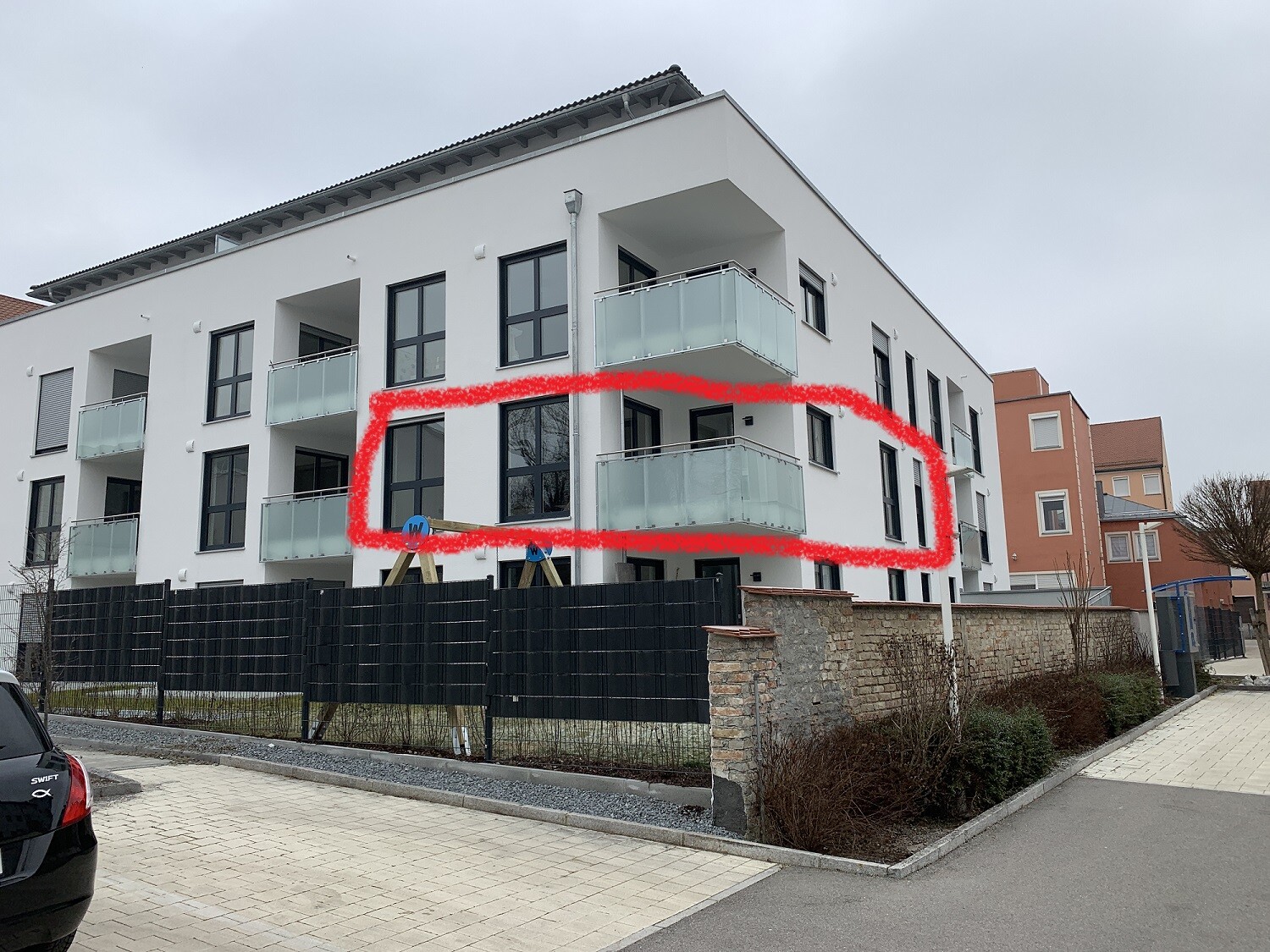
I have rented out a new apartment (built in 2021, KfW-55 standard). The tenant recently informed me that since spring, the indoor temperatures have consistently been at least 25°C (77°F) or higher. On warm days, it even reaches up to 28°C (82°F), although she keeps all the aluminum shutters closed during the day (no home office). Cross-ventilation at night doesn’t bring the temperature below 25°C (77°F). She is asking for advice on how to cool the apartment down a bit during the summer.
What could be causing this?
The apartment has a decentralized ventilation system and underfloor heating, which is naturally turned off in summer.
The apartment faces southwest and has large window areas.
Could it be that the ventilation system continuously brings in warm outside air on hot days, causing the temperature to rise so much?
Should the ventilation system be turned off during the day?
But why doesn’t the apartment cool down at night, even though there seems to be cross-ventilation and the nights are cooler?
Do you have any tips? I am a bit overwhelmed.
Best regards,
Robert

I have rented out a new apartment (built in 2021, KfW-55 standard). The tenant recently informed me that since spring, the indoor temperatures have consistently been at least 25°C (77°F) or higher. On warm days, it even reaches up to 28°C (82°F), although she keeps all the aluminum shutters closed during the day (no home office). Cross-ventilation at night doesn’t bring the temperature below 25°C (77°F). She is asking for advice on how to cool the apartment down a bit during the summer.
What could be causing this?
The apartment has a decentralized ventilation system and underfloor heating, which is naturally turned off in summer.
The apartment faces southwest and has large window areas.
Could it be that the ventilation system continuously brings in warm outside air on hot days, causing the temperature to rise so much?
Should the ventilation system be turned off during the day?
But why doesn’t the apartment cool down at night, even though there seems to be cross-ventilation and the nights are cooler?
Do you have any tips? I am a bit overwhelmed.
Best regards,
Robert
 KingJulien29 Aug 2022 07:26
The electricity consumption is largely covered by photovoltaic energy, which is increasingly abundant when the air conditioning is running and is even partly self-generated.
The "waste heat" is mostly not heat produced through conversion but simply transferred energy that is inside before and outside after.
By this logic, you wouldn’t be allowed to ventilate at night during summer either, because then your waste heat from inside the house would contribute to global warming outside 😉
The "waste heat" is mostly not heat produced through conversion but simply transferred energy that is inside before and outside after.
By this logic, you wouldn’t be allowed to ventilate at night during summer either, because then your waste heat from inside the house would contribute to global warming outside 😉
W
WilderSueden29 Aug 2022 10:04HausiKlausi schrieb:
Sure, after X days even an old building is properly heated through. But the whole point of the discussion is that nowadays you have to proactively cool "highly efficient" houses, otherwise you end up overheating.I believe there are completely different factors at play here than insulation. Insulation actually keeps the heat out during summer as well. Here is a spontaneous and certainly not complete list:- oversized windows let much more sunlight into the house
- external blinds are sensitive to wind and sometimes cannot provide shading
- large terraces collect heat directly in front of the house
- new buildings typically lack a mature garden with large trees, so the microclimate is often worse
- the extensive built-in building technology also generates waste heat
WilderSueden schrieb:
I believe there are other factors causing the problem besides the insulation. Insulation actually keeps the heat out during summer as well. Here is a spontaneous and definitely not complete list:
- oversized windows let a lot more sunlight into the house
- external venetian blinds (raffstores) are sensitive to wind and don’t allow shading on some days
- large terraces collect heat directly in front of the house
- new builds don’t have mature gardens with big trees, so the microclimate is often worse
- the many installed home systems also generate waste heat However, I don’t have large windows because of the shutters… I consistently shade the west side with them, and there’s a covered roof over the south side… but what I do think I notice is that in a poorly insulated house you can ventilate out the heat even in the last two weeks, but eventually you have to close up and the walls store all the heat nicely… The heat pump we have is also an outdoor unit, so it doesn’t produce heat inside the house either… However, the point about the trees is true, and due to the time factor, unfortunately this will remain the case for a while… until the trees grow tall enough… Another thing is that the house has almost no roof overhang, which used to have its reasons – I realize why that was done.
And of course, you can’t afford to make mistakes… Neighbors have the same house as us, just oriented differently… their only large window area is a stairwell with two long, narrow windows… ours face north, theirs unshaded face west – you feel like you’re dying inside their house… Whoever planned that should be beaten up (-;
W
WilderSueden30 Aug 2022 23:55Snowy36 schrieb:
What I notice is that in a poorly insulated house, you can ventilate out the heat even in the last two weeks. In my house, when you open the windows and close them again, the walls have stored all the heat nicely.What kind of wall construction do you have? My theory is as follows: In older buildings, you usually have solid masonry. In new constructions, you often have ETICS (External Thermal Insulation Composite Systems). In both cases, the actual wall heats up (in old buildings from outside and inside, with ETICS mainly from inside). With ETICS, the wall can only radiate heat inward, while the solid masonry radiates both inward and outward, thus losing more heat.
But this doesn’t always apply. With about 20cm (8 inches) of reinforced concrete, I have the perfect example of an uninsulated solid wall that still does not radiate enough heat away at night. Ventilating also depends on cool ambient conditions (microclimate again) and sufficient wind, which is often a problem in this sheltered area. There simply is no cross ventilation.
Georgian2019 schrieb:
I already know why I didn’t build a KfW55 or 40... basically a plastic house with a ventilation system.You can also achieve KfW40 with sand-lime brick 😉WilderSueden schrieb:
What type of wall construction do you have?
My theory is the following: in older buildings, you usually have solid masonry. In new buildings, you often have external thermal insulation composite systems (ETICS). In both cases, the actual wall heats up (in old buildings from both outside and inside, with ETICS mostly from the inside). With ETICS, the wall can only radiate heat inward, whereas the solid masonry radiates both inward and outward, which leads to higher heat loss.
But this doesn’t always work out. Here, I have a perfect example of an uninsulated monolithic wall with about 20cm (8 inches) of reinforced concrete, yet it doesn’t radiate enough heat at night. Ventilation requires not only a cool environment (microclimate again) but also sufficient wind, which is often a problem here in this dead wind zone. There simply isn’t any airflow. I built monolithically with hollow bricks. The neighbor next door with ETICS said it was noticeably cooler than ours, at least that’s what he claimed.
Similar topics