
ᐅ Newly built apartment (KfW-55 standard) cannot be cooled below at least 25 °C.
Created on: 21 Aug 2022 08:52
F
Forsberg21
Hello,
I have rented out a new apartment (built in 2021, KfW-55 standard). The tenant recently informed me that since spring, the indoor temperatures have consistently been at least 25°C (77°F) or higher. On warm days, it even reaches up to 28°C (82°F), although she keeps all the aluminum shutters closed during the day (no home office). Cross-ventilation at night doesn’t bring the temperature below 25°C (77°F). She is asking for advice on how to cool the apartment down a bit during the summer.
What could be causing this?
The apartment has a decentralized ventilation system and underfloor heating, which is naturally turned off in summer.
The apartment faces southwest and has large window areas.
Could it be that the ventilation system continuously brings in warm outside air on hot days, causing the temperature to rise so much?
Should the ventilation system be turned off during the day?
But why doesn’t the apartment cool down at night, even though there seems to be cross-ventilation and the nights are cooler?
Do you have any tips? I am a bit overwhelmed.
Best regards,
Robert
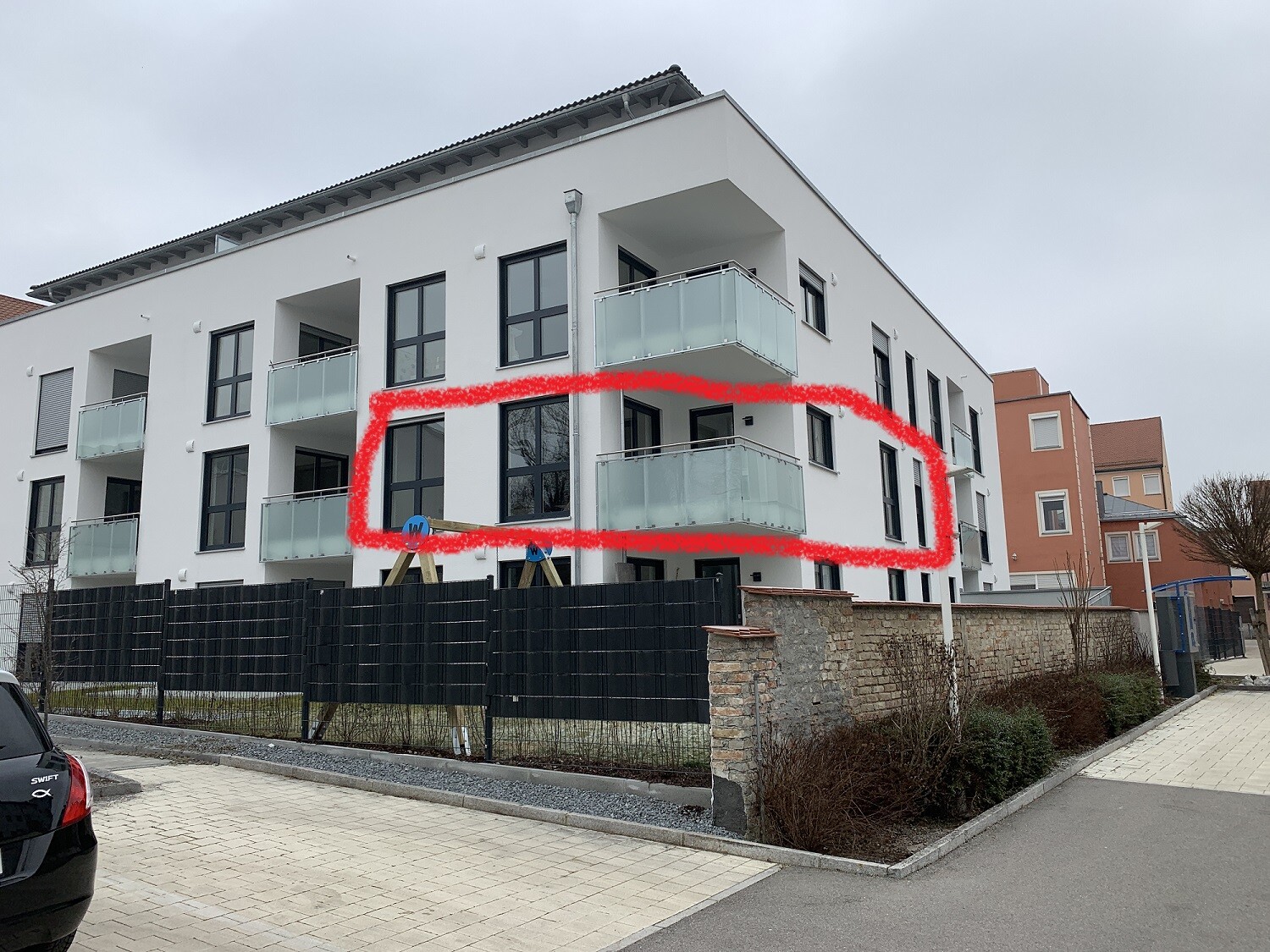

I have rented out a new apartment (built in 2021, KfW-55 standard). The tenant recently informed me that since spring, the indoor temperatures have consistently been at least 25°C (77°F) or higher. On warm days, it even reaches up to 28°C (82°F), although she keeps all the aluminum shutters closed during the day (no home office). Cross-ventilation at night doesn’t bring the temperature below 25°C (77°F). She is asking for advice on how to cool the apartment down a bit during the summer.
What could be causing this?
The apartment has a decentralized ventilation system and underfloor heating, which is naturally turned off in summer.
The apartment faces southwest and has large window areas.
Could it be that the ventilation system continuously brings in warm outside air on hot days, causing the temperature to rise so much?
Should the ventilation system be turned off during the day?
But why doesn’t the apartment cool down at night, even though there seems to be cross-ventilation and the nights are cooler?
Do you have any tips? I am a bit overwhelmed.
Best regards,
Robert
driver55 schrieb:
Please calculate properly… (this makes no sense)
and when I read, I doubt all the numbers.
What ran 12 hours a day and for how many days? What is the power consumption of the devices? The system needs 240 watt-hours per day in standby.
Standby means it is doing nothing, just plugged in and not operating.
What ran 12 hours a day? The indoor unit in the bedroom. Two adults, one baby, and two cats sleep there, to be exact 😀
Power consumption of the outdoor unit for cooling in kW: 0.34 – 2.47
Three indoor units can deliver up to 2.0 kW cooling capacity each (this is cooling output, not power consumption), and one of the four indoor units is rated for up to 3.5 kW cooling capacity.
The minimum standby power consumption of each indoor unit is apparently 2.5 watts.
I hope this is more helpful now 🙂
Here you can see it: on August 6 and 7, we were not at home, so the system was on standby.
So far, it's 57 kWh for August (27 days, including 2 days on vacation).
Not all devices are constantly running cooling; I only turn them on when needed. For example, on August 13, you can see a large peak. That day, I cooled the entire ground floor from midday until late at night because we had a birthday party and it was hot outside again: 37°C (99°F) in the shade… of course, I also ran the bedroom cooling in the evening at the same time. In total, it used 6.3 kWh on that day.
With the current electricity tariff, that amounts to €1.89, which I think is really good.
 HausiKlausi28 Aug 2022 23:44
[/QUOTE]
Thanks, that really helps me feel better right now. I’ve also been experiencing almost sleepless nights because of the energy prices. That’s what you have to deal with in an older building. But what I don’t have: 26°C (79°F) indoors. Even after several days over 35°C (95°F) outside. On the ground floor (where the bedroom is), we stay around 23°C (73°F). Without any ventilation or fancy equipment. That’s a blessing. At least during summer.
Snowy36 schrieb:
I always thought living in a newly built house meant a better quality of life than in an older building—but no such luck. Well, with current prices, I’ll be happy about saving on heating costs, but generally, I would have preferred to heat a bit more during winter rather than having to install air conditioning plus solar panels at this price just to survive. Working from home at 26°C (79°F) is just not for me.
Thanks, that really helps me feel better right now. I’ve also been experiencing almost sleepless nights because of the energy prices. That’s what you have to deal with in an older building. But what I don’t have: 26°C (79°F) indoors. Even after several days over 35°C (95°F) outside. On the ground floor (where the bedroom is), we stay around 23°C (73°F). Without any ventilation or fancy equipment. That’s a blessing. At least during summer.
W
WilderSueden28 Aug 2022 23:51I find the old building versus new building discussion a bit too simplistic. This apartment is also in an older building, and if it’s hot for 1-2 days, that’s not a problem because the walls absorb the heat. After the third day, however, the concrete is so warmed through that you really need some cooler days again, otherwise it stays quite warm until then.
There are definitely more factors involved than just whether a building is new or old.
There are definitely more factors involved than just whether a building is new or old.
HausiKlausi28 Aug 2022 23:59WilderSueden schrieb:
I find the old building/new building discussion a bit one-dimensional. This apartment is also an old building, and if it’s hot for 1-2 days, it’s not a problem; the walls absorb the heat. From the third day on, the concrete is so warmed through that you really need cooler days again, otherwise it stays quite warm.
There are more factors involved than just new or old buildings. Of course, after several days an old building will also be thoroughly heated. The real issue in this discussion is that nowadays “highly efficient” houses often need proactive cooling, otherwise you can barely tolerate the heat—thanks to climate change. What is completely overlooked, however, is that air conditioners, through their electricity consumption and heat emission, actually contribute to heating the environment again. And no, this is not some green myth, but scientifically well documented. Around 10% of global electricity demand is used for air conditioning...
HausiKlausi schrieb:
Sure, after X days even an older building is properly heated through. The real issue in this discussion, however, is that nowadays "highly efficient" houses need proactive cooling, or else you end up overheating. Thanks to climate change. What is completely overlooked is that air conditioning systems, due to their electricity consumption and waste heat (!sic), actually contribute to further warming. And no, this is not an environmental myth—it is scientifically well documented. Ten percent (!) of the global electricity demand is used for air conditioning...The global problem, however, is not electricity use in summer, but heating energy in winter (although I also consider the energy consumption for a few summer days in Germany quite exaggerated).Similar topics